Nila Kartika Wati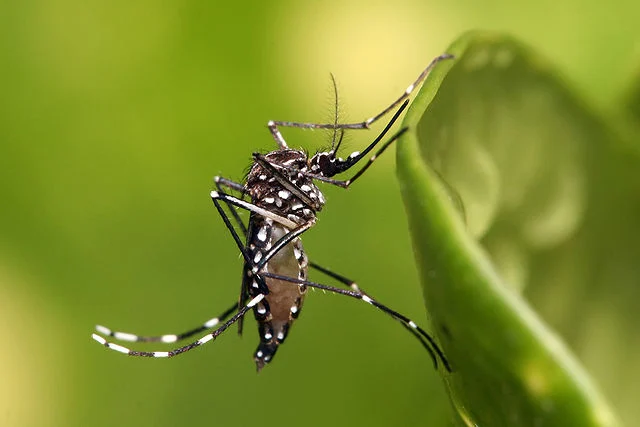
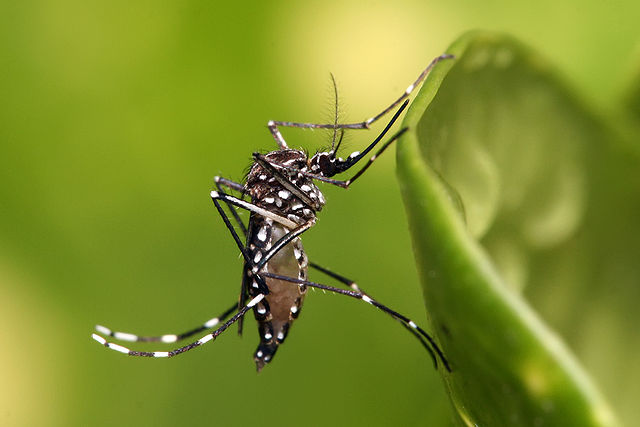
Environmental degradation and the systematic destruction of natural habitats are no longer just threats to large mammalian species; they are fundamentally altering the biological behavior of the smallest organisms on the planet. A groundbreaking study conducted in the Atlantic Forest (Mata Atlântica) of Brazil has revealed a concerning ecological shift: wild mosquitoes, traditionally reliant on the blood of forest-dwelling animals, are increasingly targeting humans as their primary source of nutrition. This behavioral adaptation, driven by the fragmentation of one of the world’s most biodiverse ecosystems, presents a significant escalation in the risk of zoonotic disease transmission and highlights the direct link between environmental health and global public health security.
The Erosion of the Atlantic Forest and the Disruption of Natural Chains
The Atlantic Forest was once a sprawling expanse of tropical and subtropical moist forest covering over 1.3 million square kilometers along the Brazilian coast. Today, after centuries of agricultural expansion, urban sprawl, and industrialization, the forest has been reduced to a mere shadow of its former self. Estimates suggest that only 12% to 28% of the original forest remains, much of it existing in isolated, degraded fragments.
This fragmentation has created a "dead-end" scenario for many indigenous species. As forest patches shrink, the populations of large mammals, diverse bird species, and various amphibians—the traditional "hosts" for forest mosquitoes—have plummeted. Some species have faced local extinction, while others have migrated deeper into the remaining inaccessible pockets of greenery. For the mosquito populations left behind in fragmented patches bordering human settlements, the loss of their natural food source created an evolutionary ultimatum: adapt or perish.
In the absence of their natural prey, these mosquitoes have demonstrated a remarkable and terrifying flexibility. The abundance of human populations living on the fringes of these forest fragments has provided a stable, consistent, and easily accessible alternative. This shift from "zoophily" (preferring animals) to "anthropophily" (preferring humans) is not merely a change in diet; it is a fundamental shift in the ecology of disease.
Methodology: Uncovering the DNA Evidence
To investigate the extent of this behavioral shift, a dedicated team of researchers from the Oswaldo Cruz Institute (IOC/Fiocruz) and the Federal University of Rio de Janeiro (UFRJ) conducted an extensive field study within two specific conservation areas in the state of Rio de Janeiro. These areas, while protected, are surrounded by dense human peri-urban settlements, making them ideal locations for studying the interface between wild nature and human civilization.
The research team employed CDC light traps—devices that use light and carbon dioxide to attract insects—to capture specimens across various points of the forest-urban interface. Over the course of the study, the team successfully collected 1,714 mosquitoes representing 52 distinct species. The primary focus of the analysis was on "engorged" females—mosquitoes that had recently fed and whose abdomens were visibly distended with blood.
The scientific challenge lay in identifying the source of that blood. In the past, scientists relied on visual observation or basic serological tests, which were often imprecise. However, this study utilized advanced molecular biology techniques, specifically DNA barcoding. By extracting DNA from the blood meals within the mosquitoes and sequencing specific genetic markers, the researchers could match the blood to a global database of animal and human genetic profiles.
Startling Results: Humans as the Primary Target
The laboratory results provided empirical confirmation of the researchers’ worst fears. Out of the samples successfully identified through DNA analysis, a staggering 75%—or 18 out of 24 definitive samples—contained human blood. This majority far outweighed the presence of blood from traditional hosts.
The remaining samples showed a dwindling variety of sources, including domestic dogs, rodents, birds, and amphibians. Perhaps most significantly, some mosquitoes were found to have "mixed" blood meals, containing DNA from both humans and amphibians. This suggests that the mosquitoes are opportunistic hunters, moving between different classes of vertebrates within a single feeding cycle. This flexibility is a key driver in the "spillover" effect, where a pathogen residing in a wild animal is picked up by a mosquito and then transmitted to a human during its next meal.
The presence of human blood in mosquitoes that are biologically classified as "wild" or "sylvan" indicates that these insects are no longer staying within the deep forest canopy. Instead, they are actively patrolling the edges of human habitations, essentially integrating human blood into their reproductive cycles.
The Public Health Implications: A Ticking Time Bomb
The shift in mosquito behavior is not merely an entomological curiosity; it is a direct threat to human life. The mosquitoes inhabiting the Atlantic Forest are known vectors for a terrifying array of pathogens. Among the viruses traditionally circulated in these forest cycles are:
- Yellow Fever: While urban yellow fever has been largely controlled through vaccination, the "sylvan" or forest cycle remains active. If forest mosquitoes that carry the virus begin biting humans regularly, the risk of re-introducing the virus into urban populations increases.
- Zika and Dengue: While primarily associated with the Aedes aegypti mosquito, the adaptation of other wild species to human blood creates new pathways for these viruses to persist and spread.
- Chikungunya: A debilitating viral disease that causes long-term joint pain.
- Mayaro Virus: Often overshadowed by Zika, the Mayaro virus is an emerging threat in South America. It is traditionally a forest-dwelling virus, but as mosquitoes bridge the gap between the forest and the city, Mayaro is increasingly viewed by health officials as a candidate for the next major outbreak.
The researchers emphasize that the human populations living at the "edge" of the forest—often in impoverished or unplanned settlements—are the most vulnerable. These individuals act as the unintended bridge between the wild pathogen reservoir and the broader global population.
The Ecological "Dilution Effect" and Its Collapse
The study’s findings support the "dilution effect" hypothesis, a central tenet in ecological epidemiology. This theory suggests that high biodiversity protects human health because a diverse range of animal hosts "dilutes" the prevalence of a pathogen. When a mosquito has 50 different species of birds and mammals to bite, many of which may be "dead-end" hosts where the virus cannot replicate, the chances of that mosquito picking up a dangerous virus and then biting a human are statistically low.
However, when biodiversity is lost due to deforestation, the dilution effect collapses. The "generalist" species—those that can survive in degraded environments—remain, and the mosquito is forced to focus its feeding on whatever is left. In the case of the Atlantic Forest, what is left is humans and their domestic animals. This concentration of feeding significantly increases the probability of a "spillover event," where a virus successfully jumps from the wild into the human population.
Expert Reactions and the Call for "One Health"
While official government responses to the study are still being formulated, the scientific community has reacted with a mixture of validation and alarm. Public health experts in Brazil have long warned that the destruction of the Mata Atlântica would have consequences far beyond the loss of trees.
"This study provides the molecular proof of what we have suspected for years," says one independent entomologist not involved in the study. "We are literally inviting these diseases into our homes by destroying the natural barriers that kept them at bay. The mosquito is simply the messenger of an ecological imbalance we created."
The findings reinforce the necessity of the "One Health" approach—a collaborative, multisectoral, and transdisciplinary strategy that recognizes the interconnection between the health of people, animals, plants, and their shared environment. Under this framework, protecting the Atlantic Forest is not just an act of environmentalism; it is a critical public health intervention.
Chronology of a Changing Ecosystem
To understand the gravity of the current situation, one must look at the timeline of the Atlantic Forest’s decline:
- Pre-1500s: The forest covers a massive, continuous stretch of the South American coast.
- 1500–1900: Colonial expansion leads to massive clearing for sugarcane, coffee, and cattle ranching.
- 1950–2000: Rapid industrialization and the growth of megacities like São Paulo and Rio de Janeiro further fragment the remaining forest.
- 2010–Present: Increased awareness leads to conservation efforts, but "edge effects" and climate change continue to degrade the quality of the remaining fragments.
- 2024: The Oswaldo Cruz Institute study confirms that the ecological pressure has reached a tipping point, forcing wild vectors to seek human hosts.
Conclusion: Nature as a Shield
The study from the Atlantic Forest serves as a stark reminder that the boundaries between the "wild" and the "civilized" are increasingly porous. As we continue to encroach upon the few remaining natural spaces on Earth, we are not just losing biodiversity; we are dismantling our own biological defenses.
The transition of forest mosquitoes to a human-based diet is a clear signal that the environment is out of equilibrium. If the trend of deforestation and habitat fragmentation continues, the frequency of spillover events is guaranteed to increase. The protection of the Atlantic Forest, therefore, must be reframed. It is no longer just about saving the charismatic megafauna or preserving rare orchids; it is about maintaining an ecological barrier that prevents the next global pandemic. Science has sounded the alarm: the health of the forest and the health of humanity are, quite literally, flowing in the same veins.