Nasution Nanang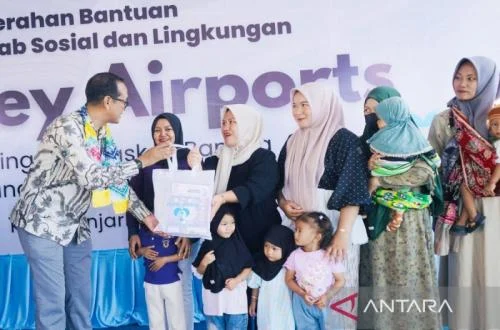
PT Angkasa Pura Indonesia (Persero), operating as Angkasa Pura Airports, through its Syamsudin Noor International Airport Banjarmasin Branch Office, has launched a comprehensive Corporate Social and Environmental Responsibility (TJSL) program in Banjarbaru, South Kalimantan. This significant initiative, totaling Rp319,625,000, is strategically allocated across four priority sectors: health, education, environmental preservation, and enhancement of community housing quality, underscoring the state-owned enterprise’s commitment to sustainable development and community well-being. A substantial portion of this aid, specifically Rp164,625,000, is dedicated to combating stunting among 127 children in Banjarbaru, as part of the broader "InJourney Lawan Stunting" program, reflecting a concerted effort to address a critical national health issue.
Contextualizing Angkasa Pura’s Mandate and the InJourney Framework
PT Angkasa Pura Indonesia, commonly known as Angkasa Pura Airports, is a prominent state-owned enterprise (SOE) responsible for managing and developing numerous airports across the central and eastern regions of Indonesia. As an SOE, Angkasa Pura Airports operates not only as a commercial entity but also carries a profound social responsibility mandate, guided by government regulations that stipulate the allocation of a portion of its profits towards community development and environmental sustainability. This mandate is further amplified under the umbrella of InJourney, the state-owned tourism and aviation holding company, which consolidates various SOEs to create a more integrated and impactful approach to national development, with TJSL being a cornerstone of its operational philosophy. The Syamsudin Noor International Airport in Banjarbaru serves as a vital gateway to South Kalimantan, connecting the region to the national and international air networks, and its commitment to local communities is paramount for fostering harmonious relations and sustainable regional growth.
The Fight Against Stunting: A National Imperative
The "InJourney Lawan Stunting" program is a direct response to Indonesia’s national health priority of reducing stunting rates. Stunting, defined as impaired growth and development that children experience from poor nutrition, repeated infection, and inadequate psychosocial stimulation, has long-term detrimental effects on physical and cognitive development, ultimately impacting human capital and national productivity. Indonesia has been grappling with persistently high stunting rates, with President Joko Widodo setting an ambitious target to reduce the national prevalence to 14% by 2024. This target necessitates concerted efforts from all sectors, including government agencies, private companies, and communities.
On Wednesday, July 15, Stephanus Millyas Wardana, General Manager of PT Angkasa Pura Indonesia Syamsudin Noor Airport Branch Office, highlighted the significance of the nutritional support provided to 127 children in Banjarbaru. The Rp164,625,000 allocated for this program is designed to provide comprehensive nutritional fulfillment, which typically includes supplementary feeding with nutrient-rich foods, micronutrient supplementation, regular growth monitoring, and educational initiatives for parents and caregivers on proper infant and young child feeding practices, hygiene, and sanitation. The program aims to break the cycle of malnutrition, ensuring that these children have the opportunity for healthy growth and development, thereby contributing to the creation of a healthier and more productive future generation for Banjarbaru and Indonesia. The focus on direct nutritional aid for vulnerable children underscores a practical, impact-oriented approach to tackling the multifaceted challenges posed by stunting, which often originates from a combination of economic hardship, lack of access to nutritious food, and insufficient health education within families.
Empowering Education: Investing in Future Generations
Beyond health, Angkasa Pura Airports demonstrated its commitment to education through the "InJourney Cerdaskan Bangsa" (InJourney Enlightens the Nation) program. Recognizing that a conducive learning environment is fundamental for effective education and student development, the company channeled significant resources into improving school infrastructure.
One key beneficiary was SDN 3 Landasan Ulin Utara, which received Rp30 million for the renovation and improvement of its schoolyard. A well-maintained and safe schoolyard is not merely an aesthetic enhancement; it is crucial for children’s physical activity, social interaction, and overall well-being. In many public schools in Indonesia, particularly in remote or developing areas, school facilities can be basic or even dilapidated, posing safety risks and hindering outdoor learning and play. The upgraded schoolyard at SDN 3 Landasan Ulin Utara is expected to provide a safer, more comfortable, and stimulating environment for the students, encouraging them to engage in recreational activities and fostering a greater sense of pride in their school. This investment directly contributes to SDG 4 (Quality Education) by improving learning environments.
Furthermore, SMP Negeri 15 Banjarbaru received Rp50 million for the construction of a dedicated school stage. This initiative addresses a critical need for facilities that support extracurricular activities, arts, and cultural development. A school stage serves as a versatile platform for various events, including drama performances, musical concerts, cultural presentations, student assemblies, and public speaking competitions. It empowers students to develop their artistic talents, build confidence, and hone their presentation skills, which are invaluable for their holistic development. In communities where access to external cultural venues might be limited, a school stage becomes a central hub for creative expression and community engagement, fostering a vibrant school culture and encouraging students to explore diverse interests beyond the traditional curriculum. The General Manager, Stephanus Millyas Wardana, emphasized that this stage is envisioned as a catalyst for artistic, cultural, and educational activities, enriching the learning experience at SMP Negeri 15 Banjarbaru.
Fostering Environmental Stewardship and Sustainable Living
Angkasa Pura Airports also extended its TJSL efforts to environmental conservation and sustainable living, acknowledging the critical importance of waste management in urban and peri-urban areas. Through the "InJourney Airports Peduli Lingkungan" (InJourney Airports Cares for the Environment) program, the company provided a waste shredder machine to LPM Guntung Payung, Desa Guntung Damar, valued at Rp25 million.
Waste management remains a significant challenge across Indonesia, with many regions struggling with inadequate infrastructure and increasing volumes of municipal solid waste. Community-based waste management initiatives are vital for addressing this issue at the local level. The waste shredder machine is a tangible tool that empowers the local community of Guntung Payung to enhance its waste processing capabilities. This equipment can efficiently shred organic waste, transforming it into compostable material, and potentially facilitate the segregation and processing of other recyclable materials. The benefits are multi-faceted: it reduces the volume of waste sent to landfills, mitigates environmental pollution, and creates economic value through the production of compost or recyclable commodities. This initiative not only promotes a cleaner environment but also fosters community participation in sustainable practices and potentially generates income for local residents involved in waste processing, aligning with SDG 12 (Responsible Consumption and Production) and SDG 11 (Sustainable Cities and Communities).
Enhancing Community Welfare Through Decent Housing
Recognizing that safe and healthy living conditions are fundamental human rights and crucial for overall well-being, Angkasa Pura Airports implemented the "InJourney Airports Rumah Layak Huni" (InJourney Airports Decent Housing) program. Through this initiative, the company allocated Rp50 million for the renovation of homes for needy families in Banjarbaru.
Access to decent housing remains a challenge for many low-income communities in Indonesia. Dilapidated homes often lack proper sanitation, ventilation, and structural integrity, posing significant health risks and diminishing the quality of life for their occupants. The housing renovation program directly addresses these issues by providing financial assistance to improve the structural soundness, hygiene, and comfort of these residences. This can involve repairs to roofs, walls, floors, as well as improvements to sanitation facilities and water access. By ensuring that families have a healthy, safe, and dignified place to live, Angkasa Pura Airports contributes to improving public health, reducing poverty, and enhancing the overall social fabric of the community. This program reflects a deep understanding that corporate responsibility extends to the most basic needs of society, providing a foundation upon which individuals and families can thrive.
Leadership Perspective and Broader Implications
Stephanus Millyas Wardana, the General Manager, articulated the overarching philosophy behind these extensive TJSL programs. He underscored that these initiatives are a testament to Angkasa Pura Airports’ unwavering commitment to "tumbuh bersama masyarakat" – growing together with the community. This sentiment highlights the company’s belief that its success is intrinsically linked to the prosperity and well-being of the communities it serves. He emphasized that an airport, while primarily a hub for air transport connectivity, must also serve as a source of tangible benefits for its surrounding populace. "We hope these contributions will provide sustainable benefits for the people of Banjarbaru," Millyas stated, encapsulating the long-term vision of these programs.
The total TJSL investment of Rp319,625,000 signifies a substantial corporate commitment, reflecting a strategic approach to corporate citizenship that goes beyond mere philanthropy. It demonstrates a proactive engagement with pressing societal issues, leveraging corporate resources to address gaps in public services and contribute to national development goals. By integrating these social and environmental initiatives into its core operations, Angkasa Pura Airports strengthens its social license to operate, enhances its corporate reputation, and fosters a deeper connection with its stakeholders.
Stakeholder Reactions and Future Outlook
The impact of these programs resonates deeply within the Banjarbaru community. Local government officials, who often face resource constraints in tackling development challenges, are likely to view such corporate partnerships as invaluable. A representative from the Banjarbaru City Government, for instance, might express profound gratitude, stating, "The support from Angkasa Pura Airports is a vital complement to our ongoing efforts in Banjarbaru. Their comprehensive approach, from combating stunting to improving school facilities and promoting environmental sustainability, directly aligns with our city’s development agenda. This partnership exemplifies how state-owned enterprises can truly make a difference in local communities."
Similarly, beneficiaries and community leaders would offer heartfelt appreciation. The principal of SMP Negeri 15 Banjarbaru might remark, "The new school stage is a dream come true for our students and teachers. It will unlock countless opportunities for creative expression and skill development, transforming our school into a more dynamic and engaging learning environment." A community leader from Guntung Payung could highlight the practical benefits: "The waste shredder machine is a game-changer for our village. It not only helps us manage waste more effectively but also empowers our community to generate income from recycling, fostering a sense of collective responsibility for our environment." A parent whose child benefits from the stunting program might convey immense relief and hope, "This nutritional aid gives my child a fighting chance for a healthy future. It’s a huge burden lifted from our shoulders, knowing that there are organizations like Angkasa Pura Airports who care."
In conclusion, Angkasa Pura Airports’ extensive TJSL programs in Banjarbaru represent a holistic and impactful approach to corporate social responsibility. By addressing critical needs in health, education, environment, and housing, the company not only fulfills its mandate as a state-owned enterprise but also sets a benchmark for corporate citizenship. These initiatives are poised to create sustainable, long-term benefits for the people of Banjarbaru, contributing significantly to the region’s socio-economic development and demonstrating how a key national infrastructure provider can be a powerful catalyst for positive societal change. The ongoing commitment to these programs signals a future where airports are not just points of transit but integral partners in community prosperity and national progress.