Nasution Nanang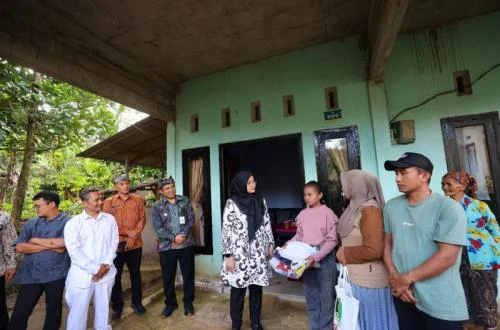
The Banyuwangi Regency Government in East Java has achieved significant strides in its ambitious mission to bring out-of-school children (ATS) back into the educational fold through its innovative "Rintisan Desa Tuntas Wajib Belajar 12 Tahun" (Pioneering Villages for 12-Year Compulsory Education Completion) program, affectionately known as "Rindu Bulan." Since its inception in 2023, this pioneering village-based collaborative initiative has successfully reintegrated an impressive 3,259 children into formal and informal educational pathways, underscoring a robust commitment to universal education and human capital development. This success highlights a strategic and multi-faceted approach to a persistent societal challenge, positioning Banyuwangi as a potential model for other regions grappling with similar issues.
The "Rindu Bulan" program is not merely a reintegration effort; it is a holistic ecosystem designed to identify, address, and prevent educational disenfranchisement from the grassroots level. Bupati (Regent) Banyuwangi, Ipuk Fiestiandani, has articulated that the program’s efficacy stems from its comprehensive multi-stakeholder collaboration. This intricate network involves village and urban sub-district governments, diverse educational institutions, the Ministry of Religious Affairs (which oversees Islamic schools or madrasahs), the East Java Provincial Education Branch Office, and the National Amil Zakat Agency (Baznas). This expansive collaborative framework ensures that interventions are tailored and resources are pooled effectively, directly addressing the varied and often complex reasons behind children dropping out of school.
Understanding the Root Causes and Tailored Interventions
Bupati Ipuk emphasized the program’s ground-up approach, stating, "We conduct sweeps starting from the village level, and by locking in on the smallest administrative unit, the interventions become more precise and targeted. This is crucial because the causes for children dropping out of school are diverse, necessitating a customized form of assistance for each case." This granular approach acknowledges that a child’s absence from school might be due to economic hardship, family issues, lack of motivation, geographical barriers, special needs, early marriage, or even cultural perceptions of education. By delving into these specific circumstances at the community level, the program avoids a one-size-fits-all solution, instead offering pathways such as re-entry into formal schools, enrolment in equivalency programs (e.g., Package A, B, C for primary, junior high, and senior high equivalency), or facilitating access to various existing educational support schemes.
The magnitude of the challenge faced by Indonesia, and by extension, regions like Banyuwangi, is significant. National data from the Ministry of Education and Culture often indicates persistent figures of out-of-school children, particularly at the junior and senior secondary levels, with socio-economic disparities being a primary driver. While national policies advocate for 12 years of compulsory education, the reality on the ground often presents hurdles that local governments must overcome with innovative strategies. Banyuwangi’s proactive stance with "Rindu Bulan" directly contributes to national goals of improving educational attainment and reducing the youth unemployment rate by equipping a larger segment of its population with foundational education.
A Chronology of Commitment and Impact
The "Rindu Bulan" initiative was officially launched in 2023, marking a formalization of Banyuwangi’s commitment to eradicating educational disparities. However, the groundwork for such a comprehensive program likely involved extensive preliminary data collection, community mapping, and stakeholder consultations in the preceding months. The program’s initial phase focused on establishing the multi-layered coordination mechanism, training village-level enumerators and outreach teams, and developing the robust data verification system.
From its launch, the program has systematically rolled out its village-level "sweeping" efforts. Teams, often comprising representatives from the village government, local educators, and community figures, fan out to identify children who are not attending school. This process is followed by a critical verification and direct visitation phase, as explained by Alfian, the Acting Head of the Banyuwangi Regency Education Office. "Children who are indeed identified as ATS are visited at their homes to understand the root cause of their situation. From there, we determine the most appropriate affirmative action or assistance," Alfian elaborated. This personalized approach has been instrumental in building trust with families and ensuring that the support provided is genuinely impactful.
The achievement of reintegrating 3,259 children within its first year of operation is a testament to the program’s efficiency and the dedicated efforts of its collaborative network. This figure represents not just statistics but thousands of individual stories of renewed hope and opportunity. Each child brought back to school contributes to a ripple effect, potentially altering the trajectory of their families and communities for generations.
Beyond Reintegration: Sustainable Support and Long-Term Vision
Bupati Ipuk stressed that the "Rindu Bulan" program’s mandate extends far beyond simply returning children to classrooms. A crucial component is the provision of continuous, ongoing support, encompassing both academic performance monitoring and addressing the children’s broader educational needs until they graduate. This holistic approach recognizes that merely enrolling a child is insufficient if the underlying issues that led to their initial dropout are not addressed or if new challenges emerge.
The Bupati herself plays an active, hands-on role in this process, routinely visiting the homes of children identified as being at risk of dropping out. These personal visits serve to motivate both the children and their families, reinforcing the community’s and the government’s commitment to their education. "Through the collaboration of many parties, we hope that more Banyuwangi children can complete their education. Education is one of the key factors in breaking the chain of poverty," she affirmed. This statement underscores the program’s broader socio-economic objectives, linking educational attainment directly to poverty reduction and improved quality of life.
The Banyuwangi Regency Government’s unwavering commitment to upholding every child’s right to education up to the senior high school level or its equivalent is further solidified by ensuring the continuous availability of various educational assistance schemes. These schemes are critical safety nets designed to prevent vulnerable children from abandoning their studies. While specific details of these schemes are not exhaustively listed in the original article, they typically include financial aid for tuition fees (if any), scholarships, provision of school uniforms and supplies, transportation subsidies, and even nutritional support. The involvement of Baznas is particularly noteworthy here, as religious charitable funds (zakat) can be channeled to provide crucial financial backing, especially for economically disadvantaged families. This multi-pronged financial support system is pivotal in mitigating the economic pressures that often force children out of school.
"For us, no child should lose the opportunity to receive an education, regardless of the problem. Every child has the right to their education through various assistance schemes," Ipuk reiterated, encapsulating the foundational ethos of the "Rindu Bulan" initiative.
Data-Driven Approach and Direct Intervention
The operational backbone of "Rindu Bulan" lies in its rigorous data management and direct intervention strategy. Alfian, from the Education Office, elaborated on the meticulous process: "The accompaniment process begins with the verification and validation of data on children vulnerable to dropping out. The team then conducts direct visits to the children’s homes to understand the root causes of their non-attendance."
This structured approach ensures that resources are allocated efficiently and interventions are precisely targeted. By understanding the specific "why" behind each child’s situation, whether it’s the need for financial aid, counseling, academic tutoring, or even specialized learning environments, the program can deploy the most effective solution. This might involve re-enrolling them in formal schooling, directing them to suitable equivalency programs that offer flexible learning schedules, or connecting them with various available educational support and welfare programs. The emphasis on direct visitation is critical for building rapport, assessing the home environment, and engaging families as active partners in the child’s educational journey.
Broader Implications and Potential for Replication
The success of Banyuwangi’s "Rindu Bulan" program carries significant implications, both locally and potentially nationally. Regionally, it is expected to bolster Banyuwangi’s Human Development Index (HDI) by improving educational attainment rates, which is a key component of HDI calculation. A more educated populace leads to a more skilled workforce, fostering local economic growth and attracting investment. Furthermore, by keeping children in school, the program indirectly addresses other social issues such as child labor, early marriage, and juvenile delinquency, contributing to a more stable and prosperous society.
From a national perspective, "Rindu Bulan" offers a compelling case study for a decentralized, community-driven approach to a widespread problem. Its emphasis on multi-stakeholder collaboration, personalized intervention, and sustained support provides a replicable framework that other regencies and municipalities in Indonesia could adapt to their local contexts. The integration of religious institutions (Ministry of Religious Affairs, Baznas) alongside secular government bodies showcases an effective model for leveraging all available community resources.
Education experts and child welfare advocates are likely to view "Rindu Bulan" as a commendable example of local government initiative in addressing a fundamental human right. Its success demonstrates that with strong political will, collaborative governance, and a nuanced understanding of local challenges, significant progress can be made in ensuring that no child is left behind. While challenges such as sustaining funding, adapting to evolving socio-economic landscapes, and ensuring the long-term retention of all reintegrated students will persist, Banyuwangi’s proactive and holistic approach provides a robust foundation for continued success and a brighter future for its children. The program truly embodies the spirit of local solutions for global challenges, demonstrating how targeted local action can have profound and lasting impacts on national development goals.