Nila Kartika Wati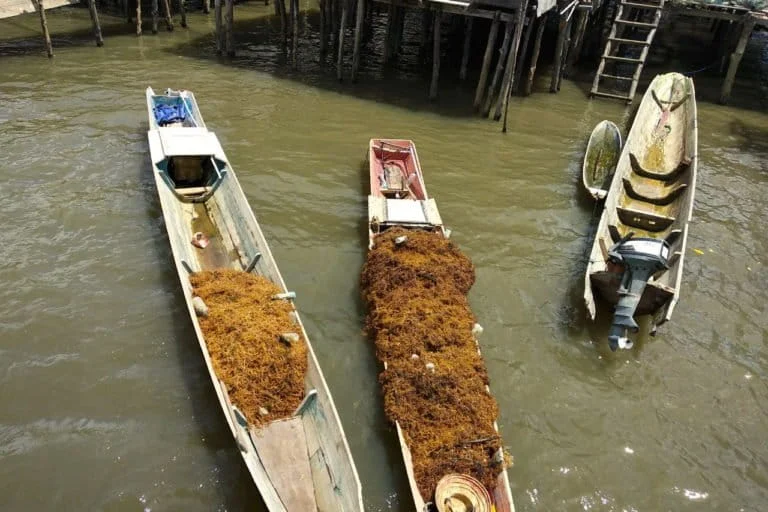
La Ode Baharuddin never imagined that his golden years would be spent wading through the thick, suffocating mud of the mangrove forests in Akuni Village, Konawe Selatan. For decades, Baharuddin was a man of the sea, a successful seaweed farmer who commanded the tides of an industry that once brought unprecedented wealth to his community. Today, however, his hands no longer handle the vibrant, rubbery strands of high-value seaweed; instead, they scavenge for mangrove snails in the silt, a desperate measure to provide for a family whose primary source of income has been systematically dismantled by the encroaching shadows of the extractive industry.
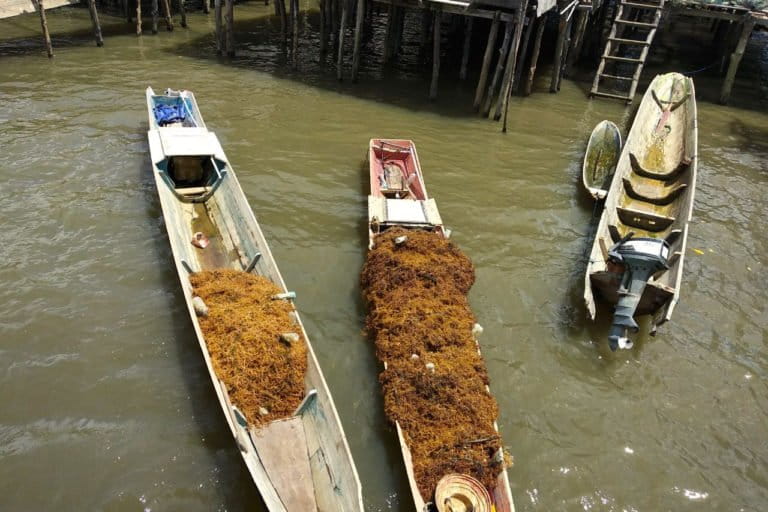
The transformation of Konawe Selatan’s coastline from a thriving hub of aquaculture to a site of environmental degradation is a narrative of lost prosperity. Only a few years ago, the villages within the Tinanggea District were so affluent that they earned the moniker "Dollar Villages." This was not a hyperbolic nickname but a reflection of a tangible economic reality. Between 2014 and 2015, the price of dried seaweed soared to approximately Rp45,000 per kilogram. For the residents of Bungin Permai, such as Mardiana, a mother of six, this era represented a pinnacle of financial security. Managing 300 stretches of seaweed rope, Mardiana could net a profit of Rp40 million in a single harvest cycle. This wealth translated into upward mobility, allowing her to purchase motorcycles, boats, and invest in her children’s education.
However, the "Dollar Village" era has effectively ended, replaced by what locals describe as a "paceklik" or a period of chronic hardship and harvest failure. Over the last three years, the seaweed cultivation industry in Tinanggea has entered a state of collapse. According to Baharuddin and his peers, the catalyst for this decline is the rapid expansion of nickel mining operations in the hills surrounding their coastal waters. The environmental impact is most visible during the rainy season when runoff from the open-pit mines carries laterite soil into the ocean. The once-clear turquoise waters of the Gulf of Tiworo now frequently turn a murky, sickly yellow. This sedimentation prevents the seaweed from photosynthesizing and causes it to rot before it can be harvested.
To keep his three children in school, Baharuddin has been forced into a cycle of asset liquidation. He has sold his cattle and eventually his land, as the sea no longer provides the yield necessary to cover basic living expenses. "It has been several years since the ‘agar’ (seaweed) harvest has been good," Baharuddin explained. "The decline started exactly when the mining began."
The Environmental Mechanics of Decline
The grievances of the coastal residents are supported by environmental advocates who point to the logistical footprint of the mining industry as a primary pollutant. Andi Rahman, the Executive Director of Walhi (The Indonesian Forum for the Environment) in Southeast Sulawesi, has highlighted that the issues extend beyond just the mines themselves. The construction of nickel ore storage facilities (stockpiles) directly on the shoreline and the constant traffic of massive coal and ore barges have fundamentally altered the marine ecosystem.
When nickel ore is stored near the water, wind and rain carry fine particulate matter into the sea. Furthermore, the movement of barges creates significant turbulence, stirring up seabed sediments and contributing to the persistent turbidity of the water. Seaweed, specifically species like Eucheuma cottonii which are commonly grown in the region, requires high water clarity to allow sunlight to reach the plants. When the water becomes opaque due to mining silt, the seaweed’s growth is stunted, and it becomes susceptible to "ice-ice" disease—a condition where the plant turns white and disintegrates due to environmental stress.
The disruption of the "Dollar Village" economy is not merely an anecdotal tragedy but a significant shift in the regional socio-economic landscape. As the seaweed dies, the social fabric of the community weakens. Farmers who were once independent entrepreneurs are now being forced into the informal labor sector or, like Baharuddin, into subsistence foraging in the mangroves.
A Conflict of Data: Official Success vs. Local Failure
One of the most jarring aspects of the Konawe Selatan seaweed crisis is the disconnect between government statistics and the lived experience of the farmers. Data from the Konawe Selatan Fisheries and Marine Affairs Office suggests a booming industry. Official records claim that seaweed production in the Tinanggea District has risen sharply, from 18,644 tons in 2021 to a projected 33,946 tons by 2025.
For farmers like Mardiana, these figures are not only unrecognizable but offensive. "Specifically for the Bungin Permai area, there is nothing. Since 2021, we have been in a state of famine," she stated, flatly contradicting the government’s upward-trending charts. The discrepancy suggests a potential flaw in how data is collected or a failure to account for localized collapses within larger administrative districts.
Wayan Darma, the Head of the Konawe Selatan Fisheries and Marine Affairs Office, has acknowledged that seaweed cultivation has vanished from former strongholds such as Torobulu and Moramo Bay. In those areas, the industry was abandoned years ago due to extreme water pollution and the high volume of barge traffic. While he admits that Tinanggea is now the last remaining center for seaweed in the region, he maintains a cautious stance regarding the cause of the decline. Darma argues that the current struggles in Tinanggea are primarily a result of fluctuating market prices rather than direct interference from mining activities. This position, however, fails to address the physical reality of failed crops and discolored water that farmers report daily.
The Broader Context: Indonesia’s Nickel Rush
The situation in Konawe Selatan is a localized symptom of a national strategy. Indonesia holds the world’s largest nickel reserves, and the government has pivoted toward a "downstreaming" policy (hilirisasi), which bans the export of raw ore to encourage domestic smelting and the production of stainless steel and electric vehicle (EV) batteries. While this policy has brought billions of dollars in foreign investment to provinces like Southeast Sulawesi, Central Sulawesi, and North Maluku, the environmental costs are often externalized onto coastal communities.
Nickel mining in Indonesia often involves the clearing of vast tracts of tropical forest on steep hillsides. Without the natural root systems to hold the soil, heavy tropical rains wash the iron-rich laterite earth directly into the river systems and out to sea. This process, known as siltation, creates "dead zones" where traditional aquaculture and coral reef ecosystems cannot survive.
Professor Laode M. Aslan, a senior academic at the Faculty of Fisheries and Marine Sciences at Halu Oleo University, identifies nickel mining as the "greatest enemy" of the seaweed industry. His research indicates that this is a recurring pattern across the Wallacea region. From the coasts of Morowali in Central Sulawesi to the islands of North Maluku, the expansion of the mining frontier has almost universally resulted in the retreat of the seaweed sector.
"We must imagine what happens when the nickel is eventually exhausted," Professor Aslan warned. "When the ore is gone and the companies leave, the coastal people will be left with nothing but a polluted ocean that can no longer support life or their traditional livelihoods."
Socio-Economic Implications and the Future of Aquaculture
The collapse of the seaweed industry in Konawe Selatan represents more than just a loss of income; it is the loss of a sustainable, low-carbon livelihood. Unlike mining, which is an extractive and finite industry, seaweed farming is a renewable resource that, under the right environmental conditions, provides long-term food security and economic stability.
The transition from seaweed farming to nickel labor or subsistence foraging also has gendered implications. Seaweed cultivation in Indonesia is often a family enterprise where women play a crucial role in the "tying" and drying processes, giving them direct access to household income. As the industry collapses, women like Mardiana lose their economic agency, and the family’s financial resilience is severely compromised.
The long-term implications for Konawe Selatan are sobering. If the sedimentation continues unabated, the damage to the benthic environment may become irreversible. Coral reefs, which act as nurseries for the fish that coastal residents rely on for protein, are also being smothered by the same yellow silt that kills the seaweed. This creates a cascading ecological failure that could lead to permanent poverty for thousands of residents.
As Indonesia continues its march toward becoming a global powerhouse in the EV battery supply chain, the story of La Ode Baharuddin serves as a cautionary tale. The "green" transition, intended to reduce global carbon emissions, is currently being fueled by practices that devastate local "blue" economies. Without stricter environmental regulations, mandatory siltation ponds, and a genuine reconciliation of mining activities with coastal preservation, the "Dollar Villages" of Southeast Sulawesi will remain a ghost of the past, buried under the weight of the global nickel rush.
The conflict between the Fisheries Office’s optimistic data and the farmers’ empty boats highlights a critical need for transparent, independent environmental monitoring. For the people of Tinanggea, the priority is clear: they do not want compensation for a dead sea; they want their clean water back, and with it, the return of the seaweed that once turned their humble villages into symbols of coastal prosperity. Until the yellow tides recede, the residents of Akuni and Bungin Permai remain trapped between a golden past and a murky, uncertain future.