Nila Kartika Wati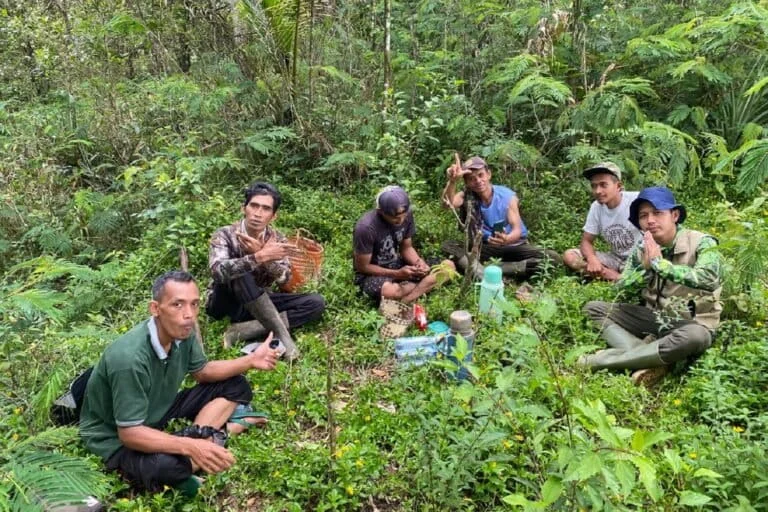
The Menoreh Hills, a lush limestone range spanning the border of Yogyakarta and Central Java, have long been a sanctuary for Java’s endemic avian species, but a recent surge in poaching activities has forced local communities to take drastic measures to safeguard their natural heritage. In May, members of the Lestari Purwosari Group, a community-driven ecotourism and conservation organization in Purwosari Village, Kulon Progo Regency, successfully apprehended a bird poacher who had been operating within their protected forest zones. This incident is part of a broader, more systemic struggle against the illegal wildlife trade in Indonesia, where the demand for songbirds—driven by a deep-seated cultural affinity for bird-singing competitions—continues to threaten wild populations with local extinction.
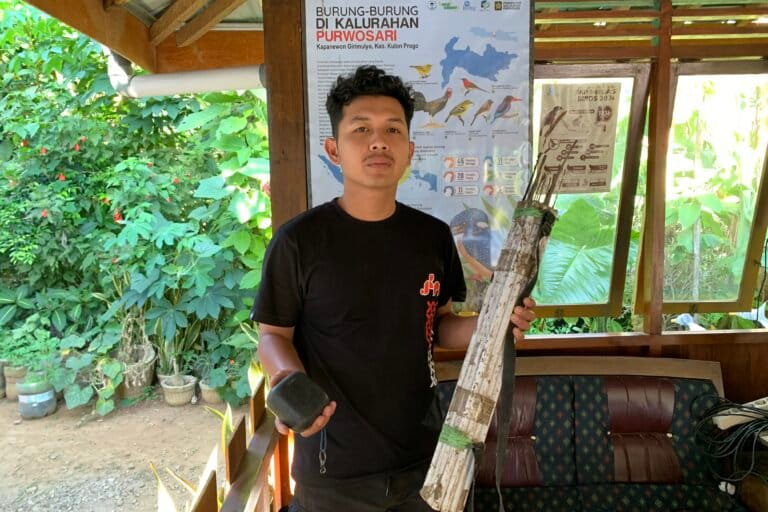
Tegar Cahaya Putra, the initiator and lead activist of the Lestari Purwosari Group, detailed the encounter during a report to Mongabay Indonesia, highlighting the sophisticated yet destructive methods used by modern poachers. The suspect, a man hailing from the neighboring Sleman Regency, was first spotted on a ridge within the village’s administrative boundaries. He was equipped with a portable electronic speaker, a cage, and a substance known locally as "pulut"—a highly viscous glue derived from tree sap or synthetic materials. This glue is applied to branches to trap birds that land on them, often causing severe feather damage or death to the animals.
The apprehension was not an isolated event but the result of a coordinated community surveillance network. After an initial verbal warning from a resident, the poacher merely relocated to another hill, underestimating the village’s vigilance. His movements were tracked and shared via a community WhatsApp group, allowing residents to mobilize and intercept him before he could exit the area. Upon being detained and brought to the community secretariat, the man was found to be in possession of several captured specimens, including the Oriental White-eye (Zosterops palpebrosus), the Ruby-throated Bulbul (Pycnonotus dispar), and the Rufous-fronted Laughingthrush (Garrulax rufifrons). Following the community’s strict conservation protocols, the poacher was forced to sign a notarized statement promising never to return, and the birds were immediately released back into the wild.
The Persistence of Poaching and Social Drivers
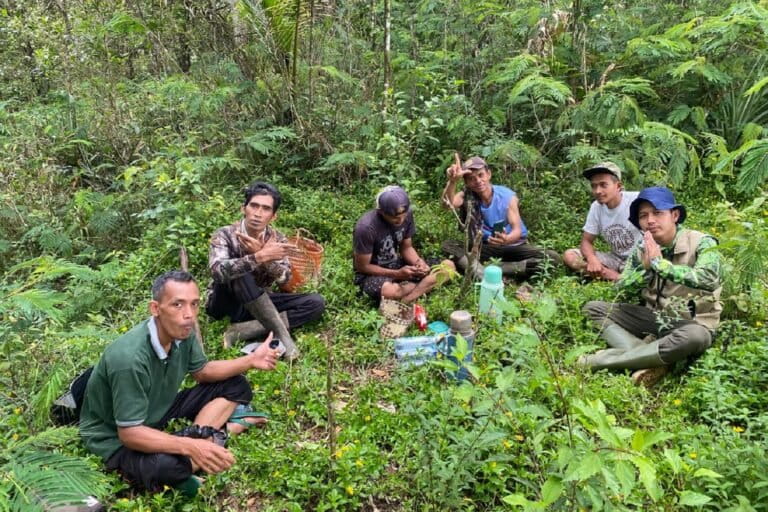
Despite the firm stance taken by Purwosari residents, the threat remains persistent. Shortly after the first incident, another poacher was caught—this time a minor from the neighboring Kapanewon Girimulyo. The involvement of a junior high school student underscores the economic desperation and the lack of awareness that still permeate parts of the region. For many, bird poaching is seen as an easy source of supplemental income, with rare or high-quality songbirds fetching significant prices on the black market or in urban bird markets (pasar burung) across Java.
The method used by the youth mirrored that of professional poachers: utilizing electronic "mastering" devices that play recorded bird songs to lure territorial or social birds into the glue traps. This technological shift in poaching has made the practice more efficient and devastating, as it targets specific high-value species with precision. The community’s response to the minor was educational rather than purely punitive, involving his parents and local authorities to ensure he understood the ecological consequences of his actions.
The Menoreh Hills serve as a critical ecological corridor. Together with Purworejo Regency to the west, this landscape is a documented habitat for various endangered and protected species, including the Grey-throated Babbler, the Crested Serpent Eagle (Spilornis cheela), the Green Iora, and the elusive Javan Partridge. Since 2020, residents of Purwosari have noted a disturbing decline in the frequency of birdsong, which once defined the morning atmosphere of the hills. This silence served as a wake-up call, prompting the community to transition from a culture of hunting to one of preservation.
The Economic Transition: From Hunting to Nest Adoption
The transformation of Purwosari into a conservation stronghold was not without internal conflict. Historically, many villagers relied on bird catching as a primary or secondary livelihood. When Tegar and other activists first proposed a ban on hunting, they met with significant resistance from those whose "kitchen fires" depended on the trade. To address this, the community, in collaboration with the Kanopi Indonesia Foundation, introduced the "Nest Adoption" program.
This innovative conservation model provides a financial incentive for villagers to protect nests rather than harvest them. Under the program, a "guardian" (often a former hunter) is paid to monitor and protect a specific nest until the fledglings are old enough to leave. This income is supplemented by the growth of ecotourism, as the presence of rare birds attracts photographers and birdwatchers from across Indonesia and abroad. This shift has successfully re-aligned the economic interests of the community with the health of the ecosystem.
"The community has come to realize that these birds are an asset," Tegar explained. "Unlike timber or crops, once these species are gone, they cannot be reproduced. They are part of a delicate ecological chain that supports our agriculture through pollination and pest control."
Legislative Fortification and Cross-Border Synergy
The local commitment to conservation was formalized in 2022 with the passage of Village Regulation (Peraturan Kalurahan) No. 9/2022 concerning Environmental Preservation. This regulation provides a legal basis for the village to intercept poachers and impose sanctions. However, the effectiveness of such laws is often limited by administrative boundaries. Birds do not recognize the lines between regencies or provinces, often flying from the protected zones of Purwosari (Yogyakarta) into the neighboring village of Pandanrejo in Purworejo (Central Java).
Pandanrejo has had its own conservation regulations since 2019, but according to Village Head Dwi Kristanto Sektyawan, implementation was initially slow. "We only began to truly enforce the rules in 2023," Sektyawan admitted. "As a former bird hunter myself, I understand the mindset, but the visible depletion of our bird populations was undeniable." Pandanrejo is now moving toward stricter enforcement, including social sanctions such as publicly displaying the photos of apprehended poachers at the village office to deter repeat offenders.
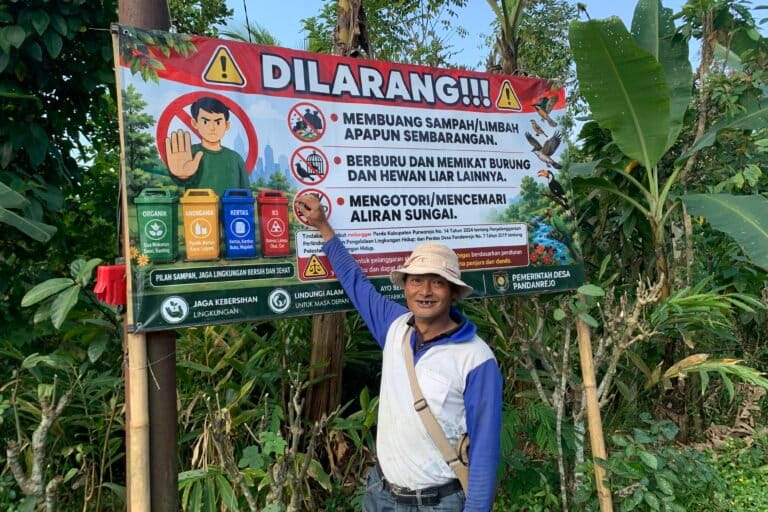
To address the issue of poachers exploiting the borders between villages, a cross-border patrol initiative has been established. This alliance includes Purwosari, Pandanrejo, and other neighboring villages like Donorejo and Jatimulyo. Jatimulyo, in particular, has been a pioneer in this field, having successfully implemented bird conservation programs since 2015. By coordinating patrols across these administrative lines, the communities have created a "no-escape" zone for poachers.
Parman, the coordinator of the Girimukti Group in Donorejo, emphasized that the success of one village is tied to the actions of its neighbors. "Jatimulyo’s success is at risk if Donorejo remains open to hunters. We share the same landscape and the same bird populations," he said. In 2022, this collaborative network successfully intercepted a poacher from as far away as Semarang, demonstrating that the word is spreading: the Menoreh Hills are no longer a "free-for-all" zone for the bird trade.
Ecological and Agricultural Implications
The Kanopi Indonesia Foundation, which supports these community efforts, emphasizes that the recovery of bird populations is essential for the long-term sustainability of the Menoreh Hills. Recent population mapping identified 98 bird species in Purwosari and 52 in Pandanrejo, including at least nine protected species and one species listed as critically endangered.
Nurina Indriyani, Director of the Kanopi Indonesia Foundation, pointed out the direct link between bird conservation and local agriculture. The Menoreh Hills are a center for intercropping (tumpangsari) plantations, producing coffee, cloves, tea, cocoa, and durian. "Every single one of these crops relies on the ecosystem services provided by birds," Indriyani stated. "Birds are the primary pollinators and the most effective natural controllers of insect pests. If the birds disappear, the cost of farming goes up, and the yields go down."
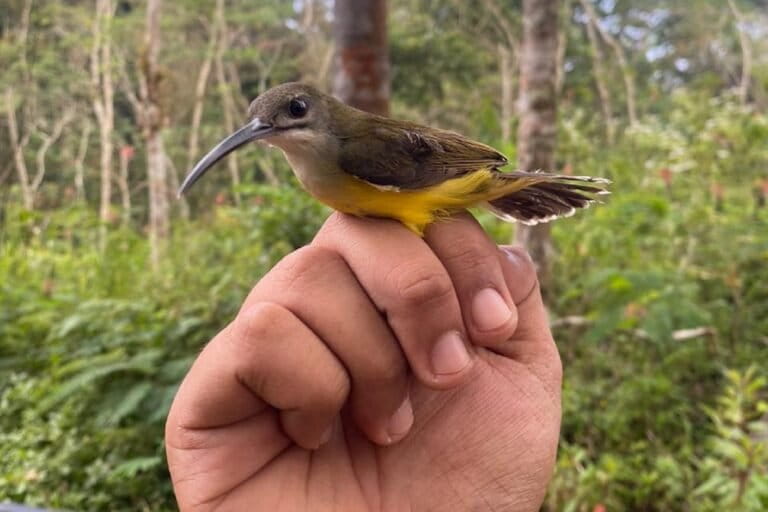
The foundation’s data suggests that the presence of insectivorous birds can reduce the need for chemical pesticides by up to 30% in some tropical plantation settings. Furthermore, the "birdwatching economy" offers a more stable and prestigious source of income compared to the volatile and illegal bird trade. By positioning the Menoreh Hills as a "paradise for Java’s endemic birds," the region is tapping into a global market for sustainable tourism.
A Model for Grassroots Environmentalism
The success of the Menoreh villages provides a blueprint for other regions in Indonesia facing similar biodiversity crises. The strategy combines four essential pillars: local legislation, economic alternatives, community-led surveillance, and regional cooperation. While national laws like Law No. 5 of 1990 regarding the Conservation of Living Natural Resources and Their Ecosystems provide a macro-level framework, the real battle for biodiversity is won at the village level.
However, challenges remain. The demand for songbirds in Indonesia’s major cities shows little sign of abating, and as long as there is a high-profit margin, poachers will continue to take risks. The community leaders in Purwosari and Pandanrejo are calling for more support from regional and national governments to harmonize village regulations with higher-level law enforcement. They also seek better infrastructure for ecotourism to ensure that the economic benefits of conservation are distributed fairly among all residents.
As the morning sun rises over the Menoreh Hills, the returning chorus of the Oriental White-eye and the Ruby-throated Bulbul serves as a testament to the resilience of both the ecosystem and the people who protect it. The "silent forest" syndrome that once threatened the region is being pushed back, replaced by a vibrant landscape where the value of a bird is measured not by its price in a cage, but by its song in the trees. The journey from poachers to protectors in Purwosari and its neighbors stands as a powerful example of how local wisdom, when empowered by modern organization, can turn the tide of environmental destruction.