Nasution Nanang
JAKARTA, REPUBLIKA.CO.ID – The arrest of West Lombok Regent Lalu Ahmad Zaini in a sting operation by the Corruption Eradication Commission (KPK) on Monday, July 20th, has prompted a stern reminder from Minister of Home Affairs Tito Karnavian regarding the critical importance of integrity among regional heads. Speaking from the Presidential Palace Complex in Jakarta on Monday evening, Minister Karnavian expressed profound concern and disappointment over the recurring incidents of corruption involving regional leaders, despite extensive preventative measures implemented by the central government. This incident underscores the persistent challenge of graft within Indonesia’s decentralized governance structure, highlighting the complex interplay between systemic vulnerabilities and individual ethical failures. The Minister’s remarks reflect a broader government commitment to combat corruption, yet also a palpable frustration with the continued defiance of anti-graft principles by some public officials.
Minister Karnavian elaborated on the comprehensive initiatives undertaken by the government to foster a culture of integrity and transparency among regional leaders. These efforts, he noted, have included mandatory retreats designed to instill ethical leadership, initial briefings for newly appointed officials, and the establishment of more transparent financial management systems across regional administrations. Furthermore, the President himself has convened gatherings of regional heads, such as the one held in Sentul, specifically to emphasize accountability and the perils of corruption. "I am concerned because we have provided retreats for our regional heads, given them initial briefings, created more transparent financial systems, and conducted various forms of guidance. They were even gathered by the President in Sentul, yet this still happens," Minister Karnavian stated, responding to journalists after attending a Plenary Cabinet Session at the State Palace. His statement underscored the inherent difficulty in eradicating corruption solely through systemic reforms, pointing instead to the indispensable role of individual moral compasses. The Minister stressed that ultimately, the issue boils down to the integrity of each individual leader. He voiced hope that the latest arrest would serve as a powerful lesson for other regional heads nationwide, compelling them to exercise self-reflection and adhere strictly to legal and ethical standards. "Secondly, it comes back to the integrity of each person. So, I hope that with these sting operations, including this one in Lombok [Barat], other regional heads will all be self-aware, introspective, and avoid committing violations, especially acts of corruption," Tito urged, signaling a zero-tolerance stance from the central government.
Anatomy of the West Lombok Regent’s Arrest
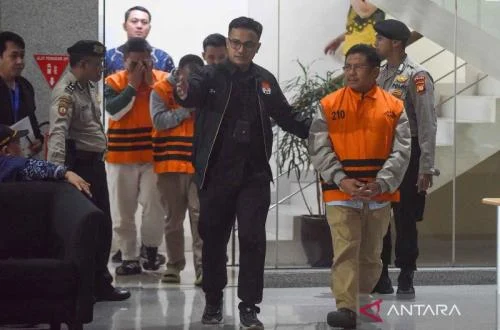
The operation that led to the apprehension of Lalu Ahmad Zaini and approximately a dozen other individuals unfolded on Monday morning. The Corruption Eradication Commission’s swift action marked a significant moment in its ongoing campaign against corruption, as it was reportedly the 17th sting operation (Operasi Tangkap Tangan – OTT) conducted by the anti-graft body throughout the year 2026. This high frequency of operations highlights the KPK’s continued vigilance and proactive approach in detecting and prosecuting corrupt practices. Following their initial capture, Regent Zaini was temporarily detained at his official residence in West Lombok before being transported to Jakarta for further questioning and legal processing. The transfer to the capital is standard procedure for high-profile suspects in KPK cases, ensuring impartiality and security during the investigative phase.
During the extensive operation, KPK investigators successfully seized substantial evidence, which included hundreds of millions of rupiah in cash and various documents believed to be directly related to the alleged criminal acts. The nature and volume of the seized items provide crucial leads for the ongoing investigation, forming the basis for potential charges. Speaking to reporters at the KPK’s Red and White Building in Jakarta, KPK spokesperson Budi Prasetyo confirmed that the West Lombok Regent is suspected of receiving a significant amount of money in connection with the implementation of several projects within the West Lombok Regency Government in West Nusa Tenggara. This allegation points to a common modus operandi in regional corruption, where public officials exploit their authority over procurement and project approvals for personal financial gain. The specific projects involved and the exact mechanisms of the alleged illicit payments will be the subject of intensive investigation by the KPK.
Upon their arrival at the KPK’s headquarters in Jakarta on Monday evening, the West Lombok Regent and the other individuals arrested were immediately subjected to preliminary interrogations. As per the provisions of the Criminal Procedure Code (KUHAP) in Indonesia, the KPK is afforded a maximum period of 1×24 hours from the time of capture to officially determine the legal status of those apprehended in a sting operation. This critical timeframe dictates whether the individuals will be formally designated as suspects, followed by a decision on their detention, or released if insufficient evidence is found. The legal and public implications of such a determination are profound, marking the official commencement of a potentially lengthy legal battle that could significantly impact the political landscape of West Lombok and send a powerful message across the nation regarding the rule of law.
KPK’s Unwavering Campaign Against Corruption
The Corruption Eradication Commission (KPK) stands as a cornerstone of Indonesia’s anti-corruption efforts. Established in 2003, the independent body is vested with extraordinary powers to investigate, prosecute, and prevent corruption. Its mandate extends to various forms of graft, including bribery, embezzlement, extortion, and illicit enrichment, particularly those involving state officials and significant financial losses to the state. The mention of this being the 17th OTT in 2026 is indicative of the relentless pace of the KPK’s operations. Such a high number of sting operations within a single year underscores the agency’s proactive strategy, often relying on intelligence gathering and public tips to catch perpetrators red-handed. These operations are particularly effective in gathering irrefutable evidence, as they involve direct observation and seizure of illicit transactions, making it challenging for suspects to deny their involvement.
The consistent execution of OTTs by the KPK has served as both a deterrent and a mechanism for accountability. While some critics occasionally question the long-term effectiveness of these operations in fundamentally altering the corruption landscape, their immediate impact on public officials is undeniable. Each successful OTT sends a chilling message to potential wrongdoers, reminding them that the long arm of the law can strike at any moment. Furthermore, these high-profile arrests contribute to maintaining public trust in the KPK as an active and effective institution dedicated to upholding integrity. The commission often emphasizes its "no one is above the law" principle, reinforcing the idea that positions of power offer no immunity from prosecution for corrupt acts. This commitment is crucial for a democratic society grappling with the corrosive effects of corruption on its institutions and economic development.
The Pervasive Challenge of Graft in Regional Governance
The arrest of a regional head like the West Lombok Regent is not an isolated incident but rather a symptom of a broader, systemic vulnerability within Indonesia’s regional governance. Following the decentralization era that began in the late 1990s and early 2000s, regional governments gained significant autonomy over their budgets, development projects, and local resources. While intended to bring governance closer to the people, this autonomy also created new opportunities for corruption. Regional heads, including governors, regents, and mayors, wield considerable power over procurement processes, licensing, and the allocation of development funds. This control, coupled with often weak oversight mechanisms and the high costs associated with local political campaigns, can create strong incentives for illicit financial gain.
The vulnerability of regional officials to corruption is multifaceted. Firstly, the immense financial resources managed by regional governments, often running into trillions of rupiah, present a tempting target. Decisions related to infrastructure projects, land use permits, and business licenses can be monetized through kickbacks, bribes, or inflated costs. Secondly, the political economy of regional elections plays a significant role. Campaigns for regional leadership positions can be extremely expensive, often leading victorious candidates to seek to recoup their "investment" through corrupt means once in office. Thirdly, local political dynamics, including patronage networks and the influence of powerful local elites, can create an environment where corrupt practices become entrenched and difficult to challenge. The ongoing series of arrests, including the 17th OTT in 2026, suggests that despite various reforms and warnings, the underlying conditions that foster corruption in regional administrations remain potent.
Legal Process and Immediate Aftermath
The legal journey for those apprehended in a KPK sting operation begins immediately after the 1×24 hour period for status determination. If sufficient preliminary evidence is found, the individuals are formally declared suspects, and the KPK typically issues an order for their detention. This detention period, often for an initial 20 days, renewable for up to 120 days during the investigation phase, allows the KPK to conduct thorough interrogations, gather additional evidence, and build a robust case. The evidence seized during the OTT, such as cash and documents, forms the core of the prosecution’s case. Forensic analysis of financial records, digital communications, and witness testimonies are meticulously compiled to establish the extent and nature of the alleged corruption.
Once the investigation is complete, the case is handed over to the KPK’s prosecution division. If the prosecutors determine that there is sufficient evidence to secure a conviction, the case is then submitted to the Corruption Court (Tipikor Court), which specializes in handling corruption cases. The judicial process involves public trials, where the prosecution presents its case and the defense has the opportunity to challenge the evidence and arguments. Sentences for corruption in Indonesia can range from imprisonment and heavy fines to the forfeiture of assets acquired through illicit means. The legal framework surrounding corruption eradication, particularly the powers granted to the KPK, is designed to be robust and efficient, aiming to ensure that those who betray public trust face justice. The outcomes of these trials not only hold individuals accountable but also contribute to setting legal precedents and strengthening the overall anti-corruption legal regime in the country.
Broader Implications for Public Trust and Administration
The arrest of a regional head, particularly through a high-profile KPK sting operation, carries significant implications beyond the immediate legal consequences for the individuals involved. Firstly, it deeply affects public trust in governance. When leaders, who are elected to serve and protect the public interest, are caught engaging in corruption, it erodes citizens’ faith in democratic institutions and the integrity of the state. This erosion of trust can lead to cynicism, apathy, and a reluctance to participate in civic processes, ultimately weakening the foundations of democratic governance.
Secondly, such arrests inevitably cause administrative disruption within the affected regional government. The removal of a sitting regent necessitates the appointment of an acting official, which can slow down decision-making, disrupt ongoing projects, and create uncertainty among civil servants. This administrative instability can impede local development, delay public services, and undermine the efficiency of government operations. Politically, these incidents can trigger a scramble for power, potentially leading to instability or shifts in local political alliances. For the political party or parties that endorsed the arrested official, there is often a reputational cost, requiring them to publicly disavow the actions and emphasize their commitment to clean governance. Ultimately, each high-profile corruption case serves as a stark reminder of the continuous battle against graft and the imperative for both systemic reforms and individual accountability to safeguard the integrity of public service.
Reactions from Stakeholders
The arrest of Regent Lalu Ahmad Zaini has elicited varied reactions from key stakeholders, reflecting the complex dynamics of anti-corruption efforts in Indonesia. The Corruption Eradication Commission (KPK) itself, through its spokesperson Budi Prasetyo, typically reiterates its unwavering commitment to upholding the rule of law and eradicating corruption without fear or favor. Their actions speak louder than words, with each OTT reinforcing their mandate and sending a clear message that no official, regardless of rank, is immune from scrutiny. The KPK’s stance is consistently one of professionalism and adherence to legal procedures, emphasizing that investigations will be thorough and transparent.
Within the West Lombok Regency administration, the immediate reaction would likely involve a statement of cooperation with the legal process and a commitment to ensuring the continuity of public services. The local government would be tasked with managing the administrative fallout, including the appointment of an interim leader to avoid a vacuum in governance. There would also be an internal focus on reassuring civil servants and the public that essential government functions will proceed unimpeded. Civil society organizations and anti-corruption watchdogs would almost certainly welcome the KPK’s action, viewing it as a necessary step in the ongoing fight against graft. They often use such incidents to call for greater transparency, stronger oversight mechanisms, and more robust ethical frameworks within public service. These groups play a crucial role in maintaining pressure on both government institutions and elected officials to uphold integrity and accountability, amplifying the public’s demand for clean governance and advocating for further reforms to prevent future occurrences of corruption.