Azin Asro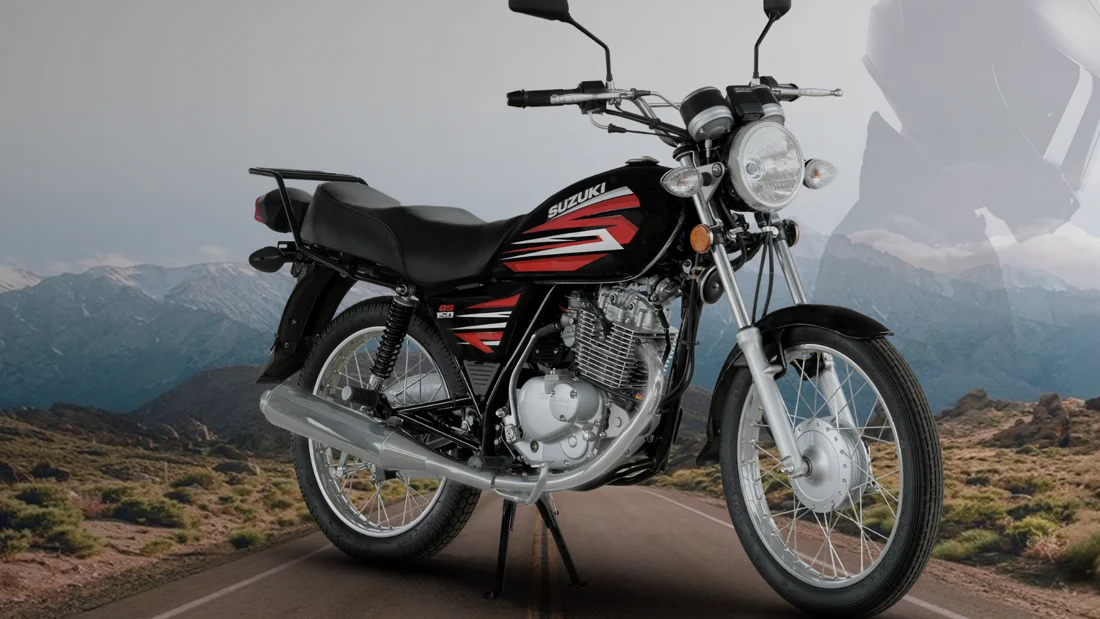
The global automotive landscape is often characterized by a relentless pursuit of high-tech features, digital connectivity, and aggressive styling. However, a significant segment of the market continues to prioritize reliability, ease of maintenance, and utilitarian functionality. Suzuki, a veteran in the motorcycle industry, has recently reaffirmed its commitment to this "workhorse" philosophy with the continued success of the Suzuki GS150. Positioned as the spiritual and technical successor to the iconic Suzuki Thunder 125, the GS150 has become a cornerstone of the commuter market in South Asia, particularly in Pakistan, where it is currently marketed for approximately PKR 399,900, which translates to roughly IDR 25.7 million. This development serves as a nostalgic reminder and a modern update for enthusiasts who remember the Suzuki Thunder 125 as a dominant force on Indonesian roads for over a decade.
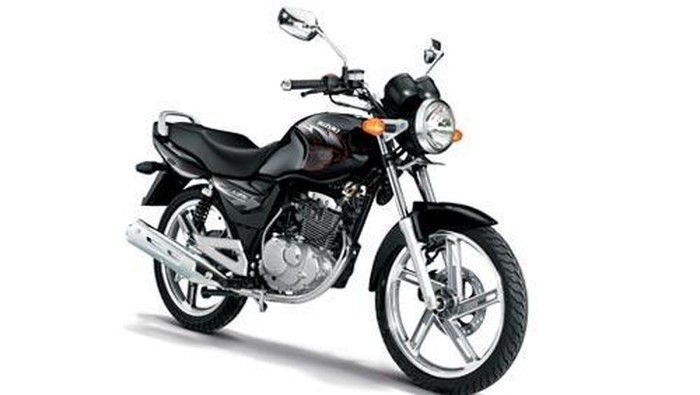
The Suzuki Thunder 125 holds a unique place in Indonesian automotive history. Launched in the early 2000s, it quickly became a favorite for those seeking an affordable sport-touring aesthetic combined with unmatched practicality. While it was officially discontinued in Indonesia in 2015, its legacy lived on, primarily due to its massive 14-liter fuel tank. This feature made it the vehicle of choice for small-scale gasoline entrepreneurs, known locally as "retailers," who used the bike’s high-capacity tank to transport fuel from gas stations to remote areas. The transition to the GS150 represents an evolution of this concept, moving from a 125cc platform to a more robust 150cc engine while retaining the classic "UJM" (Universal Japanese Motorcycle) silhouette that defined an era.

Technical Evolution: The Heart of the GS150
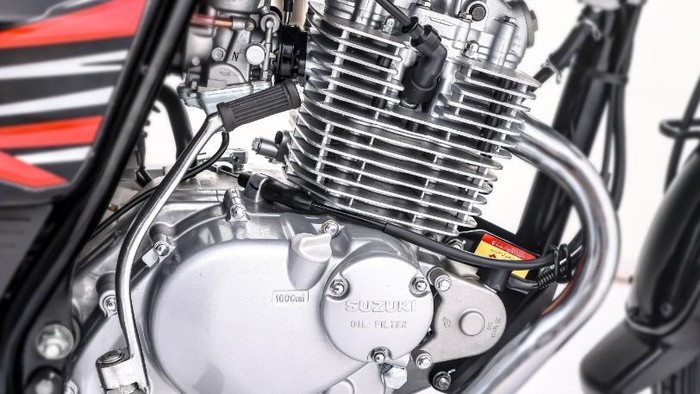
At the core of the Suzuki GS150 is a 150cc, four-stroke, single-cylinder engine that emphasizes torque and durability over high-end racing performance. The engine utilizes an Overhead Camshaft (OHC) configuration and is air-cooled, a design choice that significantly reduces the complexity of the cooling system and minimizes potential points of failure in harsh environments. Technical specifications reveal a cylinder bore of 57 mm and a piston stroke of 56.8 mm, resulting in a nearly "square" engine geometry that balances low-end grunt with smooth power delivery.
The compression ratio is set at a modest 9.2:1. This specific engineering choice is crucial for the markets the GS150 serves, as it allows the motorcycle to operate efficiently on lower-octane fuels without the risk of engine knocking or long-term damage. This flexibility is a vital asset in regions where fuel quality can vary. Unlike modern sportbikes that rely on complex Electronic Fuel Injection (EFI) systems, the GS150 maintains a more traditional fuel delivery system, ensuring that repairs can be conducted by local mechanics with standard tools, rather than requiring specialized diagnostic computers.
Design and Ergonomics: A Return to Classics
Visually, the Suzuki GS150 is a masterclass in retro-functional design. It eschews the sharp, angular fairings and LED-heavy aesthetics of contemporary "naked" bikes in favor of a timeless look. The front of the motorcycle is dominated by a classic round halogen headlight, flanked by orange-tinted turn signals that evoke a sense of 1990s nostalgia. The instrument cluster remains entirely analog, featuring a traditional speedometer and tachometer with physical needles. While critics might argue that this is "outdated" compared to the full-color TFT displays found on premium models, proponents point out that analog gauges offer superior readability in direct sunlight and are far more resistant to electrical failures.
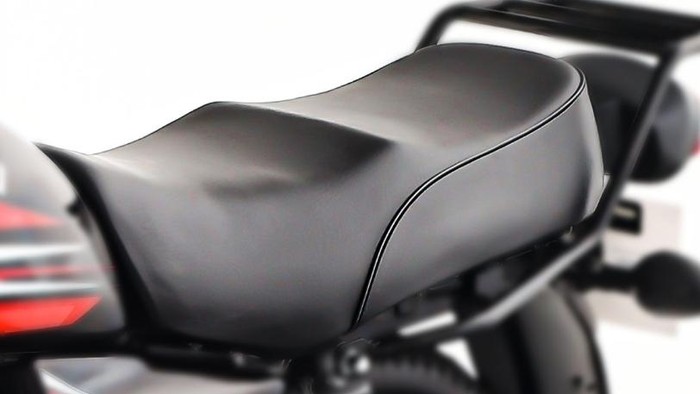
Ergonomically, the GS150 is designed for long hours in the saddle. It features a wide, flat seat that comfortably accommodates both a rider and a passenger, a rarity in an era where "split-seat" designs often sacrifice pillion comfort for style. The riding position is upright, thanks to the high-set handlebars and mid-set footpegs, reducing strain on the rider’s back and wrists. This makes the GS150 not just a commuter, but a viable option for long-distance travel on varying road surfaces.
Chassis and Hardware: Built for Resilience
The structural integrity of the Suzuki GS150 is supported by a robust steel frame designed to handle significant payloads. The suspension system is straightforward yet effective: traditional telescopic forks at the front and a swingarm paired with dual shock absorbers at the rear. The dual-rear-suspension setup is particularly beneficial for users who frequently carry heavy loads or passengers, providing better stability and weight distribution than a mono-shock configuration might offer in a utilitarian context.
One of the more surprising aspects of the GS150’s hardware is its braking system. In an age where even entry-level scooters are adopting disc brakes and Anti-lock Braking Systems (ABS), the GS150 retains drum brakes for both the front and rear wheels. From a manufacturing and maintenance perspective, drum brakes are cost-effective and highly resistant to environmental contaminants like mud and dust, which are prevalent in the rural areas where this bike often operates. However, this choice also highlights the bike’s positioning as a budget-friendly workhorse rather than a performance-oriented machine.
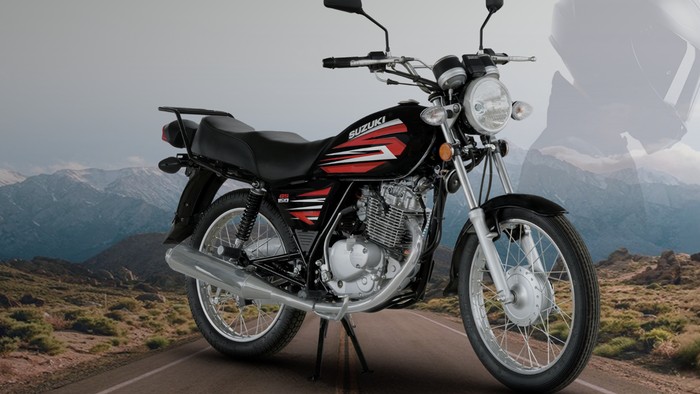
The motorcycle rolls on 18-inch wheels, with a 2.75-18 tire in the front and a 3.00-18 tire in the rear. The larger wheel diameter—compared to the 17-inch standard on most modern sportbikes—allows the GS150 to navigate potholes and uneven terrain with greater ease, further cementing its reputation as a "go-anywhere" commuter.
The Legacy of the "Fuel Tanker" and Market Impact
In the Indonesian context, the Suzuki Thunder 125’s 14-liter tank was its most famous attribute. The GS150 features a slightly smaller 12-liter fuel tank, which remains significantly larger than many modern competitors in the 150cc class. With a dry weight of only 116 kg, the GS150 boasts an impressive power-to-weight ratio for its class, ensuring that it remains nimble in heavy traffic despite its sturdy build.
Industry analysts suggest that the continued production and sale of the GS150 in markets like Pakistan provide a blueprint for how legacy brands can maintain market share in developing economies. While the Indonesian market has shifted toward high-tech maxi-scooters and performance-oriented underbones, there remains a niche for simple, indestructible machinery. The GS150 fills the void left by the Thunder 125, offering a reliable alternative for couriers, rural commuters, and those who prioritize low total cost of ownership over modern bells and whistles.
Comparative Analysis: Simplicity vs. Modernity
When compared to modern rivals like the Yamaha MT-15 or the Honda CB150R, the Suzuki GS150 appears to belong to a different era. The rivals offer liquid cooling, 6-speed transmissions, fuel injection, and LED lighting. However, these features come at a price—both in terms of initial purchase cost and long-term maintenance. A liquid-cooled engine requires radiator maintenance and coolant changes; a fuel-injected system requires high-pressure fuel pumps and sensors that can be expensive to replace.
The GS150, by contrast, offers a "back-to-basics" approach. Its air-cooled engine is simpler to manufacture and maintain. The OHC 150cc mill is known for its longevity, often reaching high mileages with nothing more than regular oil changes and valve adjustments. For a consumer in a developing economy, the ability to fix a motorcycle on the side of the road with basic hand tools is often more valuable than the ability to connect a smartphone to the dashboard via Bluetooth.
Implications for the Future of Suzuki’s Commuter Lineup
The existence of the GS150 raises questions about the future of Suzuki’s global product strategy. While the company has made strides in the premium segment with the Katana and the V-Strom series, the GS150 proves that there is still a massive global demand for "analog" motorcycles. As environmental regulations tighten globally, Suzuki may eventually be forced to update the GS150 with fuel injection to meet emissions standards, but the core philosophy of the bike—durability and simplicity—is likely to remain unchanged.
For Indonesian enthusiasts, the GS150 serves as a "what if" scenario. If Suzuki Indomobil Sales (SIS) were to reintroduce a modernized version of the Thunder based on the GS150 platform, it would likely find a dedicated following among hobbyists who enjoy the "japstyle" or "bratstyle" custom motorcycle scenes. The GS150’s frame and classic lines make it an ideal canvas for customization, a trend that continues to grow in Southeast Asia.
Conclusion
The Suzuki GS150 is more than just a motorcycle; it is a testament to the enduring value of functional engineering. By taking the mantle from the Suzuki Thunder 125, it continues a tradition of providing reliable transportation to millions. Its 150cc engine, simple air-cooled design, and rugged chassis make it an indispensable tool for daily life in challenging environments. While it may lack the digital flair of its contemporaries, its 12-liter fuel capacity and 116 kg frame ensure it remains a heavyweight in the world of practical commuting. As the automotive world moves toward an electric and digitized future, the GS150 stands as a reminder that sometimes, the best way forward is to refine the proven successes of the past. At a price point of approximately Rp 25.7 million, it offers a compelling proposition: a brand-new motorcycle with the soul of a legend and the toughness to handle the road ahead.