Bambang Pamungkas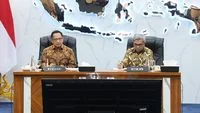
The Ministry of Home Affairs (Kemendagri) is significantly escalating its efforts to combat corruption within regional administrations across Indonesia, reaffirming its commitment to fostering good governance and integrity in line with the nation’s legal framework. This intensified push comes amidst persistent challenges and a series of high-profile corruption cases involving local leaders, prompting a comprehensive strategy that combines preventive measures, inter-agency collaboration, and direct engagement with regional stakeholders. Minister of Home Affairs Muhammad Tito Karnavian, in a statement released on Friday, July 24, 2026, detailed the Ministry’s strengthened commitment, outlining ongoing initiatives and ambitious plans for future interventions aimed at bolstering transparency and accountability at the local level.
The Imperative for Robust Regional Governance
Indonesia’s decentralized governance structure, established post-Reformation, grants substantial autonomy to regional governments (Pemerintah Daerah or Pemda) in managing local affairs, delivering public services, and fostering economic development. This decentralization, while empowering local communities and accelerating development in many areas, has also, regrettably, presented avenues for corruption. The significant control over local budgets, public procurement, and licensing processes often makes regional heads, civil servants, and legislative bodies vulnerable to illicit practices. The Undang-Undang (UU) Nomor 23 Tahun 2014 concerning Regional Government explicitly mandates Kemendagri with the crucial role of guiding and supervising Pemda, ensuring their adherence to national policies, legal norms, and ethical standards. This legal framework forms the bedrock of Kemendagri’s current anti-corruption mandate, positioning the ministry as a primary guardian against malfeasance in local administrations. The persistent public concern over integrity breaches at the local level underscores the urgency of Kemendagri’s commitment, recognizing that widespread corruption erodes public trust, distorts resource allocation, and ultimately hampers equitable development across the archipelago.
A Multi-pronged Approach to Prevention
Kemendagri’s anti-corruption strategy is multifaceted, integrating existing mechanisms with new, targeted initiatives. Since their initial appointments, newly elected regional heads and deputy regional heads undergo mandatory retreats, serving as foundational forums for inculcating principles of corruption prevention, integrity, and national insight. These early interventions are designed to set a clear ethical tone from the outset of their tenures.
A cornerstone of the existing prevention architecture is the Monitoring Center for Prevention (MCP), a collaborative platform developed in synergy with the Corruption Eradication Commission (KPK) and the Financial and Development Supervisory Agency (BPKP). The MCP serves as a crucial data-driven tool, systematically monitoring and evaluating the performance of regional governments across various indicators related to governance and anti-corruption efforts. These indicators typically cover key areas such as public service delivery, budgeting processes, goods and services procurement, asset management, and bureaucratic reform. By providing real-time data and analytical insights, the MCP enables Kemendagri, KPK, and BPKP to identify vulnerabilities, track progress, and recommend targeted improvements, thereby shifting the focus from reactive enforcement to proactive prevention.
Furthermore, Kemendagri has been actively optimizing the Sistem Informasi Pemerintahan Daerah (SIPD), or Regional Government Information System. SIPD is designed to integrate and streamline various administrative processes, including budgeting, financial management, and public service delivery. By digitizing and standardizing these operations, SIPD aims to enhance transparency, reduce discretionary loopholes, and minimize opportunities for corrupt practices that often thrive in opaque manual systems. The system provides a unified platform for monitoring regional government activities, making it more challenging for illicit transactions to go unnoticed and facilitating easier audits and oversight.
Complementing these technological and procedural safeguards is the strong emphasis on the ASN BerAKHLAK values among civil servants (Aparatur Sipil Negara). BerAKHLAK is an acronym representing key ethical principles: Berorientasi Pelayanan (Service-Oriented), Akuntabel (Accountable), Kompeten (Competent), Harmonis (Harmonious), Loyal (Loyal), Adaptif (Adaptive), and Kolaboratif (Collaborative). This national framework for civil service ethics is actively promoted to instill a culture of integrity, professionalism, and public service at all levels of government, including regional administrations. Regular monitoring of regional heads is also conducted to ensure their adherence to these ethical standards and to identify any potential red flags that could indicate a propensity towards corruption.
Addressing the ‘Integrity Crisis’: A Call for Personal Accountability
Despite these ongoing efforts, Minister Tito Karnavian candidly expressed his profound concern over the persistent issue of corruption cases involving regional heads. The KPK’s track record reveals a distressing pattern, with dozens of regional leaders, including governors, regents, and mayors, having faced prosecution for various corruption offenses, ranging from bribery in procurement projects to illicit enrichment and abuse of power. These cases, often widely publicized, not only tarnish the image of local government but also undermine public confidence in democratic institutions and the rule of law.
"We are deeply concerned by the cases of corruption that have befallen a number of regional heads," Minister Tito stated. He emphasized that these incidents serve as stark warnings, necessitating a renewed and vigorous commitment to strengthening prevention mechanisms. He underscored that while institutional frameworks and technological solutions are vital, the ultimate bulwark against corruption lies in the individual integrity of each regional head and deputy regional head. Learning from the experiences of those who have faced legal action, he stressed, is paramount for others to fortify their own ethical resolve.
A New Frontier: Joint Kemendagri-KPK Outreach Program
In a significant escalation of the anti-corruption drive, Kemendagri, in close collaboration with the KPK, is launching a series of direct, targeted interventions in various regions. This initiative involves joint teams from both agencies visiting key areas to engage directly with local leadership and stakeholders. The primary objective is to gain a ground-level understanding of corruption risks specific to each region and to facilitate the development of tailored action plans for governance improvement.
The groundwork for this intensified outreach has already been laid. Recently, a joint team led by Deputy Minister of Home Affairs Ribka Haluk and Chairman of the KPK Setyo Budiyanto conducted a preliminary visit to Papua. This initial engagement served as a vital pilot program, allowing the agencies to refine their approach and identify best practices for subsequent visits. The choice of Papua highlights the commitment to reach even the most remote and challenging regions, where unique geographical and socio-economic factors can sometimes exacerbate corruption vulnerabilities.
Looking ahead, Minister Tito Karnavian announced an ambitious plan to visit 10 strategic "cluster" regions across the archipelago. These clusters are designed to cover a broad geographical and administrative spectrum, ensuring comprehensive coverage and impact. The delegation for these visits will be comprehensive, including not only regional heads and deputy regional heads but also leaders of the Regional House of Representatives (DPRD), Regional Secretaries (Sekda), and crucially, heads of key regional departments. These departments include Public Works (often associated with large infrastructure projects and procurement), Education, Health, Finance, Assets, Goods and Services Procurement, Government Management, Human Resources Management (ASN), and Public Services. The selection of these specific officials and departments underscores a strategic focus on areas historically prone to corruption and critical for effective public administration.
The 10 clusters identified for these intensive engagements are:
- Western Nusantara Cluster: Aceh and North Sumatra.
- Central Sumatra Cluster: West Sumatra, Riau, and Riau Islands.
- Southern Sumatra Cluster: Jambi, South Sumatra, Bengkulu, Lampung, and Bangka Belitung Islands.
- Western Java Cluster: DKI Jakarta, West Java, and Banten.
- Central Java Cluster: Central Java and the Special Region of Yogyakarta (DIY).
- Eastern Java & Bali Cluster: East Java and Bali.
- Nusa Tenggara Cluster: West Nusa Tenggara and East Nusa Tenggara.
- Kalimantan Cluster: West Kalimantan, Central Kalimantan, South Kalimantan, East Kalimantan, and North Kalimantan.
- Sulawesi Cluster: North Sulawesi, Gorontalo, Central Sulawesi, West Sulawesi, South Sulawesi, and Southeast Sulawesi.
- Maluku Cluster: Maluku and North Maluku.
This systematic clustering approach is intended to facilitate more efficient resource allocation, enable the sharing of best practices among geographically proximate regions, and allow for a more nuanced understanding of regional-specific corruption challenges.
Expected Outcomes and Broader Implications
The overarching goal of these joint visits is to empower regional governments to proactively identify and map corruption risks within their respective territories. Following this risk assessment, regions will be guided to formulate concrete action plans for improving governance, complete with measurable targets and clear timelines for completion. This emphasis on actionable plans and accountability is critical for translating awareness into tangible improvements.
The implications of this intensified anti-corruption drive are far-reaching. For regional governance, it promises enhanced transparency, greater accountability, and ultimately, more efficient and effective public service delivery. By reducing the leakage of public funds due to corruption, resources can be redirected towards essential development programs, improving infrastructure, education, healthcare, and other vital sectors that directly benefit citizens. This, in turn, can contribute to a healthier investment climate, as businesses are more likely to invest in regions perceived as having strong governance and minimal corruption risks.
Moreover, these efforts are crucial for rebuilding and strengthening public trust in government institutions at the local level. When citizens perceive their leaders and civil servants as operating with integrity, their engagement in local development initiatives increases, fostering a more participatory and democratic environment.
However, the success of this ambitious program hinges on several factors. Sustaining the momentum beyond the initial visits, ensuring the genuine commitment of local leaders to implement action plans, and overcoming potential resistance from vested interests will be critical challenges. Continuous monitoring, capacity building for local officials, and consistent enforcement by law enforcement agencies will be essential to ensure long-term impact.
Minister Tito Karnavian reiterated his fervent hope that regional heads will internalize the lessons from past corruption cases, viewing them not as isolated incidents but as crucial warnings to reinforce their personal integrity. He emphasized that while various instruments for prevention continue to be strengthened, the most fundamental element remains the integrity inherent in each individual regional head and deputy regional head. This profound commitment to personal ethics, he argued, is the ultimate safeguard against the corrosive effects of corruption.
The event where these details were announced saw the participation of key figures, including Secretary-General of Kemendagri Tomsi Tohir, Director General of Regional Autonomy (Otda) Kemendagri Cheka Virgowansyah, alongside several high-ranking officials from the KPK and other relevant stakeholders. Their collective presence underscored the collaborative spirit and institutional weight behind this critical national endeavor. The journey towards a cleaner, more accountable regional administration in Indonesia is ongoing, and Kemendagri’s invigorated approach marks a significant step forward in this vital national mission.