Tata Titiana
The trajectory of Indonesia’s tourism industry is inextricably linked to the legacy of the Dutch colonial era, a period that transformed the archipelago from a string of isolated trading posts into a burgeoning destination for international travelers. Following the inauguration of the Suez Canal in 1869, maritime travel between Europe and the East experienced an unprecedented boom. Steamships carrying merchants, administrators, and eventually leisure seekers began navigating toward the Nusantara region in increasing numbers. By the late 19th century, luxury cruise liners were regularly docking at major ports, unloading waves of European tourists eager to explore the exotic landscapes of Java and beyond. To accommodate these discerning visitors, the colonial administration, alongside private investors, commissioned a series of grand hotels across the islands.
Remarkably, several of these architectural and historical landmarks have survived the tumult of decolonization, the Japanese occupation, the Indonesian National Revolution, and the rapid modernization of the late 20th century. Today, these properties operate not merely as places of lodging, but as living museums that offer guests a tactile connection to the past. Below is an exhaustive journalistic examination of five historic Indonesian hotels that bridge the gap between colonial heritage and contemporary hospitality.
1. Hotel Indonesia Kempinski Jakarta: The Crown Jewel of Post-Colonial Diplomacy
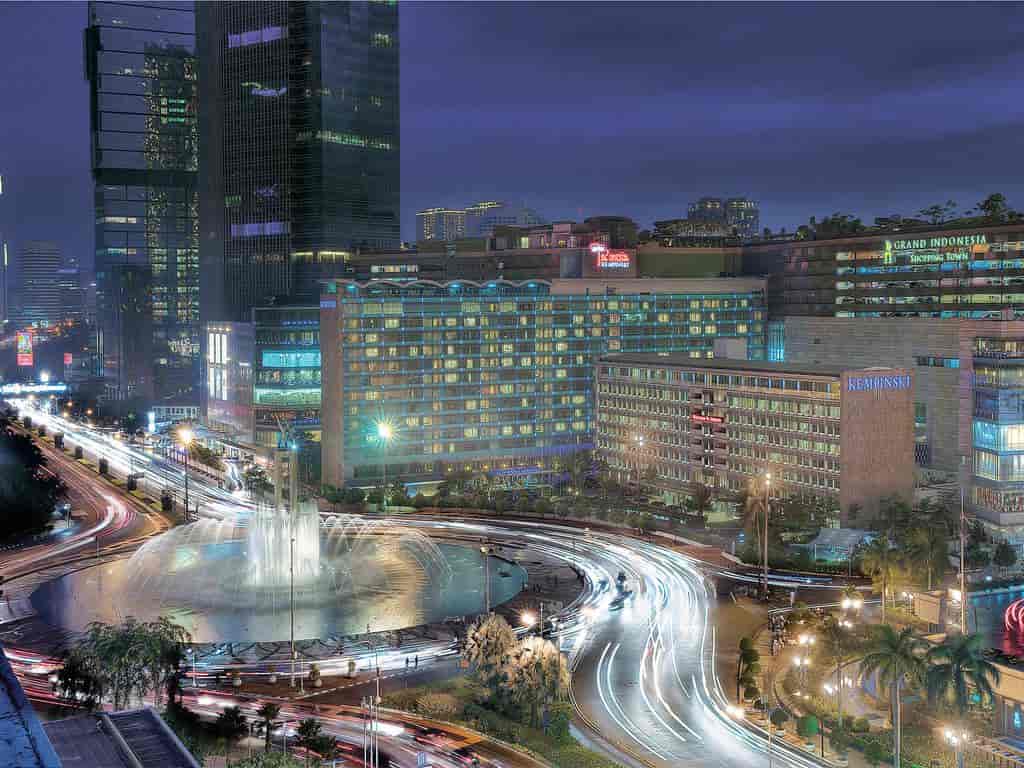
Rising prominently in the heart of the capital, the Hotel Indonesia Kempinski holds the distinction of being Indonesia’s first five-star luxury hotel and the tallest building in Jakarta at the time of its completion. Unlike many of its counterparts that originated during the height of Dutch rule, the genesis of this iconic property is tied to the turbulent mid-20th-century nation-building efforts of President Sukarno.
The construction of the hotel was financed through war reparations exacted from Japan following World War II. Sukarno envisioned a world-class establishment that could host international dignitaries and athletes participating in the 1962 Asian Games IV, signaling to the global community that the newly independent republic was modern, capable, and sovereign. Designed by American architect Abel Sorenson, the hotel fused modernist architectural principles with distinct Indonesian artistic touches.
Over the decades, the property has hosted countless heads of state, diplomats, and global icons. Its historical significance was underscored in March 2020, when King Willem-Alexander and Queen Máxima of the Netherlands chose the hotel as their primary residence during their historic state visit to Indonesia. To accommodate the royal couple, security protocols were raised to the highest standards, including the installation of bulletproof glass in their executive suite. Managed today by the prestigious European hospitality group Kempinski, the hotel commands room rates starting around Rp 2.98 million per night, continuing its legacy as a bastion of elite hospitality.
2. Hotel Majapahit Surabaya: Crucible of the National Revolution
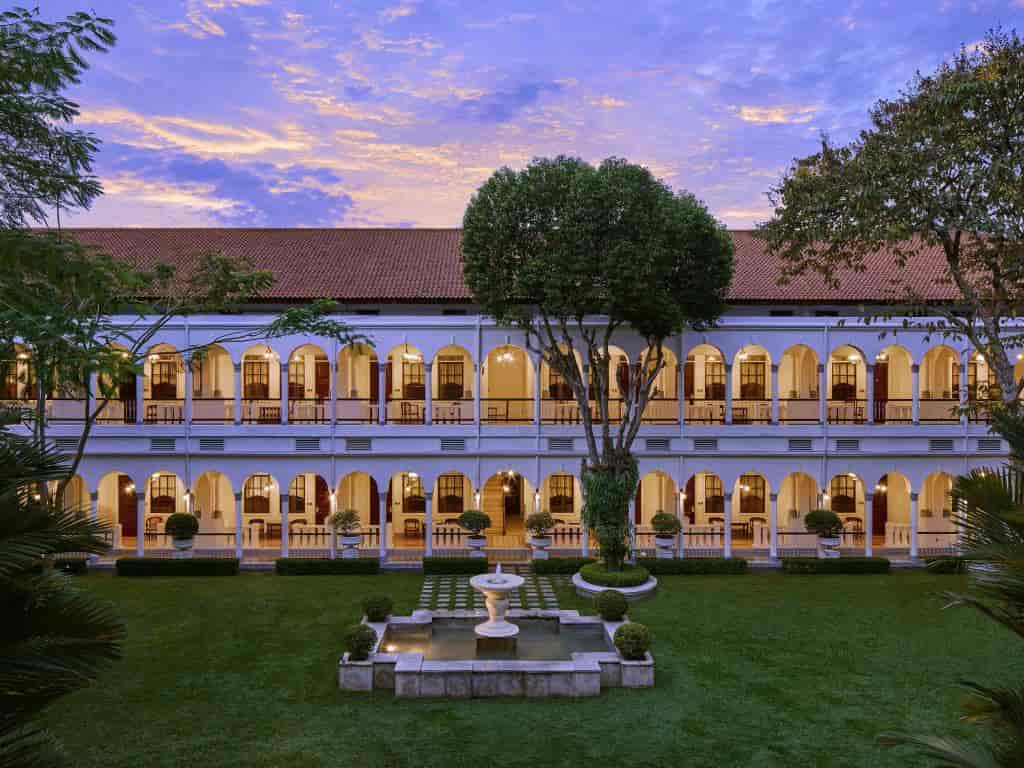
Situated in East Java, the Hotel Majapahit stands as a profound monument to Indonesia’s struggle for independence. Originally established in 1910 by the Sarkies Brothers—a prominent family of Armenian hoteliers renowned across Southeast Asia for developing luxury properties—the hotel initially operated under the name Hotel Oranje during the Dutch East Indies era. Following the Japanese invasion in 1942, the property was commandeered and rebranded as Hotel Yamato.
The hotel is indelibly etched into Indonesian history books as the focal point of the "Hotel Yamato Incident" on September 19, 1945. In the wake of Indonesia’s proclamation of independence a month prior, tensions reached a boiling point when a group of Dutch nationalists, led by W.V.Ch. Ploegman, hoisted the Dutch flag (red, white, and blue) atop the hotel’s roof. Enraged by this perceived defiance of the newly proclaimed republic, Indonesian youths stormed the building. During the ensuing confrontation, revolutionaries famously tore the blue strip off the tricolor flag, transforming it into the red-and-white banner of Indonesia.
This historic act of defiance directly preceded the historic Battle of Surabaya on November 10, 1945. Today, operated by the MGallery hotel collection, the property preserves its colonial-era neoclassical architecture, sprawling courtyards, and poignant historical markers. Travelers can experience this rich tapestry of history with room rates starting at approximately Rp 985,125 per night, offering a direct encounter with the events that forged the modern Indonesian state.
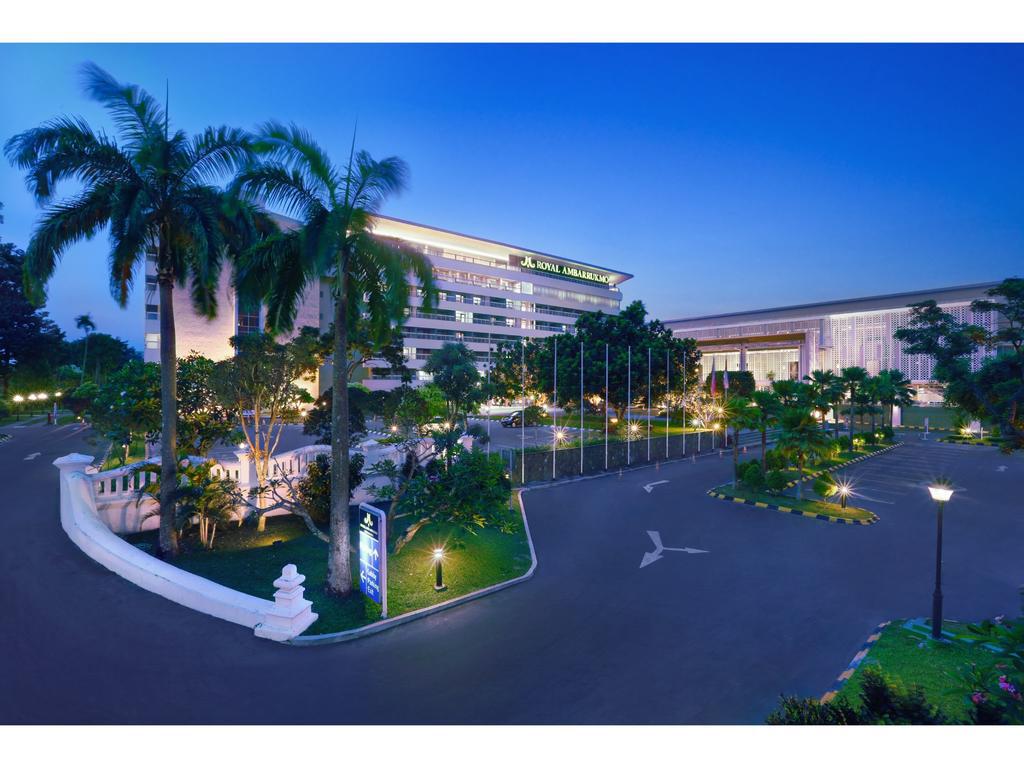
3. Royal Ambarrukmo Yogyakarta: A Royal Retreat Elevated to International Stature
In the cultural heartland of Yogyakarta lies the Royal Ambarrukmo, a property whose lineage is deeply intertwined with the royal court of the Yogyakarta Sultanate. The estate originally served as the grand royal palace grounds and summer residence for Sultan Hamengku Buwono V, reflecting the pinnacle of traditional Javanese architectural philosophy and landscape design.
The transformation of the Ambarrukmo complex into a modern hospitality venue was initiated under the direction of President Sukarno in the 1960s. Recognizing the need to develop a robust tourism infrastructure to bolster the national economy, Sukarno designated Ambarrukmo as one of the country’s pioneering luxury hotels. By 1966, it was officially promoted as an international standard hotel, welcoming global elites, artists, and political leaders.
In the modern era, the property has been meticulously restored and integrated with a contemporary high-rise luxury hotel structure while preserving the historic Loji (the colonial-era administrative building) and the royal Pendopo pavilion. Operating under the luxury tier, Royal Ambarrukmo offers guests an array of high-end amenities, including an 18-hole golf course proximity, extensive recreational facilities, and sophisticated poolside lounges. Nightly rates begin at approximately Rp 911,250, offering a seamless blend of regal Javanese heritage and five-star comfort.
4. Hotel Savoy Homann Bandung: Art Deco Masterpiece and Playground of the Global Elite
Located along the historic Jalan Asia-Afrika in Bandung—a city long celebrated as the "Paris of Java" due to its European urban planning and cooler climate—the Hotel Savoy Homann boasts a rich lineage dating back to the 19th century. Initially established as a modest accommodation owned and operated by the Homann family, the hotel gained widespread renown among colonial planters and travelers for its legendary culinary offerings, specifically the traditional Indonesian-Dutch rijsttafel prepared by Mrs. Homann.
As Bandung evolved into a thriving architectural laboratory in the 1930s, the original structure was entirely demolished to make way for a bold new design. In 1939, renowned Dutch architect Albert Aalbers was commissioned to redesign the property. Aalbers utilized the Streamline Moderne sub-style of Art Deco, shaping the building’s façade to mimic the sweeping curves of an ocean liner slicing through waves. Renamed the Savoy Homann in 1940 to cement its status as a grand hotel, the property quickly became the premier social hub for the colonial elite.
The hotel’s international prestige reached new heights when it hosted delegates attending the landmark Asia-Afrika Conference in 1955. Furthermore, its guest registry features a pantheon of international celebrities, most notably the legendary silent film star Charlie Chaplin, who famously stayed at the property during his travels through the Dutch East Indies. Today, guests can experience this architectural marvel with room rates starting as low as Rp 390,880 per night, making it one of the most accessible yet historically significant luxury stays in the country.
5. Inna Bali Heritage Hotel: Pioneering Hospitality in the Island of the Gods
Long before Bali became a ubiquitous global tourism paradise dominated by sprawling modern beach resorts and luxury villas, the island’s hospitality sector began with the establishment of the Inna Bali Heritage Hotel in Denpasar. Opened on August 22, 1927, the property was conceived by the colonial administration and the Royal Packet Navigation Company (Koninklijke Paketvaart-Maatschappij, or KPM) to accommodate the steady influx of foreign tourists arriving via steamship.
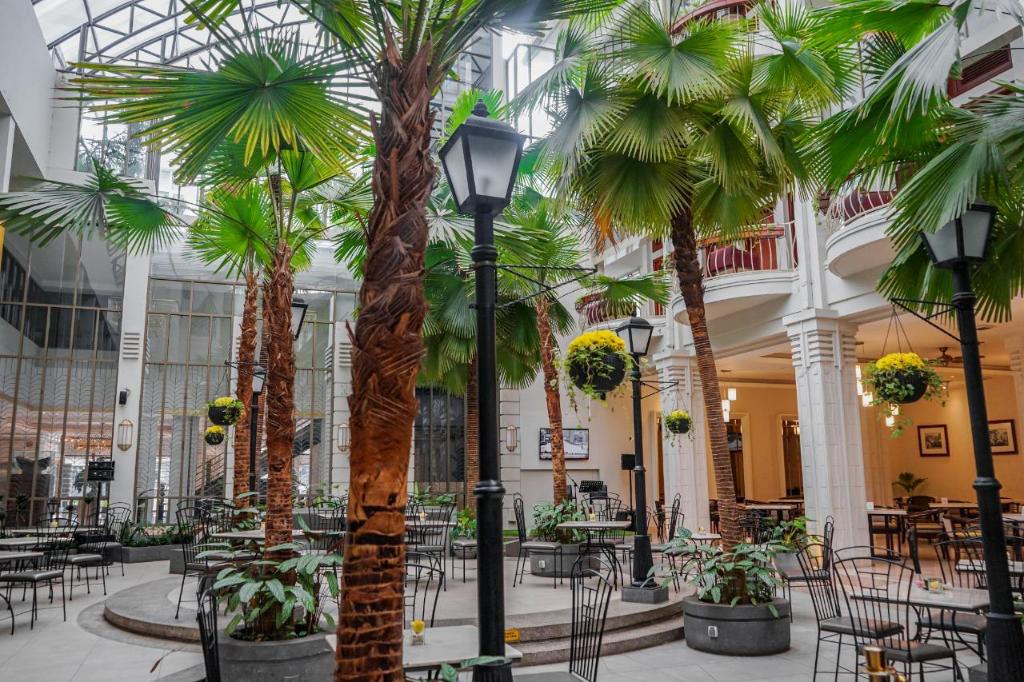
Operating as Bali’s first modern luxury accommodation, the hotel played a pivotal role in shaping the island’s international image as a tranquil, culturally rich sanctuary. Throughout the late 1920s and 1930s, it served as a base for anthropologists, artists, and writers—such as Margaret Mead, Gregory Bateson, and Walter Spies—who helped document and romanticize Balinese culture for Western audiences.
Situated strategically in the urban core of Denpasar, the three-star heritage property retains its classic colonial layout, featuring expansive tropical gardens, open-air verandas, historic dining halls, and a traditional swimming pool. Despite decades of rapid urban development surrounding it, the hotel remains a sanctuary of peace and historical continuity. Accommodations are remarkably affordable, with rates beginning at approximately Rp 270,000 per night.
Economic Implications and Booking Dynamics
The sustained commercial viability of these historic hotels underscores a broader global trend in heritage tourism, where travelers increasingly seek authentic narratives and architectural preservation over generic modern accommodations. Economically, these properties serve as vital anchors for local tourism economies, generating employment, supporting historic preservation initiatives, and driving cultural tourism in major urban centers like Jakarta, Surabaya, Yogyakarta, Bandung, and Denpasar.
Industry analysts note, however, that room rates for these historic establishments are subject to significant seasonal fluctuations. Pricing models are heavily influenced by peak travel periods (such as school holidays, the mid-year European summer holiday, and the December festive season), local inflation rates, shifts in regional taxation policies, and fluctuating market demand. Consequently, travelers are advised to target off-peak periods—known locally as the low season—to secure significantly lower rates, and are strongly encouraged to verify final pricing and inclusions directly with booking platforms or hotel management before confirming reservations.