Nila Kartika Wati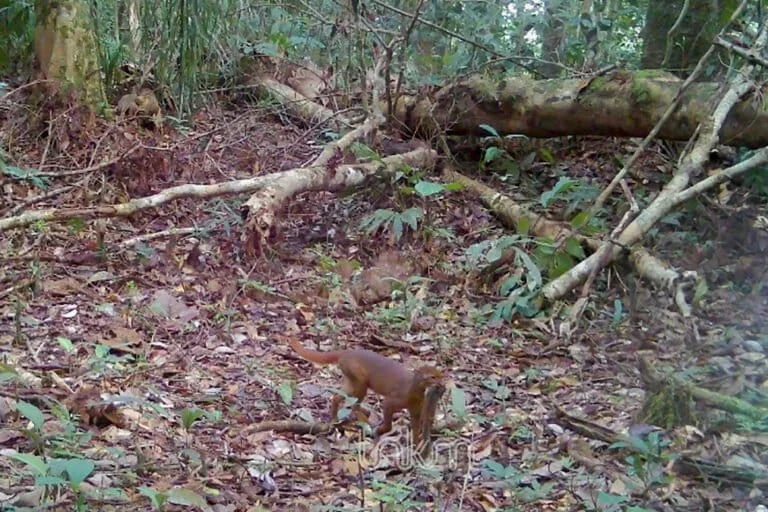
The elusive Bornean bay cat (Catopuma badia), a species shrouded in mystery and categorized as Endangered on the IUCN Red List, has once again been captured on camera within the dense, primary forests of the Kayan Mentarang National Park (TNKM) in Malinau Regency, North Kalimantan. This recent documentation, obtained by the park’s wildlife monitoring team, serves as a significant milestone in the ongoing efforts to track and preserve one of the most enigmatic carnivores on the island of Borneo.
The discovery was made following months of intensive camera trap deployment in the Mentarang Tubu Resort area of Rian Tubu Village. The footage provides rare insight into the behavior of a species that is notoriously difficult to observe due to its solitary nature, elusive temperament, and an inherent tendency to avoid human contact. For conservationists, these images are not merely a curiosity; they are vital data points that affirm the ecological integrity of the Kayan Mentarang landscape.
A Chronology of Elusive Sightings
For decades, the Bornean bay cat remained something of a phantom in the scientific community. Prior to 2023, confirmed sightings were so infrequent that researchers often operated with a near-total void of data regarding the species’ daily activities, mating habits, and territorial ranges. The 2023 sighting in the Sungai Bahau Resort, which broke a 20-year silence in the region, acted as a catalyst for renewed conservation interest and systematic monitoring.

The current 2026 documentation in the Mentarang Tubu Resort—a different sector than the 2023 discovery—underscores that the bay cat is not merely an isolated occurrence but a resident of the broader Kayan Mentarang ecosystem. The SMART Patrol team, comprised of dedicated forest ecosystem controllers including Jefry Frihardian Gumilar, Mahfu’at, Septian Adi Nugroho, Jatanai, and Singga Pilipus, recovered the data after leaving the equipment submerged in the forest’s canopy for several months.
In the latest frames, the feline is observed moving through the undergrowth, notably carrying what experts believe to be a Tupaia dorsalis (a type of ground squirrel). This visual evidence of hunting behavior provides a rare window into the predator-prey dynamics of the species, confirming its reliance on the small rodent and squirrel populations that thrive in healthy, undisturbed primary forests.
Official Perspectives on Conservation
Seno Pramudito, the Head of the Kayan Mentarang National Park Authority, emphasized the significance of these findings in a formal release issued on September 7, 2026. "The extreme difficulty of observing this species directly means that camera trap documentation is our most reliable method for gathering data on its presence within the conservation area," Pramudito stated. He further stressed that the bay cat’s presence acts as a bio-indicator of a balanced ecosystem, where the food chain remains intact and the habitat sufficiently vast.
Mahfu’at, the Head of the Mentarang Tubu Resort, highlighted the role of sustained patrolling in these findings. "This result serves as a morale boost for our team. It reinforces the importance of our patrols and our commitment to protecting this territory," he noted. The use of camera traps is integrated into the broader SMART Patrol framework, which allows officials to monitor not only the presence of endangered fauna but also to track human activity and potential environmental threats within the park’s borders.

Biological Context and Environmental Sensitivity
The Bornean bay cat is uniquely adapted to the primary and dense secondary forests of Borneo. Physically, it is characterized by its signature chestnut-red coat—though gray variants exist—a long, slender tail, and rounded ears. Its agility and body structure have drawn comparisons to the jaguar, leading to hypotheses that the cat relies on speed and surprise to secure prey in the dense forest canopy and understory.
Unlike some generalist predators that may adapt to fragmented landscapes or agricultural borders, the bay cat shows a distinct aversion to monoculture plantations, such as palm oil, and degraded forests. Jefrey Frihardian Gumilar, a Youth Expert Forest Ecosystem Controller, noted that the species’ low population density necessitates vast, connected tracts of forest to satisfy its hunting and reproductive requirements. "Their existence is a clear signal that the forest remains a vast, green, and well-preserved landscape," Gumilar explained.
Threats and the Status of the Species
Despite the recent uptick in photographic documentation, the Bornean bay cat remains highly vulnerable. With an estimated population of only about 2,200 individuals remaining in the wild, the species faces an precarious future. The primary threats identified by conservationists include the ongoing loss of habitat due to large-scale deforestation and the unintended danger posed by indiscriminate poaching methods, such as illegal snares set for other animals.
While the species has been identified in various protected areas across Borneo—including Danum Valley in Sabah, Gunung Mulu in Sarawak, and Gunung Palung in Indonesia—the lack of detailed studies on its lifespan, gestation periods, and total home range size remains a significant barrier to formal, large-scale recovery plans. Currently, there are no known individuals of the species held in captivity, making the study of wild populations in protected areas like Kayan Mentarang the only viable path for future research.

The Broader Implications for Kayan Mentarang
The Kayan Mentarang National Park is increasingly recognized as a critical stronghold for high-conservation-value species. Its role as a reservoir for biodiversity is essential for the ecological security of North Kalimantan. The repeated documentation of the bay cat suggests that the park’s management strategies, which balance community-based forest management with strict conservation protocols, are yielding tangible results.
From a scientific standpoint, the shift in observations from presumed nocturnal behavior to evidence of diurnal (daytime) activity is a notable development. These findings challenge previous assumptions and invite a re-evaluation of the cat’s behavioral ecology. As more data is gathered, the goal is to shift from sporadic, accidental sightings to a more robust monitoring program that can provide a clearer picture of population trends over the next decade.
Future Directions in Wildlife Monitoring
The success of the 2026 monitoring cycle demonstrates the effectiveness of long-term camera trap deployments combined with consistent ground-based patrols. The "hantu" of the forest, as it is colloquially known by researchers due to its spectral ability to evade detection, is slowly being brought into the light of scientific scrutiny.
Moving forward, the park authority aims to expand its surveillance reach, aiming to map the density and distribution of the cat more accurately across the park’s various resorts. Such efforts are not only essential for the survival of the Bornean bay cat but also provide a broader protective umbrella for other species that share the same habitat, such as the Sunda clouded leopard and various hornbill species.
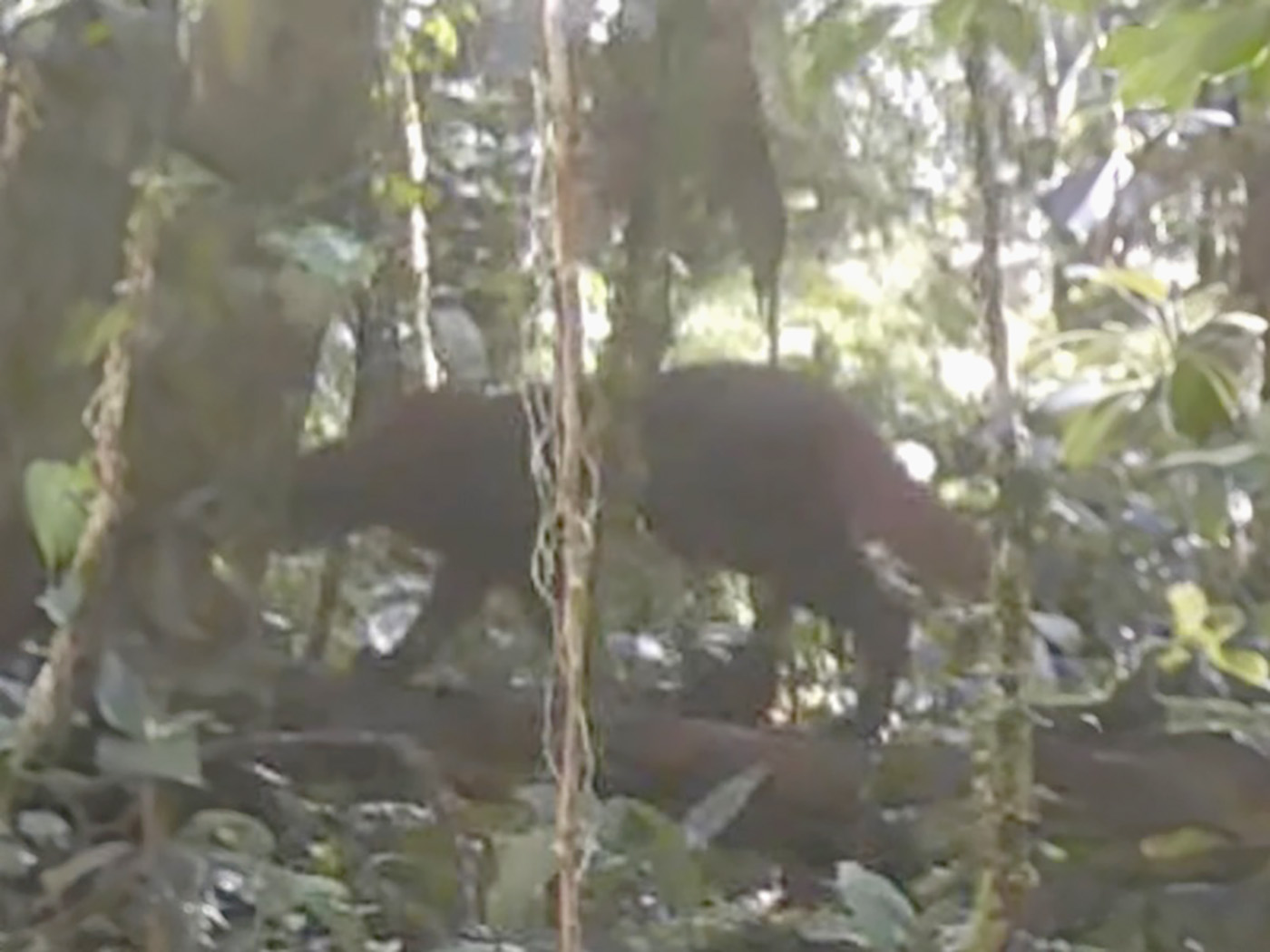
The case of the bay cat in Kayan Mentarang serves as a potent reminder of the unknowns that still exist within the world’s remaining tropical rainforests. It highlights that even in the 21st century, with advanced remote sensing and camera technology, nature retains its secrets—and the protection of these wild spaces is the only way to ensure that such mysterious species do not vanish before they are truly understood. By continuing to support the infrastructure of conservation—the patrols, the technology, and the local human resources—the Indonesian government and international stakeholders can ensure that the Bornean bay cat continues to prowl the deep forests of Kalimantan for generations to come.