Azin Asro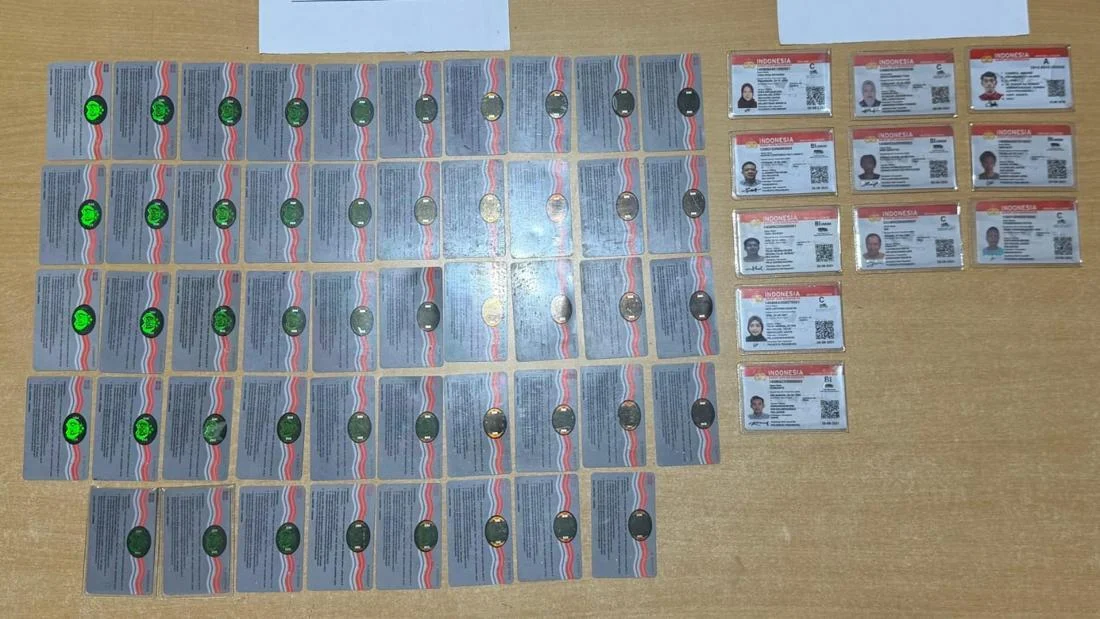
The Indonesian National Police have successfully dismantled a sophisticated syndicate operation specializing in the production and distribution of counterfeit driving licenses, commonly known locally as SIM (Surat Izin Mengemudi), across multiple digital platforms. The extensive law enforcement operation resulted in the initial apprehension of a primary suspect during a physical transaction, which subsequently triggered a broader investigation that uncovered an organized network operating heavily through social media marketplaces, messaging applications, and illicit supply chains involving stolen goods.
According to official police reports released by the Siak Resort Police, the criminal enterprise utilized modern smartphone applications and consumer-grade printing equipment to forge official credentials. The syndicate targeted citizens seeking to bypass standard regulatory testing procedures by offering fraudulent documents at prices ranging from IDR 550,000 to IDR 1.7 million. In stark contrast, the official, legal procedure overseen by the Indonesian National Police Traffic Corps (Korlantas Polri) requires a significantly lower financial investment and ensures compliance with national traffic safety standards. This major law enforcement breakthrough has once again brought national attention to the persistent underground market for fabricated legal documents, the vulnerabilities in secondary-market identification card security, and the ongoing public education campaigns required to steer citizens toward legal administrative pathways.
Chronology of the Investigation and Network Exposure
The unraveling of this extensive counterfeit operation began with a tactical operation in Suka Mulia Village, located within the Dayun Subdistrict of Siak Regency. Local law enforcement officers intercepted a key suspect at the exact moment a fraudulent driver license was being handed over to a buyer. This precise intervention provided investigators with immediate physical evidence, including the forged document itself and communication records linked to the transaction.
Capitalizing on this breakthrough, the investigative team launched a comprehensive expansion of the case. Through digital forensics, interrogation of the primary suspect, and surveillance of online marketplaces, authorities mapped out the broader operational structure of the syndicate. Within a relatively short timeframe, the operation culminated in the formal designation of eight individuals as suspects. Furthermore, law enforcement agencies have placed two additional individuals on the official wanted list, continuing active manhunts to capture all remaining architects of the forgery ring.
Kapolres Siak, AKBP Sepuh Ade Irsyam Siregar, detailed the scope of the ongoing criminal inquiry during a media briefing, emphasizing the scale of the operation. Total eight individuals have been designated as suspects, and two others remain under active pursuit. Investigators continue to expand the scope of the investigation to determine the exact geographic distribution of the counterfeit driver licenses and identify any external parties or collaborators involved in the procurement and manufacturing processes.
Modus Operandi and Production Techniques
The criminal network utilized a multi-channel digital approach to market their illicit services. Investigators discovered that the syndicate advertised readily available fabricated driver licenses via WhatsApp business accounts, Facebook marketplace listings, and networks of offline brokers who connected impatient motorists with the forgery ring.
Once a client agreed to pay the requested tariff—which fluctuated between IDR 550,000 and IDR 1.7 million depending on the specific class of license requested—the production phase commenced. Rather than utilizing advanced industrial printing presses, the perpetrators relied on accessible consumer technology. They manipulated personal identification data using standard mobile phone photo-editing applications. To mimic the authenticity of official documents, the forgers generated replicated barcodes containing specific data fields associated with the purported owner, alongside high-resolution copies of the official Korlantas Polri logo.
The completed digital artwork was then transferred and printed onto clear adhesive stickers utilizing standard color inkjet printers. In a particularly concerning finding, investigators revealed that the raw materials forming the structural base of these counterfeit credentials were sourced through theft. Used, expired, or discarded legitimate driver licenses were acquired through illicit channels, including petty theft and property crimes. Members of the criminal syndicate purchased these recycled cards in bulk. Before applying the newly printed transparent stickers, the perpetrators mechanically or chemically erased the original owner’s identity, completely masking the prior history of the physical card before imprinting the new buyer’s credentials.
Forensic analysis and preliminary document examination revealed a high volume of illegal production over a compressed timeline. Police data indicates that approximately 50 used driver license cards were traded and repurposed among the network members during the month of August 2026 alone. Individual interrogation logs showed that one primary suspect confessed to manufacturing and distributing at least 23 separate counterfeit licenses, while a secondary accomplice admitted to circulating 17 fraudulent documents within the same operational window.
Legal Framework Governing Driver License Issuance
The legal foundation for the issuance, regulation, and enforcement of driving credentials in the Republic of Indonesia is firmly established under national legislation. Specifically, the authority is mandated by Law Number 22 of 2009 concerning Traffic and Road Transport, with Article 87, paragraph 2, explicitly designating the Indonesian National Police as the sole authorized institution responsible for issuing driver licenses.
Operating outside this legal framework by procuring, possessing, or utilizing a fabricated driver license constitutes a serious criminal offense under the Indonesian Criminal Code (KUHP), carrying severe penalties including imprisonment and substantial fines. Law enforcement agencies have repeatedly warned the public that utilizing fraudulent credentials not only compromises national identity security but also invalidates mandatory insurance protections and bypasses essential competency evaluations designed to ensure road safety.
Official Cost Structure of Legitimate Driver License Procurement
To counter the claims made by illegal syndicates that official channels are prohibitively expensive or excessively cumbersome, regulatory bodies maintain transparent pricing structures. The official fees associated with obtaining a new driver license are regulated under Government Regulation Number 76 of 2020 concerning Types and Tariffs on Types of Non-Tax State Revenue (PNBP) applicable within the Indonesian National Police. Throughout the current fiscal landscape, these regulatory fees remain stable and predictable.
Citizens undertaking the legal process can acquire a new driver license for a total baseline administrative fee that does not exceed approximately IDR 300,000 at the absolute maximum, depending on the specific vehicle classification (such as SIM A for private cars or SIM C for motorcycles). This official pricing schedule has remained consistent, ensuring that compliance remains economically viable for the general population.
Beyond the baseline administrative fee mandated by the state, applicants must factor in supplementary statutory requirements essential for assessing driver capability and fitness. These ancillary requirements include mandatory medical examinations, psychological evaluations, and optional personal accident insurance coverage, as outlined in official Korlantas Polri operational guidelines.
Detailed Breakdown of Official Costs:
-
Medical Examination: Conducted directly at authorized Satpas (Satuan Penyelenggara Administrasi SIM) facilities, the physical health screening incurs a standardized tariff of IDR 35,000. This evaluation checks critical sensory and physical parameters, including visual acuity, color blindness, auditory health, and general physical motor function.
-
Psychological Evaluation: Designed to test cognitive capabilities, psychomotor reaction times, and emotional stability under stress, the psychological test is mandatory for all new applicants. The standard testing fee at Satpas facilities using dedicated digital terminals is IDR 100,000. Alternatively, applicants can complete the psychological examination via official online portals prior to their visit, reducing the fee to IDR 77,500.
-
Personal Accident Insurance: To ensure financial protection in the event of traffic incidents, optional insurance coverage is offered during the licensing process at a standard rate of IDR 50,000 per issuance.
When summing the maximum administrative state revenue fees alongside comprehensive health and psychological screenings, the total legitimate expenditure required to legally acquire a new driver license remains well under the IDR 350,000 threshold. This officially sanctioned pricing structure represents a fraction of the maximum rates charged by illegal forgery syndicates, which often exploit citizens’ fear of bureaucratic delays.
Broader Implications and Public Safety Concerns
The exposure of the Siak counterfeit ring underscores significant vulnerabilities regarding the security lifecycle of physical identification cards. The fact that the syndicate relied on stolen or discarded official cards as the raw material for their operations highlights an urgent need for stricter protocols concerning the disposal and recycling of expired government-issued identification documents. When physical credentials containing embedded security features fall into the wrong hands, they can be easily manipulated to deceive everyday citizens and frontline law enforcement personnel alike.
Furthermore, the integration of digital marketplaces and instant messaging applications into the operational workflows of criminal syndicates demonstrates the ongoing challenge regulatory agencies face in policing cyber-enabled fraud. Traditional offline enforcement must now be continuously augmented with robust digital monitoring capabilities to detect illicit advertisements before transactions materialize in physical communities.
From a public policy perspective, the proliferation of fake driver licenses poses a direct threat to national traffic safety initiatives. The official licensing process—incorporating theoretical examinations, practical driving tests, medical clearances, and psychological assessments—is specifically calibrated to ensure that every licensed operator on public roads possesses the necessary competence, physical wellness, and psychological temperament to operate motor vehicles safely. By bypassing these rigorous evaluations, individuals purchasing counterfeit licenses introduce unverified risks onto public thoroughfares, potentially contributing to higher rates of traffic violations, accidents, and fatalities.
In response to this high-profile case, regional and national traffic directorates have amplified public awareness campaigns. Authorities are actively urging motorists to avoid short-cut services promoted on social media and to utilize official, transparent channels provided at local Satpas offices. By reinforcing administrative transparency, streamlining digital queuing systems, and cracking down heavily on intermediary brokers and forgery rings, law enforcement agencies aim to restore complete public trust in the national licensing system while safeguarding the integrity of Indonesia’s transportation infrastructure.