Azin Asro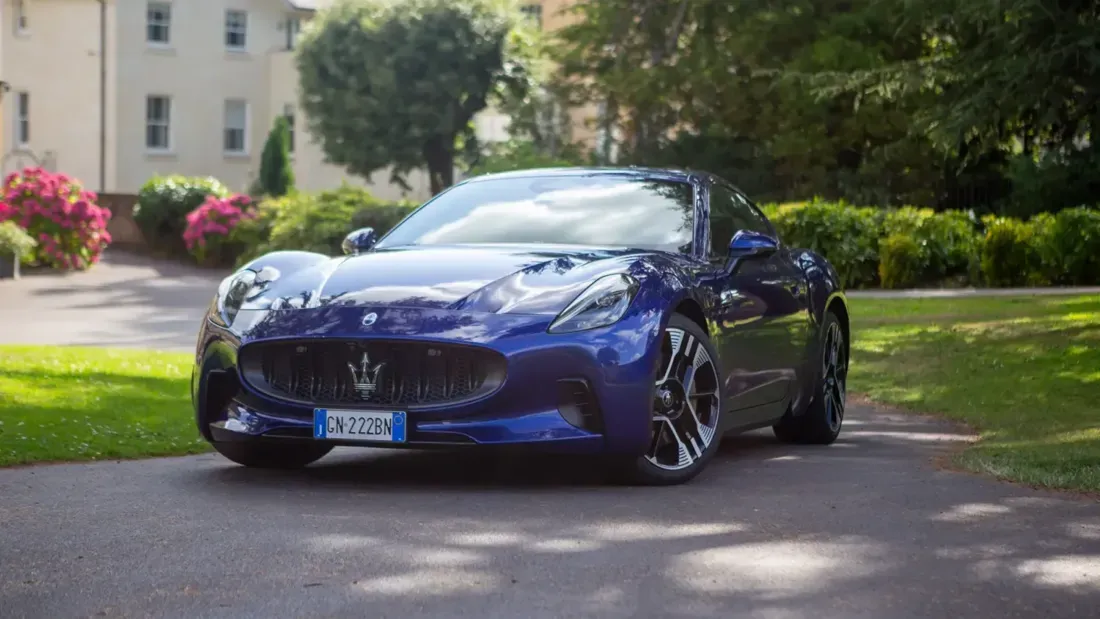
JAKARTA — In a strategic pivot designed to navigate the rapidly evolving global automotive landscape and revitalize declining sales, Italian luxury carmaker Maserati has announced a landmark collaboration with Chinese tech giant Huawei and state-backed manufacturer JAC Motors. This tripartite partnership aims to co-develop and manufacture a new generation of high-end electric vehicles, blending traditional Italian automotive craftsmanship with cutting-edge Chinese EV technology and manufacturing efficiency.
The collaboration represents a significant turning point for the Trident brand, which has faced severe market headwinds in recent years. By pooling resources with experts in software, autonomous driving, and large-scale manufacturing, Maserati is positioning itself to accelerate its electrification roadmap while attempting to restore profitability and secure its long-term future within the Stellantis automotive empire.
Scope of the Collaboration: Two New Electric Models
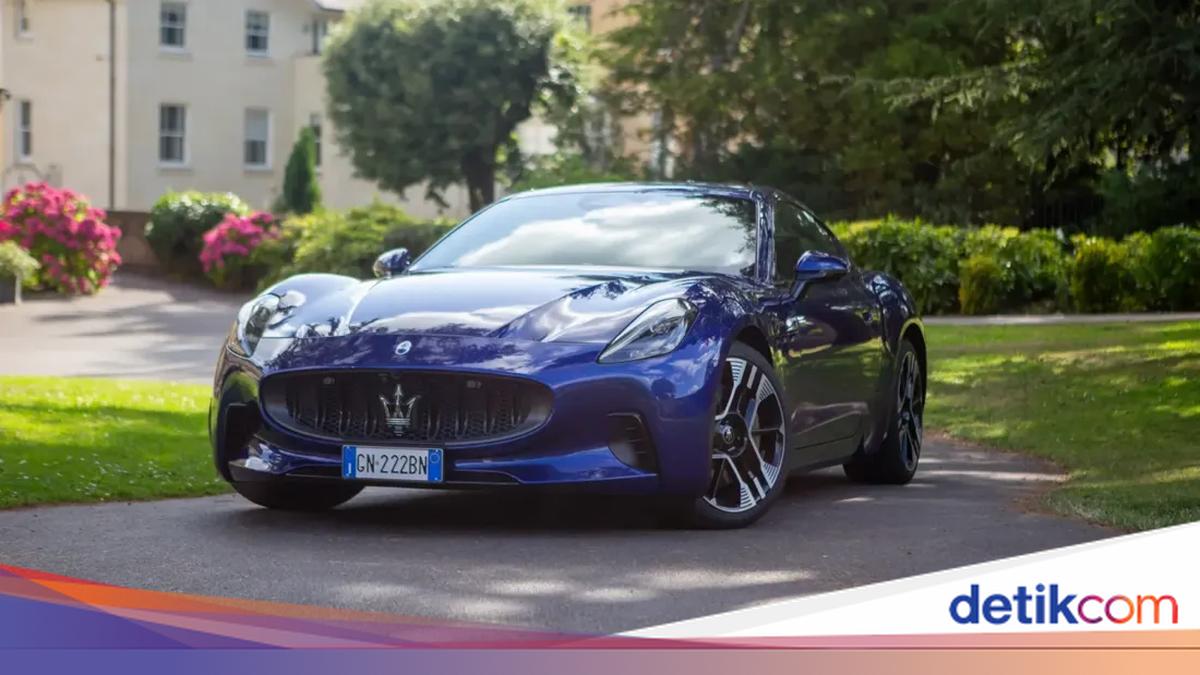
According to industry reports originating from Future Cars Daily, the partnership is slated to yield two distinct battery-electric vehicles (BEVs). The lineup will comprise a mid-to-large-size electric SUV—designed to complement the existing Grecale Folgore—and a large electric Grand Tourer (GT) intended to serve as the spiritual successor and technological evolution of the GranTurismo Folgore.
Insiders suggest that the electric GT is currently being prioritized as the flagship product to launch this new era of collaboration. By introducing these models, Maserati aims to reinforce its core brand identity as a producer of high-performance luxury sports cars while aggressively expanding its footprint in the zero-emission segment.
The division of labor among the partners leverages each entity’s core competencies:
- Huawei: Responsible for supplying advanced digital ecosystems, including intelligent cockpit solutions, the proprietary Qiankun ADS autonomous driving system, and core electric propulsion components.
- JAC Motors: Tasked with vehicle engineering and primary production duties, utilizing its advanced Maextro manufacturing facility located in Hefei, China.
- Maserati: Retains total control over exterior and interior design, brand identity, driving dynamics tuning, and the global sales and distribution network.
A notable strategy in the commercialization plan involves branding. For the domestic Chinese market, vehicles stemming from this joint effort will be retailed under the Maextro nameplate, tapping into local consumer preferences and luxury EV positioning. However, for international markets—including Europe, the Middle East, and beyond—the vehicles will proudly wear the iconic Maserati trident logo, maintaining their heritage appeal.
The Hybrid Production Model: Made in China, Assembled in Italy
To balance cost-efficiency with the imperative of preserving its authentic "Made in Italy" cachet, Maserati has devised a specialized Semi Knocked Down (SKD) production scheme.
Under this framework, vehicle bodies will be fabricated and structurally completed at the JAC-operated Maextro plant in Hefei in an unpainted state. These body-in-white structures will then be shipped to Maserati’s historic production facilities in Italy. The final stages of manufacturing—including painting, interior trim installation, electrical integration, and meticulous chassis tuning—will take place on Italian soil.
This hybrid approach allows Maserati to harness the advanced, cost-effective manufacturing capabilities of China’s EV ecosystem while ensuring that the final product retains the craftsmanship and tactile quality expected of a luxury Italian automobile. Furthermore, this workflow is strategically designed to breathe new life into underutilized manufacturing infrastructure at Maserati’s plants in Modena and Cassino, safeguarding local employment and industrial heritage.
Initial rollout plans indicate a targeted regional launch strategy focusing on high-net-worth markets, specifically the Middle East, Italy, France, and Germany, where demand for bespoke electric luxury vehicles remains resilient.
Financial Pressures and the Genesis of the Partnership
The announcement of this cross-continental partnership comes at a critical juncture for Maserati. In recent years, the legendary marque has confronted severe financial and commercial pressures that have strained its operational stability.
Market data reveals a steep decline in commercial performance. By the close of 2025, Maserati’s global vehicle shipments plummeted to fewer than 8,000 units. This figure represents an alarming contraction of approximately 80 percent compared to the brand’s modern peak in 2017, when sales surpassed 50,000 units globally, driven largely by the initial success of the Levante SUV.
Compounding the volume slump, financial disclosures highlighted a substantial adjusted operating loss of 198 million euros for the brand. These mounting deficits prompted parent company Stellantis to reevaluate Maserati’s operational model. Stellantis leadership openly acknowledged that Maserati required robust industrial partnerships to share the staggering research and development costs of electrification, explicitly ruling out a sell-off of the brand while emphasizing the necessity of external technological alliances.
The alliance with Huawei and JAC Motors directly addresses these vulnerabilities. By outsourcing heavy manufacturing logistics and leveraging Huawei’s mature software architecture, Maserati can significantly reduce its internal R&D expenditure and time-to-market for next-generation electric vehicles.
Chronology of Maserati’s Electrification Journey
To understand the weight of the current partnership, it is essential to contextualize Maserati’s recent trajectory within the broader automotive transition toward sustainability:
- 2018–2020: Stellantis (then FCA) outlines initial electrification strategies, committing to battery-electric variants across luxury portfolios under the "Folgore" (Lightning) banner.
- 2022: Maserati debuts the Grecale Folgore, its first fully electric SUV, signaling a firm commitment to phasing out internal combustion engines by the end of the decade.
- 2023–2024: The market introduction of the GranTurismo Folgore and GranCabrio Folgore. However, slower-than-anticipated global adoption of high-end EVs and stiff competition from both established European rivals and emerging Chinese manufacturers begin to impact sales volumes.
- 2025: Global shipments drop below the 8,000-unit threshold, accompanied by a 198 million euro operating loss. Stellantis leadership signals openness to strategic external partnerships to preserve the marque’s viability.
- 2026: Maserati officially formalizes its cooperative agreement with Huawei and JAC Motors to co-develop a new medium-large SUV and a large GT, incorporating the SKD manufacturing model between Hefei and Italy.
Industry Implications and Market Analysis
Automotive analysts view the Maserati-Huawei-JAC partnership as a harbinger of broader structural shifts within the global luxury automotive sector. As legacy European manufacturers grapple with the immense capital requirements of software-defined vehicles and battery technology, traditional barriers between Western heritage brands and Eastern technology powerhouses are rapidly dissolving.
For Maserati, the primary benefit lies in risk mitigation. Developing competitive digital cockpits and autonomous driving systems independently requires multi-billion-euro investments that are difficult to justify against a backdrop of sub-8,000 annual unit sales. By integrating Huawei’s Qiankun ADS system—widely regarded as one of the most advanced autonomous driving platforms available in the Asian market—Maserati instantly bridges the technological gap with digital-first competitors like Tesla, Nio, and Lucid.
However, the strategy is not without inherent risks. Luxury automotive consumers are historically sensitive to brand pedigree and provenance. The hybrid SKD model—while preserving final assembly in Italy—requires careful brand communication to ensure that buyers perceive the vehicles as genuine Italian luxury goods rather than rebranded imports. Maintaining strict quality control across international shipping and assembly nodes will be paramount for Maserati to protect its premium pricing strategy.
Furthermore, the dual-branding strategy—utilizing the Maextro name in China while retaining the Maserati badge internationally—reflects a pragmatic acknowledgement of differing market dynamics. In China, where domestic EV brands command immense loyalty and advanced technological integration, entering the market under a localized luxury banner like Maextro provides a higher probability of commercial success than competing directly with entrenched domestic tech-giants under a purely European heritage label.
Future Outlook
As the project moves from the drawing board to prototype development and eventual production, all eyes will be on Maserati’s ability to execute this complex international supply chain. The success of the upcoming electric SUV and electric GT will serve litmus-test functions for the entire Stellantis luxury portfolio.
If the partnership successfully marries Huawei’s software prowess, JAC’s manufacturing scale, and Maserati’s iconic design language, it could provide a sustainable blueprint for legacy European luxury brands seeking to survive and thrive in the electric vehicle era. Conversely, any missteps in execution or brand dilution could further challenge the storied Italian marque’s path to recovery. For now, the Trident brand has chosen a bold, pragmatic path forward, betting that technological collaboration can secure its place on the roads of tomorrow.