Eko Sulistyo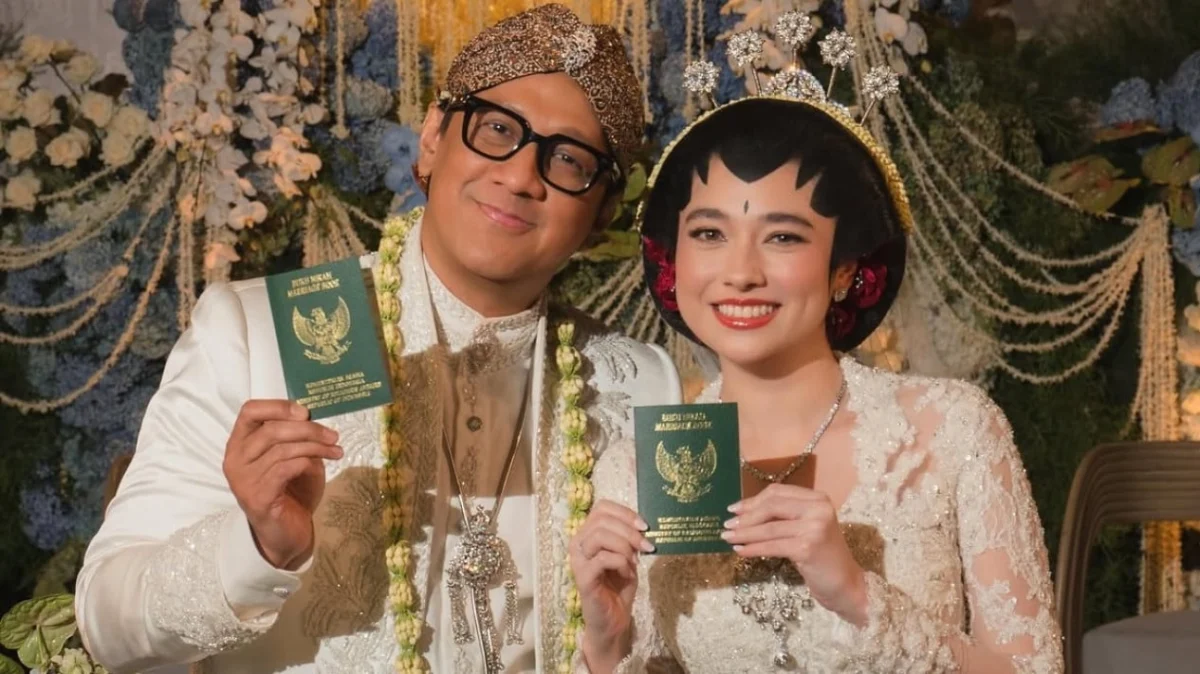
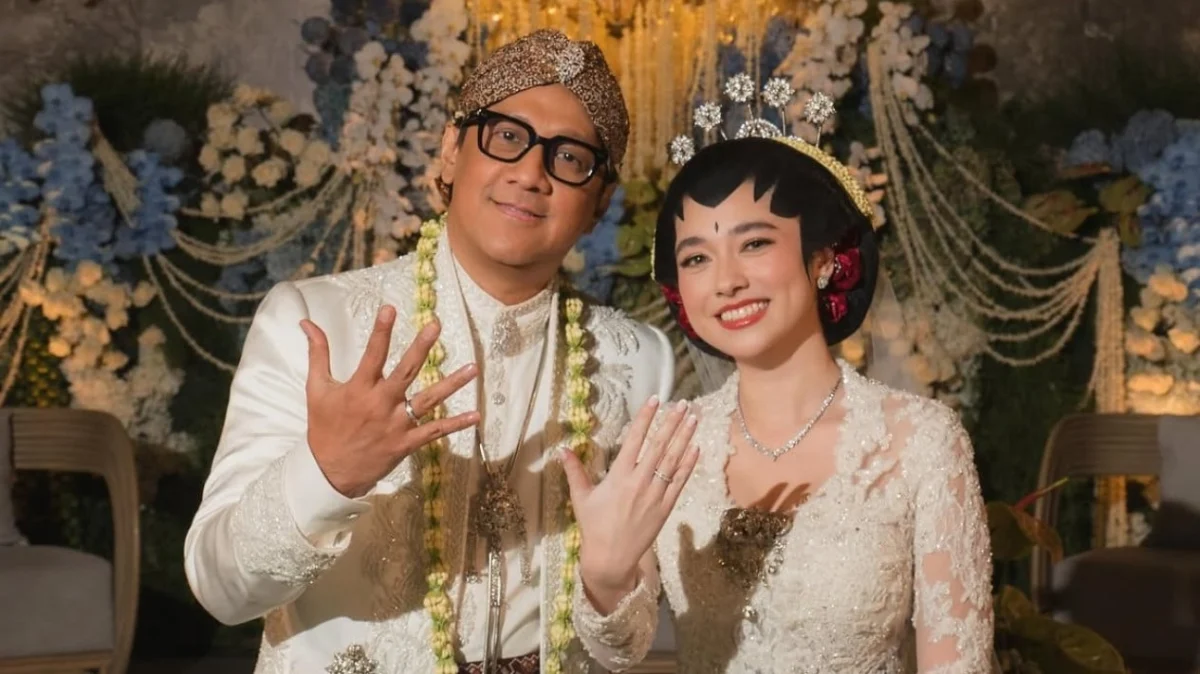
The marriage of prominent Indonesian entertainer Andre Taulany and actress Amanda Rigby, formalized on Sunday, September 20, 2026, has ignited a significant wave of public conversation across social media platforms. While the union of two public figures typically garners attention, the specific nature of this marriage—characterized by a notable age difference and the prior marital history of the groom—has catalyzed an intense debate among observers, ranging from pragmatic concerns about life stages to unconventional theories involving astrological compatibility.
Andre Taulany, a 51-year-old veteran of the Indonesian entertainment industry, and Amanda Rigby, 30, officially entered into wedlock amidst a climate of intense scrutiny. The discourse, which reached its peak on the microblogging platform Threads on Monday, September 21, 2026, reflects a broader societal tension regarding unconventional age gaps in celebrity marriages, as well as the modern tendency to seek metaphysical explanations for complex interpersonal relationships.
The Chronology of Public Interest
The timeline of this public reaction began shortly after the wedding ceremony. By the morning of September 21, social media algorithms were flooded with discussions questioning the motivations behind the union. The initial critiques focused heavily on the demographic disparity between the two individuals. One widely shared post from a user identified as @opini_miaw highlighted the concerns of a segment of the public who believe that the life stages of a 30-year-old and a 51-year-old are fundamentally incompatible.
The user’s commentary suggested that Amanda, who is entering a period often associated with professional and personal "peak performance," might be misaligned with a partner whose professional legacy and financial trajectory are already established and, in the user’s view, previously depleted by a long-term prior marriage. This criticism echoed traditional societal anxieties regarding "age-gap" marriages, where the younger partner is often perceived as potentially sacrificing personal growth or future stability for an established but aging partner.
Astrological Interpretations and the "Karmic" Narrative
As the conversation evolved, the focus shifted from socio-economic concerns to metaphysical interpretations. A significant subset of the online discourse began to analyze the couple’s birth charts. In particular, a post by an account identified as @yournutellagirl gained traction by suggesting that the couple shares a "karmic relationship."
In astrological circles, a karmic relationship is frequently characterized as a bond that transcends mundane attraction, often carrying heavy emotional weight and specific life lessons. The analysis cited the zodiac combination of Virgo (Andre) and Capricorn (Amanda), as well as their respective Shio (Chinese zodiac) signs, the Tiger and the Goat.
The analysis went further, delving into technical astrological placements—specifically the alignment of Venus, Mercury, and Mars in Amanda’s chart with the "Rahu" (the North Node of the Moon) in Andre’s chart. In Vedic astrology, Rahu is often associated with intense, obsessive, and transformative energy. The claim suggested that these specific planetary positions explain the profound attraction described by observers. While these assertions remain purely interpretive and lack scientific basis, they underscore how digital communities often utilize esoteric frameworks to process and rationalize celebrity behavior that they find otherwise inexplicable.
Demographic Context and Societal Trends
To understand the intensity of the public reaction, one must look at the broader context of marriage trends in Indonesia. Data from recent years indicates a shifting landscape in marital demographics. While the median age of first marriage in Indonesia has been slowly rising due to increased educational attainment and economic participation among women, significant age gaps in high-profile marriages remain a point of contention.
Sociologists note that when a public figure with a history of a long-term, high-profile previous marriage enters a new union, the public often projects their own anxieties regarding divorce, alimony, and the "baggage" of a previous life onto the new couple. Andre Taulany’s 51 years of life experience, including a two-decade-long previous marriage, contrast sharply with Amanda Rigby’s first marriage at age 30. This contrast creates a narrative arc that the public is eager to dissect, analyze, and, in many cases, judge.
The Role of Parasocial Interaction
The phenomenon surrounding the Taulany-Rigby marriage is a quintessential example of modern parasocial interaction. Because audiences feel they have "known" Andre Taulany through his decades of television presence, they feel a sense of ownership over his personal life decisions. When those decisions deviate from the perceived "norm," the public response is amplified through digital platforms.
The transition from purely personal concern to the application of complex astrological theories is a unique feature of the current digital era. It represents a mechanism by which followers attempt to make sense of, or even validate, a relationship that they may find logically confusing. By labeling the union "karmic," observers move the discussion away from cold, potentially cynical, critiques of age and money and toward a more "destined" narrative, which is often more palatable to the public psyche.
Expert Analysis and Implications
While the public discourse is dominated by social media commentary, it is essential to distinguish between popular opinion and the reality of marital success. Relationship experts generally emphasize that the longevity of a marriage depends on shared values, communication, and emotional intelligence—factors that cannot be predicted by planetary alignment or birth dates.
From a sociological standpoint, the scrutiny faced by the couple highlights the inherent pressure of living in the digital fishbowl. The "instant analysis" culture of platforms like Threads means that personal milestones are subjected to immediate, public peer review. For a couple in the public eye, this creates a volatile environment where their private life is constantly being reinterpreted through the lens of anonymous, yet highly engaged, observers.
Official Responses and Future Outlook
As of this writing, neither Andre Taulany nor Amanda Rigby has issued an official statement regarding the specific criticisms or the unsolicited astrological analyses of their marriage. Historically, both have maintained a level of professionalism regarding their public personas, and it is likely they will continue to navigate their new life together with a degree of privacy, despite the external noise.
The "karmic" narrative, while scientifically baseless, serves as a testament to the audience’s desire for deeper meaning in the lives of their idols. Whether this marriage will prove the critics right or the romantics (and astrologers) correct remains to be seen. However, the intensity of the current reaction confirms that the public interest in the lives of Indonesian celebrities remains as potent as ever, particularly when those lives intersect with the complexities of age, history, and the evolving definitions of modern partnership.
Ultimately, the marriage of Andre Taulany and Amanda Rigby is more than just a union between two individuals; it is a mirror reflecting the evolving values and anxieties of a digitally connected society. As the couple embarks on this new chapter, the public’s ongoing fascination serves as a reminder of the thin line between celebrity privacy and the performative nature of modern fame. Whether the relationship withstands the "karmic" intensity or the practical challenges of a 21-year age gap will be documented by the same digital audience that is currently dissecting every aspect of their union. For now, the couple remains the focal point of a debate that is as much about the observers as it is about the observed.