
 Tata Titiana
The trajectory of Indonesian tourism is inextricably linked to the colonial legacy of the Dutch East Indies. Following the historic opening of the Suez Canal in 1869, maritime trade routes between Europe and the Malay Archipelago expanded exponentially, drastically cutting travel time and spurring commercial mobility. By the late 19th century, a burgeoning wave of maritime tourism began. Luxury cruise liners frequently dropped anchor in the archipelago, disembarking European travelers eager to explore the tropical landscapes of the Dutch East Indies. To accommodate these affluent visitors, the colonial administration and private investors initiated large-scale infrastructure projects, most notably constructing a series of grand European-standard hotels primarily across the island of Java and later expanding to Bali.
Today, while the political landscape of the nation has fundamentally transformed following its hard-fought independence, many of these architectural masterpieces survive. Far from existing merely as static museum pieces, several of these heritage hotels remain fully operational, seamlessly blending historical preservation with contemporary luxury hospitality.
Hotel Indonesia Kempinski: The Epitome of Post-Colonial Luxury and Modern Diplomacy
Standing tall in the heart of the capital, the Hotel Indonesia Kempinski holds the distinction of being Indonesia’s first five-star luxury hotel and historically stood as one of the tallest buildings in Jakarta upon its inception. Unlike many colonial-era properties that date back to the 19th or early 20th century, the genesis of this iconic hotel is tied to the mid-20th-century nation-building efforts of independent Indonesia, financed significantly through Japanese war reparations.
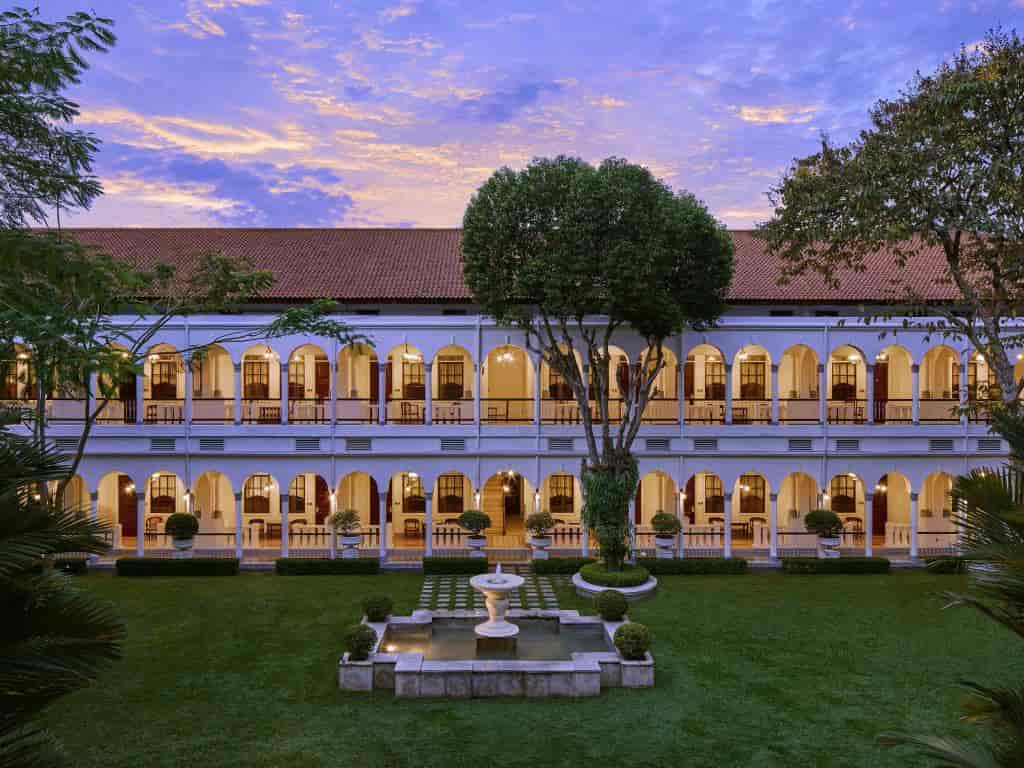
Commissioned by President Sukarno, the hotel was officially inaugurated on August 5, 1962, to serve as the primary residence for international athletes participating in the Fourth Asian Games (Asian Games IV). President Sukarno envisioned the property not just as an accommodation facility, but as a grand showroom for a modern, independent Indonesia on the global stage. Decades later, the property continues to host world leaders and dignitaries. Notably, in March 2020, the hotel made headlines when King Willem-Alexander and Queen Máxima of the Netherlands chose it as their official residence during their historic state visit to Indonesia, staying in the presidential suite equipped with bulletproof glass—a poignant symbol of reconciliation and modern diplomatic ties between the two nations. Room rates at this landmark property typically start at approximately IDR 2.98 million per night, varying by seasonal demand.
Hotel Majapahit Surabaya: The Crucible of Nationalism and Architectural Grandeur
Relocating eastward to the bustling industrial port city of Surabaya, the Hotel Majapahit stands as a profound monument to Indonesia’s struggle for independence. Originally established in 1910 by the renowned Sarkies Brothers—Armenian hoteliers famed for developing luxury properties across Southeast Asia—the hotel initially operated under the name Hotel Oranje during the Dutch colonial administration. During the Japanese occupation of the Dutch East Indies (1942–1945), the property was commandeered and renamed Hotel Yamato.
The hotel is most historically revered for the dramatic "Hotel Yamato Incident" on September 19, 1945, just weeks after Indonesia proclaimed its independence. Enraged by the unfurling of the Dutch red-white-blue flag atop the hotel roof by colonial loyalists without the permission of the newly formed Republican government, a crowd of Indonesian nationalists stormed the building. In the ensuing confrontation, youthful freedom fighters famously scaled the roof and tore away the bottom blue section of the tri-color flag, transforming it into the red-and-white Indonesian national flag (Sang Saka Merah Putih). Today, managed under the Accor umbrella as Hotel Majapahit Surabaya MGallery, the property retains its opulent art deco and tropical colonial architecture. Accommodation prices begin at roughly IDR 985,125 per night.
Royal Ambarrukmo Yogyakarta: The Regal Sanctuary of Central Java
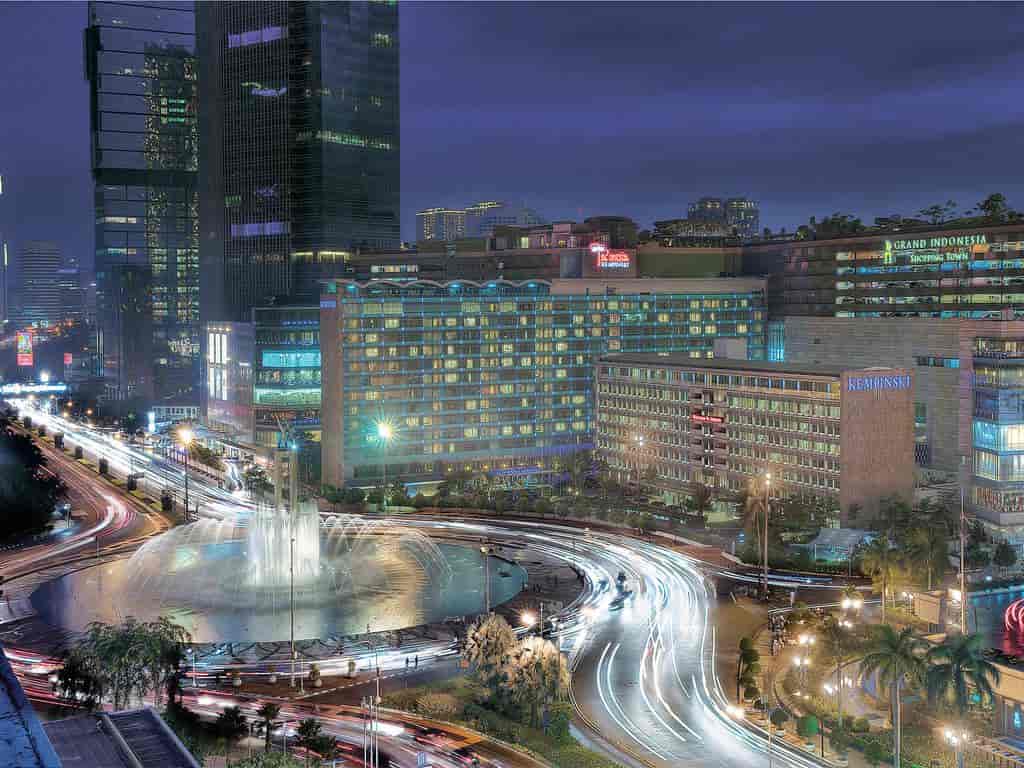
In the cultural heartland of Yogyakarta lies the Royal Ambarrukmo, a property deeply intertwined with the royal lineage of the Mataram Sultanate. Situated along Jalan Laksda Adisucipto, the core structure of the hotel incorporates the historical Loji Ambarrukmo, a former royal palace pavilion (pendopo) originally commissioned by Sultan Hamengku Buwono V and later utilized by Sultan Hamengku Buwono VII as a royal administrative residence and retreat.
In the post-independence era, recognizing the need to foster international tourism, President Sukarno spearheaded an ambitious hospitality development plan. The Royal Ambarrukmo was subsequently selected as one of the first four luxury hotels in the country to be designated and heavily promoted as an international standard hotel in 1966. Over the decades, the property has undergone extensive modernizations while meticulously preserving its royal Javanese heritage. Modern guests enjoy five-star amenities—such as an 18-hole golf affiliation, extensive wellness spas, and exquisite poolside facilities—while surrounded by authentic palace architecture and artifacts. Nightly rates start around IDR 911,250.
Hotel Savoy Homann Bandung: The Art Deco Masterpiece of the Parahyangan
Known historically as the Paris van Java, the West Java provincial capital of Bandung features numerous architectural marvels from the colonial era, chief among them being the Hotel Savoy Homann. Located strategically on Jalan Asia-Afrika, a thoroughfare globally recognized for hosting the historic 1955 Asia-Afrika Conference, the hotel’s origins trace back to the late 19th century when it was established as a humble family-run guesthouse by the Homann family, gaining early renown for Madam Homann’s legendary traditional Dutch-Indonesian rijsttafel feasts.
By 1939, as modern architectural philosophies shifted toward European modernism, the original structure was entirely redesigned by the visionary Dutch architect Albert Aalbers. Aalbers imbued the building with a striking streamline Moderne style, characterized by sweeping horizontal lines that mimic the motion of ocean waves, making it one of the finest examples of tropical Art Deco architecture in the world. Formally rebranded as the Savoy Homann in 1940 to reflect its expanding international prestige, the hotel has welcomed a myriad of global luminaries, most notably the legendary silent film star Charlie Chaplin, who stayed there during his travels to Java in the 1930s. Today, travelers can experience this cinematic legacy with room rates starting from approximately IDR 390,880 per night.
Inna Bali Heritage Hotel: Pioneering Hospitality in the Island of the Gods
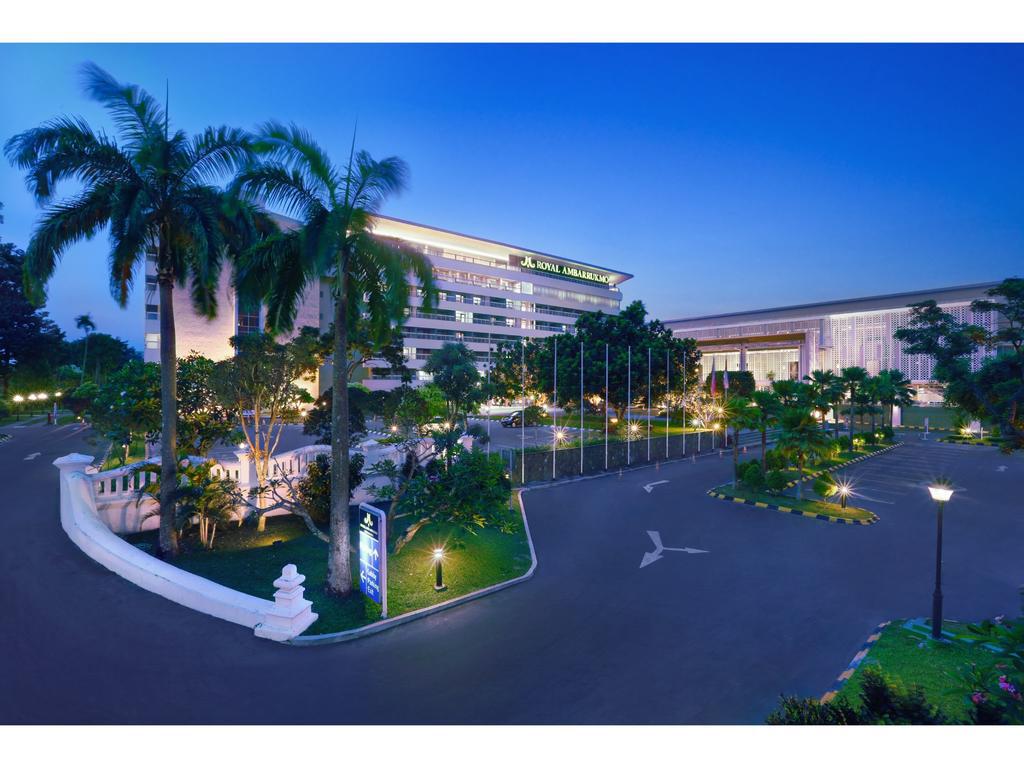
Expanding beyond the island of Java, the hospitality footprint of the colonial era also reached Bali, culminating in the establishment of the Inna Bali Heritage Hotel. Opened on August 22, 1927, in the heart of Denpasar, this property holds the historic title of being the first modern luxury hotel established on the island. Its inception was directly catalyzed by the introduction of regular steamship services operated by the Royal Packet Navigation Company (Koninklijke Paketvaart-Maatschappij or KPM), which began transporting European artists, anthropologists, and affluent leisure travelers to the hitherto remote shores of Bali.
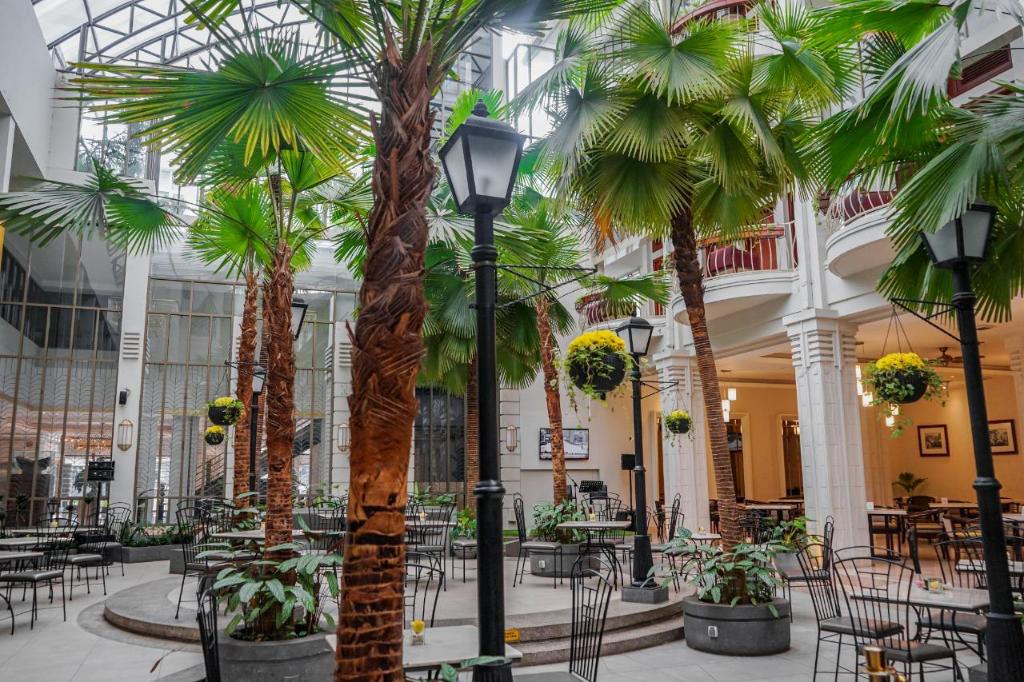
Designed to accommodate the burgeoning influx of foreign visitors who were captivated by Balinese arts and traditions, the hotel quickly became the social and administrative hub for expatriates and intellectuals during the late colonial period. Despite enduring decades of political turbulence, world wars, and the rapid, modern commercialization of Bali’s tourism sector, the hotel maintains its charming colonial facade and understated heritage architecture. Featuring lush tropical courtyards, heritage dining halls, and classic swimming facilities, the Inna Bali Heritage Hotel offers a rare historical retreat in urban Denpasar, with budget-friendly rates starting as low as IDR 270,000 per night.
Economic Implications and Preservation Challenges
The continued operation of these colonial-era hotels presents a unique economic and cultural paradigm within Indonesia’s modern tourism sector. On one hand, these properties serve as invaluable physical archives that enrich the nation’s cultural tourism portfolio, attracting history enthusiasts, architects, and international travelers seeking authentic heritage experiences. The adaptive reuse of these buildings ensures that substantial capital continues to flow into structural maintenance, historic preservation, and local employment.
However, operating century-old properties presents persistent economic hurdles. Hospitality analysts note that balancing strict historic conservation mandates with the installation of modern fire safety systems, high-speed digital infrastructure, and energy-efficient climate control requires substantial capital expenditure. Furthermore, room rates for these heritage assets remain highly sensitive to macroeconomic shifts, inflation rates, local tax adjustments, and fluctuations in regional tourism demand. Industry data consistently indicates that booking these properties during low seasons offers travelers significant cost advantages, though prospective guests are consistently advised to verify final tariffs prior to confirmation, as pricing remains subject to seasonal high-demand surges and municipal policy updates. Ultimately, these five hotels stand not merely as relics of foreign administration, but as resilient pillars of Indonesian hospitality that have successfully transitioned from instruments of colonial leisure into cherished symbols of national heritage.








