
 Tata Titiana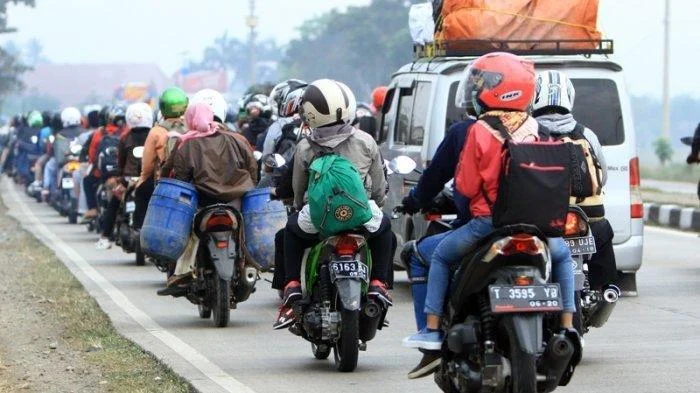
The official policy regarding the annual Eid al-Fitr exodus, commonly known as mudik, underwent a significant shift in March 2021 when the Indonesian government announced that citizens would be permitted to travel to their hometowns to celebrate the religious holiday. This marked a clear departure from the strict nationwide travel bans enforced during the onset of the global health crisis in 2020. The announcement, which immediately ignited nationwide debate, placed the Ministry of Transportation at the center of complex policy coordination aimed at balancing economic mobility with aggressive public health safeguards.
Chronology of Policy Shifts and Ministerial Statements
The definitive statement regarding the 2021 homecoming season was delivered by the Minister of Transportation, Budi Karya Sumadi, during a formal Working Commission hearing with House of Representatives (DPR) Commission V on Tuesday, March 16, 2021. During the proceedings, the Minister clarified that while the government would not explicitly encourage citizens to embark on the mass migration—as the Ministry lacked the direct mandate to issue moral directives of that nature—the travel corridors for the holiday would officially remain open.
This decision set off an immediate logistical mobilization within the government. The Ministry of Transportation committed to collaborating closely with the national COVID-19 Task Force to engineer a comprehensive travel mechanism. The primary objective of this inter-agency cooperation was to prevent the annual movement of millions of citizens from acting as a vector for viral transmission into vulnerable rural communities and regional hometowns. According to policy communications shared via the Minister’s official public channels, the administration intended to rely heavily on structured consultations with regional stakeholders, tightening travel prerequisites, and reinforcing contact tracing infrastructures to maintain a semblance of order during the peak travel window.
Heightened Prerequisites and Regulatory Frameworks
In response to widespread concerns that opening travel corridors could trigger a new wave of infections, the Ministry of Transportation outlined a stringent framework of rules and conditions designed to govern the 2021 homecoming pilgrimage. The regulatory architecture rested upon three foundational pillars: uncompromising health protocols, enhanced passenger surge management, and shortened validity periods for mandatory pre-travel screening tools.
First and foremost, the government mandated the strict enforcement of health protocols across the entire journey continuum—from points of departure and transit hubs all the way to final destinations. Commuters were expected to adhere strictly to hygiene and distancing mandates, including the mandatory wearing of high-grade face masks, maintaining physical distance in terminal waiting areas, undergoing regular disinfection procedures across all public transportation infrastructure, and enduring enforced capacity limits within vehicles to prevent overcrowding. Furthermore, transportation authorities planned meticulous scheduling adjustments for services to stagger passenger volumes.
Second, to proactively mitigate the risks associated with population surges, the government integrated intensive contact tracing mechanisms into the transit grid. Third, the validity window for mandatory medical screenings, such as rapid antigen tests and polymerase chain reaction (PCR) tests, was compressed to ensure that travelers possessed verifiable, up-to-date health clearances immediately prior to boarding or entering transit vehicles. Officials repeatedly emphasized that the success of these measures ultimately hinged on public discipline and individual compliance with the established health codes.
Epidemiological Concerns and Public Health Warnings
Despite the intricate planning and regulatory safeguards unveiled by the Ministry of Transportation, the decision to greenlight the 2021 mudik was met with deep skepticism and vocal opposition from the academic and public health sectors. Epidemiologists and infectious disease specialists argued that the fundamental epidemiological indicators—including national vaccination coverage rates and community transmission baselines—did not yet support the safe execution of a mass population movement of this scale.
Prominent epidemiologists, including public health experts from Universitas Gadjah Mada (UGM), publicly challenged the rationale behind the policy. Critics noted that the government appeared to be placing an over-reliance on the early stages of the national immunization program, operating under the assumption that baseline vaccination coverage was already sufficient to suppress widespread outbreaks. However, public health professionals countered that vaccination status alone did not grant immunity from infection in public spaces, nor did it eliminate the capacity of an individual to transmit the virus to others if non-pharmaceutical interventions were abandoned.
A core concern raised by health experts was the behavior of travelers once they departed formal transit networks. While public transportation systems were subjected to centralized oversight, rigorous screening mandates, and the deployment of domestic detection technologies such as GeNose breathalyzers at major terminals, stations, and airports, private vehicle travel presented a formidable enforcement blind spot. Epidemiologists warned that millions of citizens opting to travel via private cars and motorcycles without institutional supervision could easily bypass localized screening checkpoints, inadvertently serving as vectors for viral transmission into remote districts where healthcare infrastructure was less equipped to handle surges in severe cases.
Broader Implications and Strategic Analysis
The policy debate surrounding the 2021 Eid al-Fitr homecoming encapsulates the delicate balancing act faced by governments worldwide during the prolonged public health crisis: reconciling the socioeconomic, cultural, and psychological imperatives of traditional holidays with the rigid demands of disease containment. For millions of Indonesians, the annual pilgrimage represents a deeply ingrained cultural tradition and an essential touchstone for family cohesion, having been entirely suppressed during the preceding year of strict lockdowns.
At the same time, the divergence in strategy between the transportation ministry’s managed-access approach and the public health sector’s advocacy for delay highlighted persistent vulnerabilities in pandemic governance. Analysts pointed out that macro-level suspension of mass travel, while economically and psychologically burdensome, offered a far lower risk profile than an open-border policy reliant entirely on decentralized enforcement and voluntary compliance.
Ultimately, the events surrounding the 2021 mudik underscored the reality that vaccination rollouts, while critical to reducing morbidity and mortality, must be accompanied by sustained behavioral compliance, robust testing infrastructure, and adaptive policy responses. The ongoing friction between economic reopening and epidemiological caution demonstrated that navigating the transition out of a global health emergency requires continuous calibration between administrative feasibility and the sobering realities of viral transmission dynamics.








