
 Nila Kartika Wati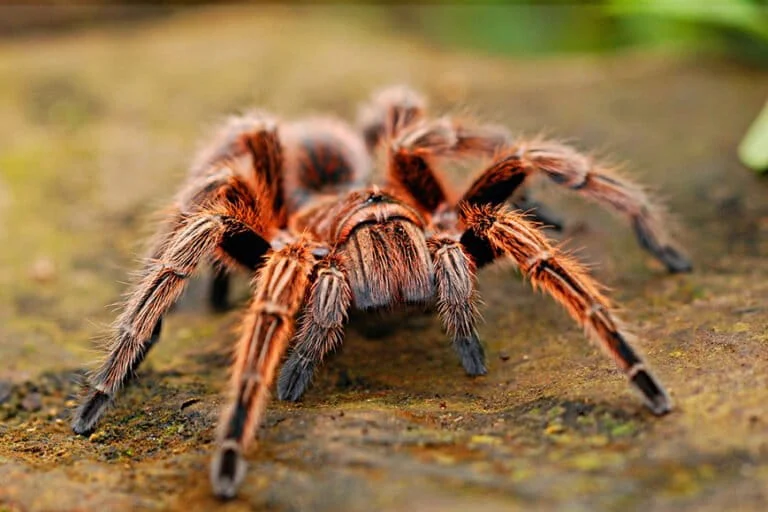
In the complex hierarchy of the South American rainforest floor, few encounters are as high-stakes as the intersection of a tarantula’s burrow and an encroaching column of army ants. For decades, biologists have categorized army ants—predatory insects known for their relentless, swarming hunting tactics—as a significant threat to nearly any creature that cannot quickly vacate their path. However, recent observations and a comprehensive study published in the Journal of Natural History in August 2024 have unveiled a counterintuitive dynamic: when army ants infiltrate the lair of a tarantula, they frequently bypass the resident spider entirely.
This peculiar behavior has led researchers to conclude that the dense, bristled hair covering the tarantula’s body is not merely an ornamental feature, but a sophisticated, evolutionary defensive mechanism. This discovery challenges long-held assumptions about the vulnerability of these large arachnids and highlights the intricate biological arms race occurring within the undergrowth.
The Evolutionary Shield: Understanding the Anatomy of Defense
The primary hypothesis regarding this phenomenon centers on the physical structure of the tarantula’s setae, or specialized hairs. Alireza Zamani, an esteemed arachnologist at the University of Turku, Finland, and the lead author of the study, posits that these stiff, dense fibers create a formidable barrier that effectively neutralizes the primary weapons of the army ant: their mandibles and stingers.
"The dense hair covering the tarantula’s body makes it physically difficult for ants to reach the spider’s skin to bite or sting," Zamani explained. "We are confident that these hairs have evolved specifically as a defensive mechanism to facilitate coexistence or at least survival in an environment where army ants are a constant, swarming presence."
This defensive barrier is not a static feature. Tarantulas are known to possess different types of setae, some of which are urticating—barbed hairs that can be flicked at predators to cause intense irritation to eyes and mucous membranes. The study suggests that the body hair serves a more fundamental, passive role, acting as a structural deterrent that forces the ants to seek easier, less defended prey rather than engaging in a costly battle with a creature that is essentially encased in a protective mat of bristles.
Chronology of Observation and Methodology
The findings published in August 2024 were not the result of a single isolated incident, but rather a meta-analysis of years of field data and existing literature. The research team, led by Zamani, synthesized decades of anecdotal evidence and recent field observations to map the behavioral interactions between tarantulas and their neighbors.
For years, field researchers had noted that tarantulas remained curiously passive during army ant raids. While smaller, less armored arthropods would flee, tarantulas were often observed staying firmly within their burrows. By cross-referencing these field reports with the known anatomy of various tarantula species, the team identified a correlation between the density of body hair and the success rate of surviving ant incursions.
The timeline of this research reflects a growing shift in arachnology: moving away from viewing tarantulas as isolated, aggressive predators toward understanding them as integral components of a highly social and interactive ecosystem. The synthesis of historical research with modern field observations allowed the team to move beyond speculation and categorize these behaviors as systematic survival strategies.
Beyond the Burrow: Behavioral Adaptations and Evasion
While the "hair-as-shield" hypothesis explains the survival of ground-dwelling tarantulas, the researchers noted that the defense strategies of these arachnids are far from monolithic. The biological imperative to survive the relentless swarm of army ants has forced different species to adopt diverse tactics based on their habitat.
For arboreal tarantulas—those that reside in trees rather than underground—the density of body hair is often significantly lower than their ground-dwelling counterparts. Lacking the heavy "armor" of the burrow-dwellers, these spiders utilize evasion. A prime example highlighted in the study is the species Avicularia hirschii, observed in the Peruvian Amazon. When faced with an ant swarm, these spiders display remarkable agility, hanging from the very tips of leaves or extending themselves into positions where the ants cannot gain purchase. This behavioral flexibility demonstrates that the tarantula’s survival is predicated on a suite of adaptations that vary according to their niche in the ecosystem.

The Symbiotic Paradox: A Beneficial Relationship?
Perhaps the most surprising revelation of the 2024 study is that the relationship between tarantulas and army ants is not always adversarial. While the ants are undeniably predators, they occasionally perform a "janitorial" service for the tarantula. Observations have confirmed that ants may remove old, decaying food scraps or debris from the burrow, effectively sanitizing the spider’s living space.
This relationship borders on commensalism, where one party benefits without harming the other. The tarantula, by providing a habitat that the ants find useful to clean, may inadvertently receive a cleaner home. However, this is a delicate balance. The protection offered by the tarantula’s hair remains the primary safeguard, ensuring that if the ants decide the spider itself is a viable food source, the arachnid is prepared to defend its life. Previous studies have also noted that tarantulas take extra precautions when rearing offspring, often lining their egg sacs with specialized, protective hairs to ensure that even the smallest, most vulnerable stages of their lifecycle are shielded from ant predation.
The Amphibian Connection: Multi-Species Coexistence
The research also delved into the complex social dynamics within tarantula burrows, particularly regarding their relationship with amphibians. The study gathered roughly 60 separate observations from 10 different countries documenting instances of frogs and toads utilizing tarantula burrows as shelters.
This interaction provides a window into the "neighborhood" dynamics of the forest floor. Small frogs, often vulnerable to a wide array of predators, find the depths of a tarantula burrow to be an ideal sanctuary. In return, these amphibians may act as a secondary line of defense, consuming smaller insects, larvae, or parasites that might otherwise threaten the tarantula or its eggs.
"They eat insects that can be harmful to the spider, its eggs, and its spiderlings," Zamani noted. "It can be said that the tarantula is not as fearsome as it has been portrayed so far."
Implications and Scientific Analysis
The implications of this research are twofold. First, it significantly alters the scientific community’s perception of the tarantula as a solitary, hyper-aggressive predator. Instead, the evidence points to a creature that is highly adapted to navigate complex social and biological landscapes. The tarantula’s existence is defined by a series of calculated risks and strategic alliances, mediated by its physical armor and behavioral caution.
Second, the study highlights the critical importance of protecting the structural integrity of these habitats. If the tarantula is a "keystone" occupant of these burrows—creating micro-ecosystems that support amphibians and provide a focal point for interspecies interactions—then the decline of tarantula populations could have cascading effects on the smaller organisms that rely on their presence.
From a data-driven perspective, the findings emphasize the need for continued, long-term observational studies in tropical regions. The "hair-as-defense" theory, while supported by strong evidence, remains a hypothesis that invites further testing. Future research involving controlled environments or high-speed behavioral analysis could confirm exactly how much protection these hairs provide against different species of ants.
Conclusion
The narrative of the tarantula has long been colored by human fear and misunderstanding. By framing them merely as "large, scary spiders," we have overlooked the subtle, brilliant ways in which they interact with the world around them. Whether through the evolutionary marvel of their protective hair, the strategic evasion practiced by arboreal species, or the complex, often beneficial, relationships they maintain with forest amphibians, tarantulas prove to be master survivalists.
As we continue to decode the behaviors of these creatures, we gain more than just knowledge about arachnology; we gain a deeper appreciation for the resilience of life in the face of constant, relentless predation. The study serves as a poignant reminder that in the natural world, survival is rarely about who is the strongest, but rather about who has evolved the most effective strategy to exist alongside the challenges of their environment. The tarantula, with its bristled armor and complex social ties, remains a testament to the ingenuity of nature.









