
 Nila Kartika Wati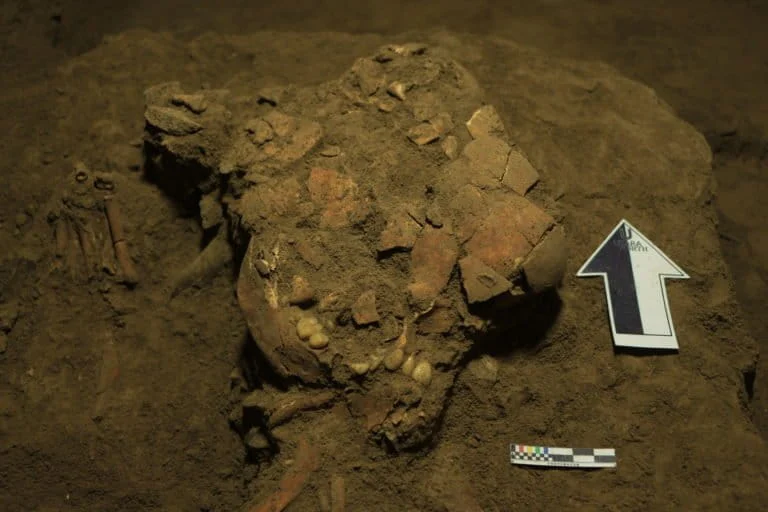
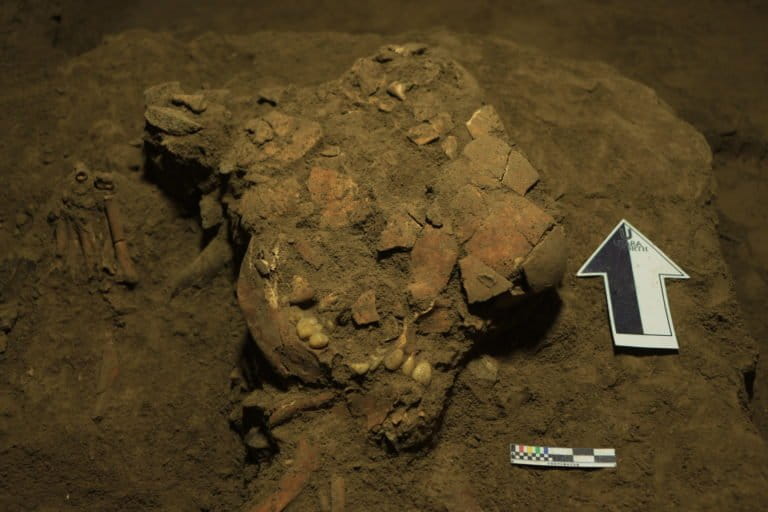
The discovery of a 7,200-year-old skeleton in the Leang Panninge cave in Maros, South Sulawesi, has fundamentally altered the scientific understanding of human migration and genetic heritage in Southeast Asia. Known colloquially as "Bessé," a term of endearment for young women in the local Bugis culture, this individual represents a rare and significant breakthrough in paleogenetics. In a region where tropical heat, high humidity, and acidic soil typically degrade organic material within decades, the preservation of Bessé’s DNA in her petrous (ear) bone is nothing short of miraculous. This find has provided researchers with an unprecedented window into the Toalean culture, a mysterious group of hunter-gatherers whose influence was once thought to be localized, and their complex ancestral ties to the earliest inhabitants of Oceania.
The Significance of the Toalean Culture
The Toalean people, who inhabited the southern peninsula of Sulawesi from approximately 8,000 to 1,500 years ago, have long been a subject of fascination for archaeologists. Characterized by their unique stone tool industry—most notably the Maros points, which are finely serrated, leaf-shaped projectile points—the Toaleans occupied a niche environment that differed significantly from the agricultural societies emerging elsewhere in the Indonesian archipelago.
Archaeologists have spent decades categorizing the Toalean industry based on lithic assemblages, such as microliths and bone implements. Until the discovery of Bessé, the Toalean culture was defined almost exclusively by these tools. The lack of human remains meant that researchers could only hypothesize about their physical appearance, their origins, and their interactions with neighboring populations. The discovery of Bessé in 2015, during excavations led by an international team, finally provided the physical evidence necessary to link the material culture of the Toaleans to a specific biological lineage.
A Chronology of Discovery and Analysis
The scientific journey from the initial discovery at Leang Panninge to the publication of the genomic results in 2021 followed a meticulous, multi-year process:
- 2015: Archaeologists discover the skeleton of a female, aged 17–18, at the Leang Panninge cave site in Maros. The burial was found in a flexed position, characteristic of the Toalean funerary practices of that period.
- 2018–2020: Specialists in ancient DNA (aDNA) from Griffith University and the Max Planck Institute for the Science of Human History conduct specialized sampling of the petrous bone. The density of this bone is known for its ability to shield DNA from environmental degradation.
- 2021: The genomic analysis is completed. The results confirm that the DNA belongs to a previously unknown human lineage, sparking a global re-evaluation of prehistoric migration routes in the Wallacea region—the group of islands separated by deep water from the Asian and Australian continental shelves.
Genomic Implications: The Denisovan Connection
Perhaps the most startling revelation from the study of Bessé is her genetic ancestry. Genomic sequencing revealed that she shares a deep genetic history with the indigenous populations of Papua and the Aboriginal Australians. This suggests that the early inhabitants of Sulawesi were part of a wider movement of hunter-gatherers who traversed the Wallacean islands long before the arrival of the Austronesian-speaking farmers who now make up the majority of the region’s population.
Even more significant is the evidence of introgression with Denisovans. The Denisovans, an extinct group of hominins known primarily from remains found in Siberia and the Tibetan Plateau, left a lasting imprint on the genetic makeup of modern-day Oceanians. Bessé’s DNA shows a distinct contribution from these ancient hominins, providing the first direct evidence that Denisovans were present in the Wallacean region. This confirms that the island of Sulawesi was a critical crossroads for the meeting and interbreeding of distinct human populations during the Late Pleistocene.
Scientific Perspectives and Expert Analysis
Basran Burhan, an archaeologist and PhD candidate at Griffith University, who has been instrumental in the study of the Toalean culture, emphasizes that Bessé is more than just a data point; she is a bridge to understanding a "lost" chapter of human history. In discussions regarding the find, experts have noted that the absence of Toalean ancestry in modern-day populations suggests a significant demographic shift occurred in the region.
"The Toalean people were not isolated," notes Burhan. "Their genetic makeup suggests they were part of a larger, interlinked network of populations that moved through the islands of Southeast Asia. The fact that we found Denisovan DNA here, in the heart of Wallacea, tells us that the story of human evolution is far more complex than a simple linear migration from Africa to Australia."
Other researchers in the field have highlighted the technical difficulty of the task. Extracting DNA from the tropics is a high-stakes endeavor, as the "DNA clock" in tropical environments is significantly faster than in temperate zones. The success at Leang Panninge serves as a proof-of-concept for future excavations in Southeast Asia, suggesting that if archaeologists can locate the right skeletal contexts, many more secrets of the region’s human past can be recovered.
Broader Impact on Wallacean Prehistory
The discovery of Bessé forces a reconsideration of the "Wallacea barrier." For years, biologists and anthropologists debated whether the deep waters surrounding the islands of Sulawesi, Lombok, and Flores acted as an impenetrable wall for early human migration. The presence of a distinct, long-standing hunter-gatherer culture in Sulawesi suggests that Wallacea was not a barrier, but rather a "hub" for evolutionary development.
Furthermore, the genetic disparity between Bessé and modern populations in Sulawesi implies that the transition from hunter-gatherer to agricultural societies was likely a replacement event rather than a gradual assimilation. When Austronesian farmers moved into the archipelago around 3,500 years ago, they brought new technologies and social structures that effectively marginalized the existing Toalean groups, eventually leading to their disappearance from the genetic and cultural record.
Preserving the Heritage of Leang Panninge
The site of Leang Panninge has now been elevated to a site of global scientific importance. Beyond the biological data, the cave itself serves as an archive of human adaptation. The preservation of the site is currently a priority for Indonesian authorities and international research partners.
The challenge, according to conservationists, is to balance the need for further scientific exploration with the preservation of the cave’s integrity. Human activity, tourism, and environmental changes pose constant threats to the delicate limestone environment. As a center of archaeological research, Leang Panninge requires robust management plans to ensure that future researchers can continue to analyze the stratigraphy of the cave without compromising the remaining evidence of the Toalean people.
Future Directions for Research
The study of Bessé is only the beginning. As technology in the field of paleogenomics advances—particularly in the areas of non-destructive sampling and ultra-deep sequencing—the potential for uncovering more about the Toalean people grows. Researchers are now looking at other sites in South Sulawesi and neighboring islands to determine how far the Toalean culture extended and whether other pockets of these ancient lineages survived into the more recent past.
Moreover, the search for further Denisovan DNA in the region remains a high priority. By creating a more comprehensive map of Denisovan introgression across the Indonesian islands, scientists hope to piece together the timeline of their arrival and the environmental factors that led to their eventual extinction.
Conclusion: A Legacy Reclaimed
Bessé, the young woman of Leang Panninge, has become an iconic figure in the study of human migration. Her life, ending over seven millennia ago, offers a profound reflection on the resilience and complexity of human history in the tropics. Through her, we learn that the story of Indonesia is not just one of the recent past, but one that stretches back to the earliest chapters of human dispersal.
The integration of archaeological data, genomic sequencing, and cultural anthropology has provided a holistic view of the Toalean people. As scientific inquiry continues to shed light on this elusive group, Bessé remains the central reference point—a reminder that the dirt and stone of the Indonesian caves hold the keys to understanding our collective human journey. The investigation into the Leang Panninge site continues to inspire a new generation of archaeologists to look closer, dig deeper, and respect the silent, yet significant, stories buried in the earth.









