Bambang Pamungkas
Jakarta, CNBC Indonesia — President Prabowo Subianto has issued a decisive directive to significantly scale up the number of forest rangers, locally known as polisi kehutanan or polhut, across the archipelago. The strategic initiative aims to fundamentally strengthen the protection, preservation, and monitoring of Indonesia’s vast forestry estates, which currently face persistent threats from illegal logging, systematic land encroachment, and destructive forest fires.
Speaking directly to fiscal authorities, the President formally urged Minister of Finance Suahasil Nazara to secure and allocate the necessary state budget to facilitate the recruitment, training, and deployment of tens of thousands of new personnel. The policy underscores the administration’s broader commitment to environmental stewardship, resource security, and the strict enforcement of forestry laws within Southeast Asia’s largest economy.
The Core Directive and Budgetary Adjustments
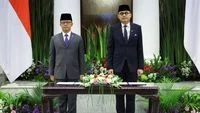
During an official address at the complex of the Attorney General’s Office in Jakarta, President Prabowo highlighted the stark numerical disparity between the expansive geographical scale of Indonesia’s forested lands and the severely limited human resources currently tasked with protecting them.
Addressing the financial leadership directly, the President outlined a targeted multi-year roadmap designed to elevate personnel numbers from a critically low baseline to a robust operational force of 70,000 active forest rangers.
"Mr. Minister of Finance, how much budget can we secure next year? Out of the targeted 70,000 personnel, we might only reach 21,000 by 2027, meaning it could take three to four years to fully achieve the 70,000 personnel mark," President Prabowo stated.
The head of state emphasized that the current shortage of forest rangers directly correlates with ongoing environmental crimes that continue to degrade protected ecosystems. Without adequate on-the-ground enforcement, illegal activities often go undetected until significant ecological and financial damage has already occurred.
"I have proposed through the state budget, if I am not mistaken, to increase the number of forest rangers to 70,000," the President added, signaling a firm legislative and executive alignment to prioritize environmental defense in national fiscal planning.
The Reality of Understaffed Forestry Enforcement
President Prabowo contextualized the expansion request by acknowledging the immense physical and operational challenges confronting security and regulatory personnel across the nation. He drew attention to the disproportionate ratio of enforcement officers to the millions of hectares of protected forests under state jurisdiction.
"I understand the difficulties of our apparatus, I understand the hardships of our soldiers, our police, our customs officers, our forest rangers. We understand that, if I am not mistaken, to protect tens of millions of hectares of our forests, we only have 7,000, we only have 4,500 forest rangers to guard tens of millions [of hectares]," Prabowo asserted emphatically.
This massive shortfall has historically left vast swaths of remote forest land vulnerable to transnational syndicates, local encroachers, and corporate actors operating outside the boundaries of the law. By expanding the forest ranger workforce to 70,000, the administration aims to establish a permanent, highly visible presence capable of deterring forest fires, halting illegal wildlife trafficking, and preventing unauthorized land conversion.
Context of the Announcement: Asset Recovery and Administrative Fines
The President’s directive regarding forest ranger expansion was delivered during a high-profile national event: the official handover of administrative fines, the recovery of state financial losses, and the formal repossession of forest areas under Phase VIII of the ongoing national forestry asset recovery initiative.
The event, held at the Attorney General’s Office complex in Jakarta, brought together key leaders from various ministries, law enforcement agencies, and specialized task forces dedicated to environmental and fiscal governance.
According to official data presented by Sanitiar Burhanuddin, the Attorney General who also serves as Vice Chairman I of the Steering Team for the Task Force on Forest Area Regulation and Order (Satgas PKH), the financial and territorial returns achieved during this latest phase were substantial. A total of Rp 13,241,335,681,910.13 in cash penalties was formally surrendered to the state, alongside the successful repossession and state reintegration of 259,230.73 hectares of forest land.
"Today we are witnessing the tangible results of the hard work of the PKH Task Force, which consists of, as mentioned earlier, 12 institutions working together to save and secure state wealth," President Prabowo said in his address.
Milestone Achievements of the Forestry Task Force
The Satgas PKH, which operates as a multi-agency coalition involving a dozen distinct government bodies, was formally established in January 2025. Its primary mandate is to untangle complex regulatory violations, penalize non-compliant corporate entities operating within state forest zones, and recover state assets lost due to illegal land utilization.
President Prabowo noted that enforcement operations of this scale have been systematically executed eight times since the task force’s inception. Through these concerted multi-agency efforts, the cumulative amount of cash penalties and recovered state funds has reached approximately Rp 52 trillion.
This financial recovery represents a major victory for public finance management, proving that environmental infractions can carry severe economic consequences for violators. The integration of environmental protection with aggressive asset recovery forms a cornerstone of the current administration’s strategy to bolster national revenue while enforcing ecological sustainability.
Broader Implications for Indonesia’s Environment and Economy
The simultaneous push for increased enforcement manpower and aggressive legal action against forestry violators signals a fundamental shift in how Indonesia manages its natural capital. As one of the world’s primary global carbon sinks, the health of Indonesia’s rainforests holds immense geopolitical and environmental significance in the global fight against climate change.
-
Enhanced Deterrence Against Environmental Crimes
With 70,000 trained forest rangers deployed across critical regions in Sumatra, Kalimantan, Sulawesi, Papua, and other high-risk areas, the capacity for proactive patrols will increase exponentially. This workforce expansion is expected to drastically reduce response times to hot spots, curb illegal logging operations, and prevent the intentional burning of land for agricultural clearance. -
Fiscal Sustainability and Good Governance
The success of the Satgas PKH in recovering Rp 52 trillion demonstrates that natural resource management can actively contribute to the national treasury. By ensuring that corporations and individuals adhere strictly to spatial planning laws and pay their administrative obligations, the government reinforces the rule of law and creates a level playing field for compliant businesses. -
International Climate Commitments
Indonesia has made ambitious pledges under its Nationally Determined Contributions (NDC) to reduce greenhouse gas emissions, primarily through the Forestry and Other Land Use (FOLU) Net Sink 2030 scenario. Strengthening the on-the-ground enforcement apparatus directly supports these international commitments, providing tangible proof that national policies are backed by robust operational enforcement. -
Inter-Agency Synergy
The collaborative framework demonstrated by the 12 institutions comprising the Satgas PKH sets a new precedent for inter-agency cooperation in Indonesia. Combining the investigative power of the Attorney General’s Office with the regulatory oversight of the Ministry of Environment and Forestry, along with financial intelligence from regulatory bodies, creates a comprehensive defense mechanism against complex environmental crimes.
Conclusion and Future Outlook
President Prabowo Subianto’s call for a 70,000-strong forest ranger corps marks a turning point in Indonesia’s environmental policy history. By bridging the resource gap that has historically hampered forestry oversight, the government is laying the groundwork for sustainable resource management that protects both the nation’s ecological integrity and its financial interests.
As the Ministry of Finance works alongside forestry and security officials to map out the budgetary allocation for the upcoming fiscal years, the gradual deployment of these new personnel will be closely monitored by environmental experts, civil society, and international observers. Combined with the ongoing asset recovery work of the Satgas PKH, these measures reflect a comprehensive, resolute approach to safeguarding Indonesia’s precious natural heritage for generations to come.