
 Nila Kartika Wati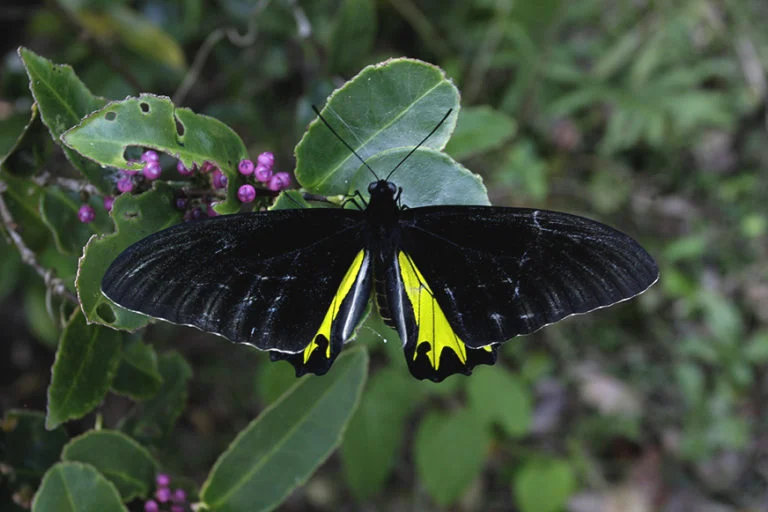
The global decline of butterfly populations represents far more than the disappearance of charismatic, colorful insects; it is a profound indicator of systemic environmental degradation that threatens food security, biodiversity, and ecosystem stability. As key pollinators and vital links in the terrestrial food web, butterflies act as "canary in the coal mine" species. Their presence, or lack thereof, provides an immediate snapshot of the health of an ecosystem. From the industrial landscapes of East Kalimantan to the restricted, fragile habitats of endemic species in Bali, these insects are facing an existential crisis driven by anthropogenic pressures, including chemical intensification in agriculture and the relentless expansion of extractive industries.
The Ecological Role of Lepidoptera
Butterflies and moths, belonging to the order Lepidoptera, occupy a unique niche in the natural world. Beyond their aesthetic appeal, they serve as essential pollinators for a vast array of wild plants and commercial crops. Unlike bees, which are often the focus of pollination conservation, butterflies possess a unique flight pattern and foraging behavior that allows them to pollinate across larger distances and fragmented landscapes.
Furthermore, they are primary consumers in the larval stage and prey for birds, spiders, and small mammals throughout their life cycle. A decline in butterfly numbers triggers a trophic cascade. When butterfly populations crash, the plants that rely on them for reproduction face reduced genetic diversity and lower yields, while the predator species that depend on butterfly larvae for protein experience food shortages. This ripple effect destabilizes entire biological communities, leading to a loss of resilience against climate change and environmental shocks.
Regional Threats: From Kalimantan to Bali
In Indonesia, the threats to butterfly populations are as diverse as the archipelago’s geography. In East Kalimantan, the rapid expansion of extractive industries—specifically coal mining and large-scale palm oil plantations—has led to massive habitat fragmentation. The conversion of tropical rainforests into monoculture landscapes removes the diverse host plants required by butterflies for breeding and feeding. Without a mosaic of flora, specialized butterfly species cannot survive.
Conversely, in Bali, the situation highlights the vulnerability of endemism. The Barong butterfly (Attacus atlas or related local variants) is a prime example of a species with a highly restricted range. When a species is endemic to a single valley or forest patch, the loss of even a few hectares of habitat can result in total extinction. Unlike generalist species that can migrate to neighboring regions, endemic butterflies are "trapped" by their evolutionary specialization. For these species, protection is not merely a long-term goal; it is a critical, time-sensitive necessity.
A Chronology of Environmental Pressure
The decline of Lepidoptera is not a recent phenomenon but a cumulative result of decades of land-use changes.
- 1970s–1980s: The "Green Revolution" introduced widespread use of synthetic pesticides and herbicides. While designed to increase crop yields, these chemicals lacked specificity, killing non-target insects, including butterflies, on a massive scale.
- 1990s–2000s: The acceleration of industrial palm oil production in Southeast Asia led to the clearing of primary forests, destroying the corridors necessary for butterfly migration and genetic exchange.
- 2010s: Climate change began to alter the phenology—or the timing of life cycle events—of butterflies. Warmer temperatures caused butterflies to emerge earlier than their host plants, leading to a mismatch that resulted in widespread larval mortality.
- 2020–Present: Increased focus on biodiversity loss under the Kunming-Montreal Global Biodiversity Framework has brought the issue of insect decline to the forefront of international policy. However, on-the-ground implementation remains hindered by the lack of localized data.
Supporting Data and Scientific Assessment
According to the International Union for Conservation of Nature (IUCN) Red List, over 10% of butterfly species are currently at risk of extinction. However, experts suggest this figure is a significant underestimate due to the "Linnean shortfall"—the lack of comprehensive data on most insect species.
Research conducted by the Xerces Society for Invertebrate Conservation indicates that pesticide exposure, particularly the use of neonicotinoids, remains the primary driver of decline in agricultural zones. These systemic insecticides are absorbed into the plant’s tissues, appearing in nectar and pollen. For a butterfly, even sub-lethal doses can impair navigation, flight endurance, and reproductive success.
In tropical regions like Indonesia, satellite imagery confirms a correlation between habitat loss and insect population decline. Studies in tropical forest fragments suggest that when habitat connectivity drops below 30%, butterfly species richness plummets by more than 50%. This loss is irreversible without active restoration efforts.
Perspectives from Conservationists and Stakeholders
The urgency of the situation has prompted a shift in how conservation is managed. Dr. Aris Wahyudi, an entomologist specializing in tropical insect ecology, notes that "the reliance on passive protection—simply setting aside forest—is no longer sufficient. We are now entering an era where active intervention, including the cultivation of host plants and the creation of ‘pollinator corridors’ in urban and agricultural spaces, is required."
Government bodies have faced criticism for prioritizing industrial output over ecological safeguards. However, recent initiatives in Indonesia, such as the establishment of protected zones within industrial concessions, indicate a slow shift in policy. Corporations operating in East Kalimantan are increasingly pressured by international ESG (Environmental, Social, and Governance) standards to prove that their operations do not lead to the loss of local biodiversity, though the enforcement of these standards remains inconsistent.
Implications for Ecosystem Services
The economic implications of losing butterfly populations are significant. Agriculture depends on pollination services that are often taken for granted. In Indonesia, the health of many fruit-bearing crops and wild species essential to forest regeneration is tied directly to the health of Lepidoptera. If the current trajectory continues, the cost of manual pollination or the loss of agricultural yield will be borne by the national economy.
Furthermore, the loss of butterflies serves as an indicator of broader soil and water contamination. Because butterflies are sensitive to chemical residues, their decline indicates that the local water supply and soil microbiome are also likely compromised by excessive pesticide use. Thus, protecting butterflies is, by extension, a strategy for protecting human health and water security.
The Role of Citizen Science and Community-Led Conservation
In the absence of large-scale government monitoring, "citizen science" has emerged as a vital tool. Programs that encourage local residents to document butterfly sightings have provided researchers with thousands of data points that would otherwise be impossible to collect. By mapping the presence of species in backyard gardens and local parks, citizens are helping to identify which areas are acting as "refugia"—safe havens where species can persist despite the surrounding environmental degradation.
Community-led butterfly parks and butterfly houses have also played a crucial role. These facilities do more than provide a space for tourism; they serve as educational hubs where the public can learn about the life cycle of the insect and the importance of planting native host plants rather than exotic ornamentals. These localized efforts are essential for building a culture of conservation that transcends administrative borders.
Future Outlook: A Call to Action
The task of protecting butterflies is a multifaceted challenge that requires a departure from traditional, siloed conservation strategies. The solution involves three pillars:
- Regenerative Agriculture: Moving away from broad-spectrum pesticides toward integrated pest management (IPM) that protects non-target pollinators.
- Landscape Connectivity: Ensuring that industrial developments in regions like Kalimantan include mandatory, connected wildlife corridors that allow for the migration of Lepidoptera.
- Endemic Species Protection: Identifying and strictly protecting the micro-habitats of species like the Barong butterfly, treating them as irreplaceable biological assets.
The survival of butterflies in our environment is not just about keeping the sky vibrant; it is about maintaining the fundamental machinery of nature. Every species lost represents a broken gear in the engine of the biosphere. If the current trends in habitat destruction and chemical usage are not reversed, the silence in our forests and fields will grow, signaling a shift in the balance of nature from which there may be no return.
As we look toward the next decade, the metrics of success must move beyond GDP and industrial output to include the health of our biodiversity. The butterflies are telling us a story of a changing world. It is a story that requires immediate action, rigorous scientific commitment, and a societal shift toward valuing the small, delicate, and often overlooked components of our world. The future of our ecological landscape depends on whether we listen to the signals they provide—before the last of them stops flying.









