 Tata Titiana
South Korea has firmly established itself as a premier global tourism powerhouse, attracting millions of international visitors annually, with travelers from Southeast Asia, particularly Indonesia, representing a rapidly growing demographic. This surge in popularity is largely attributed to the sweeping global phenomenon known as the Hallyu wave, or the Korean Wave. Popular television dramas, cinematic releases, and K-pop culture have successfully showcased the nation’s diverse landscapes, blending ultra-modern metropolises with rich cultural heritage sites. For travelers planning an itinerary to the East Asian country, moving beyond standard tourist traps to explore locations made famous by popular media offers an immersive experience into contemporary Korean lifestyle. Industry analysts note that media-induced tourism has become a vital economic driver, prompting local governments to heavily invest in maintaining and promoting these iconic urban backdrops.
The Evolution of Media-Driven Tourism in South Korea
The intersection of entertainment media and tourism in South Korea is not a recent development, but its trajectory has accelerated exponentially over the past decade. Government-backed initiatives, spearheaded by organizations such as the Korea Tourism Organization (KTO), have capitalized on the global success of Korean dramas (K-dramas) to revitalize urban and rural districts alike. Historically, tourism was concentrated around ancient palaces, historical temples, and natural wonders like Jeju Island. However, contemporary itineraries increasingly feature dynamic urban spaces, specialized architectural marvels, and vibrant arts districts that mirror the storylines of beloved television programs. This strategic shift has diversified the national tourism portfolio, distributing economic benefits to diverse sectors including hospitality, retail, and local arts communities.
Immersive Urban Energy: Experiencing Geonbae’s Nightlife and Metropolit Appeal

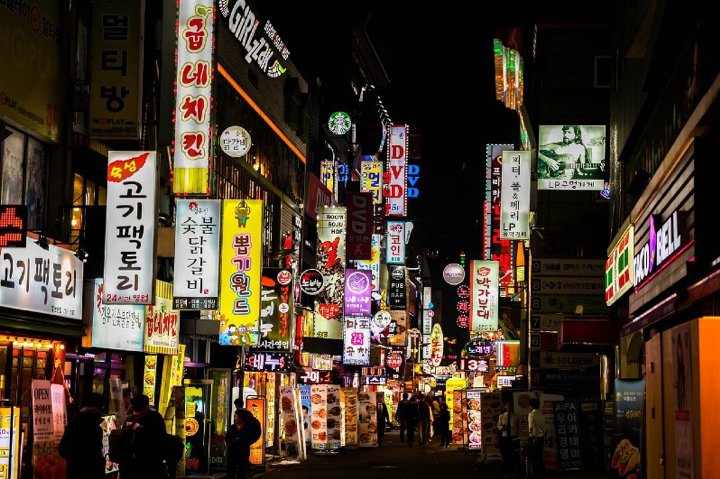
For travelers seeking to immerse themselves in the high-energy pulse of South Korea’s contemporary urban landscape, Geonbae offers a quintessential metropolitan experience. Characterized by bustling thoroughfares flanked by an eclectic array of modern bars, bistros, and entertainment venues, this district captures the vibrant nocturnal spirit native to Seoul and other major urban centers. The visual aesthetic of the area—defined by glowing neon signage, striking architectural contrasts, and a constant influx of both local residents and international visitors—frequently serves as the visual backdrop for cinematic sequences depicting youthful urban life.
From an economic and sociological perspective, districts like Geonbae reflect South Korea’s rapid post-war modernization and the rise of a robust consumer culture. Urban planners designed these zones to optimize pedestrian engagement, encouraging visitors to transition seamlessly from dining to entertainment. Tourism experts emphasize that experiencing such districts provides foreign visitors with a genuine understanding of modern Korean social dynamics, where work-life balance increasingly favors leisure, dining, and social connectivity in dynamic public spaces.
The Artistic Heartbeat of Seoul: Daehakro’s Cultural Significance
Moving from commercial entertainment to high culture, Daehakro stands as a premier destination for performing arts enthusiasts and cultural explorers. Stretching approximately 1.6 kilometers, this historic avenue is frequently compared to Broadway in New York City or London’s West End. The district’s name literally translates to "University Street," a nod to its historical association with Seoul National University before the institution relocated its main campus in the 1970s and 1980s.
Today, Daehakro boasts a concentrated network of over a hundred theater venues, ranging from large-scale commercial auditoriums to intimate experimental playhouses. Visitors walking down the tree-lined boulevard can witness live street performances, explore independent art galleries, and attend a diverse array of theatrical productions, musicals, and indie concerts. Cultural authorities credit Daehakro with nurturing generations of Korean actors, playwrights, and musicians who later achieve international acclaim. For the discerning traveler, visiting this cultural hub offers profound insight into South Korea’s thriving performing arts sector, demonstrating that the nation’s global cultural footprint extends far beyond mainstream television screens.
Architectural Marvels and Modern Literacy: Inside the Starfield Library
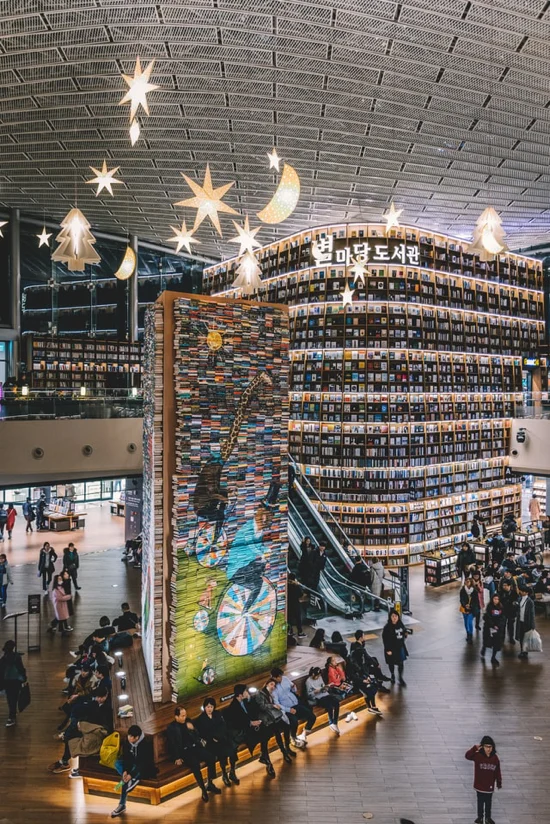
In stark contrast to open-air cultural avenues, the Starfield Library represents a groundbreaking fusion of modern architecture, public space design, and intellectual accessibility. Situated inside the sprawling COEX Mall in the Gangnam district of Seoul, this open-plan cultural facility has quickly become one of the most photographed locations in the country. Spanning approximately 2,800 square meters, the library is anchored by soaring, 13-meter-tall bookshelves that house tens of thousands of books, magazines, and digital archives encompassing various genres, from literature and humanities to specialized international publications.
Unlike traditional research libraries that require strict silence and restricted access, the Starfield Library was conceived as an open cultural lounge where shoppers, readers, and tourists can congregate freely. The facility regularly hosts poetry readings, book talks, musical recitals, and academic lectures featuring prominent authors and intellectuals. Urban development analysts view the Starfield Library as a visionary model for commercial real estate integration, proving that retail complexes can successfully incorporate public, non-commercial cultural amenities to enhance visitor experience and community engagement.
Economic Implications and Future Outlook of South Korean Tourism
The sustained influx of international tourists visiting media-inspired and culturally rich destinations carries profound economic implications for South Korea. According to data released by the Ministry of Culture, Sports and Tourism, inbound tourism significantly bolsters small-to-medium enterprises (SMEs), including independent cafes, boutique retailers, and local performance troupes operating within cultural districts like Daehakro. Furthermore, the integration of smart tourism technologies—such as multilingual digital wayfinding, mobile payment systems, and augmented reality (AR) applications highlighting drama filming locations—has streamlined the visitor experience, making independent travel more accessible than ever.

Official statements from tourism boards indicate a continued commitment to sustainable tourism development. As global travel patterns normalize post-pandemic, authorities are implementing measures to manage visitor density in high-traffic zones while promoting lesser-known regional destinations to ensure equitable economic distribution across the country. Infrastructure investments are slated to prioritize eco-friendly public transportation links between major cultural hubs, minimizing the environmental footprint of mass tourism.
Conclusion: Crafting a Tailored South Korean Itinerary
South Korea’s ability to seamlessly blend ancient traditions with ultra-modern innovation ensures that it remains a top-tier destination for international travelers. Whether one is seeking the electric metropolitan nightlife of Geonbae, the artistic immersion of Daehakro’s theater district, or the architectural splendor and intellectual tranquility of the Starfield Library, the nation offers a multifaceted travel experience. By understanding the historical context, cultural significance, and urban design philosophies behind these prominent locations, visitors can move beyond passive sightseeing to develop a deeper appreciation for the dynamic society that shapes the modern Korean Wave. Careful planning and an openness to diverse experiences will undoubtedly yield an unforgettable journey through the heart of East Asia’s most captivating cultural landscape.