Nila Kartika Wati
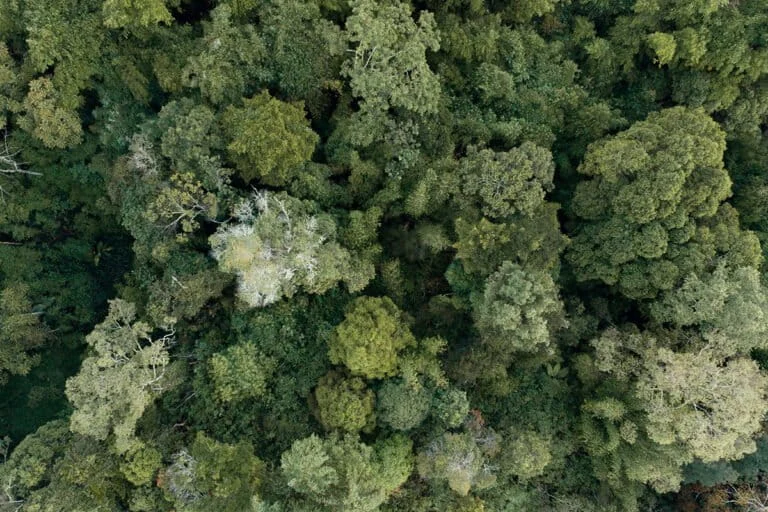
The Indonesian government has officially positioned itself at the forefront of global biodiversity finance initiatives during the 17th Conference of the Parties to the Convention on Biological Diversity (COP-CBD) in Yerevan, Armenia. As the international community grapples with the ambitious goals set by the 2022 Kunming-Montreal Global Biodiversity Framework, Indonesia is seeking to operationalize innovative funding instruments, including biodiversity credits and enhanced access and benefit-sharing (ABS) mechanisms. However, this strategic pivot toward financialization has triggered a sharp rebuke from environmental advocates and civil society organizations, who argue that the government is prioritizing market-based mechanisms over the fundamental structural reforms required to address the root causes of ecological destruction.
The Global Context: Financing the Kunming-Montreal Framework
The COP17 summit in Armenia serves as a critical checkpoint for the Kunming-Montreal Global Biodiversity Framework, which was adopted in December 2022. The framework represents a historic commitment to halt and reverse biodiversity loss by 2030, commonly referred to as the "30×30" target. Central to this mission is the mobilization of at least US$200 billion per year from all sources—public and private—by 2030 to support conservation efforts.
For developing nations like Indonesia, which hosts one of the world’s most significant reservoirs of biological diversity, the financial burden of conservation is substantial. During a side event at the Meridian Exhibition Center in Yerevan, Noer Adi Wardojo, Deputy for Pollution Control and Environmental Damage at the Indonesian Ministry of Environment, underscored the country’s intent to bridge the gap between conservation commitments and on-the-ground implementation. Indonesia is actively exploring two primary financial pathways: biodiversity credits, which create a tradable unit representing a positive impact on biodiversity, and the formalization of the Nagoya Protocol’s access and benefit-sharing mechanisms, which regulate the fair distribution of profits derived from genetic resources.
The Mechanics of Indonesia’s Proposed Financial Instruments
The Indonesian government’s proposal centers on creating a regulatory framework that allows international entities to invest in the country’s natural assets. According to government officials, the ABS mechanism is designed to establish bilateral agreements between the provider of genetic resources and the commercial entity utilizing those resources, ensuring that local communities and the state receive royalty payments.

"Indonesia views these instruments as a necessary bridge to connect our conservation targets with tangible, funded implementation," Wardojo stated during the session. The government is currently in the process of drafting a presidential regulation to formalize the ABS framework, aiming to create a transparent, legally binding system that could serve as a model for other biodiversity-rich nations. By formalizing these flows, Indonesia hopes to move beyond traditional state-funded conservation toward a model where biodiversity is integrated into the national economy as a high-value asset.
Civil Society Resistance: A Call for Structural Reform
While the government views these financial instruments as an opportunity for growth, the Justice Coalition for Our Planet (JustCOP) and other leading environmental watchdogs have expressed profound skepticism. For activists, the government’s focus on biodiversity finance is akin to "greenwashing" a system that remains fundamentally extractive.
Uli Artha Siagian, National Campaign Coordinator for the Indonesian Forum for the Environment (WALHI), argued that the primary driver of biodiversity loss in Indonesia is not a lack of funding, but the unchecked expansion of extractive industries, such as mining, industrial logging, and massive monoculture plantations. "Protecting biodiversity can only be achieved by stopping the machines of destruction," Siagian noted. "Turning biodiversity into a business through credits and offsets does not address why our forests are being cleared in the first place. It merely creates a market for the destruction to continue elsewhere."
The critique from civil society extends to the perceived lack of governance. Torry Kuswardono, Executive Director of Yayasan Pikul, emphasized that the introduction of biodiversity credits is premature without first addressing legal enforcement, land tenure, and governance reform. "Without a clear mechanism to hold polluters accountable and a commitment to land rights, these financial instruments will likely become conduits for manipulation," Kuswardono said in a recent statement.
The Intersection of Land Tenure and Indigenous Rights
A central pillar of the opposition’s argument is the issue of land tenure. Many of Indonesia’s most biodiverse regions are managed or inhabited by Indigenous peoples and local communities whose rights are often not legally recognized. Critics argue that any "benefit-sharing" scheme is inherently flawed if the communities actually stewarding the land lack secure legal standing.
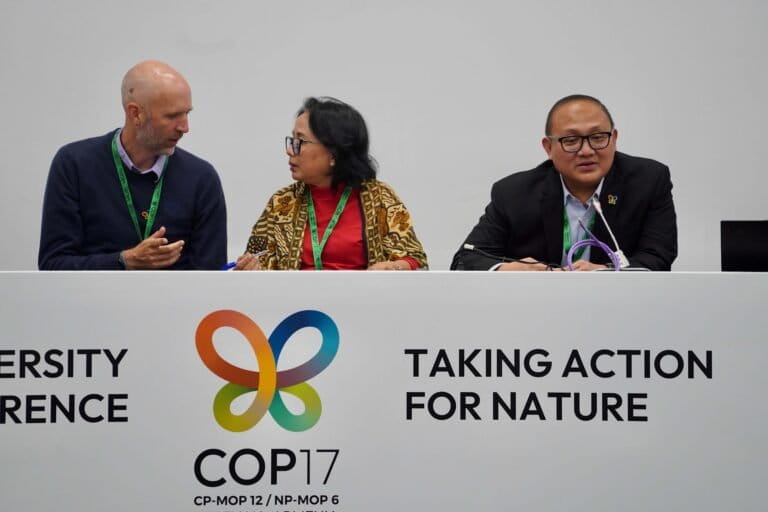
Giorgio Budi Indrarto of the Madani Berkelanjutan Foundation pointed out that the discussion on financial instruments often ignores the legal vacuum regarding the rights of Indigenous peoples. "Access and benefit-sharing will be meaningless without first securing the tenurial rights of the communities that have protected these ecosystems for generations," Indrarto explained.
Furthermore, there is a contention regarding fiscal priorities. Some advocates suggest that the government’s focus on attracting external capital is a distraction from existing domestic resources. Indrarto highlighted that if the government truly prioritized conservation, it could reallocate funding from other national programs, such as the government’s "free nutritious meal" initiative, to support long-term ecological stability. This suggests that the current hurdle is not an absolute lack of capital, but a matter of political prioritization.
Chronology of the Debate and Strategic Implications
The trajectory of this debate can be traced back to the 2022 COP15 summit, where the global community agreed on the US$30 billion annual increase in international biodiversity funding for developing nations. Since then, Indonesia has been under pressure to demonstrate how it plans to capture and utilize these funds.
- December 2022: Adoption of the Kunming-Montreal Global Biodiversity Framework at COP15, establishing the US$200 billion mobilization target.
- 2023-2025: Indonesia intensifies discussions on "Innovative Finance," exploring carbon and biodiversity markets as part of its climate and nature-positive commitments.
- October 2026: At COP17 in Armenia, the Indonesian delegation officially presents its roadmap for implementing biodiversity credits and an ABS regulatory framework.
- October 2026 (Ongoing): Civil society coalition (JustCOP) issues formal letters and statements demanding a moratorium on extractive activities as a prerequisite to any financial instrument implementation.
Future Outlook and Challenges
The path forward for Indonesia’s biodiversity finance agenda remains fraught with implementation risks. Even if the government successfully passes the proposed regulations, the global market for biodiversity credits is still in its infancy and lacks the robust verification standards required to prevent fraud. Furthermore, the concern remains that "biodiversity offsets"—a component of many credit schemes—could provide a license for corporations to destroy high-value habitats in one location while claiming "offset" protection in another, resulting in a net loss of global biodiversity.
For the Indonesian government, the next challenge will be to reconcile the demands of international investors—who require clear, scalable, and standardized assets—with the demands of domestic stakeholders who require social justice, land rights, and the cessation of ecological degradation.

If the government chooses to proceed with the financialization of biodiversity, the success of the program will likely depend on three factors: the transparency of the benefit-sharing flow to local communities, the rigor of the monitoring systems to ensure that "credits" represent real, non-degraded ecosystems, and the willingness of the state to enforce environmental laws against major industrial players.
Ultimately, the debate at COP17 underscores a fundamental tension in modern environmental policy: is biodiversity a public good to be protected through regulation and social recognition, or is it a natural capital asset that must be commodified to secure its preservation? As Indonesia navigates this transition, the voices of civil society will continue to serve as a critical counterweight, reminding policymakers that the integrity of the natural world cannot be easily balanced on a corporate ledger.