Bambang Pamungkas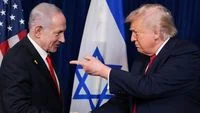
In a striking revelation, former United States President Donald Trump is understood to have adopted a narrative championed by Israeli Prime Minister Benjamin Netanyahu, portraying a potential conflict with Iran as an "easy" and swiftly resolvable affair, even as the complexities and regional scope of the actual conflict continued to expand dramatically. This assessment, widely reported and analyzed, highlights a significant divergence between strategic optimism and the grim realities unfolding on the ground, ultimately leading to unforeseen geopolitical and economic repercussions.
The Mar-a-Lago Summit: A Strategic Persuasion
The genesis of this "easy war" rhetoric can be traced back to a critical meeting between Prime Minister Netanyahu and then-President Trump at Mar-a-Lago on December 29. During this pivotal summit, Netanyahu reportedly presented a forceful argument for renewed and decisive American involvement in the escalating conflict with Tehran. Sources familiar with the discussions indicate that Netanyahu’s primary objective was to secure Washington’s full commitment to a large-scale confrontation, leveraging a persuasive blend of strategic analysis and personal diplomacy.
Following this meeting, President Trump publicly echoed claims originating from Israel, asserting that Iran was actively rebuilding its military capabilities. In a joint press conference with Netanyahu, Trump declared, "Now I hear that Iran is trying to build up its strength again. So we have to take them out. We will destroy them. But hopefully, that doesn’t happen." This statement underscored a burgeoning alignment between the two leaders on the perceived threat from Iran and the potential for a decisive military response.
Netanyahu’s lobbying efforts extended beyond mere strategic assessments. He reportedly employed a highly personalized approach to influence Trump, including bestowing high Israeli accolades and presenting a compelling strategic prospect: a swift victory over Iran could significantly reduce Israel’s long-standing reliance on substantial military aid from the United States. This proposition aimed to appeal to Trump’s stated desire to reduce American foreign aid commitments while simultaneously advancing Israel’s security objectives. These intensive lobbying efforts continued through subsequent communications, with Israel consistently advocating for robust US engagement in a comprehensive conflict against Iran. Israeli intelligence, at the time, reportedly assessed the Tehran regime as fragile, susceptible to internal pressures, and potentially on the verge of collapse if subjected to sufficient external force.
A History of Tensions: US-Iran-Israel Dynamics
To fully comprehend the gravity of these discussions, it is crucial to revisit the deeply entrenched history of animosity and proxy conflicts that have long characterized relations between the United States, Israel, and Iran. Since the 1979 Islamic Revolution, Iran has consistently been viewed by both Washington and Jerusalem as a primary antagonist in the Middle East, a state sponsor of terrorism, and a destabilizing force.
The multilateral Joint Comprehensive Plan of Action (JCPOA), or Iran nuclear deal, signed in 2015 under the Obama administration, aimed to curb Iran’s nuclear program in exchange for sanctions relief. However, President Trump, at Netanyahu’s strong urging, withdrew the US from the JCPOA in 2018, reimposing crippling sanctions and adopting a policy of "maximum pressure." This move, widely praised by Israel, significantly ratcheted up tensions, leading to a series of confrontations, including attacks on oil tankers, drone shoot-downs, and targeted assassinations of key military figures like Iranian General Qasem Soleimani.
Israel, for its part, has long considered Iran’s nuclear ambitions and its network of regional proxies—including Hezbollah in Lebanon, various militias in Iraq and Syria, and Hamas in Gaza—an existential threat. The "shadow war" between Israel and Iran has played out for decades, involving cyberattacks, assassinations, and military strikes in Syria and beyond. This intricate web of historical grievances, strategic competition, and proxy warfare formed the volatile backdrop against which Netanyahu presented his "easy war" scenario to Trump.
The Miscalculation of Conflict: From Days to Months
Despite the confident projections presented by Israeli officials, the reality on the ground diverged sharply from the anticipated swift victory. Initial estimates from Israeli military planners suggested that the Iranian threat could be neutralized within a matter of days, with maximum scenarios projecting a conflict duration of no more than three weeks. These optimistic assessments were seemingly based on the belief that Iran’s internal vulnerabilities and the shock-and-awe effect of a combined US-Israeli military intervention would quickly lead to regime change or capitulation.
However, the conflict has now stretched into its second month, with no discernible signs of abatement. Far from being an isolated incident, this war became an integral part of a broader regional escalation ignited by the brutal Hamas attacks on Israel on October 7, 2023. That devastating assault triggered a full-scale war in Gaza, which quickly spilled over into Lebanon, drawing in powerful non-state actors like Hezbollah, and subsequently, direct and indirect involvement from Iran. The initial optimism about a rapid resolution proved to be a profound miscalculation, highlighting the complex and deeply entrenched nature of regional power dynamics.
Regional Conflagration and the Failure of "Decapitation"
The strategy of "decapitation," aimed at neutralizing the Iranian regime by eliminating its top leadership, has also failed to yield the promised results. While reports emerged of the deaths of several significant Iranian figures, including, in some accounts, Supreme Leader Ali Khamenei, these losses did not trigger the anticipated regime collapse. Instead, analysts observed a consolidation of Iranian power, particularly within the formidable Islamic Revolutionary Guard Corps (IRGC), which demonstrated resilience and an ability to adapt under pressure. The IRGC, with its extensive internal security apparatus, vast economic interests, and ideologically committed forces, proved far more robust than anticipated, preventing any significant internal unrest or power vacuum.
The conflict’s expansion into Lebanon, marked by sustained exchanges of fire between Israeli forces and Hezbollah, further underscored the regional nature of the crisis. Hezbollah, a heavily armed and Iranian-backed proxy, demonstrated its capacity to inflict significant damage on Israel, compelling a large-scale evacuation of Israeli communities near the Lebanese border. This multi-front engagement strained Israeli military resources and exposed the limitations of a strategy focused solely on a quick victory against the Iranian state itself, without adequately accounting for its network of regional allies.
Doubts Within Washington and the Geopolitical Chessboard
Within the United States, skepticism regarding Netanyahu’s optimistic claims began to surface. An Axios report cited an unnamed US official who expressed concern that "Bibi," as Netanyahu is often referred to, had been overly confident in convincing President Trump that a war with Iran would be "easy" and that the prospects for regime change were "far more likely than reality." This sentiment suggests a disconnect between the political rhetoric and the more sober assessments circulating within US intelligence and defense circles.
Former US diplomats Daniel C. Kurtzer and Aaron David Miller, both seasoned Middle East experts, offered a more nuanced perspective, suggesting that Trump was not merely influenced but was a "willing and full partner" in the pursuit of this confrontational stance. This implies that Trump’s own worldview and desire for decisive action aligned with Netanyahu’s proposals, making him receptive to the "easy war" narrative rather than a passive recipient of persuasion. This alignment between two powerful leaders, both known for their strong leadership styles and willingness to challenge conventional diplomacy, created a potent synergy that ultimately drove the region towards deeper conflict.
Economic Repercussions: A Global Ripple Effect
The consequences of this prolonged conflict have extended far beyond the immediate battlefields, sending ripples across the global economy. The closure of the Strait of Hormuz, a critical maritime chokepoint through which approximately one-fifth of the world’s crude oil and liquefied natural gas passes, sent shockwaves through energy markets. Global oil prices surged, impacting industries reliant on fossil fuels, increasing transportation costs, and contributing to inflationary pressures worldwide. Major shipping companies were forced to reroute vessels, adding significant delays and costs to international trade, disrupting supply chains for goods ranging from electronics to consumer staples.
Analysts estimate that the conflict has already incurred costs amounting to billions of dollars, not only in direct military expenditures but also in economic disruptions, humanitarian aid, and reconstruction efforts. Furthermore, the sustained military operations have placed immense strain on the advanced weaponry stockpiles of the United States and its allies, raising concerns about readiness and the capacity to respond to other potential global crises. The conflict has forced a re-evaluation of defense budgets, supply chain resilience for military hardware, and the long-term sustainability of high-intensity engagements.
Strategic Implications and the Path Forward
The unfolding crisis demonstrates unequivocally that Netanyahu’s promise of a quick and easy war was not only fundamentally flawed but has also yielded devastating and far-reaching consequences. The instability in the region has deepened, creating a humanitarian catastrophe in Gaza, exacerbating political fractures across the Middle East, and further empowering non-state actors. The prospect of a wider regional conflagration remains a palpable threat, with various actors, both state and non-state, potentially being drawn into the vortex.
Geopolitically, the conflict has forced a significant re-evaluation of military strategies and diplomatic approaches. The failure of "decapitation" and the resilience of Iran’s internal structures suggest that military solutions alone are insufficient to address the deep-seated challenges posed by the Iranian regime and its regional influence. The economic pressures, coupled with the drain on military resources, underscore the immense costs of prolonged conflict and highlight the urgent need for renewed diplomatic efforts and de-escalation strategies.
The international community now faces the daunting task of navigating this complex landscape, seeking pathways to de-escalate tensions, address humanitarian crises, and restore a semblance of stability to a region teetering on the brink. The lessons from this "easy war" that proved anything but, will undoubtedly shape future foreign policy considerations for the United States, Israel, and indeed, the entire global community for years to come.