Nila Kartika Wati
Snakes are widely recognized as some of the most efficient and formidable predators in the natural world, possessing the extraordinary biological capability to consume prey that significantly exceeds the dimensions of their own heads, including deer, wild boar, and even crocodilians. However, beyond their prowess as hunters, their most astonishing physiological feat lies in their extreme physical resilience, specifically their ability to survive without any food intake for several months or, in some documented cases, over a year, without suffering significant health degradation. A newly published study by an international team of scientists has provided a profound breakthrough in understanding this phenomenon, revealing that the secret to this survival lies in a radical restructuring of the snake’s genetic map—a change that distinguishes them fundamentally from almost all other living creatures on Earth. This discovery indicates that snakes have undergone a radical evolutionary transformation in how they manage basic nutritional needs, allowing them to adapt to the often-unpredictable availability of prey in their natural habitats.
The research, which was recently published in the prestigious journal Open Biology, represents one of the most comprehensive genomic analyses of reptiles to date. The study involved the meticulous examination of the genomes of 112 reptile species, a diverse group that included various types of snakes, turtles, and crocodiles. The primary objective was to identify the genetic markers responsible for metabolic regulation and appetite. The findings were startling: the entire lineage of snakes has permanently lost the ghrelin gene, a biological component that is nearly universal among vertebrates. In the field of endocrinology and biology, ghrelin is famously known as the "hunger hormone." It plays a critical role in regulating appetite thresholds and sending active signals to the brain when the body requires an energy refill. By losing this gene, snakes have effectively deactivated their internal "hunger alarm," a move that has profound implications for their survival strategy.
The Biological Mechanism of Persistent Fasting
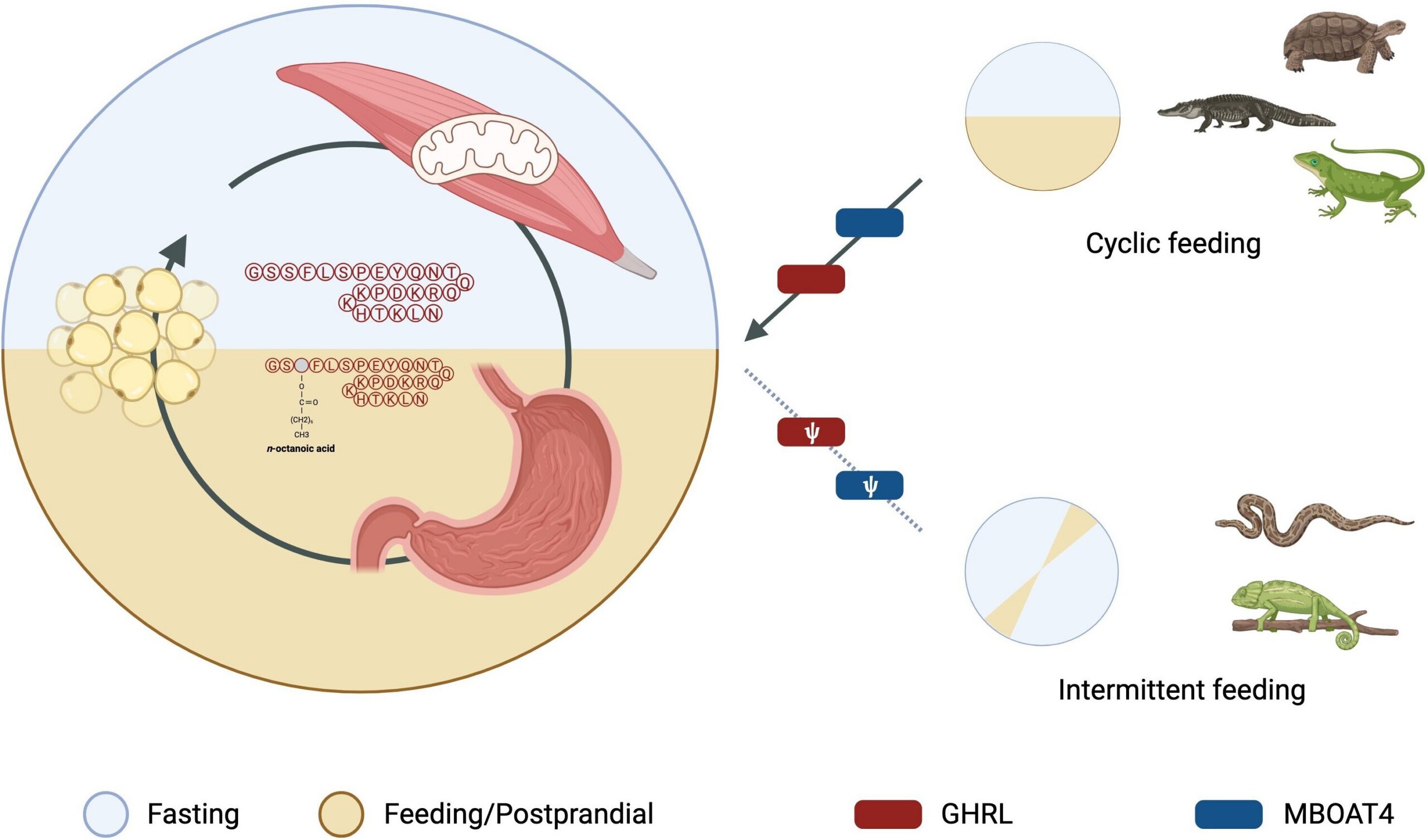
In most mammals, including humans, the rise and fall of ghrelin levels dictate daily life. When the stomach is empty, ghrelin is secreted and travels through the bloodstream to the hypothalamus in the brain, triggering the sensation of hunger and prompting the organism to seek food. For a mammal, missing even a few meals can lead to physical weakness, psychological stress, and a rapid depletion of energy reserves. However, the international research team, led by Rui Resende Pinto and his colleagues, discovered that snakes do not just lack the ghrelin hormone itself; they have also lost a vital supporting enzyme known as MBOAT4 (membrane-bound O-acyltransferase domain containing 4).
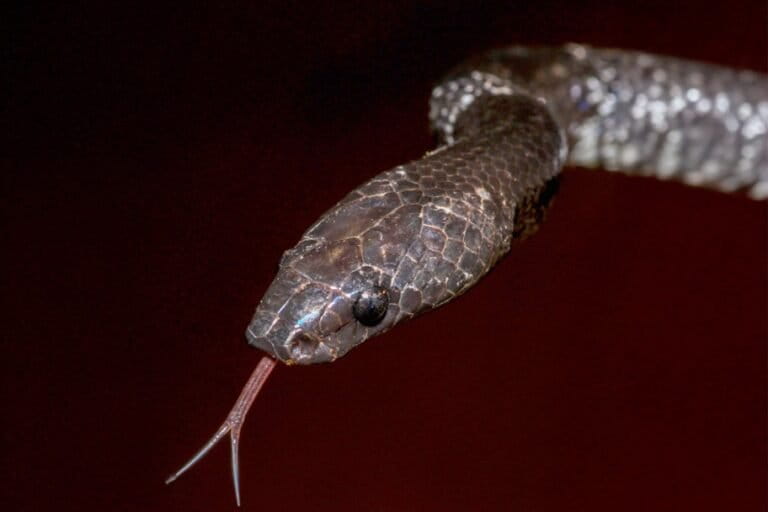
In other species, MBOAT4 acts as a necessary catalyst that activates ghrelin, allowing it to bind to its receptors and function effectively. The dual loss of both the hormone and its activator suggests a complete evolutionary "shuttering" of the hunger-signaling pathway. Without this constant biological pressure to eat, snakes can remain in a state of metabolic calm for extended periods. They do not experience the physiological stress or the "starvation response" that typically compromises the immune system and muscle mass of other animals during periods of food scarcity. This allows them to wait patiently for weeks or months until the perfect hunting opportunity arises, rather than being forced to hunt out of desperation when prey might be scarce or the risks of predation are high.
Evolutionary Adaptation and Environmental Pressures
The loss of the ghrelin system is not a biological defect but rather a highly sophisticated evolutionary adaptation. Scientists believe this change occurred as snakes transitioned into specialized "sit-and-wait" predators. Unlike active foragers that require a steady stream of calories to maintain high activity levels, many snake species rely on camouflage and patience. In environments such as arid deserts or dense tropical forests, where large prey may only cross a predator’s path a few times a year, the ability to turn off the drive for hunger is a massive competitive advantage.
This genetic shift also correlates with the snake’s unique digestive strategy, known as Specific Dynamic Action (SDA). When a snake finally does consume a large meal, its metabolism can increase by up to 40 times its resting rate. Their internal organs, such as the heart, liver, and intestines, actually increase in size and functional capacity to process the massive influx of nutrients. Once the meal is digested, these organs shrink back to a dormant state to save energy. By removing the ghrelin-induced urge to eat frequently, evolution has allowed snakes to master a "boom and bust" nutritional cycle that would be fatal to most other vertebrates.
Comparative Genomics: Snakes versus Other Reptiles
The study’s scope provided a fascinating look at the divergence within the reptile class. While snakes showed a total loss of the ghrelin and MBOAT4 genes, other reptiles showed varying degrees of genetic retention. For instance, the research noted that certain lizard species, such as chameleons, have also undergone significant changes in their GHRL (ghrelin) hormone systems, though not always to the same absolute extent as snakes. This suggests that the "slow-motion" lifestyle of many reptiles has exerted a consistent evolutionary pressure to modify how hunger is perceived.

Turtles and crocodiles, which also possess the ability to survive long periods without food, appear to utilize different metabolic pathways or retain vestigial elements of the hunger system that snakes have entirely discarded. The total absence of these genes in the Serpentes suborder marks them as the most extreme examples of metabolic conservation in the animal kingdom. This genetic "erasure" serves as a permanent solution to the problem of fluctuating food supplies, ensuring that the snake’s body does not waste precious energy on the search for food when the probability of success is low.
Implications for Energy Conservation and Fat Metabolism
One of the most significant findings of the research relates to how the loss of ghrelin affects fat storage and utilization. In humans and other mammals, ghrelin does more than just make us feel hungry; it also signals the metabolic system to begin the oxidation or burning of fat stores when the body enters a fasting state. Because snakes lack this signal, their bodies do not "panic" and rapidly burn through their lipid reserves. Instead, they enter a state of extreme energy conservation where metabolic activity is dialed down to the absolute minimum required to maintain cellular integrity.
This allows snakes to maintain their body mass and muscle tone even after months of fasting. While a human undergoing a prolonged fast would suffer from muscle wasting and organ strain, a snake remains physiologically "primed" and ready for action. The study suggests that by bypassing the ghrelin-MBOAT4 pathway, snakes have decoupled the sensation of hunger from the process of metabolic fuel selection. This discovery challenges long-held assumptions in vertebrate biology regarding the necessity of a centralized hunger hormone for survival.
Scientific Reactions and Potential Medical Impact
The scientific community has reacted to these findings with significant interest, particularly those in the fields of evolutionary biology and human medicine. Dr. Rui Resende Pinto’s team highlighted that understanding how snakes manage extreme fasting without damaging their organs could open new doors for medical research. Specifically, researchers are looking at how these findings might relate to metabolic disorders in humans, such as obesity, type 2 diabetes, and cachexia (wasting syndrome).
"The snake’s ability to essentially ‘turn off’ a core piece of vertebrate machinery is a masterclass in evolutionary flexibility," noted one independent reviewer of the study. "If we can understand the secondary pathways snakes use to manage energy without the ghrelin ‘alarm,’ we might find new ways to treat metabolic imbalances in humans where the hunger signal is overactive or where the body fails to conserve energy during illness."
Furthermore, the study provides a timeline for these genetic losses, suggesting they occurred tens of millions of years ago as snakes diversified and occupied niches that required high-efficiency survival. This long-term stability of the "ghrelin-free" genome proves that the adaptation is not only viable but highly successful across thousands of snake species globally.
Conclusion and Future Research
The discovery that snakes have evolved to exist without the primary hormone responsible for hunger represents a landmark shift in our understanding of reptilian physiology. It portrays the snake not just as a simple predator, but as a complex biological machine capable of extreme efficiency. By removing the biological "noise" of hunger, snakes have gained the freedom to wait, survive, and thrive in some of the harshest environments on the planet.
As the scientific community continues to digest the data from the 112 species analyzed, the focus will likely shift to the secondary systems snakes use to monitor their internal nutrient levels. If ghrelin is gone, what tells a snake when it is finally time to strike? Future research is expected to investigate other peptides and neural pathways that may have stepped in to fill the void left by the hunger hormone. For now, the image of the snake as a patient, cold-blooded survivor is backed by a new, genetic reality: they are the only creatures on Earth that have truly conquered the urge to eat.