Nila Kartika Wati
Indonesia is currently navigating a precarious path as it aggressively expands its nickel exploitation capabilities, a move that carries profound consequences for the environment and local communities, particularly regarding the management of toxic mining waste. As the world’s largest producer of nickel, the archipelago has become the epicenter of the global electric vehicle (EV) supply chain. However, this industrial boom is powered by High-Pressure Acid Leaching (HPAL) technology, a method used to process low-grade nickel ore into mixed hydroxide precipitate (MHP)—a critical precursor for EV batteries. While economically lucrative, HPAL is the primary contributor to a burgeoning waste crisis. For every single ton of nickel metal produced via the HPAL process, an estimated 133 tons of toxic tailings are generated, creating a waste management challenge of unprecedented proportions.
A comprehensive new report from Earthworks, a global environmental organization, titled "Filtered Tailings in Indonesia: The Catastrophic Failure of a Disruptive Technology," warns that government regulations and oversight have failed to keep pace with the rapid expansion of nickel processing plants. This regulatory lag has resulted in significant risks to public safety, worker health, and the integrity of local ecosystems.
The Scale of the Tailings Crisis
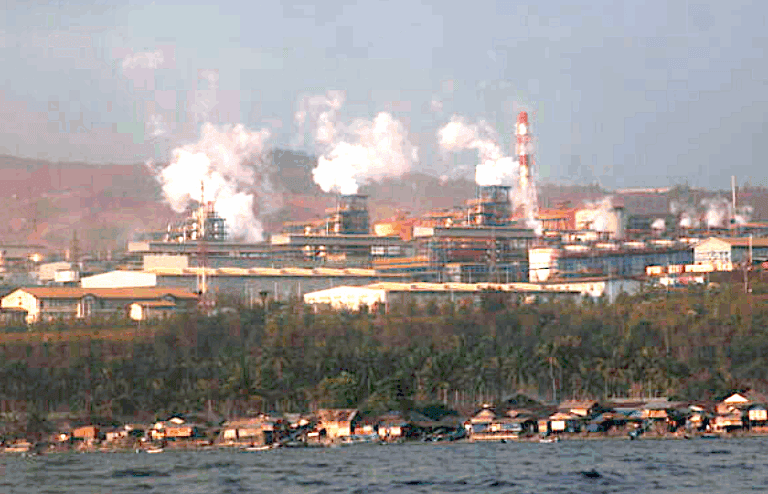
The sheer volume of waste produced by Indonesia’s nickel industry is staggering. As of mid-2025, seven HPAL facilities are operational across the country. These include two facilities operated by Harita Nickel on Obi Island, one facility within the Indonesia Weda Bay Industrial Park (IWIP) on Halmahera Island, and four facilities located in the Indonesia Morowali Industrial Park (IMIP) in Central Sulawesi. Collectively, these plants generate approximately 57 million tons of tailings annually.
The trajectory of this waste production is set to steepen. With the addition of two new HPAL facilities at IMIP, the total volume of annual waste is expected to rise to 62.6 million tons. The long-term outlook is even more concerning: 12 HPAL projects have already secured permits or are under construction, with an additional 12 projects in the proposal stage. If all these projects reach fruition, Indonesia will be tasked with managing an estimated 275 million tons of toxic tailings every single year.
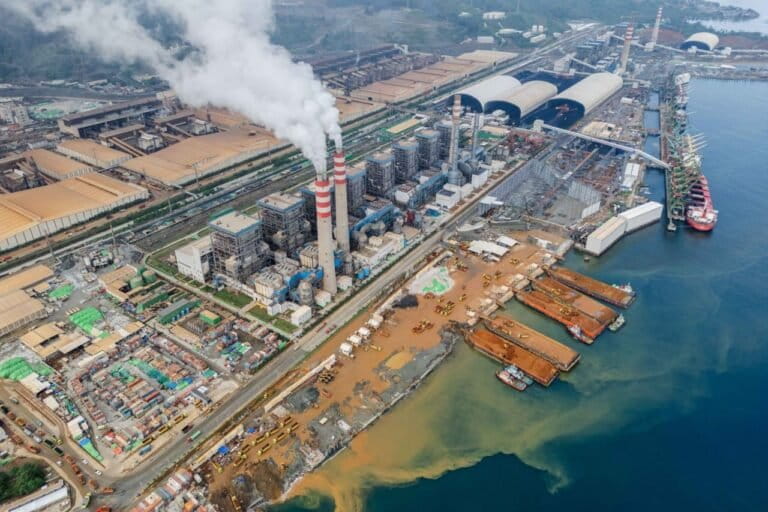
The Earthworks research specifically analyzed operational facilities such as Huafei Nickel Cobalt (HFNC) at IWIP and PT Halmahera Persada Lygend (HPL) on Obi Island. The findings indicate that the height of these facilities and the sheer volume of waste they contain far exceed similar tailing storage facilities in other parts of the world with comparable rainfall. This suggests that the technology, at least in the context of Indonesia’s unique environmental conditions, remains largely unproven and highly dangerous.
A Chronology of Industrial Failure and Fatality
The transition from theory to practice has already resulted in a series of alarming incidents and fatalities, particularly within the massive industrial complexes of Morowali and Obi.
In Morowali, the IMIP complex has been the site of multiple structural failures. On March 16, 2025, a facility owned by PT Huayue Nickel Cobalt (HYNC) suffered a breach, resulting in a torrent of liquid tailings flowing into the Bahodopi River and eventually reaching the sea. Just five days later, on March 21, 2025, a storage facility at PT Qing Mei Bang (QMB) New Energy Materials collapsed, claiming the lives of three workers.
Investigations into these incidents, supported by satellite imagery, suggest that the March 2025 failures were not isolated events. Satellite photos from January 3, 2025, revealed a landslide at the PT HYNC facility with a visible flow path toward the Bahodopi River. Furthermore, video footage from September 2023 showed a bulldozer buried within a filtered tailing storage facility at IMIP, highlighting ongoing stability issues.
Tragedy struck again on February 18, 2026, when a worker from Palopo, South Sulawesi, was killed after being buried by a landslide while operating an excavator. A spokesperson for IMIP attributed the landslide to fragile soil conditions beneath the tailing heaps, which were unable to support the immense weight of the waste.
The Myth of "Dry Stack" Tailings in a Tropical Climate
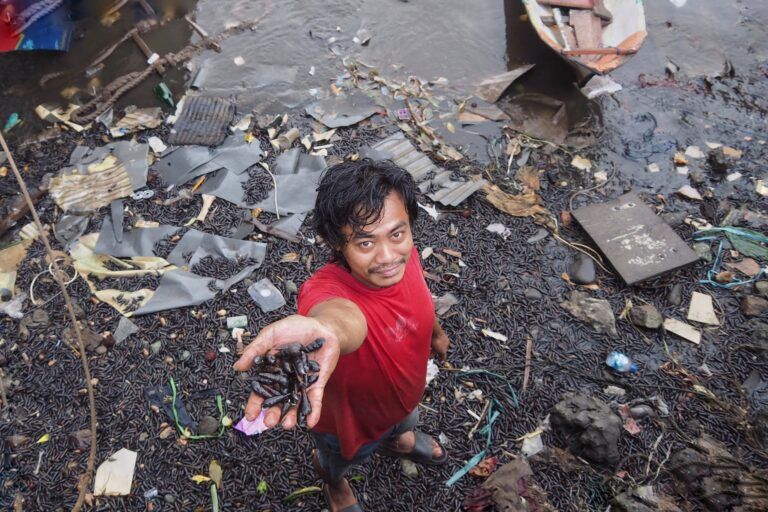
In response to a government ban on Deep Sea Tailing Placement (DSTP), many nickel companies in Indonesia pivoted to "filtered tailings," often marketed as "dry stack tailings." In theory, this method involves removing water from the waste before storage, which should increase physical stability and reduce the footprint of the waste.
However, experts like Steven Emerman, a technical specialist in tailings and the author of the Earthworks report, argue that the term "dry stack" is often used as a form of greenwashing. In reality, the tailings in Indonesia remain as moist as damp soil. When combined with the country’s high rainfall, high seismic activity, and susceptibility to landslides, these "dry" stacks become incredibly unstable.
A 2022 technical review by the consulting firm SRK regarding the PT Halmahera Persada Lygend (HPL) facility on Obi Island described the risk of catastrophic failure as "uncontrollable." The review noted that the facility was constructed without standard quality control systems or monitoring devices. Similarly, an audit by PT Lapi ITB found that portions of the HPL dry stack facility would be unstable during seismic activity if operations continued as planned.
"Even if quality control were perfectly implemented, the tailings still run the risk of liquefaction and catastrophic failure," Emerman warned. Despite these warnings, facilities continue to add waste to these compromised structures, posing a direct threat to the workers and the nearby village of Kawasi.
Water Contamination and the Chromium-6 Threat
Beyond the risk of physical collapse, HPAL tailings pose a chemical threat to Indonesia’s water security. The waste is highly acidic and contains high concentrations of heavy metals. One of the most significant concerns is Hexavalent Chromium (Cr(VI)), a known carcinogen that can cause respiratory issues and increase the risk of cancer.
On Obi Island, the operations of the Harita Group have been linked to Chromium-6 contamination for over a decade. A report by the Organized Crime and Corruption Reporting Project (OCCRP) and The Gecko Project in May 2025 revealed that the company was aware of carcinogenic contamination in local water sources. While the company has publicly denied these dangers, leaked documents from 2023 showed that Chromium-6 levels in the area were more than three times the legal limit for drinking water.
Similar contamination has been documented elsewhere. Since 2022, Walhi South Sulawesi has found Chromium-6 in the Lawewu River near PT Vale Indonesia’s operations. In 2024, Walhi Central Sulawesi and Friends of the Earth Japan detected alarming levels of the chemical in the Bahodopi River near Morowali.
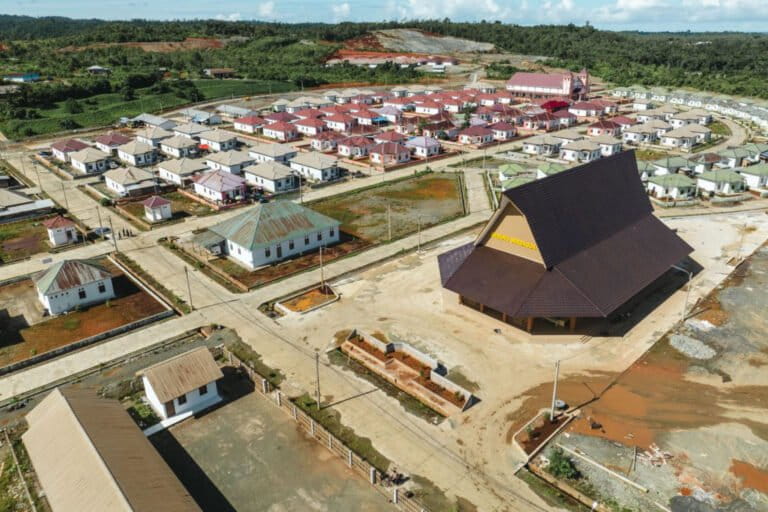
Astuti N. Kilwouw, Executive Director of Walhi North Maluku, noted that the pollution has forced the government to relocate residents of Kawasi Village to a company-provided "Eco Village." Critics argue this move prioritizes corporate interests over the rights of citizens to a clean environment, effectively displacing a community rather than holding the polluter accountable.
Deforestation and the Horizontal Expansion of Waste
The instability of vertical waste storage has forced companies to adopt a horizontal expansion strategy. By spreading the waste over a larger area to prevent collapse, companies are driving massive deforestation. In the tropical landscape of Obi and Halmahera, this loss of forest cover exacerbates flooding.
Faizal, a national campaigner for Walhi, pointed out that the land footprint for proposed conventional tailing dams on Obi Island would be eight times larger than the current maximum footprint of HPL’s filtered tailing facilities. This expansion directly threatens local biodiversity and the ecological services the forests provide to surrounding communities.
The Global Supply Chain and Corporate Responsibility
The environmental and human rights issues unfolding in Indonesia’s nickel heartlands are not merely local concerns; they are deeply intertwined with the global automotive industry. Research by Earthworks indicates that major car manufacturers, including BMW, Mercedes-Benz, Tesla, and Volkswagen, are linked to these facilities through supply chains involving Huayou Cobalt and CATL.
Jan Morrill, Senior International Mining Manager at Earthworks, emphasizes that global EV brands must conduct rigorous due diligence. "Thorough testing and auditing are essential to ensure that the nickel used in ‘green’ vehicles is not produced at the cost of environmental destruction or human life," Morrill stated.
The report calls for a multi-stakeholder intervention:
- The Indonesian Government: Must impose a moratorium on new HPAL facilities until a clear national standard for tailing storage is established and independent safety audits are conducted.
- Operator Companies: Must halt operations in high-risk areas, implement transparent monitoring, and provide reparations for impacted communities.
- Automotive Companies: Must investigate their supply chains and suspend purchases from suppliers that fail to meet international safety and environmental standards.
- Investors: Must withdraw funding from projects that do not address these "uncontrollable" risks.
Conclusion: The Cost of a "Clean" Future
The irony of Indonesia’s nickel boom is that it is being marketed as a necessity for a cleaner, greener global future. Yet, for the people of Morowali, Obi, and Halmahera, the reality is one of toxic water, unstable ground, and the loss of life. Richard Labiro, Director of Yayasan Tanah Merdeka, summarizes the situation as a "designed disaster." With over 40 worker deaths recorded since 2015 due to unsafe conditions, the human cost of the nickel rush is becoming impossible to ignore.
As Indonesia continues to position itself as a global leader in the energy transition, the "catastrophic failure" of its current tailing management suggests that without radical reform, the country’s green revolution will be built on a foundation of toxic waste and environmental ruin. The silence from major industrial players like IMIP, IWIP, and Harita Nickel in response to these findings only underscores the urgent need for transparency and international pressure to ensure that the transition to electric vehicles does not come at the expense of the very planet it seeks to save.