Nasution Nanang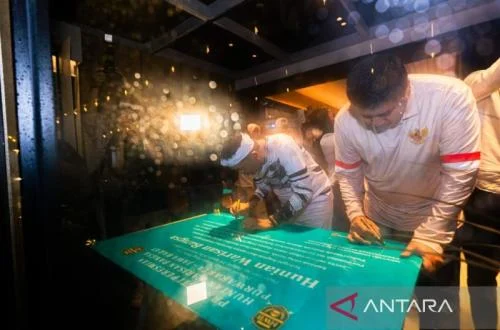
Purwakarta, West Java – Minister of Housing and Settlement Areas, Maruarar Sirait, conducted a comprehensive inspection of the Hunian Warisan Bangsa (HWB) project in Purwakarta on Tuesday, marking a pivotal moment in the nation’s ambitious drive to provide affordable housing. The visit underscored the government’s commitment to the "3 Million Homes Program," an initiative championed by President Prabowo Subianto aimed at significantly expanding homeownership access and elevating the quality of life for Indonesian citizens across the archipelago. This particular project in Purwakarta is not merely another housing development; it stands as a national prototype, meticulously designed to offer high-quality, accessible housing solutions that can be replicated on a broader scale to address Indonesia’s persistent housing deficit.
A National Imperative: Addressing Indonesia’s Housing Backlog
Indonesia has long grappled with a substantial housing backlog, a challenge that affects millions of families, particularly those in low-income brackets. Official figures from the Ministry of Public Works and Housing (PUPR) have consistently placed the national housing deficit in the range of 11 to 12 million units, encompassing both new construction needs and the upgrade of substandard dwellings. This shortage is exacerbated by rapid urbanization, population growth, and the rising cost of land and construction materials, making homeownership an elusive dream for a significant portion of the workforce. Previous administrations have launched various housing programs, including the "One Million Homes Program," which, while making strides, faced challenges related to funding, land availability, and the speed of execution.
President Prabowo Subianto’s "3 Million Homes Program" signifies an intensified commitment, aiming for a more aggressive and innovative approach to tackle this fundamental socio-economic issue. The program emphasizes not just quantity but also quality, affordability, and sustainability, seeking to integrate housing solutions with broader urban planning and economic development strategies. The Ministry of Housing and Settlement Areas (PKP), under Minister Sirait, plays a crucial role in coordinating these efforts, formulating policies, securing funding, and facilitating partnerships between government entities, private developers, and financial institutions. The visit to HWB Purwakarta serves as a validation of models that align with these ambitious national objectives.
The Hunian Warisan Bangsa (HWB) Model: Redefining Affordability
The HWB Purwakarta project presents a compelling model for affordable housing, setting new benchmarks in pricing and financing schemes. Unlike many traditional subsidized housing programs, such as those relying on the Fasilitas Likuiditas Pembiayaan Perumahan (FLPP) scheme, which typically market units above Rp160 million, HWB Purwakarta offers significantly lower entry points. One-bedroom units are available from Rp98 million, while two-bedroom units start from Rp115 million. This aggressive pricing strategy makes homeownership genuinely attainable for a wider segment of the working class, including factory workers, civil servants, and young professionals.
Beyond the attractive upfront costs, the project distinguishes itself with an innovative and highly accessible financing model. Prospective homeowners can benefit from initial monthly installments as low as Rp170,000 for the first 15 months for a one-bedroom unit. This gradual payment structure significantly eases the financial burden during the crucial initial phase of homeownership, allowing buyers to adjust to their new commitments without undue strain. Such a scheme reflects a deep understanding of the financial realities faced by target beneficiaries, many of whom have irregular income streams or limited savings. The financing mechanism is supported by a collaboration with state-owned banks and private financial institutions, structured to provide long-term, low-interest mortgages once the initial subsidized period concludes. This blended approach ensures both initial affordability and sustainable long-term repayment.
Chronology of a Promising Initiative
The HWB Purwakarta project has rapidly progressed since its inception, demonstrating an agile and efficient development timeline. The groundwork for the project began in July 2025, following extensive feasibility studies and site preparation. The official launch took place in March 2026, marking the commencement of sales and construction in earnest. The response from the public has been overwhelmingly positive, with more than 1,500 units already sold within a remarkably short period since its launch. This rapid uptake not only validates the market demand for such affordable housing but also underscores the effectiveness of the project’s marketing and sales strategies. Minister Sirait’s inspection on Tuesday, just months after the official launch, highlights the government’s keen interest in monitoring its progress and assessing its potential for broader implementation. The rapid sales figures position HWB Purwakarta as a crucial benchmark and a tangible example of what can be achieved through strategic planning and effective partnerships within the framework of the national housing program.
Strategic Location and Economic Catalyst
Purwakarta’s selection as the location for this pioneering project is no coincidence; it is a strategically vital area that perfectly aligns with the program’s objectives. Geographically, Purwakarta sits within Indonesia’s industrial heartland, positioned advantageously between two major economic powerhouses: Jakarta, the capital city, and Bandung, the provincial capital of West Java. This prime location makes it a nexus for logistics, manufacturing, and commerce. The region is encircled by numerous industrial estates, hosting a vast workforce employed in factories, logistics hubs, and ancillary services. Consequently, the demand for affordable and quality housing for these workers is exceptionally high, often outstripping supply and leading to informal settlements or long commutes.
Economically, the HWB Purwakarta project represents a significant stimulus for the local and regional economy. With an estimated investment value of Rp1.5 trillion, the development is projected to create more than 3,000 direct and indirect jobs by mid-2026. This job creation spans various sectors, including construction, material supply, logistics, and services. A key policy directive for the project is the prioritization of local resources: the majority of construction materials are sourced from within West Java, and local skilled and unskilled labor is employed wherever possible. This localization strategy not only reduces transportation costs and carbon footprint but also ensures that the economic benefits of the project directly flow back into the provincial economy, fostering local businesses and improving community livelihoods. This multiplier effect extends beyond construction, stimulating local retail, food services, and other support industries, thereby creating a vibrant economic ecosystem around the new residential areas.
Public-Private Partnership: A Collaborative Success
The success of the HWB Purwakarta project is a testament to the power of effective public-private partnerships. It is a collaborative endeavor involving the HWB Group, a consortium focused on innovative housing solutions; Lippo Cikarang, a prominent Indonesian property developer with extensive experience in large-scale townships; and local developer Iwang Prejadi, who brings invaluable understanding of the regional market and community needs. This tripartite collaboration leverages the strengths of each partner: the HWB Group’s vision and innovative financing models, Lippo Cikarang’s development expertise and financial capacity, and Iwang Prejadi’s local insights and execution capabilities.
Ketut Wijaya, a representative from Lippo Cikarang, emphasized the significance of this partnership, describing it as a model for broad-impact collaboration. "This project demonstrates how combining the private sector’s efficiency and innovation with the government’s policy support and the local developer’s community engagement can yield transformative results," Wijaya stated during the Minister’s visit. Such partnerships are critical for the "3 Million Homes Program" to achieve its ambitious targets, as the scale of the housing challenge far exceeds the capacity of any single entity. They allow for risk-sharing, pooling of resources, and the adoption of best practices from both public and private sectors, ultimately benefiting the end consumers with better quality and more affordable housing. The government’s role extends to providing regulatory support, simplifying permitting processes, and potentially offering incentives to developers who commit to the affordable housing mandate.
Official Responses and Community Impact
The HWB Purwakarta project has garnered strong support from various levels of government and enthusiastic responses from the community it aims to serve. Governor of West Java, Dedi Mulyadi, expressed his strong conviction that Purwakarta is poised to become a national exemplar for housing development that is genuinely responsive to community needs. "Purwakarta’s readiness to embrace this innovative model reflects our commitment to improving the welfare of our citizens, especially our hardworking industrial labor force. This project is a benchmark for other regions in West Java and across Indonesia," Governor Mulyadi remarked. His statement underscores the provincial government’s active role in facilitating land acquisition, infrastructure development, and ensuring local regulatory alignment for the project’s smooth execution.
Bupati (Regent) of Purwakarta, Saepul Bahri Binzein, reiterated the local administration’s full support. "This project is not just about building houses; it’s about building communities, creating jobs, and ensuring a dignified living environment for our residents. We are fully committed to providing all necessary assistance to make HWB Purwakarta a resounding success," Bupati Binzein affirmed, highlighting the direct benefits for the local populace.
The most poignant responses came from the prospective homeowners themselves. Ina Tiya, a factory worker who has long struggled with the dream of owning a home, articulated the profound impact of the HWB project. "For people like me, owning a house always felt out of reach. The prices were too high, and the down payments were impossible. But with HWB, and especially the low monthly payments, it feels like a real chance. This project opens up opportunities for us that we never thought we’d have," Tiya shared, her voice filled with hope. Her sentiment echoes that of thousands of other workers who now see a tangible path to securing their families’ futures. These grassroots reactions underscore the social equity dimension of the program, directly addressing the housing needs of vulnerable segments of society.
Analysis and Future Outlook: Challenges and Opportunities for Replication
The HWB Purwakarta project, while highly successful in its initial phase, also offers valuable lessons and highlights critical considerations for the broader "3 Million Homes Program." The primary challenge in replicating this model nationwide lies in securing suitable land at affordable prices, especially in highly urbanized and industrial areas where land values are often inflated. The government’s role in facilitating land banking, potentially through state-owned enterprises or land reform initiatives, will be crucial. Furthermore, maintaining the delicate balance between affordability and quality of construction on a large scale requires stringent oversight and innovative construction techniques, such as modular housing or prefabrication, to control costs without compromising structural integrity or livability.
The financing model, particularly the initial low installments, needs careful management to ensure long-term sustainability for both buyers and financial institutions. Expanding access to credit for low-income segments, potentially through enhanced government guarantees or microfinance schemes, will be essential. Urban planning integration is another critical aspect; new housing developments must be seamlessly integrated with existing infrastructure, public transport, and social amenities like schools, healthcare facilities, and markets, to avoid creating isolated communities.
Despite these challenges, the HWB Purwakarta project presents immense opportunities. Its success demonstrates that a truly affordable and high-quality housing solution is achievable through strategic partnerships, innovative financing, and strong political will. If replicated effectively, this model could significantly reduce Indonesia’s housing backlog, stimulate local economies across numerous regions, and elevate the living standards of millions. The project serves as a compelling proof-of-concept for the "3 Million Homes Program," offering a clear pathway towards realizing President Subianto’s vision of widespread homeownership and a more equitable society. The Minister’s visit was not just an inspection; it was an affirmation of a promising strategy poised to reshape Indonesia’s housing landscape for decades to come.