Nila Kartika Wati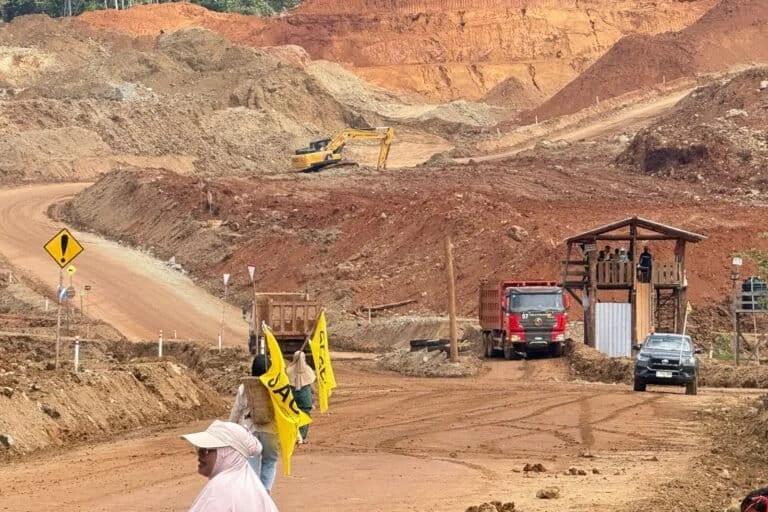
The diplomatic triumph in Washington was met with immediate legal turbulence in the United States. Just twenty-four hours after the ART was signed, the U.S. Supreme Court issued a definitive ruling on February 20, 2026, declaring the legal foundation for President Trump’s "reciprocal tariff" policy unconstitutional. The Court’s decision effectively dismantled the executive branch’s authority to unilaterally impose or negotiate such tariffs without explicit Congressional approval, citing a violation of the separation of powers. This development has created a paradoxical legal vacuum: while the Indonesian government continues to move forward with the implementation of the ART, the very legal framework that sustains the agreement on the American side has essentially collapsed.
Chronology of the 2026 Indonesia-U.S. Trade Mission
The timeline of the trade mission reflects an intensive period of negotiation and rapid-fire deal-making. On February 18, 2026, the Indonesian delegation and American business leaders signed several MoUs focused on infrastructure and mining. The centerpiece was the agreement regarding the Grasberg mine in Papua, which outlines the continuation of Freeport’s operations beyond current contractual limits.
On February 19, the official state ceremony took place at the White House, where Presidents Prabowo and Trump signed the ART. The document was presented as a mechanism to rectify trade imbalances and ensure "fairness" in the exchange of goods. However, on February 20, the judicial intervention in Washington threw the future of the agreement into uncertainty. Despite the SCOTUS ruling, the Indonesian Ministry of Trade and the Coordinating Ministry for Economic Affairs have yet to issue a formal statement regarding a potential renegotiation or suspension of the pact, treating the ART as a valid and binding instrument of international law.
Regulatory Constraints and the "Neraca Komoditas" Conflict
A primary concern raised by the Mining Advocacy Network (Jatam) and trade lawyers involves the specific language of Article 1.2 in the ART. This provision explicitly prohibits Indonesia from imposing quantitative restrictions on imports from the United States. This includes the use of import licenses and the "Commodity Balance" (Neraca Komoditas) program, a cornerstone of Indonesian economic policy regulated under Presidential Regulation (Perpres) No. 7 of 2025.
The Neraca Komoditas was designed to synchronize domestic production with consumption, ensuring that national industries and citizens have priority access to resources before export or import quotas are adjusted. By agreeing to waive these restrictions for U.S. goods, Indonesia may lose its ability to manage domestic supply chains effectively. Critics argue that if the government cannot limit the volume of specific imports, it risks overwhelming local producers and undermining the very industrial stability the Perpres was meant to protect.
Furthermore, Section 2 of the ART addresses "non-tariff barriers." Articles 2.2 and 2.3 require Indonesia to recognize U.S. conformity assessment bodies as equivalent to domestic institutions. While this is framed as an effort to harmonize standards and reduce "red tape," it potentially limits Indonesia’s right to enforce stricter safety, health, or environmental standards on American products if those standards are deemed "detrimental to U.S. exports" under World Trade Organization (WTO) definitions.
Environmental Rhetoric vs. Concrete Fossil Fuel Commitments
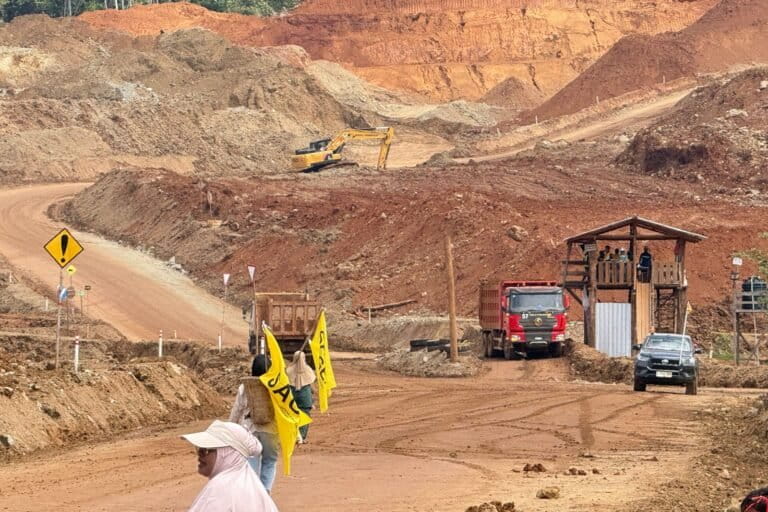
While the ART contains language regarding labor rights and environmental protection in Articles 2.9 and 2.10, analysts point out a stark lack of enforcement mechanisms. The agreement mentions a commitment to prohibiting forced labor and protecting biodiversity but fails to mandate explicit human rights audits or environmental restoration as a prerequisite for license renewals. Notably absent are provisions for Free, Prior, and Informed Consent (FPIC) for indigenous communities or cross-border litigation pathways for those impacted by industrial accidents.
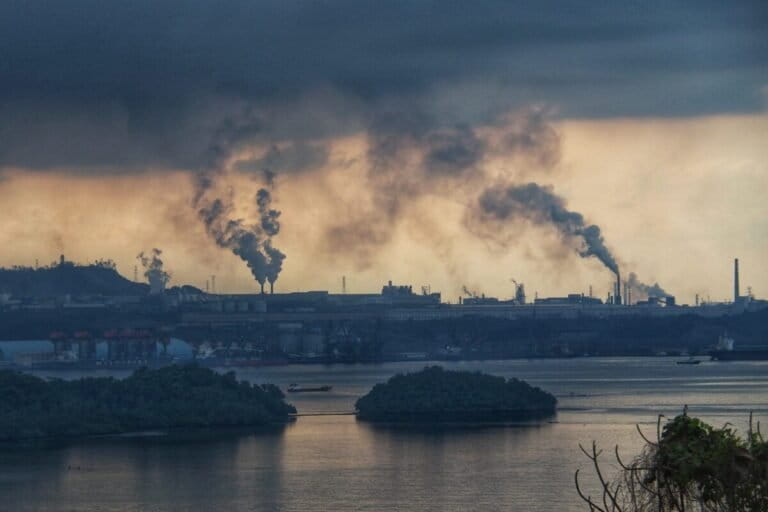
In contrast to the vague environmental clauses, Annex IV of the agreement—which focuses on energy—is highly specific and prescriptive. It mandates that Indonesia facilitate the purchase of U.S. crude oil, refined gasoline, liquefied petroleum gas (LPG), and metallurgical coal. Perhaps most controversially, the annex requires Indonesia to contribute to the development of coal export corridors on the U.S. West Coast.
This commitment appears to run counter to Indonesia’s stated goals for a "Just Energy Transition." By embedding a long-term dependency on American fossil fuels into a trade treaty, Indonesia risks locking itself into a high-carbon economic path at a time when global climate finance is increasingly tied to decarbonization. The requirement to support U.S. coal infrastructure effectively turns Indonesia into a financier and guaranteed market for the American extractive industry.
Digital Sovereignty and Technological Alignment
The ART also introduces significant shifts in the digital economy. Articles 3.1 through 3.5, along with Annex III, prohibit Indonesia from imposing certain digital service taxes on U.S. companies. Furthermore, the agreement requires Indonesia to consult with Washington before entering into digital trade agreements with third-party nations.
In the era of Artificial Intelligence (AI) and big data, these provisions carry heavy implications. The expansion of digital infrastructure requires massive amounts of electricity and water, alongside critical minerals like nickel, cobalt, and copper—resources Indonesia is currently trying to leverage for its own "downstreaming" (hilirisasi) policy. By limiting its ability to tax or regulate global tech giants, Indonesia may find itself providing the raw materials and the market for digital services while retaining a diminishing share of the fiscal benefits.
Additionally, the agreement aligns Indonesia’s technological security with U.S. standards. Section 4 requires Indonesia to adapt its export controls and investment screening to match Washington’s national security parameters. This could limit Indonesia’s ability to diversify its technological partnerships, particularly with Chinese or European firms, if those entities are deemed "threats to infrastructure" by U.S. regulators.
The Freeport Extension and the Future of Papua
The geopolitical and economic weight of the ART is inextricably linked to the Tripartite MoU concerning Freeport McMoRan’s operations in Papua. The MoU facilitates an extension of the Special Mining Business License (IUPK) not just to 2041, but for the "life of the mine," based on reserves determined by the company itself.
U.S. government fact sheets describe the expansion of the Grasberg mine as a vital component of the American critical mineral supply chain. For Indonesia, however, this "early extension" removes a critical point of leverage. By locking in the extension now, the government effectively waives the opportunity to conduct a comprehensive evaluation of Freeport’s environmental track record or to renegotiate profit-sharing and indigenous land rights in 2041.
Analysts argue that the combination of the ART’s investor protections and the "life of mine" extension creates a legal fortress around Freeport’s operations. This makes it increasingly difficult for future Indonesian administrations to implement corrective policies or to respond to the demands of the Papuan people for more equitable resource management.
Implications for "Hilirisasi" and Local Content Requirements
One of the most significant domestic policy risks involves Article 6.1 and Annex III. These sections require Indonesia to grant U.S. companies the same treatment as domestic investors in the exploration, mining, and refining of critical minerals. Crucially, Annex III Article 2.2 exempts U.S. goods and companies from "Local Content Requirements" (TKDN) and certain domestic technical standards.
For years, the Indonesian government has promoted TKDN as a tool to ensure that foreign investment results in technology transfer and jobs for the local workforce. If American investors are exempt from these requirements, the foundational logic of Indonesia’s "Hilirisasi Berkeadilan" (Just Downstreaming) policy is jeopardized. This creates a dual-track regulatory system where domestic firms or investors from other nations remain bound by rules that U.S. competitors can bypass.
Conclusion and Future Outlook
The Agreement on Reciprocal Trade and the Freeport MoU represent a significant pivot in Indonesia’s foreign and economic policy. While they offer the promise of deepened ties with the world’s largest economy, they also introduce systemic risks to national autonomy. The collapse of the agreement’s legal basis in the United States adds a layer of uncertainty that could lead to diplomatic friction or domestic legal challenges in Indonesia.
As the government moves toward implementation, the necessity for a transparent debate regarding the ART’s impact on the 1945 Constitution—specifically Article 33, which mandates that the nation’s natural resources be used for the greatest prosperity of the people—becomes more urgent. Without clear safeguards for regulatory sovereignty, environmental standards, and indigenous rights, Indonesia faces the risk of entering a new era of economic dependency, where its strategic resources are managed more by international treaty obligations than by national interest.