Nila Kartika Wati
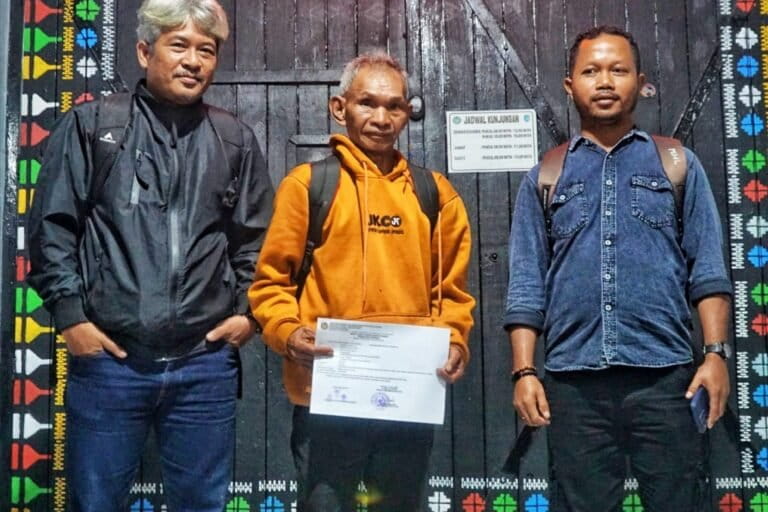
The Ruteng District Court in East Manggarai Regency has delivered a landmark verdict by acquitting Yohanes Flori, an indigenous farmer from the Lando Lawi community, of all criminal charges related to alleged illegal logging within a state-protected conservation area. The decision, handed down on Friday, April 10, 2026, marks the end of a three-month legal ordeal for the 35-year-old farmer, who was arrested for harvesting timber on land he maintains is ancestral territory, despite state claims that the area falls within the Ruteng Nature Tourism Park (TWA Ruteng).
Presiding Judge I Made Hendra Satra Dharma, leading the judicial panel alongside Doni Laksita and Farif Ramdani, ruled that the prosecution failed to provide sufficient evidence to support the allegations of illegal activity. In a comprehensive judgment, the court ordered the immediate restoration of Flori’s rights, status, and dignity, while stipulating that all legal costs be borne by the state. The ruling further mandated the return of seized evidence, including 54 pieces of timber and a chainsaw, to the defendant.
A Victory for Indigenous Rights in East Manggarai
The acquittal of Yohanes Flori is seen as a significant victory for indigenous communities in East Nusa Tenggara (NTT), where tensions between state-managed conservation efforts and customary land rights have long been a source of friction. Flori was charged under the controversial Law No. 18 of 2013 on the Prevention and Eradication of Forest Destruction, as amended by Law No. 6 of 2023 concerning the Job Creation Law. The Public Prosecutor (JPU) had sought a six-year prison sentence, arguing that Flori had violated Article 82, Paragraph (1), letter c, by felling trees in a protected zone without state authorization.
However, the court’s decision highlighted a critical gap between administrative designations of "forest zones" and the lived reality of indigenous peoples who have occupied these lands for generations. Flori, a father who sought only to build a modest home for his family, maintained throughout the trial that his actions were governed by customary law (adat) rather than criminal intent. The acquittal reflects a growing judicial recognition of the rights of indigenous peoples living in or around conservation areas, a sentiment echoed by legal experts and human rights advocates across the archipelago.
Chronology of the Case: From Customary Practice to Criminal Prosecution
The legal saga began on March 20, 2025, when officials from the Ruteng Nature Tourism Park and the East Nusa Tenggara Natural Resources Conservation Agency (BKSDA) Region II arrived at Flori’s residence in Lok Pahar, Compang Lawi Village. The officials accused Flori of illegally felling Kempo (Palaquium obovatum) and Duar (Lindera polyantha) trees within the boundaries of TWA Ruteng. Furthermore, they challenged the legitimacy of his wooden house, claiming it was constructed within a restricted conservation zone.
Flori’s defense was rooted in the traditions of the Lando Lawi indigenous community. According to his testimony, the land in question is part of the community’s "Ulayat" (ancestral) territory. He testified that the timber used for his home was harvested only after he received formal permission from the Tua Teno, the traditional leader responsible for land and agricultural management in Manggarai culture.
"In 2022, I requested permission from the Tua Teno, and the felling only took place in March 2025," Flori explained during the proceedings. He noted that the plot of land had been under his active cultivation for nine years, a practice sanctioned by his community. Despite these explanations, BKSDA officials proceeded to seize dozens of wooden planks and beams, leading to Flori’s detention at the East Manggarai Police Station.
During his three months in custody, Flori described a state of intense psychological pressure and physical discomfort. "I was confused; I knew I had done nothing wrong," he said following his release. "Many people in our community farm that land. We are one indigenous community, and we have always lived this way."
TWA Ruteng: A Map of Overlapping Interests and Conflict
The conflict surrounding TWA Ruteng is not an isolated incident but part of a systemic overlap between state conservation maps and indigenous settlements. TWA Ruteng covers a massive expanse of 32,245.6 hectares, stretching across two regencies: Manggarai and East Manggarai. Specifically, 8,013.60 hectares are located in Manggarai, while the remaining 24,235 hectares fall within East Manggarai.
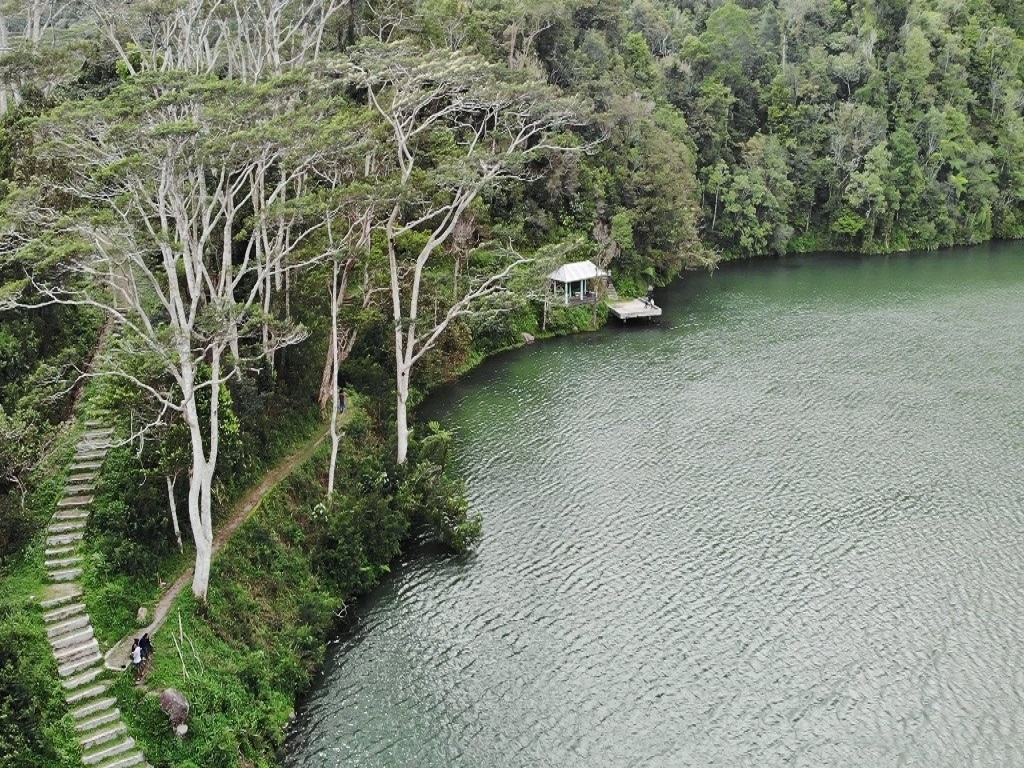
This conservation area borders 57 different villages and spans nine sub-districts. For many of these communities, the state-drawn boundaries of the park are an invisible imposition on lands they have managed for centuries. Yoseph Lensi, Chairman of the Alliance of Indigenous Peoples of the Archipelago (AMAN) for Western Flores, pointed out that many "Gendang" (customary houses or village units) were established long before the Indonesian state defined these territories as conservation zones.
"In areas like Colol, Biting, Welu, and Tangkul, nearly 40% of the community land is claimed by TWA Ruteng," Lensi stated. "These villages existed before the country did. The tradition of building homes from the forest is an ancestral legacy, not a crime." Lensi further criticized the BKSDA’s enforcement methods, alleging that despite agreements to resolve boundary disputes through deliberation (musyawarah), officials have frequently resorted to harsh measures, including the destruction of coffee crops and the burning of farm huts.
Legal Arguments and the Precedent of Mikael Ane
Jimmy Z. Ginting, the legal counsel representing Flori, praised the Ruteng District Court for its objective and progressive stance. He noted that the judges applied a perspective consistent with Constitutional Court (MK) rulings that protect the rights of indigenous peoples. Specifically, the Indonesian Constitutional Court Ruling No. 35/PUU-X/2012 famously declared that "Customary Forests are not State Forests," a landmark decision that remains the bedrock of indigenous land claims in Indonesia.
"We highly appreciate this verdict because the bench was able to deliver substantive justice," Ginting said. He emphasized that the ruling should serve as a wake-up call for the Ministry of Forestry and the East Manggarai Regency Government to accelerate the re-mapping and "penatabatasan" (boundary setting) of indigenous territories.
The Flori case bears a striking resemblance to the previous case of Mikael Ane, another indigenous resident who was sentenced to 18 months in prison for similar activities within TWA Ruteng. Ane served a portion of his sentence between March and September 2023 before the Supreme Court eventually overturned his conviction in May 2024, declaring him innocent. The recurrence of such cases suggests a pattern of "green grabbing," where conservation laws are used to criminalize traditional livelihoods.
The Call for Systematic Reform and Recognition
The acquittal has reignited demands for the East Manggarai government to implement existing local regulations more effectively. While the regency passed Regional Regulation (Perda) No. 1 of 2018 regarding the Recognition, Protection, and Empowerment of Indigenous Law Communities, its implementation has been slow. To date, only three Gendang (customary territories) have been officially recognized, while others, including Gendang Lawi and Gendang Ngkiong, remain in the identification phase.
Maximilianus Herson Loi, Chairman of AMAN Nusa Bunga, argued that the criminalization of indigenous farmers is a violation of human rights. "The forestry criminal provisions should not apply to indigenous peoples who carry out activities on their ancestral lands for survival, rather than commercial gain," Loi asserted. He noted that Flori’s land was acquired through the "Kapu Manuk, Lele Bonggo" mechanism—a sacred customary process of land distribution.
The AMAN leadership is now calling on the central government and the House of Representatives (DPR) to expedite the passage of the long-delayed Indigenous Peoples Bill (RUU Masyarakat Adat). Without a robust national legal framework, local communities remain vulnerable to the shifting priorities of state agencies and the ambiguity of land tenure.
Human Impact and Future Implications
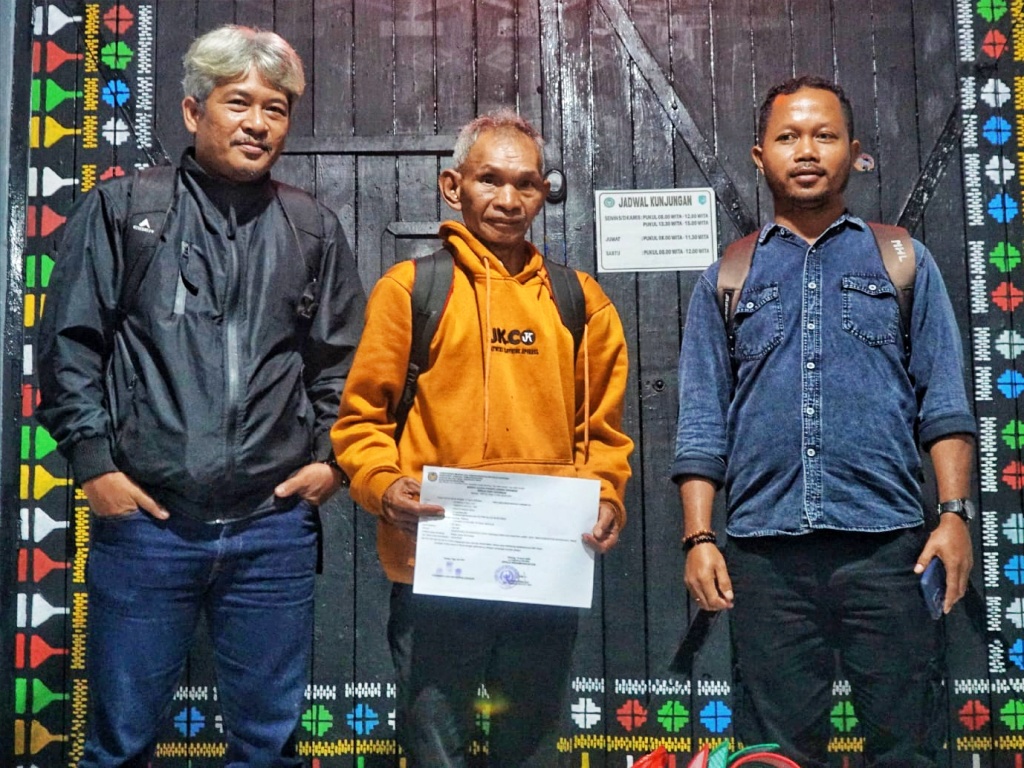
For Yohanes Flori, the court’s decision is a chance to rebuild a life disrupted by the state’s legal machinery. However, the trauma of his incarceration remains. "I felt stressed and pressured. The detention center was very cold, and the uncertainty was difficult," he recalled. Following his release, Flori plans to coordinate with AMAN to meet with the Regent of East Manggarai, seeking a permanent solution that would see his ancestral lands officially excised from the TWA Ruteng map.
The case serves as a critical case study for conservation management in Indonesia. It highlights the necessity of a "rights-based" approach to environmental protection, where the conservation of biodiversity does not come at the expense of the people who have served as the forest’s original stewards.
Legal analysts suggest that if the government does not move quickly to resolve the overlapping claims in TWA Ruteng, the region will continue to see a cycle of arrests, trials, and social unrest. With 68 different Gendang intersecting with the park’s boundaries, the potential for future conflict is high. The acquittal of Yohanes Flori is a significant step toward justice, but for the indigenous communities of East Manggarai, the journey toward full legal recognition of their ancestral heritage is far from over.