Azin Asro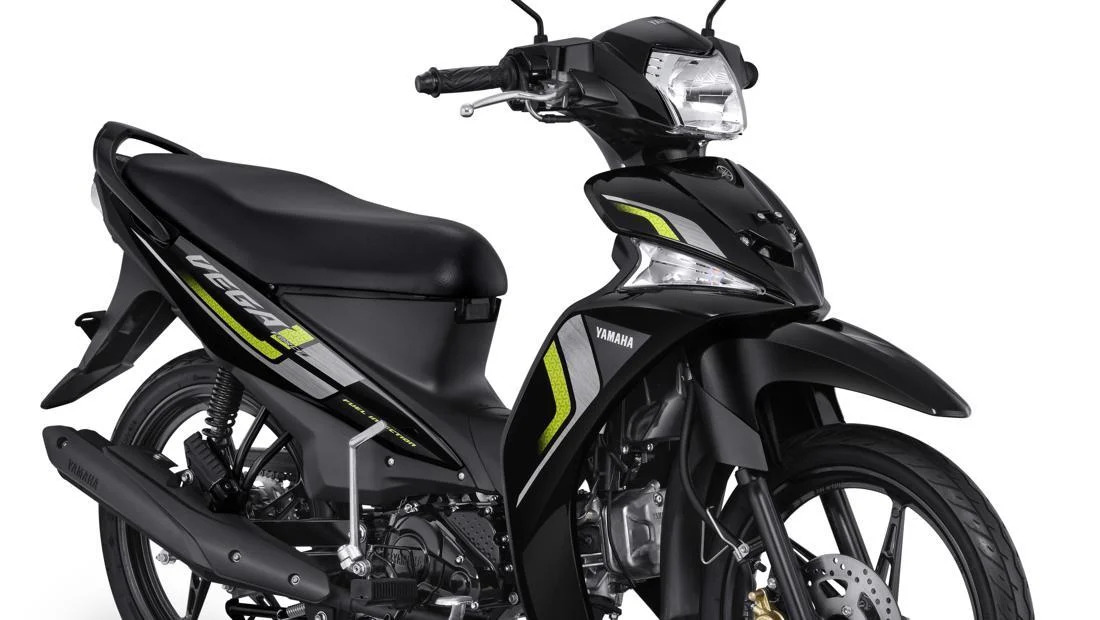
The Indonesian automotive landscape continues to witness a fascinating dichotomy within its two-wheeler segment, where the traditional underbone motorcycle, colloquially known as the "motor bebek," maintains a persistent presence despite the overwhelming dominance of automatic scooters. As of the current fiscal period, the market for these geared utility bikes remains serviced by three primary manufacturers: Honda, Yamaha, and TVS. While the variety of models has streamlined over the last decade, the price spectrum has widened significantly, ranging from budget-friendly workhorses to high-end lifestyle collectibles. Currently, the entry point into this segment is anchored by the TVS Neo XR, priced at an accessible Rp 14.9 million, while the apex of the market is represented by the Honda CT125, which commands a premium price of Rp 82.839 million. This price disparity reflects a broader shift in how underbone motorcycles are perceived and utilized by the Indonesian public, transitioning from essential daily transport to either specialized commercial tools or status-driven hobbyist assets.
The Current Market Landscape and Sales Distribution
The most recent data released by the Association of Indonesia Motorcycle Industries (AISI) provides a clear picture of the consumer preferences currently shaping the industry. In the latest annual reporting cycle, total motorcycle sales in Indonesia reached a staggering 6.4 million units, marking a 1.3 percent increase from the previous year. This growth signals a robust recovery and steady demand in the domestic market, yet the distribution across different types of motorcycles reveals a stark imbalance. Automatic scooters, or "matics," have solidified their position as the undisputed leaders of the road, accounting for 91.7 percent of all sales.
In contrast, the underbone or bebek segment now occupies a modest 4.46 percent of the market share. While this figure is a far cry from the segment’s glory days in the 1990s and early 2000s, it still outperforms the sport motorcycle category, which accounts for 3.51 percent of sales. Interestingly, the emerging electric motorcycle segment, despite significant government incentives and a push for green energy, still contributes less than 1 percent to the total volume. This data suggests that while the general population has migrated to the convenience of twist-and-go transmissions, a dedicated core of users—approximately 285,000 buyers annually—still finds the manual gear system and durability of the underbone design to be superior for their specific needs.
Brand Strategies and Pricing Hierarchies
The three remaining players in the bebek segment—Honda, Yamaha, and TVS—each employ distinct strategies to capture the remaining market share. Honda, as the market leader, offers the most diverse portfolio, catering to both the economy and premium lifestyle tiers. Their lineup includes the long-standing Revo series for budget-conscious buyers, the Supra X 125 for those seeking a reliable mid-range commuter, and the GTR150 for the performance-oriented "sport-bebek" enthusiast. At the top of their range, Honda has successfully carved out a "lifestyle underbone" niche with the Super Cub C125 and the CT125 Hunter Cub, which appeal to collectors and enthusiasts rather than daily commuters.
Yamaha focuses on a more streamlined approach, emphasizing performance and youthful styling. Their Jupiter Z1 and Vega Force models serve the functional commuter market, while the MX King 150 remains a dominant force in the performance underbone category, often used as a platform for local road racing. Meanwhile, TVS continues to position itself as the value-for-money alternative. By offering models like the Neo XR and the Rockz—the latter of which is unique for featuring an integrated FM radio and music system—TVS targets suburban and rural markets where mechanical simplicity and low acquisition costs are the primary purchasing drivers.
A Chronological Shift: From Dominance to Niche
To understand the current state of the underbone market, one must look at the historical trajectory of the Indonesian motorcycle industry. For decades, the "bebek" was the face of Indonesian mobility. In the 1970s and 80s, models like the Honda C70 and the Yamaha V75 mobilized the nation. The 1990s saw the rise of legendary nameplates such as the Honda Supra and the Yamaha Force 1, which were prized for their fuel efficiency, ease of maintenance, and ability to navigate the country’s varied terrain.
The turning point occurred in the mid-2000s with the introduction and subsequent explosion of automatic scooters like the Yamaha Mio and the Honda Vario. These models offered a "step-through" design that was more accessible to women and provided much-needed under-seat storage space—a feature traditional underbones lacked. As urban congestion increased, the ease of an automatic transmission became an irresistible selling point. By 2010, the market share of underbones began a steady decline, eventually leading to the current 4.46 percent standing. However, the segment has not vanished; instead, it has evolved. The "bebek" has moved from being a general-purpose vehicle to a specialized one, favored by delivery couriers for its engine-braking capabilities in hilly areas and by rural farmers for its larger wheels and ruggedness compared to small-wheeled scooters.
Socio-Economic Factors and Regional Demand
The endurance of the underbone motorcycle is heavily tied to the geography and economic structure of Indonesia. While Jakarta and other major metropolitan areas are dominated by scooters, the "bebek" remains a vital tool in regions with more challenging topographies. In parts of Sumatra, Sulawesi, and Kalimantan, where roads may be unpaved or involve significant elevation changes, the semi-automatic gearbox of an underbone provides better control and torque management than a Continuously Variable Transmission (CVT) found in scooters.
Furthermore, the commercial sector remains a steady consumer of underbone motorcycles. Logistics companies and independent "ojek" (motorcycle taxi) drivers often prefer models like the Honda Revo or Yamaha Vega Force due to their perceived longevity and lower long-term maintenance costs. The mechanical simplicity of these bikes allows for easy repairs in remote areas where specialized diagnostic tools for modern high-tech scooters might be unavailable. This "fleet" demand provides a safety net for manufacturers, ensuring that production lines for these models remain viable despite the shrinking retail interest in urban centers.
The Rise of the Premium Underbone
Perhaps the most surprising trend in the current market is the success of high-priced underbones. The Honda CT125, priced at over Rp 80 million, is not a vehicle purchased for utility, but rather for its aesthetic and heritage value. This "premiumization" of the bebek segment indicates that there is a segment of the Indonesian middle and upper class that views the underbone design with nostalgia. These buyers are willing to pay a premium for modern technology—such as LED lighting, ABS braking, and digital instrumentation—wrapped in a classic silhouette.
This shift has changed the manufacturer’s perspective on the segment. While the low-end models compete on price and fuel economy, the high-end models compete on brand story and exclusivity. This dual-track market ensures that the underbone remains relevant in the cultural conversation, even if it no longer dominates the sales charts. It has transformed from a "people’s bike" into a versatile platform that can serve as either a humble tool or a luxury toy.
Industry Implications and Future Outlook
Looking ahead, the future of the underbone motorcycle in Indonesia will likely be defined by two factors: electrification and further specialization. As the Indonesian government pushes for a transition to electric vehicles (EVs), the traditional internal combustion engine (ICE) underbone faces a new challenge. However, the underbone chassis design is actually well-suited for electrification, offering space for battery placement and a stable ride. Whether manufacturers will invest in "Electric Bebeks" or focus their EV efforts entirely on the more popular scooter format remains to be seen.
Industry analysts suggest that as long as there is a demand for durable, low-cost transport in the logistics and rural sectors, the 110cc to 125cc underbone will persist. Manufacturers are likely to continue updating these models with fuel injection and more efficient engines to meet tightening emission standards, but major redesigns may become less frequent. The current sales stability—holding at around 4-5 percent of the market—suggests that the segment has found its "floor" and is unlikely to disappear entirely in the near future.
In conclusion, while the automatic scooter is the undisputed king of the Indonesian road, the underbone motorcycle remains an essential and evolving part of the nation’s transport fabric. From the Rp 14.9 million TVS Neo XR that empowers small business owners to the Rp 82.8 million Honda CT125 that satisfies the desires of collectors, the "bebek" continues to prove its versatility. The 6.4 million units sold in the broader market show a healthy industry, and the 4.46 percent share held by underbones represents a significant, loyal, and functional niche that continues to drive the wheels of the Indonesian economy forward.