Azin Asro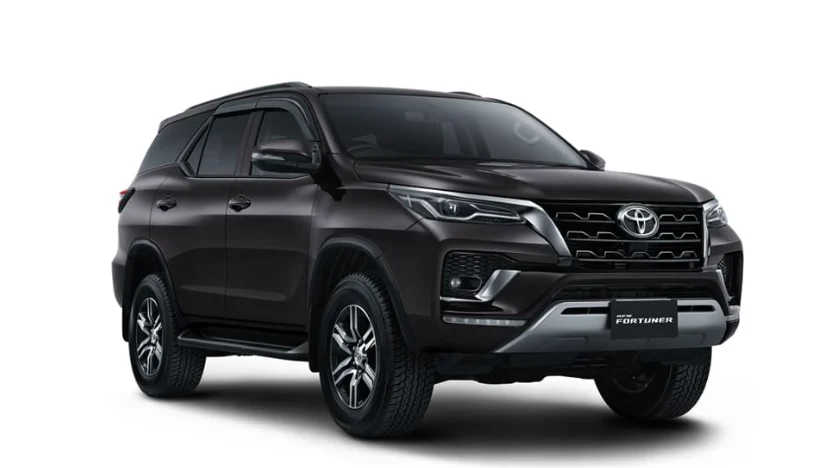
The Indonesian automotive landscape has long been dominated by the presence of ladder-frame SUVs, with the Toyota Fortuner standing as a perennial symbol of prestige, durability, and versatility. As the market enters the first quarter of 2026, a detailed analysis of sales data reveals a fascinating trend regarding consumer behavior within the premium SUV segment. Despite being the most affordable entry point into the Fortuner family, the 2.4-liter variant is currently experiencing a significant slump in sales, overshadowed by its more powerful and expensive siblings. This shift suggests that the Indonesian consumer, particularly in the high-end SUV category, is increasingly prioritizing performance and engine displacement over initial purchase price.
According to the latest wholesales distribution data released by the Association of Indonesia Automotive Industries (Gaikindo) for the period of January to March 2026, the Toyota Fortuner 2.4L recorded surprisingly low figures. Total distribution for this entry-level model reached only 16 units across the first three months of the year. This figure stands in stark contrast to the flagship Fortuner 2.8L, which continues to dominate the charts with 2,778 units distributed in the same timeframe. Even the 2.7-liter gasoline variant, which often occupies a niche space in the market, outperformed the 2.4-liter diesel with 22 units.
The Paradigm Shift: Performance Over Economy
The Toyota Fortuner 2.4L is positioned as the pragmatic choice, starting at an attractive price point of approximately Rp 583.7 million for the manual transmission and Rp 601.8 million for the automatic version. In previous years, the 2.4-liter 2GD-FTV engine was the backbone of Fortuner sales, favored by fleet owners and private buyers looking for the imposing presence of an SUV without the higher tax and fuel costs associated with larger engines. However, the 2026 data indicates a profound shift.
Industry analysts suggest that the "premiumization" of the Indonesian middle class has led buyers to view the 2.8-liter variant not just as a luxury, but as a necessity for the driving experience expected of a vehicle in this price bracket. The Fortuner 2.8L, despite being the most expensive in the lineup, offers a level of torque and power that the 2.4L cannot match, making it the preferred choice for those who frequently navigate mountainous terrain or utilize the vehicle for long-distance highway travel.
Technical Breakdown: Comparing the Three Hearts of the Fortuner
To understand why the market is gravitating toward the 2.8L, one must look at the mechanical specifications of the three available engines. Toyota has engineered these powertrains to cater to different regional needs and fuel preferences, yet the gap in performance metrics is substantial.
The 2.4L Diesel (2GD-FTV)
The entry-level 2.4L variant utilizes the 2GD-FTV four-cylinder diesel engine with a capacity of 2,393 cc. It produces a respectable 149.6 PS at 3,400 rpm and a maximum torque of 40.8 kgm within the 1,600 to 2,000 rpm range. While these numbers are sufficient for urban commuting, they are often perceived as modest for a vehicle with a curb weight exceeding two tons. Despite the lower power, Toyota does not compromise on safety features for this model, equipping it with Hill Start Assist (HSA), Emergency Brake Signal (EBS), Trailer Sway Control (TSC), Traction Control (TRC), and Vehicle Stability Control (VSC).
The 2.7L Gasoline (2TR-FE)
The 2.7L variant remains the sole choice for consumers who prefer the smoothness and lower vibration levels of a gasoline engine. Carrying the 2TR-FE engine with a displacement of 2,694 cc, it generates 163 PS at 3,400 rpm and a maximum torque of 24.7 kgm at 4,000 rpm. While it offers higher horsepower than the 2.4L diesel, its significantly lower torque makes it less popular for heavy-duty use, explaining its niche sales performance of 22 units.
The 2.8L Diesel (1GD-FTV)
The undisputed king of the lineup is the 2.8L variant, powered by the 1GD-FTV engine with a 2,755 cc displacement. According to current specifications, this engine delivers a massive 50.9 kgm of torque at 1,600-2,800 rpm. It is this torque figure that defines the driving character of the Fortuner 2.8L, providing effortless acceleration and superior towing capabilities. The 2,778 units sold in Q1 2026 prove that buyers are willing to pay the premium for the 1GD engine’s performance, which has become the benchmark for the segment.
Historical Context and Market Evolution
The Toyota Fortuner’s journey in Indonesia began in the mid-2000s, originally imported as a Completely Built-Up (CBU) unit from Thailand before local production commenced. For nearly two decades, the Fortuner and its primary rival, the Mitsubishi Pajero Sport, have engaged in a fierce battle for market share.
Historically, the 2.5L (and later 2.4L) diesel engines were the volume drivers. However, the introduction of the 2.8L engine in early 2022 marked a turning point. Toyota-Astra Motor (TAM) recognized a growing demand for higher output, responding to Mitsubishi’s high-power Dakar variants. By 2026, the 2.8L has transitioned from being a "special edition" or high-trim option to becoming the default choice for the majority of Fortuner customers. This evolution reflects a broader trend in the Indonesian automotive market where the "top-of-the-line" trim often outsells the base models, as buyers in this segment are less price-sensitive and more focused on value-added features and prestige.
Chronology of Sales Performance: Q1 2026
The distribution of the Fortuner throughout the first quarter of 2026 shows a steady, albeit lopsided, flow of units from the factory to dealerships.
- January 2026: The year started with strong momentum for the 2.8L, as dealerships replenished stock following the December holiday rush. The 2.4L saw minimal movement, primarily directed toward fleet contracts in the mining and plantation sectors.
- February 2026: Sales remained consistent. The 2.7L gasoline variant saw a small uptick in urban areas like Jakarta and Surabaya, where gasoline is sometimes preferred for its perceived lower maintenance in stop-and-go traffic.
- March 2026: The closing of the first quarter solidified the 2.8L’s dominance. With 2,778 units across the three months, it accounted for over 98% of total Fortuner wholesales.
Industry Reactions and Economic Implications
Automotive industry observers note that the low sales of the 2.4L could prompt Toyota to re-evaluate its production mix at the PT Toyota Motor Manufacturing Indonesia (TMMIN) facilities. If the trend continues, the 2.4L might be relegated strictly to a "made-to-order" basis or reserved primarily for government and corporate fleet tenders, rather than general consumer retail.
"The data suggests that the ‘middle ground’ in the SUV segment is disappearing," says an industry analyst. "Buyers either want the absolute best performance available—which is the 2.8L—or they are looking at different segments entirely, such as smaller crossovers or electric vehicles. The 2.4L Fortuner, while capable, sits in a space that no longer excites the private retail buyer who is spending upwards of Rp 600 million."
Furthermore, the secondary market (used cars) for the Fortuner remains incredibly strong in Indonesia. The high demand for the 2.8L in the new car market is expected to translate into higher resale values for that specific variant, further incentivizing buyers to opt for the larger engine despite the higher initial cost.
Competitive Landscape: The Battle with Pajero Sport
The Fortuner’s performance cannot be discussed without mentioning the Mitsubishi Pajero Sport. The competition between these two models often dictates the features and engine options provided to Indonesian consumers. Mitsubishi has also seen a similar trend, where their high-spec Dakar and Dakar Ultimate variants significantly outsell the base Exceed models.
The rivalry has forced both manufacturers to continuously upgrade their offerings. In 2026, the Fortuner’s dominance with the 2.8L engine is a strategic response to maintain its position as the market leader. The fact that Toyota can move nearly 2,800 units of its most expensive variant in just three months is a testament to the brand’s strength and the perceived reliability of the GD engine series.
Future Outlook and Sustainability
Looking ahead to the remainder of 2026 and into 2027, there are questions regarding how Toyota will address the low demand for the 2.4L and 2.7L variants. There is speculation that Toyota may introduce hybrid technology to the Fortuner lineup, similar to the direction taken with the Innova Zenix. A "Fortuner HEV" (Hybrid Electric Vehicle) could potentially replace the lower-displacement diesel and gasoline engines, offering a combination of high torque and improved fuel efficiency that might appeal to the modern, environmentally conscious consumer.
Until then, the 2.8L remains the undisputed flagship of the Toyota SUV range in Indonesia. Its massive sales lead over the 2.4L and 2.7L models underscores a clear message from the market: in the world of ladder-frame SUVs, power and prestige are the ultimate commodities.
Summary of Pricing for the 2026 Toyota Fortuner Lineup
While specific regional taxes and dealer markups may vary, the 2026 price structure remains a key factor in consumer decision-making.
Fortuner 2.4L Price Range
- 2.4 G M/T (Diesel): Starting from Rp 583,700,000
- 2.4 G A/T (Diesel): Starting from Rp 601,800,000
Fortuner 2.7L Price Range
- 2.7 GR Sport A/T (Gasoline): Positioned in the mid-range, catering to gasoline enthusiasts.
Fortuner 2.8L Price Range
- 2.8 VRZ A/T (Diesel): The volume leader.
- 2.8 GR Sport A/T (Diesel): The flagship variant, commanding the highest price point and representing the bulk of the 2,778 units sold in Q1 2026.
As the year progresses, the automotive industry will be watching closely to see if the 2.4L can regain any ground or if the Indonesian market has permanently moved toward a "bigger is better" philosophy for its favorite 7-seater SUV.