Lina Irawan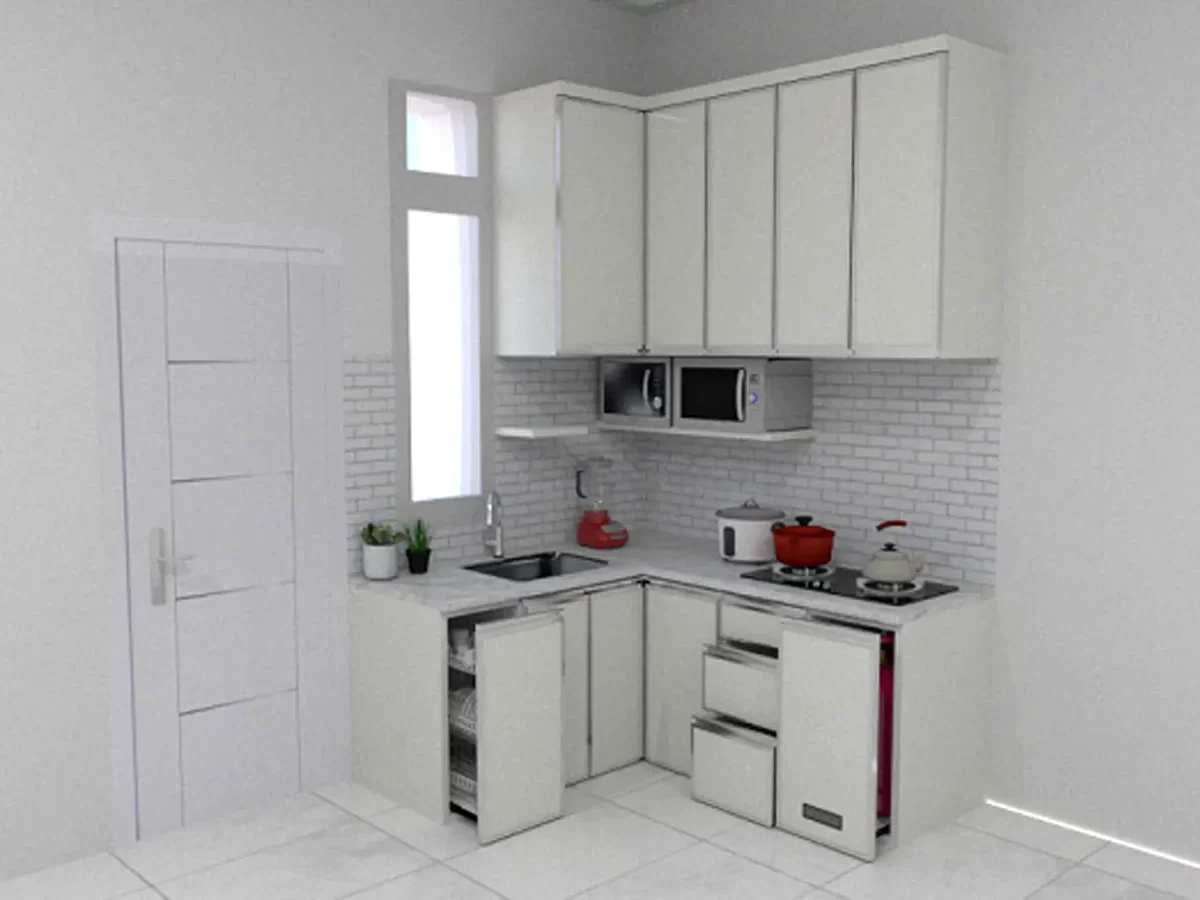
Designing a kitchen set within a confined area fundamentally hinges on two critical dimensions: establishing the base cabinet depth at a precise 60 cm and extending upper cabinets seamlessly to the ceiling. Rather than getting caught up in intricate decorative details, the focus must shift decisively towards the efficiency of drawer systems and the ergonomic spacing between distinct work zones. This strategic approach, championed by leading design authorities like InteriorDesign.ID, underscores a philosophy where functionality reigns supreme, particularly in environments where every centimeter counts.
The increasing prevalence of compact living spaces, driven by rapid urbanization and the proliferation of apartments and smaller residential units, has fundamentally reshaped interior design priorities. Homeowners are no longer merely seeking aesthetics; they demand intelligent, space-saving solutions that do not compromise on usability. In this context, the kitchen, often considered the heart of the home, presents a unique challenge. A small kitchen is not merely a downsized version of a larger one; it requires a fundamentally different design methodology, one rooted in precision and thoughtful planning.
At InteriorDesign.ID, the design team consistently prioritizes practicality and workflow. Crafting layouts for small kitchens necessitates meticulous dimensional accuracy. A miscalculation of even 5 cm can lead to significant functional impediments, such as cabinet doors clashing or obstructing vital pathways. Furthermore, the common practice of purchasing pre-fabricated modular cabinet units often results in awkward corner gaps or unused spaces, which invariably become collecting points for dust and clutter, undermining the very goal of a streamlined kitchen.
The Inadequacy of Standard Modules in Compact Kitchens
A significant pitfall in small kitchen design is the attempt to force standard, off-the-shelf cabinet dimensions, typically designed for larger showroom environments, into the confined realities of residential kitchens. For spaces averaging 2×2 meters or narrow galley layouts of 1.5×3 meters, imposing such standard units inevitably stifles circulation. This can manifest as frustrating obstacles, like struggling to fully open a refrigerator door or reaching items stored in lower cabinets due to insufficient clearance.
A common design error involves dividing cabinet door widths uniformly. For instance, splitting a wall into four equally sized 45 cm doors often disregards the actual items intended for storage behind them. Cabinet widths should, instead, be dictated by the contents they house. Large pots and pans might require a generous 60-80 cm wide cabinet, whereas spice bottles or condiments can be efficiently accommodated in a narrower 15-20 cm pull-out unit. This tailored approach ensures that storage is not just present, but truly optimized for accessibility and utility.
Corner spaces, particularly prevalent in L-shaped kitchen layouts, frequently become neglected "dead zones." Their difficult accessibility means that items stored deep within are rarely retrieved, rendering a significant portion of valuable storage capacity redundant. These challenging corner areas demand ingenious solutions, such as specialized hinges that allow wider door openings or innovative pull-out mechanisms like "lazy Susans" or "magic corners" to ensure that every square inch of storage is effectively utilized. The failure to address these nuances transforms potential storage into wasted, inaccessible volume.
Ergonomic Benchmarks for Kitchen Set Dimensions
Optimal kitchen design for small spaces is deeply rooted in ergonomics, specifically adapting dimensions to the average body measurements of users. This ensures comfort, efficiency, and safety during cooking activities.
1. Base Cabinet Modules
These foundational units support the countertop and typically house heavier items and appliances. An ideal countertop height, generally ranging from 85-90 cm from the floor, is crucial for preventing shoulder and back fatigue during prolonged tasks like chopping vegetables. The standard depth of 60 cm for base cabinets is not arbitrary; it aligns perfectly with the dimensions of most built-in cooktops and ovens available on the market, ensuring seamless integration and a cohesive aesthetic.

At the very bottom, a recessed toe kick, typically 10-15 cm high, is indispensable. This indentation provides crucial foot clearance, allowing users to stand closer to the countertop with proper posture, reducing strain and enhancing comfort during food preparation.
2. Upper Cabinet Modules
Designed for lighter storage, upper cabinets require a shallower depth, usually 30-35 cm. Extending them further risks head collision while cooking, particularly when leaning over the countertop.
The vertical clearance between the base cabinet countertop and the bottom of the upper cabinets is ideally 60 cm. This generous gap provides ample space for common countertop appliances such as rice cookers, blenders, or coffee makers, ensuring they can be used without feeling cramped. A key recommendation for small kitchens is to extend these upper cabinets fully to the ceiling. This not only maximizes vertical storage capacity but also eliminates the unsightly and often greasy dust traps that accumulate on top of shorter cabinets, simplifying cleaning and promoting a cleaner aesthetic.
3. Circulation Pathways
Unimpeded movement is paramount in a small kitchen. The minimum clear distance between opposing cabinets, or between a cabinet and a wall, should be at least 90 cm for a single person to move comfortably. If the kitchen is frequently used by two people simultaneously, this clearance should be expanded to 110-120 cm. This crucial spacing ensures that appliance doors, such as those of a refrigerator or oven, can be fully opened without striking an opposing wall or cabinet, preventing damage and maintaining workflow efficiency.
Optimizing Internal Cabinet Organization
Beyond external dimensions, the internal configuration of cabinets plays a pivotal role in maximizing utility in a small kitchen.
Prioritizing Full-Extension Drawers in Base Units
A transformative design principle for base cabinets is to replace traditional tiered shelves with full-extension drawers. Standard shelves often force users to crouch and rummage through front-row items to access pots or pans stored at the back. Full-extension drawers, conversely, allow the entire contents of the cabinet to be pulled out and viewed from above, making every item instantly accessible without strain or wasted effort.
A well-organized drawer system can be tiered into three levels: shallow top drawers for cutlery and small utensils, mid-depth drawers for everyday plates and bowls, and deep bottom drawers specifically designed to accommodate large pots, pans, and other bulky cookware. This systematic approach ensures that items are stored logically and retrieved effortlessly.
Ingenious Vertical Module Division
Even narrow, seemingly awkward cabinet gaps can be transformed into highly functional storage. A slender 15 or 20 cm gap beside a cooktop, for example, can be converted into a vertical pull-out pantry, ideal for organizing cooking oils, vinegars, and spices, thereby decluttering the countertop. Near the sink area, a narrow open slot can provide a convenient, accessible space for storing cutting boards or serving trays, allowing them to air dry and be readily available. These intelligent vertical divisions leverage every available inch, turning potential waste into practical assets.
Streamlining the Kitchen Workflow
The classic "work triangle" theory (sink, stove, refrigerator) often proves impractical in the linear constraints of many small kitchens. Instead, a linear workflow, mirroring the natural progression of cooking tasks, offers a more logical and efficient arrangement.

The Linear Workflow Model
This sequential layout optimizes movement by aligning appliances and work surfaces according to the cooking process: retrieving ingredients, washing, preparing, and finally, cooking. The ideal sequence is: Refrigerator → Sink → Preparation Area → Cooktop.
Crucially, an uninterrupted countertop space of at least 60 cm should be designated as the primary prep area, positioned between the sink and the cooktop. It is also advisable to avoid situating the cooktop directly adjacent to a side wall. A minimum clearance of 30 cm from the wall prevents pot handles from colliding with the surface and makes wall cleaning easier after cooking. Similarly, a small countertop space next to the sink is beneficial for placing a dish drying rack.
Layout Solutions Tailored to Room Shapes
Different kitchen layouts suit varying room configurations, each demanding specific design considerations for optimal functionality in small spaces.
1. Single-Line Layout
Most commonly found in studio apartments or smaller homes, this model arranges all primary kitchen elements along a single wall. For walls shorter than 2.5 meters, maximizing space requires strategic choices such as a single-bowl sink and a two-burner cooktop. The space beneath upper cabinets can be further utilized by installing metallic rails or pegboards for hanging frequently used utensils or dishcloths, keeping countertops clear.
2. L-Shaped Layout
Ideal for spaces measuring at least 2×2 meters that connect to a dining area, the L-shaped layout allows for a separation of the cooktop and sink onto different walls. This distributes activity, preventing congestion at a single point. To effectively utilize the challenging corner space in the lower cabinet, specialized wide-opening hinges combined with pull-out shelves or rotating carousels (lazy Susans) can dramatically improve accessibility and storage capacity.
3. Galley Layout
Characterized by two parallel rows of cabinets and countertops facing each other, the galley kitchen demands a precise central aisle. A minimum clearance of 110 cm between the opposing cabinets is essential to ensure that doors on both sides can be opened simultaneously without collision, maintaining smooth passage. This layout is excellent for separating wet and dry zones: one side can house the sink and perhaps a washing machine, while the opposite side is dedicated to the cooktop and preparation area. This segregation significantly reduces the risk of water splashes near hot oil on the cooktop, enhancing safety.
Material and Visual Selections for Small Kitchens
The choice of materials and visual elements can profoundly impact the perception of space in a compact kitchen.
HPL and Duco Finishes
Light-colored exterior cabinet finishes, such as white, light grey, or pale wood grain laminates, are highly effective. These tones reflect light, creating an illusion of greater spaciousness. When opting for High-Pressure Laminate (HPL), a matte (doff) texture is often preferable as it cleverly conceals fingerprints and smudges more effectively than a glossy surface. For those with a more flexible budget, Duco paint offers a premium, seamless finish without the visible dark joint lines typically associated with HPL edges, contributing to a sleek and sophisticated aesthetic.
Countertop Surfaces
Durable materials like granite or quartz in solid, light colors are highly recommended. These natural and engineered stones are robust, offering excellent resistance to heat and knife scratches. It is generally advisable to avoid granite with overly busy or speckled patterns, as these can visually clutter a small kitchen and make it feel more confined. Solid surface materials present another compelling option; they can be seamlessly integrated with the wall backsplash and sink, eliminating grout lines and crevices where dirt and grime typically accumulate, thus promoting superior hygiene and ease of cleaning.

Backsplash Design
The backsplash, the wall area between the countertop and upper cabinets, is prone to cooking splashes and stains. Installing ceramic subway tiles horizontally can visually elongate the kitchen, making it appear wider than it is. Alternatively, mirrored backsplashes, whether bronze or clear, are a popular choice for their reflective properties. They create an optical illusion of depth and expanse, making the room feel significantly larger and brighter by bouncing light around the space.
Specialized Hardware for Confined Kitchens
Thoughtful selection of hardware can significantly enhance functionality and space efficiency in small kitchens.
Upper cabinet doors that swing outwards consume valuable air space and can impede movement. A superior alternative is to use hydraulic lift-up hinges, which allow the cabinet doors to open upwards. This design keeps the doors safely out of the way while cooking, preventing head bumps and allowing unobstructed access to cabinet contents. Furthermore, investing in soft-close drawer slides and cabinet hinges is a wise decision. These mechanisms ensure that drawers and doors close gently and silently, preventing wear and tear, extending the lifespan of the cabinetry, and contributing to a more peaceful kitchen environment.
Strategic Electrical and Lighting Planning
Effective planning of electrical outlets and lighting is crucial for both functionality and ambiance in a small kitchen.
Electrical planning should commence before any cabinet construction. It is essential to designate and install at least 3-4 power outlets along the backsplash wall. This strategic placement allows for convenient plugging in of small appliances like rice cookers or blenders without unsightly cables trailing across the main work area, maintaining a clean and safe countertop.
Relying solely on a single overhead ceiling light is often insufficient. A central light source can cast shadows over the main prep areas as the user stands in front of it, making tasks like chopping vegetables difficult and potentially hazardous. The optimal solution involves installing LED strip lighting discreetly underneath the upper cabinets. These lights directly illuminate the primary work surfaces, providing bright, shadow-free task lighting. A natural white light, typically around 4000K, offers optimal clarity and is comfortable for the eyes, enhancing both safety and precision during cooking.
Estimated Costs for Custom Minimalist Kitchen Sets
Understanding the financial investment required for a custom kitchen set is a key consideration for homeowners.
The cost of bespoke kitchen fabrication is typically calculated on a "per linear meter" basis. In metropolitan areas like Jakarta, a kitchen cabinet made from high-quality multiplek (plywood) with an HPL finish for the interior usually ranges from IDR 2.5 million to IDR 3.5 million per linear meter. This pricing is often quoted separately for upper and lower cabinets. It is important to note that this initial estimate generally does not include premium accessories, natural stone countertops (like granite or quartz), or built-in electronic appliances.

A budget ranging from IDR 15 million to IDR 25 million is typically considered sufficient for constructing a robust and highly functional custom kitchen set. For those with tighter financial constraints, it is generally advised to prioritize the quality of core materials for the base cabinets (e.g., sticking with plywood) over immediate installation of upper cabinets. Compromising on material quality, such as opting for particle board, especially in moisture-prone areas, can lead to rapid deterioration and higher long-term replacement costs.
Ultimately, designing a small kitchen is a precise exercise in spatial planning and ergonomic reach. The focus must be on eliminating superfluous decorative elements, such as ornate carved doors or classical embellishments, which consume valuable space without adding functional value. A truly effective kitchen is not measured by its aesthetic appeal in a photograph but by the seamless, unhindered flow of cooking activities, allowing the user to prepare meals efficiently without feeling cramped or constantly bumping into surfaces.
Frequently Asked Questions (FAQ) Regarding Small Kitchen Sets
Q: What is the minimum space required for a functional kitchen?
A: A space as compact as 1.5 x 2 meters can be made highly functional. With a single-line layout, a 150 cm long wall can effectively accommodate a single-bowl sink, a 40 cm prep area, and a two-burner cooktop, demonstrating that smart design can make the most of minimal dimensions.
Q: Is a cooker hood (exhaust fan) a necessity in a small kitchen?
A: Absolutely. In small, enclosed spaces, air circulation can quickly become stagnant. A cooker hood, particularly a built-in type integrated into the upper cabinet, is essential for extracting cooking fumes and odors before they permeate other living areas or cling to furniture and clothing. This also improves indoor air quality.
Q: What type of wood material is durable for kitchen cabinetry?
A: Multiplek (plywood) made from meranti wood, laminated with melamine, offers excellent strength and moisture resistance, making it a durable choice for kitchens. In environments prone to termite infestations or high humidity, alternatives like PVC board or specialized aluminum cabinetry for the lower units provide superior resistance to pests and water damage.
Q: Can dark colors, such as black, be used in a small kitchen?
A: Yes, dark colors can be incorporated, but sparingly and strategically as accents. It is best to apply dark hues to the lower cabinets only, while keeping upper cabinets, countertops, and walls in lighter shades. This balance prevents the room from feeling visually heavy or cramped, maintaining an airy and open feel.
Q: How can unpleasant odors under the sink cabinet be prevented?
A: The area around drainage pipes is inherently prone to moisture. To mitigate musty odors, consider installing cabinet doors with louvered (kisi-kisi) designs or integrating small aluminum ventilation grilles into the door panels. These features promote air circulation within the cabinet, preventing moisture buildup and subsequent odor development. Regular cleaning and ensuring no leaks from plumbing are also crucial.