Nila Kartika Wati
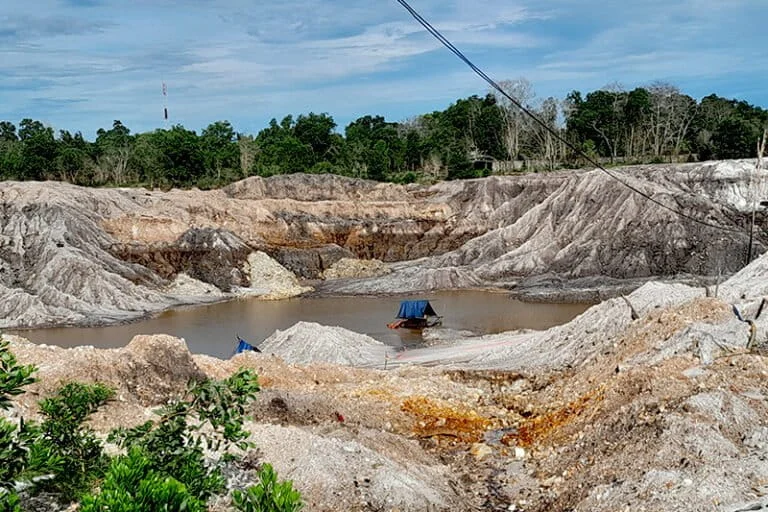
The Indonesian Ministry of Environment (KLH) has officially identified 175 corporations across the mining, palm oil, and forestry sectors as primary contributors to the devastating cycle of floods and landslides that have ravaged three provinces in Sumatra. These companies, operating within production forest areas through various business permits (PBPH), are linked to a staggering 1.8 million hectares of deforestation. The findings, presented during a high-level working meeting with Commission XII of the House of Representatives (DPR) on April 6, signal a significant escalation in the government’s attempt to hold the private sector accountable for ecological disasters. However, as the ministry moves forward with administrative and civil sanctions, environmental advocates and legal experts warn that the current enforcement framework may lack the transparency and teeth necessary to ensure long-term environmental recovery or prevent future tragedies.
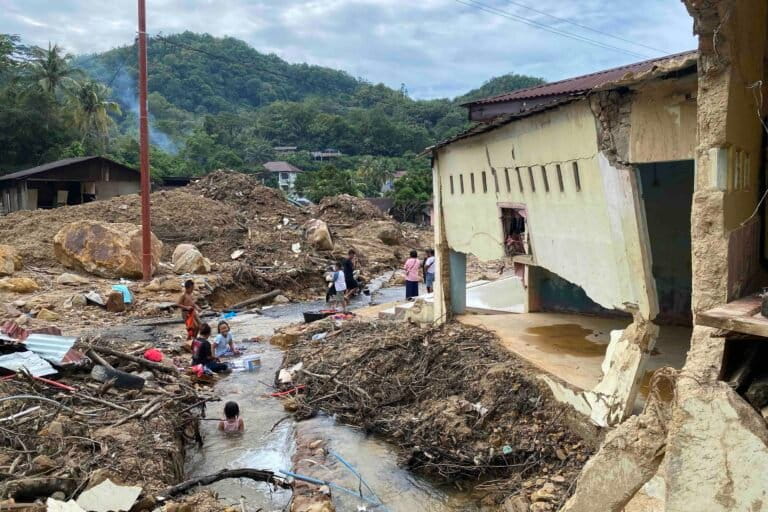
The scale of the environmental degradation is unprecedented in its regional concentration. According to data released by Environment Minister Hanif Faisol Nurofiq, the deforestation footprint is distributed across the most disaster-prone areas of the island. In Aceh, 75 companies have been identified as responsible for 423,019 hectares of land clearing. In North Sumatra, the impact is even more severe, with 42 companies linked to 799,119 hectares of forest loss. Meanwhile, in West Sumatra, 58 companies have been implicated in the clearing of 583,477 hectares. This massive loss of forest cover has drastically reduced the landscape’s ability to absorb rainfall, turning seasonal monsoons into lethal torrents of mud and water that have displaced thousands of residents and destroyed critical infrastructure.

In response to these findings, the Ministry of Environment has initiated a tiered enforcement strategy. Administrative sanctions have already been imposed on 22 companies, requiring them to undergo mandatory government-led environmental audits. An additional 45 companies are currently in the process of receiving administrative sanction letters. Minister Hanif emphasized that the government is not stopping at administrative measures; the ministry is also pursuing civil lawsuits seeking over Rp4.9 trillion in damages from six specific companies. Furthermore, six other firms are facing criminal investigations for their alleged roles in the environmental destruction. Other follow-up actions include the issuance of compliance sanctions for one firm, the transfer of cases to the forestry and regional government sectors for four others, while two companies were found to have already ceased operations.
Beyond corporate negligence, the Ministry’s investigation revealed a systemic failure in regional governance. Minister Hanif pointed to a "serious gap" between the Strategic Environmental Assessments (KLHS) and the Regional Spatial Plans (RTRW) established by local governments. This misalignment is believed to be a primary driver of the disasters, as land-use permits were often issued in areas that environmental assessments had already flagged as high-risk or ecologically sensitive. To address this, the Ministry has issued a ministerial decree to evaluate these discrepancies across Aceh, North Sumatra, and West Sumatra, aiming to harmonize development plans with ecological realities.
Despite these actions, the Indonesian Forum for the Environment (Walhi) has raised sharp criticisms regarding the transparency of the enforcement process. Uli Arta Siagian, Walhi’s National Executive Campaign Coordinator, argues that the government’s approach remains shrouded in secrecy and fails to address the root causes of the crisis. Walhi has repeatedly demanded that the government release the specific indicators used to evaluate these companies and, more importantly, the names of the 175 entities involved. "We do not know the clarity of the indicators used in the audit of these companies," Siagian stated. "Without detailed names, we cannot verify if the sanctions are hitting the right targets or if they are even directly related to the flood zones."
Walhi also pointed to inconsistencies in previous enforcement actions. In January, the government revoked the permits of 28 companies, but Walhi noted that some of these companies were located far from disaster sites, while others had already had their permits revoked years prior. There are also concerns regarding the transition of these concessions to Danantara, the new state-owned investment management agency. Critics worry that shifting these lands to state-owned enterprises like PT Agrinas Palma Nusantara or PT MIND ID under the guise of "management" may simply be a way to bypass environmental accountability rather than restoring the land. Siagian warned that if the government continues with "business as usual" by prioritizing asset recovery over ecological restoration, the cycle of disasters in Sumatra is guaranteed to repeat.
Echoing these concerns, Rio Rompas, Forest Campaign Team Leader at Greenpeace Indonesia, argued that administrative fines alone act as little more than a "license to pollute" for wealthy corporations. "Administrative sanctions and fines do not provide a deterrent effect," Rompas explained. "For large corporations with massive capital, these fines are just a cost of doing business—a way to wash away their sins." Greenpeace is advocating for the strict application of Law No. 32 of 2009 on Environmental Protection and Management (UU PPLH). Under Articles 98 and 99 of this law, intentional pollution or negligence leading to environmental damage carries heavy criminal penalties, including up to 15 years in prison and fines of up to Rp15 billion. Rompas insists that without criminal prosecution and mandatory restoration, the environment will never truly recover.
The legal complexity of "restoration" is a central point of contention. Andri Gunawan Wibisana, an environmental law expert from the University of Indonesia, noted that the essence of environmental law is not merely to punish, but to repair. "If the administrative sanctions and fines do not come with a direct order for restoration, they are insufficient," Wibisana said. He highlighted a structural flaw in Indonesia’s financial system: fines collected from environmental cases are currently categorized as Non-Tax State Revenue (PNBP). Once these funds enter the state treasury, they are blended with general tax revenue and used for various national expenditures, with no guarantee that they will be reinvested into the specific ecosystems that were damaged.

To solve this "structural deadlock," Wibisana suggests a radical restructuring of the Environmental Fund Management Agency (BPDLH). Currently, the BPDLH primarily manages grants and carbon-related funds. Wibisana argues that the agency should be empowered to manage all funds derived from environmental fines, civil settlements, and criminal penalties. By channeling these funds directly to the BPDLH, the government could bypass the bureaucratic hurdles of the national budget (APBN) and ensure that money taken from environmental offenders is used immediately for reforestation, soil remediation, and habitat restoration in the affected regions.
The human cost of these environmental failures remains the most pressing issue for the Ministry. In the wake of the most recent floods, KLH has submitted a rapid assessment of environmental carrying capacities to the DPR to guide the construction of permanent housing (huntap) for displaced residents. Minister Hanif stated that the ministry is providing spatial directions down to the sub-district level to ensure that new settlements are not built in high-risk zones. However, the physical recovery of these areas is hampered by a secondary crisis: waste management.
In Aceh alone, 52 districts and cities have reported the total destruction of their waste disposal facilities (TPS). The floods have left behind massive amounts of debris, particularly large logs and timber, which now clog waterways and pose significant health risks. The Ministry of Environment has requested a budget of Rp7.5 billion for feasibility studies to rebuild these facilities and an additional Rp72 billion for waste management infrastructure, including garbage trucks and heavy machinery. The sheer volume of wood waste—much of it likely a byproduct of the very deforestation that caused the floods—requires an immediate and specialized response to prevent further clogging of the region’s drainage systems.

The ongoing situation in Sumatra serves as a grim case study of the intersection between corporate expansion and ecological limits. While the Ministry of Environment’s move to identify and sanction 175 companies is a step toward accountability, the effectiveness of these measures remains under heavy scrutiny. The combination of 1.8 million hectares of lost forest, a multi-trillion rupiah damage bill, and a legal system that often prioritizes administrative convenience over criminal justice suggests that the path to recovery will be long and fraught with political and structural challenges. As climate change intensifies the frequency of extreme weather events, the pressure on the Indonesian government to move beyond "business as usual" and implement radical, transparent, and restoration-focused policies has never been higher. Without a shift toward mandatory ecosystem recovery and the closing of legal loopholes that allow companies to "pay to play," the communities of Aceh, North Sumatra, and West Sumatra remain at the mercy of the next rainy season.