Nila Kartika Wati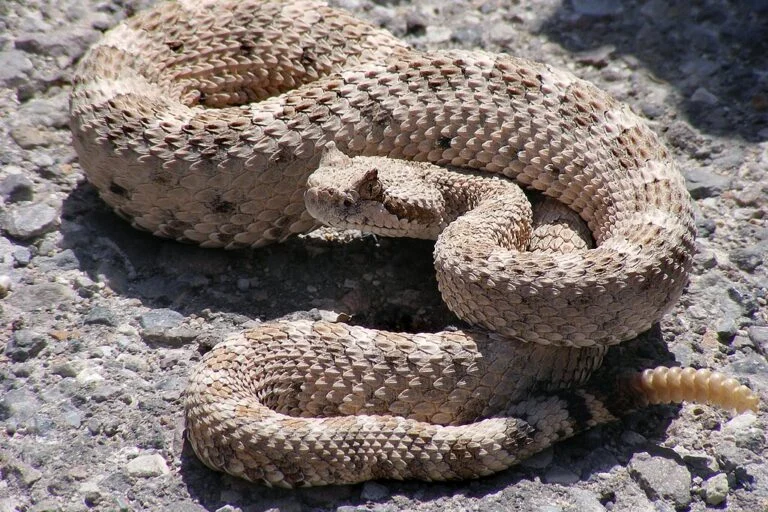
In the unforgiving expanses of the Southwestern United States and Northern Mexico, where the sun bakes the earth and the ground itself is a shifting, unstable sea of granules, a biological marvel has perfected the art of high-speed traversal. The Sidewinder rattlesnake, scientifically known as Crotalus cerastes, has long been a subject of fascination for herpetologists, but recent breakthroughs in microscopic imaging and biomechanical analysis have revealed that this predator is far more than a simple desert dweller. It is a master of friction physics, holding a land speed record for snakes at an astonishing 29 kilometers per hour—a figure that dwarfs the average serpentine pace of 3 to 8 kilometers per hour. This extraordinary velocity is not merely a product of raw power but the result of millions of years of evolutionary refinement, optimizing everything from the molecular structure of its scales to the mathematical precision of its strike.
The Microscopic Revolution: Beyond Conventional Locomotion
For decades, the movement of snakes was understood through the lens of lateral undulation, where the body pushes against external pivot points to create forward momentum. However, the Sidewinder faces a unique challenge: sand. On a granular surface, traditional "grip" can be a liability, as pushing too hard causes the substrate to give way, leading to energy loss and burial. To understand how Crotalus cerastes overcomes this, researchers turned to Atomic Force Microscopy (AFM), a high-resolution scanning technique that allows scientists to visualize surfaces at the atomic level.
The findings, recently highlighted in a series of comparative studies, have overturned long-held assumptions about reptilian physiology. Most snakes possess belly scales characterized by microscopic, backward-facing spikes. These structures act like the treads on a hiking boot or the "skins" on cross-country skis, providing unidirectional traction that allows the snake to grip the ground as it pushes forward. In the desert, however, these spikes would create excessive friction and heat, dragging against billions of sand grains.
AFM scans revealed that the Sidewinder has undergone a radical evolutionary departure. Its belly scales have virtually eliminated these spikes, replacing them with a uniform, "isotropic" pattern of microscopic pits. This smooth, multidirectional texture allows the snake to slide over sand with minimal kinetic resistance. By reducing the coefficient of friction, the Sidewinder can maintain high speeds without the risk of overheating or becoming bogged down in the loose terrain. This discovery marks a significant milestone in evolutionary biology, proving that in certain environments, the loss of a physical trait—in this case, traction spikes—can be a superior adaptation for survival.
The Biomechanics of Sidewinding: A Lesson in Efficiency
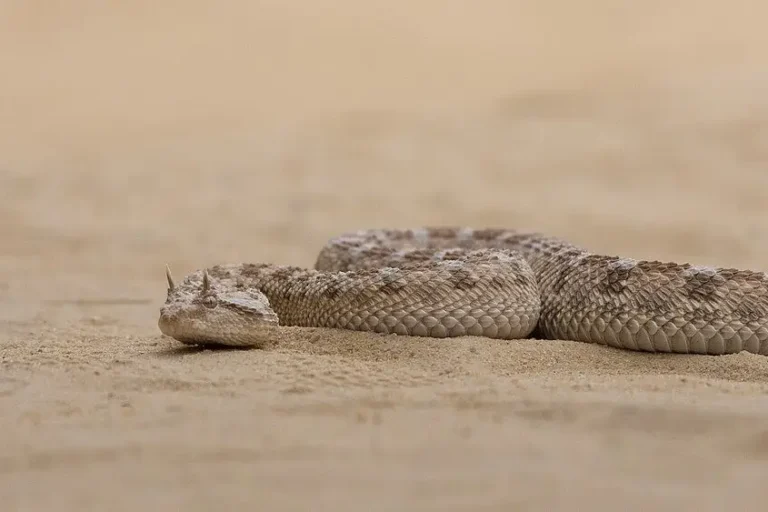
While the skin provides the interface, the movement itself—known as sidewinding—is a masterclass in weight distribution. A study published in the Proceedings of the National Academy of Sciences (PNAS) and further expanded upon by biomechanics experts indicates that the Sidewinder’s movement is a series of calculated lifts and placements. Unlike other snakes that remain in constant contact with the ground, the Sidewinder minimizes its physical footprint.
At any given moment during its diagonal trek, only two points of the snake’s body touch the sand. The rest of the body is arched into the air, moving forward in a wave-like motion. This "two-point" contact system serves multiple purposes. First, it prevents the snake from sinking into the fine, fluid-like sand of the Mojave and Sonoran deserts. Second, it limits the amount of surface area exposed to the scorching heat of the desert floor, which can reach temperatures high enough to cause cellular damage to less-adapted organisms.
Furthermore, recent research utilizing high-speed sensors has shown that the Sidewinder actively modulates the height of these arches based on the density and slope of the sand. When encountering a steep dune or particularly fine silt, the snake increases the vertical lift of its body, effectively "stepping" through the sand rather than dragging through it. This level of active environmental feedback suggests a highly developed neuromuscular system that treats the desert floor not as a static obstacle, but as a dynamic medium to be navigated with mathematical precision.
The Lightning Strike: Speed as a Survival Strategy
The Sidewinder’s prowess is not limited to its travel speed; its predatory capabilities are equally record-breaking. In a comprehensive study released in late 2025, scientists employed 3D high-speed cameras capable of capturing thousands of frames per second to analyze the strike mechanics of 36 venomous snake species globally. The results solidified the Viperidae family, and specifically the Sidewinder, as some of the fastest strikers in the animal kingdom.
The data revealed that a Sidewinder can initiate a strike, deliver its venom, and retract its head to a defensive position in a window of 80 to 100 milliseconds. To put this into perspective, the average human blink takes approximately 200 milliseconds. A Sidewinder could essentially strike and return twice before a human observer could even register the movement.
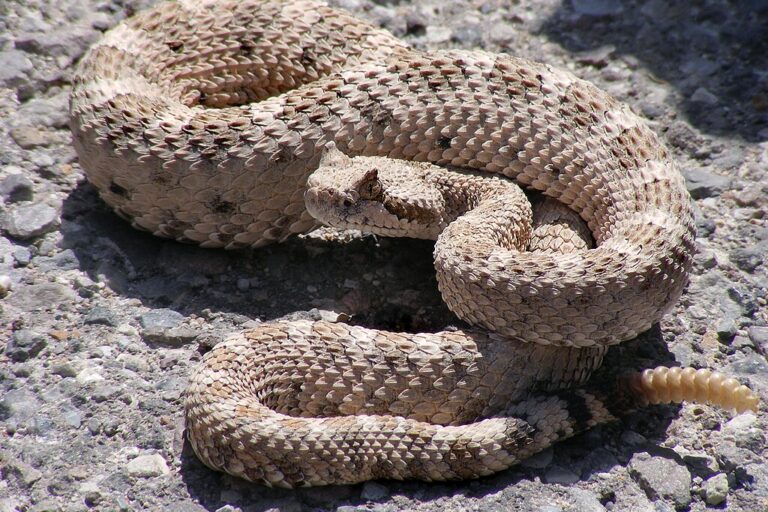
This explosive acceleration is facilitated by a specialized musculoskeletal architecture. The snake’s epaxial muscles and cervical vertebrae are arranged to function like a compressed spring. When the strike is triggered, the energy is released in a singular, devastating burst. This speed is a necessity in the open desert, where prey—such as lizards and small rodents—have evolved their own rapid escape responses. In the "arms race" of the desert ecosystem, the Sidewinder’s 100-millisecond strike is the ultimate equalizer.
Chronology of Discovery and Research Milestones
The path to understanding the Sidewinder has been paved by decades of incremental scientific breakthroughs:
- Early 20th Century: Naturalists first document the unique "S-shaped" tracks of Crotalus cerastes, though the physics remain a mystery.
- 1990s-2000s: Initial biomechanical studies begin to quantify the energy efficiency of sidewinding compared to lateral undulation.
- 2014: Collaborative research between the Georgia Institute of Technology and Carnegie Mellon University uses a modular snake robot to test the principles of sidewinding, discovering the importance of "wave-like" body lifting.
- 2021: The PNAS study utilizes AFM technology to identify the isotropic scale structure, providing the first microscopic explanation for the snake’s low-friction movement.
- 2025: A global comparative study using 3D high-speed videography ranks the Sidewinder’s strike speed and acceleration among the highest ever recorded in the reptilian world.
Broader Impact: From the Desert Floor to Outer Space
The implications of Sidewinder research extend far beyond herpetology. The principles of its movement are currently being integrated into the field of "bio-inspired robotics." For years, engineers at NASA and various aerospace institutions have struggled with the limitations of wheeled rovers on planetary surfaces. The Mars rover Spirit, for instance, famously became permanently stuck in a soft sand trap in 2009.
By studying the Sidewinder, roboticists are developing "limbless" explorers that can navigate the sandy, treacherous terrain of Mars or the Moon. These robots replicate the snake’s ability to lift parts of its body to avoid sinking and use isotropic skin textures to glide over obstacles. Professor Jennifer Rieser and her colleagues have noted that the Sidewinder provides a "perfect blueprint" for traversing granular media—environments that behave like both solids and liquids.
Furthermore, the study of the Sidewinder’s skin has sparked interest in materials science. Engineers are looking at ways to create "smart surfaces" that can change their friction levels based on the direction of movement or the type of substrate they encounter. This could lead to advancements in everything from more efficient medical catheters to industrial conveyor systems that require low-friction transport of granular materials.
Conclusion: The Efficiency of Evolution
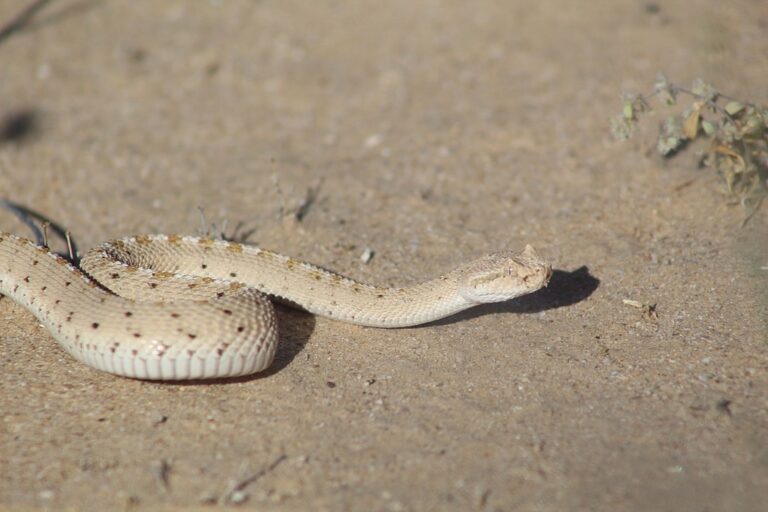
The Sidewinder rattlesnake stands as a testament to the idea that efficiency is the ultimate form of sophistication. In an environment where every calorie spent is a risk and every second of exposure to the sun is a danger, Crotalus cerastes has evolved a suite of tools that allow it to thrive where others perish. From its "pitted" scales that defy the friction of sand to its "sidewinding" gait that optimizes weight distribution, every aspect of the snake is a solution to a specific environmental challenge.
As climate change continues to expand arid regions across the globe, understanding the adaptations of desert specialists like the Sidewinder becomes increasingly vital. These snakes are not just predators; they are biological engineers that have solved complex problems of physics and locomotion long before humans ever conceived of the laws of motion. The Sidewinder reminds us that even in the harshest conditions, nature finds a way to move forward—not just with survival, but with unmatched speed and grace.