Azin Asro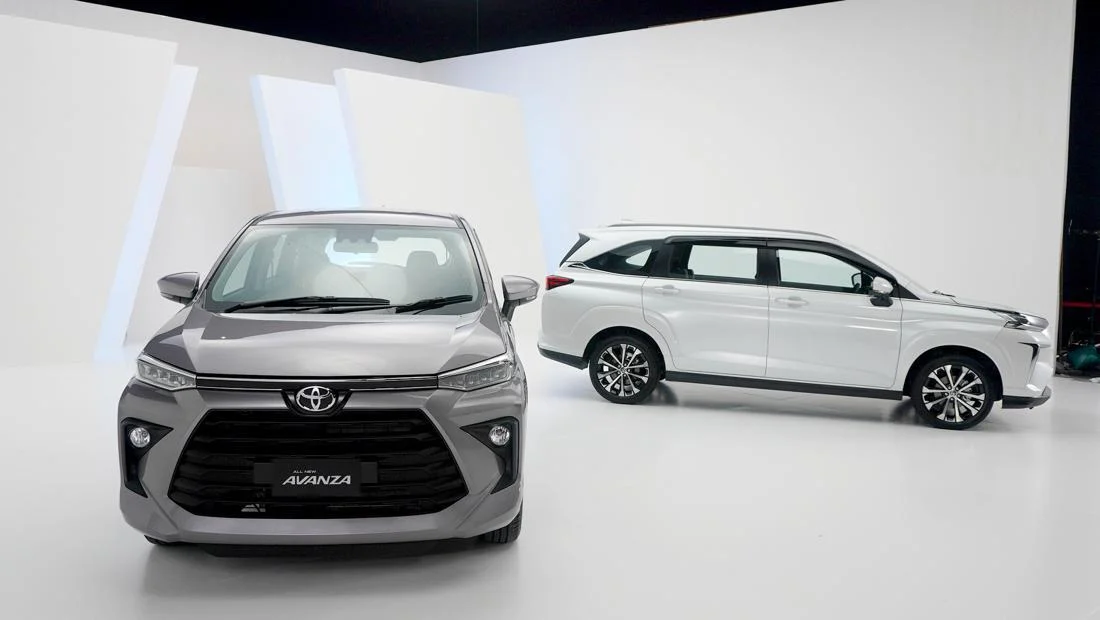
The landscape of the Indonesian automotive market in 2026 continues to be dominated by the perennial "Million-People Car," the Toyota Avanza, which has recently seen a price adjustment reflecting current economic conditions and manufacturing costs. As potential buyers navigate the complexities of vehicle ownership, the feasibility of low monthly installments remains a primary concern for the middle-class demographic. While the starting price for the most accessible variant, the Toyota Avanza 1.3 L M/T, has reached Rp 243.7 million, the possibility of securing a monthly payment in the range of Rp 1 million still exists, albeit contingent upon a significant initial capital outlay. Financial experts and automotive dealers note that to achieve such a low monthly burden, consumers must be prepared to commit to a down payment (DP) strategy that deviates significantly from the standard 20 to 30 percent typically seen in the industry.
The Financial Architecture of Low-Installment Ownership
The pursuit of a Rp 1 million monthly installment for a new Toyota Avanza requires a sophisticated understanding of credit structures. For the 2026 model year, data indicates that a minimum down payment of 70 percent is the baseline for even approaching this figure. At a 70 percent down payment for the base 1.3 L M/T model, the upfront cost reaches approximately Rp 170.59 million. Even with this substantial investment, the resulting monthly payment often hovers closer to the Rp 2 million mark unless the loan tenor is extended to its maximum allowable limit.
To truly sit within the Rp 1 million bracket, a down payment of 80 percent is generally required across the Avanza lineup. This high-capital approach essentially transforms the car purchase into a "near-cash" transaction, where the financing component serves more as a final settlement tool rather than a traditional long-term debt instrument. For the base 1.3 L M/T model, an 80 percent down payment translates to an initial payment of Rp 194.96 million. This strategy, while demanding high liquidity upfront, offers the benefit of significantly lower interest accumulation over the life of the loan, providing long-term financial relief for households that prioritize low monthly fixed costs over immediate cash preservation.
Comprehensive Price and Financing Breakdown for 2026 Models
The 2026 Toyota Avanza lineup is categorized into two primary engine displacements and two transmission types, each with its own specific financial requirements for low-installment schemes. Below is a detailed breakdown of the capital requirements for the 80 percent down payment strategy:
Toyota Avanza 1.3 L M/T (Manual Transmission)
As the entry-level variant, this model is priced at Rp 243.7 million. It remains the most viable candidate for those seeking the lowest possible monthly commitment.
- Price: Rp 243,700,000
- 80% Down Payment: Rp 194,960,000
- Remaining Principal: Rp 48,740,000
Toyota Avanza 1.3 L CVT (Continuously Variable Transmission)
The 1.3 L CVT offers a more modern driving experience for urban commuters who prefer the convenience of an automatic gearbox.
- Price: Rp 258,700,000
- 80% Down Payment: Rp 206,960,000
- Remaining Principal: Rp 51,740,000
Toyota Avanza 1.5 L M/T (Manual Transmission)
The 1.5 L variant provides additional power for those frequently carrying full passenger loads or navigating hilly terrain.
- Price: Rp 266,800,000
- 80% Down Payment: Rp 213,440,000
- Remaining Principal: Rp 53,360,000
Toyota Avanza 1.5 L CVT (Continuously Variable Transmission)
The flagship of the standard Avanza line, combining the larger engine with the smooth CVT.
- Price: Rp 281,600,000
- 80% Down Payment: Rp 225,280,000
- Remaining Principal: Rp 56,320,000
Technical Evolution and Variant Differentiation
The 2026 Toyota Avanza continues to utilize the Daihatsu New Global Architecture (DNGA), which transitioned the vehicle from a rear-wheel-drive (RWD) ladder frame to a front-wheel-drive (FWD) unibody construction in its previous major redesign. This platform evolution has allowed for greater interior space and improved fuel efficiency, which are critical factors for Indonesian families.
There are distinct mechanical and physical differences between the 1.3 L and 1.5 L variants that go beyond mere engine displacement. Interestingly, the 1.5 L models possess a more commanding road presence due to a difference in height and ground clearance. The 1.3 L variant stands at 1,665 mm tall, whereas the 1.5 L variant reaches 1,700 mm. This difference is largely attributed to the suspension tuning and tire sizes, resulting in a ground clearance of 205 mm for the 1.5 L model compared to 195 mm for the 1.3 L version. Furthermore, the wheel track (jarak pijak) also varies slightly; the 1.3 L has a front track of 1,515 mm and a rear track of 1,510 mm, while the 1.5 L measures 1,505 mm at the front and 1,500 mm at the rear.
Under the hood, the 1.3 L models are equipped with the 1NR-VE engine, a 1,329 cc four-cylinder unit producing 98 PS at 6,000 rpm and 12.4 kgm of torque at 4,200 rpm. This engine is optimized for fuel economy and urban stop-and-go traffic. In contrast, the 1.5 L models utilize the 2NR-VE engine with a 1,496 cc displacement. This larger engine delivers a more robust 106 PS at 6,000 rpm and 14 kgm of torque at 4,200 rpm, making it the preferred choice for long-distance travel and highway cruising.
The Socio-Economic Context of the 2026 Price Increase
The rise in Avanza prices by 2026 is reflective of broader inflationary pressures within the Indonesian economy and the global automotive supply chain. Factors such as the fluctuating cost of raw materials—specifically steel and aluminum—and the increasing integration of advanced safety features have contributed to the upward price trajectory. Since the implementation of the Toyota Safety Sense (TSS) suites in higher trims, the baseline technology expectations for the "Low Multi-Purpose Vehicle" (LMPV) segment have shifted.
Historically, the Avanza was positioned as a strictly budget-friendly option. However, as Indonesian consumer preferences have matured, there has been a demand for better ride quality, noise insulation, and connectivity. The 2026 models reflect these upgrades, which naturally influence the MSRP. Industry analysts suggest that the "Rp 1 million installment" marketing hook remains a powerful psychological tool for dealerships, even if it requires an 80 percent down payment. It targets a specific niche of buyers: those who may have sold a previous vehicle and have significant cash on hand, or those who receive annual bonuses and wish to minimize their monthly overhead.
Market Reactions and Consumer Sentiment
Reaction from the consumer base has been mixed regarding the 2026 pricing. While the Avanza remains the market leader due to its vast service network and high resale value, the high down payment required for low installments has pushed some buyers to consider the used car market or the Low-Cost Green Car (LCGC) segment, such as the Toyota Calya.
"The Avanza is no longer just a basic transport tool; it has become a mid-tier family asset," says a Jakarta-based automotive consultant. "When we look at the 2026 credit schemes, we see a divide. Younger families are opting for lower DPs and higher installments, whereas established families with savings are opting for the 70-80 percent DP route to keep their monthly cash flow flexible. The fact that an 80 percent DP is needed for a Rp 1 million installment tells us that the era of truly ‘cheap’ brand-new cars is fading in favor of ‘value-driven’ cars."
Dealerships have responded by offering "balloon payment" programs and flexible tenor options reaching up to seven years to make the monthly payments more palatable for those who cannot afford a 170-million-rupiah down payment. However, these longer tenors often result in a much higher total cost of ownership due to compounded interest.
Broader Implications for the Indonesian Automotive Industry
The pricing of the Toyota Avanza often sets the benchmark for the entire LMPV segment, including competitors like the Mitsubishi Xpander, Suzuki Ertiga, and Hyundai Stargazer. As Toyota adjusts its pricing for 2026, it is expected that other manufacturers will follow suit, citing similar increases in production and logistics costs.
The shift toward higher down payments also highlights a trend in Indonesian consumer finance: a move toward debt aversion among certain segments of the population. By putting down 80 percent, consumers are effectively shielding themselves from the volatility of interest rates and ensuring that they have significant equity in their vehicle from day one. This high-equity ownership model is particularly beneficial in Indonesia, where cars are often used as collateral for other business loans.
Furthermore, the 2026 Avanza’s technical specifications show that Toyota is maintaining a clear distinction between its 1.3 L and 1.5 L offerings to capture two different types of buyers. The 1.3 L serves the efficiency-minded fleet and ride-sharing market, while the 1.5 L caters to the private family market that desires more features and better performance.
Conclusion and Future Outlook
As we move through 2026, the Toyota Avanza remains a cornerstone of Indonesian mobility. While the "Rp 1 million per month" installment is a reality, it is a reality reserved for those with substantial liquid assets. For the average consumer, the 2026 price list necessitates a careful calculation of long-term financial health versus immediate mobility needs.
The technical differences between the variants—ranging from engine output to ground clearance—ensure that there is an Avanza for every specific Indonesian road condition. Whether it is the 1.3 L variant navigating the narrow streets of Jakarta or the 1.5 L variant climbing the steep grades of the Puncak region, the vehicle’s engineering remains tailored to the archipelago. As the market looks toward the potential electrification of the Avanza line in the coming years, the 2026 internal combustion engine (ICE) models represent the peak of refined, traditional LMPV design, balanced by a pricing structure that reflects a modernizing economy.