Azin Asro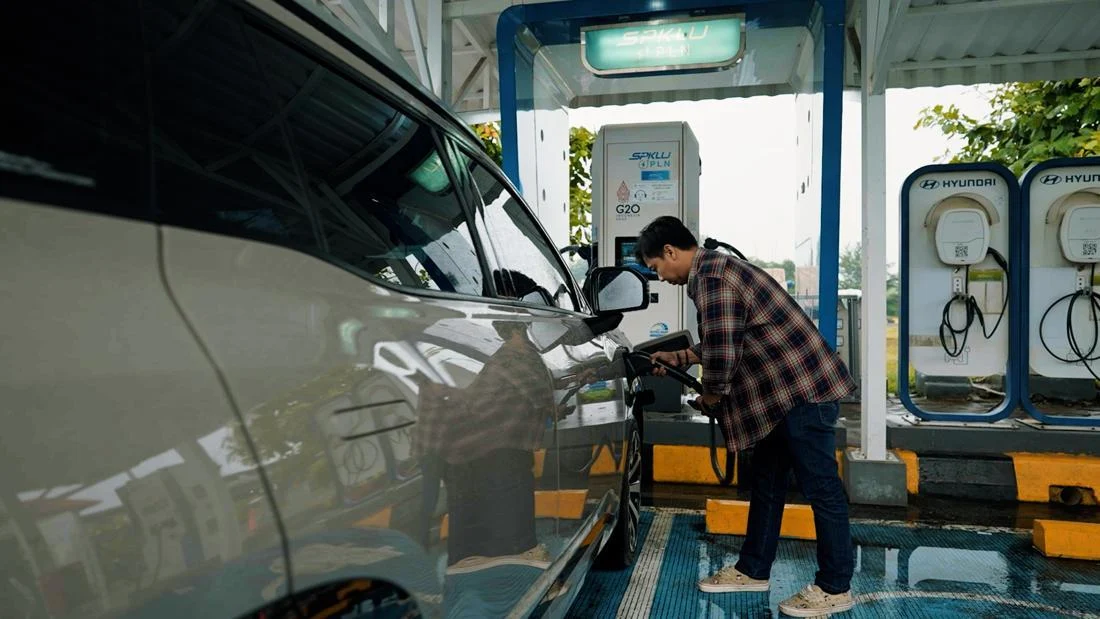
The Indonesian government, through the Ministry of Energy and Mineral Resources (ESDM), has officially announced an ambitious roadmap to significantly expand the nation’s electric vehicle (EV) charging infrastructure over the next decade. By targeting the installation of approximately 192,251 public electric vehicle charging stations (SPKLU) by 2034, the government seeks to eliminate "range anxiety" among prospective EV owners and ensure that the infrastructure keeps pace with the rapidly accelerating adoption of battery-powered transportation. This strategic move is designed to facilitate long-distance travel across the archipelago, ensuring that the transition from internal combustion engines to cleaner alternatives is supported by a robust and reliable energy network.
As of early 2026, data from the Ministry indicates that Indonesia has successfully deployed approximately 4,000 SPKLU units. While this represents a significant increase from previous years, the current infrastructure remains heavily concentrated on the island of Java. Meanwhile, the population of electric passenger cars has surged to approximately 119,000 units, supplemented by roughly 530 commercial electric vehicles. This disparity highlights a growing gap between the number of vehicles on the road and the availability of public charging points, a challenge that the Ministry of Energy and Mineral Resources intends to address through aggressive policy interventions and private-sector partnerships.
Strategic Infrastructure Development and the 2034 Vision
The push for a massive increase in charging stations is rooted in the belief that infrastructure must serve as the catalyst for the entire EV ecosystem. Trois Dilisusendi, Head of the Center for Testing of Electricity, New Renewable Energy, and Energy Conservation (BBSP KEBTKE) at the Ministry of ESDM, emphasized that the government’s priority is to create a seamless driving experience for EV users. Speaking at an industry event in Senayan, Central Jakarta, Dilisusendi noted that while current infrastructure is sufficient for high-traffic routes such as the corridor from Jakarta to Bali, a more comprehensive national network is required to sustain long-term growth.
The government’s blueprint is formalized under the Ministry of Energy and Mineral Resources Decree No. 24.K/TL.01/MEM.L/2025 regarding the Development Plan for SPKLU for Battery-Based Electric Motor Vehicles. This regulation sets clear, incremental milestones for the coming years. For the current 2024-2025 period, the target is to reach 9,633 SPKLU units. This figure is projected to climb to 62,918 units by 2030, eventually culminating in the goal of over 192,000 units by 2034.
This roadmap is closely aligned with the projected growth of the EV fleet in Indonesia. By 2034, the government anticipates that the number of electric cars on Indonesian roads will exceed 2.8 million units. While the growth rate of vehicle sales is expected to outpace the installation of charging stations, the Ministry believes that a ratio of one public charger for every 14 to 15 vehicles—combined with the prevalence of home charging solutions—will be sufficient to meet the needs of the motoring public.
Current Market Dynamics and the Java-Centric Challenge
Despite the optimistic outlook, the current state of the market reveals several hurdles. The heavy concentration of SPKLU units in Java reflects the island’s status as the economic heart of the country and the primary market for early adopters of new technology. However, for Indonesia to achieve its broader environmental and economic goals, the infrastructure must expand to Sumatra, Sulawesi, Kalimantan, and other regions.
The current ratio of roughly 30 vehicles per public charging point (based on 119,000 cars and 4,000 chargers) suggests that many owners currently rely on home charging. While home charging is convenient for daily commuting, it does not address the requirements of commercial fleets or travelers embarking on inter-city journeys. The Ministry’s plan focuses specifically on high-speed DC (Direct Current) chargers and ultra-fast charging stations at rest areas, shopping malls, and public office complexes to provide the "peace of mind" necessary to convert traditional car buyers into EV enthusiasts.
Industry analysts point out that the success of this expansion will depend heavily on the participation of the private sector and state-owned enterprises like PT PLN (Persero). PLN has already been at the forefront of the rollout, integrating SPKLU locations into its "PLN Mobile" application to help users locate the nearest available port. However, the Ministry of ESDM is also encouraging shopping mall developers, property managers, and fuel station operators to integrate charging points into their existing facilities.
Regulatory Framework and Government Incentives
The legal foundation for this expansion, Decree No. 24.K/TL.01/MEM.L/2025, is part of a broader suite of policies aimed at positioning Indonesia as a regional hub for the EV industry. This includes Presidential Regulation No. 55 of 2019, which focuses on the acceleration of the battery electric vehicle program for road transportation.
To stimulate the development of SPKLUs, the government has introduced several incentives for investors and operators:
- Simplified Licensing: Streamlining the process for obtaining business entities for charging station operations (IUPTLU).
- Electricity Tariffs: Implementing specialized bulk tariffs for SPKLU operators to ensure that the cost of charging remains competitive compared to traditional fuel.
- Land Use Support: Encouraging the use of public spaces and state-owned land for the installation of charging hubs.
Furthermore, the government is working on standardizing charging connectors. Currently, the market sees a mix of Type 2 (AC), CCS2 (DC), and CHAdeMO connectors. Standardizing these across the 192,000 planned stations will be crucial for ensuring interoperability and preventing a fragmented user experience where certain cars can only charge at specific locations.
Economic Implications and the Global Context
The aggressive rollout of charging infrastructure is not merely a transport policy but a core component of Indonesia’s economic strategy. Indonesia holds the world’s largest reserves of nickel, a critical component in EV batteries. By fostering a strong domestic market for EVs, the government aims to attract foreign direct investment in the "downstream" processing of nickel and the manufacturing of battery cells and vehicles.
Global automotive giants like Hyundai and Wuling have already established manufacturing bases in Indonesia, and others such as BYD and VinFast are entering the market. For these manufacturers, a reliable and widespread charging network is a prerequisite for scaling their operations. If Indonesia can successfully deploy 192,000 chargers, it will signal to the global market that the country is ready for mass-market EV adoption, potentially unlocking billions of dollars in further industrial investment.
Compared to regional neighbors, Indonesia’s targets are among the most ambitious in Southeast Asia. Thailand and Vietnam have also made significant strides, but Indonesia’s geographic scale presents unique logistical challenges. The Ministry of ESDM acknowledges that the 2034 target is a "living document" that may be adjusted based on market demand and technological advancements, such as the potential rise of wireless charging or faster battery-swapping technologies for commercial fleets.
Challenges to Implementation: Grid Stability and Investment
While the targets are clear, the path to 192,000 stations is fraught with technical and financial challenges. One of the primary concerns is the impact on the national power grid. A sudden influx of thousands of high-power charging stations could strain local distribution networks, particularly in older urban areas or remote regions with limited electrical infrastructure.
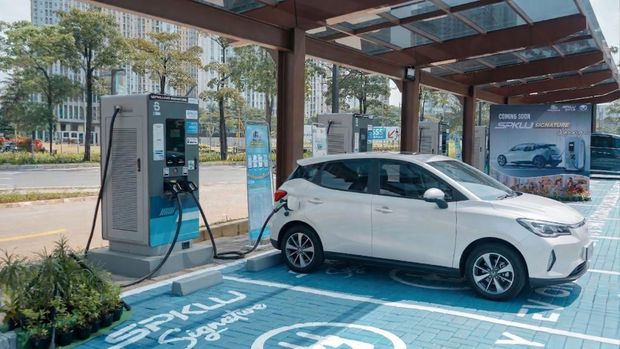
PT PLN will need to invest heavily in grid modernization and "smart grid" technologies to manage the load. This includes implementing demand-response systems where charging speeds are adjusted during peak hours to prevent blackouts. Additionally, the transition to EVs only yields maximum environmental benefits if the electricity used to charge them comes from renewable sources. Currently, Indonesia’s power mix remains heavily reliant on coal, though the government is simultaneously pushing for an increase in renewable energy capacity as part of its Net Zero Emission 2060 goal.
From an investment perspective, the cost of building nearly 200,000 charging points is substantial. While home chargers are relatively inexpensive, ultra-fast DC chargers can cost tens of thousands of dollars per unit. The Ministry of ESDM is looking toward "Public-Private Partnership" (PPP) models to distribute the financial burden and ensure that the rollout is commercially viable for operators.
The Role of Consumer Behavior and Public Sentiment
The government’s plan also accounts for the psychological barriers to EV adoption. Trois Dilisusendi noted that the "safety" of the Jakarta-to-Bali route has already proven to be a successful case study in boosting consumer confidence. As more chargers appear in smaller cities and along major toll roads, the "fear of being stranded" is expected to diminish.
Public reaction to the EV push has been generally positive, driven by government subsidies for EV purchases and the lower operating costs of electric motors. However, consumers remain sensitive to the "time cost" of charging. The Ministry’s focus on increasing the number of SPKLUs is partly intended to ensure that users never have to wait in long queues, making the experience as convenient as visiting a traditional gas station.
Conclusion and Future Outlook
The Ministry of Energy and Mineral Resources’ plan to establish over 192,000 SPKLU units by 2034 represents a landmark moment in Indonesia’s journey toward sustainable mobility. By setting clear targets and providing a regulatory framework, the government is attempting to solve the "chicken and egg" problem that often plagues new technology adoption—ensuring that the infrastructure exists before the mass market arrives.
As the population of electric vehicles is projected to reach 2.8 million units in the next eight years, the synchronization between vehicle sales and infrastructure development will be the ultimate test of this policy. If successful, Indonesia will not only reduce its carbon footprint and reliance on imported fuels but also solidify its position as a leader in the global green economy. The transition is no longer a matter of "if" but "how fast," and with nearly 200,000 charging points on the horizon, the road ahead for Indonesia’s EV owners looks increasingly clear.