Azin Asro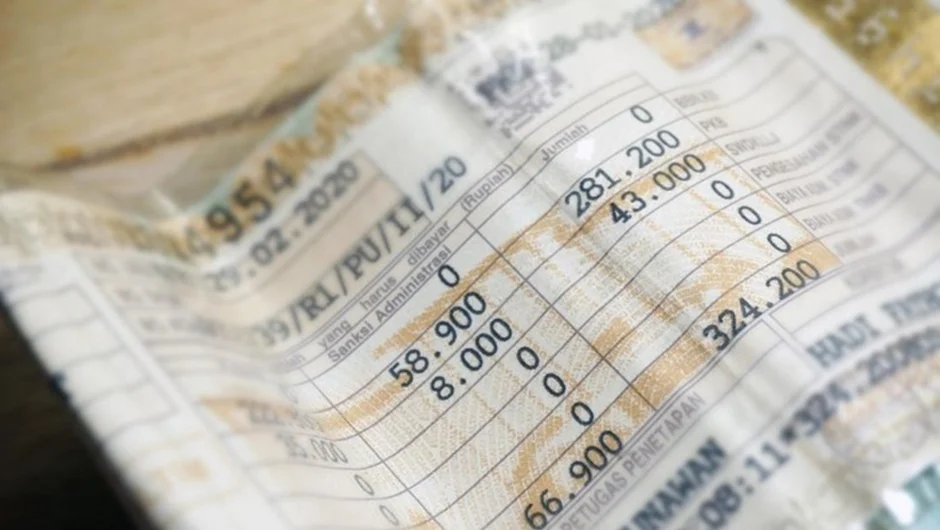
The Provincial Government of Banten has officially adopted a national policy allowing vehicle owners to renew their annual Vehicle Registration Certificate (STNK) without presenting the original owner’s Identity Card (KTP), a move designed to streamline tax collection while signaling a major shift toward mandatory title transfers by 2027. This regulatory adjustment, which simplifies the process for second-hand vehicle buyers who have not yet legally transferred ownership, comes with a specific caveat: taxpayers must sign a formal commitment to undergo the Change of Ownership (BBN-KB) process within the next two years. The policy reflects a broader national strategy to synchronize vehicle ownership data across Indonesia, ensuring that the person operating and taxing the vehicle is the same individual listed in the official government registry.
Understanding the New Policy in Banten
The Regional Revenue Agency (Bapenda) of Banten Province recently clarified the requirements for this relaxation of administrative rules. Under the new guidelines, residents who have purchased pre-owned vehicles and do not possess the original seller’s KTP—a common hurdle in the Indonesian used vehicle market—can still fulfill their annual Motor Vehicle Tax (PKB) obligations. However, this is not an indefinite exemption. According to Bapenda Banten, applicants must attach a Statement Letter (Surat Pernyataan) pledging to complete the Change of Ownership (BBN-KB) process no later than 2027.
This shift aims to address a long-standing issue where thousands of vehicles operate under the names of previous owners, often leading to administrative confusion, difficulties in tax collection, and challenges for law enforcement. By allowing a grace period, the government hopes to encourage immediate tax compliance while giving citizens time to prepare for the mandatory administrative updates that will become the standard across the archipelago.
The National Regulatory Landscape and 2027 Deadline
The policy implemented in Banten is not an isolated regional initiative but part of a coordinated national effort led by the Indonesian National Police’s Traffic Corps (Korlantas Polri). Brigadier General Wibowo, Director of Registration and Identification (Dirregident) at Korlantas Polri, emphasized that the relaxation of the KTP requirement is a temporary measure designed to facilitate a smooth transition. The national directive specifies that 2026 will serve as the final "transition year" for this flexibility.
Starting in 2027, the government intends to enforce a strict "single identity" system for vehicle registration. Under this upcoming regime, the ability to pay taxes without the registered owner’s KTP will be entirely revoked. The only legal avenue for renewing an STNK for a second-hand vehicle will be to complete a formal title transfer. This move is intended to clean up the national database, which is currently cluttered with "dead" data—vehicles that have changed hands multiple times without being re-registered, or vehicles whose registered owners have moved or passed away.
Legal Foundations: From Traffic Laws to Fiscal Relations
The requirement to provide an original KTP for STNK renewal is not a arbitrary administrative rule but is grounded in several layers of Indonesian law. Specifically, Law Number 22 of 2009 concerning Traffic and Road Transportation, along with Police Regulation Number 7 of 2021 (Article 61), mandates that vehicle registration and identification must match the actual owner’s identity.
For years, the high cost of Title Transfer Fees (BBN-KB) was cited as the primary reason why citizens avoided re-registering vehicles in their own names. To remove this financial barrier, the government introduced Law Number 1 of 2022 concerning Financial Relations between the Central Government and Regional Governments (UU HKPD). This landmark legislation effectively paves the way for the elimination of the BBN-KB II fee (the fee for second-hand vehicle transfers) starting in 2025. By removing the primary tax burden associated with title transfers, the government believes there is no longer a valid excuse for citizens to maintain vehicle registrations under someone else’s name.
Financial Breakdown: What is Free and What Still Costs Money?
While the actual "tax" or "fee" for the title transfer (BBN-KB II) is being phased out or waived in many provinces to encourage compliance, it is crucial for vehicle owners to understand that the process is not entirely without cost. The "zero-rupiah" policy typically applies only to the transfer tax itself. Owners are still required to pay Non-Tax State Revenue (PNBP) fees, which cover the administrative costs of issuing new legal documents.
The standard PNBP costs associated with a title transfer generally include:
- Issuance of a New STNK: The administrative fee for printing the new registration certificate.
- Issuance of a New BPKB (Vehicle Ownership Book): This is usually the most significant administrative cost, as the BPKB is the primary proof of ownership.
- Issuance of a New TNKB (License Plates): Fees for the physical production of new plates reflecting the updated registration.
- SWDKLLJ (Mandatory Road Accident Insurance): A mandatory contribution to Jasa Raharja for third-party insurance coverage.
- Mutation Fees: If the vehicle is being moved from one administrative region (Samsat) to another, a mutation fee is applicable.
By separating the "tax" from the "administrative fee," the government is attempting to make the process more affordable while still recovering the costs of the physical materials and labor required for registration.
The Role of ETLE and Data Synchronization
One of the driving forces behind the 2027 mandate is the rapid expansion of Electronic Traffic Law Enforcement (ETLE). The automated camera system relies on accurate vehicle registration data to send traffic violation notices to the correct individuals. Under the current system, many "electronic tickets" are mailed to the original owners of vehicles because the current owners failed to process a title transfer.
This creates significant legal friction, as original owners are forced to prove they no longer own the vehicle to avoid fines or STNK blocking. By mandating title transfers by 2027, the National Police aim to ensure that the person responsible for a traffic violation is the person who actually receives the penalty. Furthermore, accurate data is essential for the "Electronic Registration and Identification" (ERI) system, which serves as a backbone for national security and public safety.
Public Response and Socio-Economic Implications
The reaction from the public has been a mixture of relief and concern. Many vehicle owners in Banten have welcomed the temporary removal of the KTP requirement, noting that tracking down a seller from several years ago is often impossible. However, there is apprehension regarding the 2027 deadline. Even without the BBN-KB II tax, the administrative PNBP fees can still amount to several hundred thousand or even millions of rupiah, depending on the vehicle type.
Economic analysts suggest that this policy will have a stabilizing effect on the used vehicle market. Previously, the "hidden cost" of a title transfer often deterred buyers or led to price haggling. With the tax eliminated and the rules clearly defined, the market may see increased transparency. Additionally, the policy is expected to boost Regional Original Income (PAD) in the long run. While the province loses the immediate revenue from BBN-KB II, it gains a much higher rate of annual PKB compliance from a more accurate and active database.
A Timeline of Vehicle Administrative Reforms
The transition toward the 2027 mandate follows a structured timeline designed to minimize public shock:
- 2022-2023: Introduction of UU HKPD and initial socialization of the plan to eliminate BBN-KB II. Several provinces, including Banten and Jakarta, began offering periodic "tax amnesties" to test public response.
- 2024: Broad implementation of "tax bleaching" programs across various provinces, allowing owners to pay back taxes without penalties and offering free title transfers.
- 2025: Official implementation of the zero-percent BBN-KB II fee as mandated by national law.
- 2026: The final transition year where annual STNK renewals can still be processed without the original owner’s KTP, provided a commitment to transfer the title is made.
- 2027: Full enforcement. STNK renewals will strictly require the KTP of the person named on the registration. Failure to have the vehicle in one’s own name will result in an inability to pay taxes, eventually leading to the vehicle’s data being deleted from the national registry after a certain period of non-payment.
Strategic Analysis of the 2027 Mandate
The decision by the Banten government and Korlantas Polri to set a firm deadline represents a "carrot and stick" approach to governance. The "carrot" is the removal of the title transfer tax and the temporary administrative flexibility. The "stick" is the looming 2027 deadline and the potential for vehicle data deletion under Article 74 of Law No. 22 of 2009, which allows authorities to permanently scrap vehicle registrations that have been expired for two consecutive years.
This reform is essential for Indonesia’s digital transformation. As the country moves toward a more integrated digital economy, having a clean, verified, and real-time database of vehicle ownership is a prerequisite for smart city initiatives, improved urban planning, and more effective public insurance schemes. For the residents of Banten, the current window of opportunity allows them to regularize their vehicle status with minimal bureaucratic friction, provided they are willing to commit to the legal requirements of full ownership in the near future.
In conclusion, the policy in Banten serves as a critical bridge. It acknowledges the practical difficulties faced by citizens today while maintaining a firm trajectory toward a more organized and legally sound future. Vehicle owners are encouraged to utilize the 2025-2026 window to finalize their paperwork, taking advantage of the eliminated transfer fees before the stricter 2027 regulations take full effect.