Azin Asro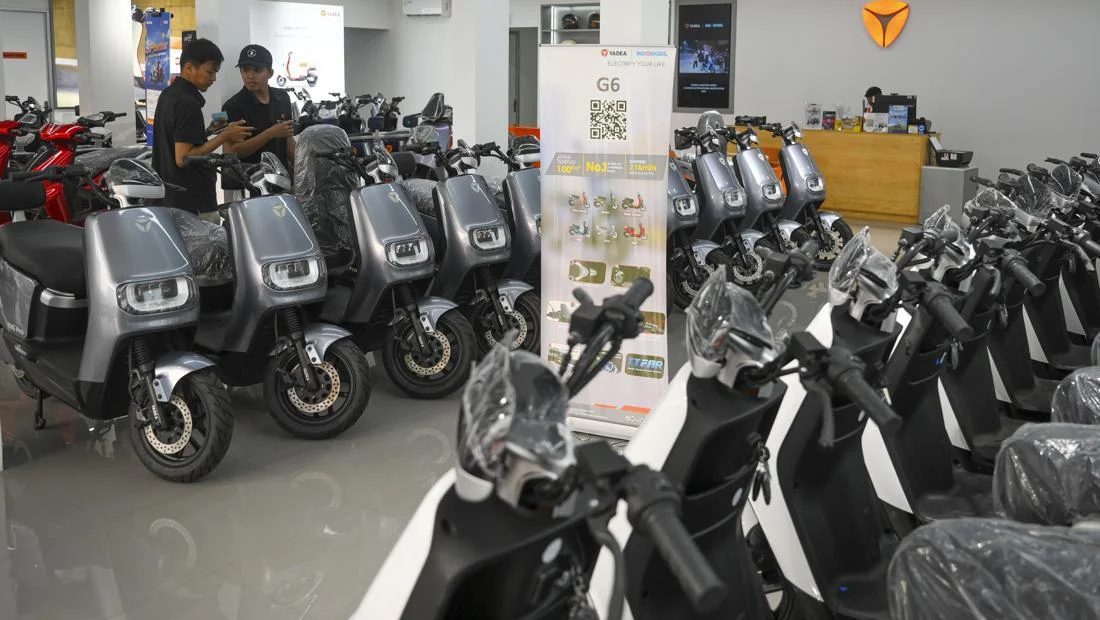
The Indonesian government has once again ignited a public discourse regarding the continuation of financial incentives for electric motorcycles, a move that has prompted a mixture of anticipation and anxiety within the domestic automotive industry. While the prospect of further subsidies aims to accelerate the nation’s transition toward sustainable mobility, the lack of a finalized regulatory framework is creating a "wait and see" atmosphere among potential buyers. The Indonesian Electric Motorcycle Industry Association (Aismoli) has expressed significant concern that prolonged ambiguity could lead to a stagnation in sales, mirroring past periods where consumers deferred purchases in hopes of securing better government support that was slow to materialize.
The core of the current debate centers on the sustainability of the electric vehicle (EV) ecosystem in Southeast Asia’s largest economy. As the government seeks to meet its ambitious Net Zero Emission (NZE) targets by 2060, the electrification of the two-wheeler segment is viewed as a critical milestone. However, industry stakeholders argue that the momentum gained in recent years could be derailed if the transition between subsidy programs is not handled with precision and clarity.
The Perils of Policy Uncertainty and the Hold Buying Phenomenon
Hanggoro Ananta, the Secretary General of Aismoli, has been vocal about the potential negative repercussions of the current regulatory limbo. According to Ananta, the industry is particularly wary of a "hold buying" trend, where consumers intentionally delay their transactions. This phenomenon is not theoretical; it has historical precedents in the Indonesian market. In previous years, specifically leading into 2025, the market saw a noticeable dip in activity as rumors of upcoming incentives circulated without official confirmation.
When the government discusses potential subsidies without providing a definitive start date or eligibility criteria, it inadvertently signals to the public that buying an electric motorcycle at the current market price is a poor financial decision. For a price-sensitive market like Indonesia, where the majority of motorcycle users belong to the middle-to-lower income brackets, a difference of several million rupiahs is a decisive factor. Ananta emphasized that without a clear timeline, manufacturers and dealers struggle to formulate long-term business strategies, manage inventory levels, or commit to further capital investments in local assembly lines.
The association’s primary plea is for the government to avoid "hanging" the regulation. Aismoli suggests that a swift, transparent announcement—even if the subsidy amount is different from previous years—is preferable to a prolonged period of speculation. The goal is to maintain the sales momentum that began to peak in 2024, ensuring that the infrastructure and manufacturing investments already made by the private sector do not go to waste.
Financial Commitments and the New Subsidy Structure
Providing a glimpse into the government’s fiscal planning, Finance Minister Purbaya Yudhi Sadewa recently confirmed that the subsidy program for electric motorcycles is slated to continue through the current fiscal year. Speaking at the BPPK Building in Jakarta, the Minister indicated that the government is currently weighing a subsidy of approximately Rp 5 million per unit. This figure represents a slight decrease from the previous incentive of Rp 7 million, which was implemented during the 2023-2024 period.
Minister Purbaya clarified that the implementation would likely be gradual rather than a blanket rollout. The government is currently in the process of determining the total quota of motorcycles that will be eligible for the financial assistance. This involves intensive inter-ministerial coordination, primarily between the Ministry of Finance, the Ministry of Industry, and the Coordinating Ministry for Maritime Affairs and Investment.
The decision-making process is multifaceted. The government must balance the need to stimulate the EV market with the necessity of fiscal responsibility. While the Rp 5 million figure is currently on the table, the Minister noted that the final amount and the specific mechanisms for distribution are still subject to high-level discussions and final approval from the President. This bureaucratic process, while necessary for legal and budgetary integrity, is precisely what creates the "wait and see" period that industry players fear.
Historical Context: The 2023-2024 Incentive Legacy
To understand the current stakes, one must look back at the trajectory of Indonesia’s EV policy over the last three years. In 2023, the government introduced a landmark subsidy of Rp 7 million per electric motorcycle. Initially, the criteria were quite restrictive, targeting specific groups such as recipients of people’s business credit (KUR) or micro-enterprise subsidies. However, due to slow initial uptake, the government expanded the eligibility in late 2023 to include all Indonesian citizens with a valid National Identity Number (NIK), limited to one subsidized purchase per person.
This policy shift had a dramatic impact on the market. According to data from the Ministry of Transportation’s Type Test Registration Certificate (SRUT) system, electric motorcycle sales reached a record peak in 2024, with approximately 77,000 units hitting the road. This surge was directly attributed to the accessibility of the Rp 7 million incentive, which brought the price of several electric models down to a level competitive with traditional internal combustion engine (ICE) motorcycles.
The 2024 peak demonstrated that the Indonesian consumer is willing to adopt green technology if the price point is right. It also highlighted the sensitivity of the market to government intervention. As the previous funding cycle for these incentives drew to a close, the industry braced for a "subsidy cliff," where sales might drop off if the government did not immediately renew or replace the program.
Market Performance and the One Percent Hurdle
Despite the growth seen in 2024, the electric motorcycle segment remains a minor player in the context of Indonesia’s massive automotive industry. Data from the Indonesian Motorcycle Industry Association (AISI) provides a sobering perspective on the scale of the challenge. Out of a total of 6,412,769 motorcycles sold nationwide, electric variants accounted for less than one percent of the total market share.
In absolute terms, annual sales of electric motorcycles have hovered around the 50,000 to 77,000-unit mark. While this represents a significant year-on-year percentage growth, it is a drop in the ocean compared to the millions of petrol-powered bikes sold annually. Brands like Honda and Yamaha continue to dominate the ICE market, leveraging decades of brand loyalty, extensive service networks, and high resale values.
For electric motorcycles to break the "one percent" barrier, industry analysts suggest that subsidies are only part of the equation. The current discourse on the Rp 5 million incentive is vital for maintaining the floor of the market, but long-term growth will require addressing structural barriers such as battery standardization, the expansion of charging and swapping stations (SPBKLU), and increasing the Local Content Requirement (TKDN) to reduce production costs.
The Role of Local Content and Domestic Manufacturing
A crucial element of the government’s incentive strategy is the promotion of domestic industry. To qualify for subsidies in the previous and likely the upcoming schemes, manufacturers must meet a minimum TKDN threshold, typically set at 40%. This requirement is designed to ensure that the transition to EVs does not merely result in an influx of cheap imports but instead fosters a local manufacturing ecosystem that creates jobs and develops technical expertise.
Major players in the Indonesian EV space, including companies like Gesits, Volta, Polytron, and United, have invested heavily in localizing their supply chains to meet these requirements. The uncertainty surrounding the Rp 5 million subsidy puts these manufacturers in a difficult position. If the subsidy is delayed or the criteria change significantly, these companies face the prospect of idle factory capacity and financial losses.
Furthermore, the government’s strategy is linked to Indonesia’s vast nickel reserves, which are essential for battery production. The long-term vision is to integrate the entire value chain—from nickel mining and refining to battery cell manufacturing and final vehicle assembly—within the country. Stable and predictable demand for electric motorcycles is the engine that will drive this industrial integration.
Infrastructural Challenges and Consumer Confidence
Beyond the initial purchase price, consumer confidence is heavily influenced by the availability of supporting infrastructure. Unlike ICE motorcycles, which can be refueled at thousands of Pertamina stations across the archipelago, electric motorcycle users often face "range anxiety."
The government and state-owned electricity company PLN have made strides in installing Public Electric Vehicle Charging Stations (SPKLU) and Battery Swapping Stations (SPBKLU). However, the coverage remains concentrated in major urban centers like Jakarta, Surabaya, and Bali. For residents in suburban or rural areas, the lack of infrastructure remains a significant deterrent.
Industry experts argue that the government’s incentive policy should ideally be paired with an accelerated rollout of swapping stations. Battery swapping is widely considered the most viable solution for the Indonesian market, as it mimics the quick "refuel and go" experience of petrol stations and eliminates the need for long charging times. If the new subsidy program can be synchronized with an expansion of the swapping network, the value proposition for consumers would be greatly enhanced.
Strategic Implications for the Green Energy Transition
The outcome of the current discussions between the Ministry of Finance and the Ministry of Industry will have far-reaching implications for Indonesia’s environmental commitments. The transportation sector is one of the largest contributors to carbon emissions in the country. Transitioning millions of two-wheelers to electric power is not just an industrial goal but a public health and environmental necessity.
If the government successfully navigates the current policy transition and stabilizes the market with a consistent incentive program, it will send a strong signal to international investors. Indonesia is competing with regional neighbors like Thailand and Vietnam to become the "EV Hub" of Southeast Asia. Consistency in policy is the most valuable currency in attracting the foreign direct investment (FDI) needed to scale the industry.
However, if the "tarik ulur" (tug-of-war) of policy continues, Indonesia risks losing its momentum. Analysts warn that a fragmented or inconsistent approach could lead to a loss of trust from both consumers and manufacturers. The transition to electric mobility is a marathon, not a sprint, and it requires a steady hand at the regulatory helm to ensure that the market does not stall just as it is starting to gain speed.
In conclusion, while the discourse regarding the Rp 5 million subsidy is a positive sign of continued government support, the priority must be on clarity and execution. As Aismoli has pointed out, the shadow of "hold buying" looms large over the industry. The government’s next steps will determine whether 2026 becomes a year of renewed growth for electric motorcycles or a cautionary tale of how regulatory uncertainty can dampen even the most promising technological transitions. The eyes of the industry, and the wallets of the consumers, remain fixed on the final decision from the Presidential Palace.