Nasution Nanang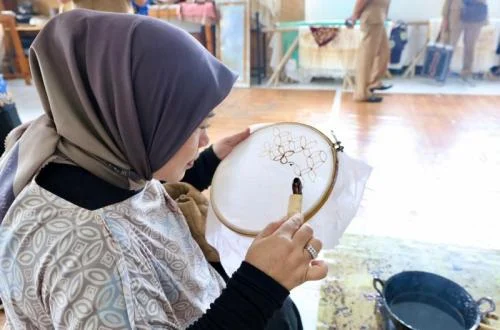
BANDUNG, West Java – The West Java Provincial Regional House of Representatives (DPRD) Commission II has issued a strong call to the provincial government, urging a concentrated and strategic effort to bolster the development of Small and Medium Industries (IKM). This initiative specifically targets easing regulatory burdens and streamlining permit processes, with the ultimate goal of enabling local products, particularly those from regions like Tasikmalaya, to successfully penetrate and compete in the international export market. The move underscores the legislature’s commitment to harnessing the economic potential of the IKM sector, which is widely recognized as a cornerstone of Indonesia’s national economy.
Lina Ruslinawati, Vice Chair of West Java DPRD Commission II, emphasized the multifaceted importance of the IKM sector. Speaking in Bandung on Tuesday, she highlighted that beyond their significant contribution to regional economic output, IKMs serve as crucial custodians of local cultural identity, reflecting the unique characteristics and craftsmanship of various regions. More critically, she noted their substantial role in job creation, providing livelihoods and fostering economic empowerment for communities within their own localities. "The IKM actors deserve profound appreciation because, in addition to showcasing regional distinctiveness, they also effectively absorb local labor, allowing communities to thrive in their respective areas," Ruslinawati stated, articulating the socio-economic benefits derived from a robust IKM ecosystem.
The call from Commission II follows extensive field visits and observations across various regions in West Java, including Tasikmalaya. These assessments revealed persistent challenges confronting IKM players, chief among them being the unpredictable fluctuations in raw material prices and the intense competition prevalent in both domestic and international markets. These hurdles often impede the growth trajectory of promising small businesses, limiting their ability to scale operations, innovate, and achieve broader market reach. Consequently, the DPRD has pressed the government to adopt a more proactive and supportive stance, ensuring that the substantial potential embedded within the IKM sector can be fully realized and optimized. "The government must deeply understand the needs of IKM actors and be present to provide adequate protection and support," Ruslinawati asserted, stressing the imperative for responsive governance.
The Critical Role of Small and Medium Industries in West Java’s Economy
Small and Medium Industries are the backbone of Indonesia’s economy, contributing an estimated 60% to the national Gross Domestic Product (GDP) and absorbing over 97% of the total workforce. In West Java, as the most populous province and a significant industrial hub, the IKM sector plays an even more pivotal role. The province’s diverse economic landscape, ranging from agriculture and manufacturing to creative industries, is heavily reliant on the dynamism and resilience of its millions of small and medium enterprises. These businesses not only drive economic growth but also ensure a more equitable distribution of wealth and opportunities across different regions, preventing over-concentration of economic power in urban centers.
West Java’s IKM sector is particularly diverse, encompassing a wide array of products from traditional textiles and handicrafts to processed foods, fashion, and innovative tech-based startups. This diversity is a source of strength, but also presents unique challenges in terms of tailored support and policy implementation. The provincial government has long recognized this potential, implementing various programs aimed at fostering IKM growth, but the current legislative push suggests that existing efforts may not be fully addressing the root issues faced by these businesses, especially concerning their ambition to tap into global markets.
Navigating the Hurdles: Challenges Faced by IKM Actors
The challenges identified by Commission II are not isolated incidents but systemic issues deeply ingrained in the IKM ecosystem. Raw material price volatility, for instance, can cripple small businesses with limited capital reserves. Global supply chain disruptions, fluctuating commodity prices, and even local harvest inconsistencies can lead to unpredictable input costs, making financial planning and competitive pricing extremely difficult. For many IKMs, especially those in craft-based industries, sourcing high-quality, sustainable raw materials at stable prices remains a perennial struggle.
Market competition is another formidable barrier. Domestically, IKMs often contend with larger, more established companies that benefit from economies of scale, superior marketing budgets, and wider distribution networks. Internationally, they face competition from a global marketplace, requiring them to meet stringent quality standards, adhere to complex trade regulations, and differentiate their products effectively. Furthermore, many IKMs struggle with access to finance. Traditional banks often perceive small businesses as high-risk, leading to prohibitive interest rates or stringent collateral requirements. This lack of capital hampers their ability to invest in new machinery, expand production capacity, or engage in meaningful marketing efforts.
Beyond these, regulatory complexities, a lack of digital literacy, and limited access to modern technology also hinder IKM growth. Navigating the myriad permits and licenses required for business operations, let alone for export, can be a daunting and time-consuming process for entrepreneurs with limited administrative support. The slow adoption of e-commerce platforms and digital marketing strategies further restricts their reach, keeping them confined to local or regional markets when global opportunities abound.
Tasikmalaya’s Untapped Potential: A Case Study
Tasikmalaya, a city in West Java, serves as a compelling example of a region rich in IKM potential that currently faces these exact challenges. Known for its exquisite bordir (embroidery), batik, mendong crafts (woven mats and bags), and traditional culinary delights, Tasikmalaya’s IKMs embody the "kekhasan daerah" that Lina Ruslinawati highlighted. These products are not merely commodities; they are cultural expressions, often passed down through generations, representing unique skills and artistic heritage.
Despite their cultural significance and inherent quality, many Tasikmalaya IKMs struggle to scale beyond local markets. The artisans often lack the resources and knowledge to navigate export logistics, understand international market demands, or comply with global product standards. Their unique designs and craftsmanship hold immense appeal for international consumers seeking authentic, handmade goods, but without targeted support, this potential remains largely untapped. The DPRD’s focus on Tasikmalaya underscores the need for localized, tailored interventions that address the specific needs and capitalize on the unique strengths of regional IKM clusters.
A Holistic Approach: DPRD’s Vision for Intervention
In response to these pervasive issues, Commission II of the West Java DPRD has put forth a comprehensive framework for intervention, advocating for a "holistic accompaniment" program. This goes beyond mere financial aid or ad-hoc training sessions. The proposed strategy encompasses several critical dimensions:
- Enhancement of Production Quality: This involves providing technical assistance for product standardization, quality control, and obtaining necessary certifications (such as SNI for national standards, Halal certification for Muslim-majority markets, and international certifications like HACCP for food products or ISO for various industries). Such certifications are non-negotiable prerequisites for entering many international markets.
- Strengthening Overall Business Capacity: This pillar focuses on equipping IKM actors with essential entrepreneurial skills. This includes training in financial management (bookkeeping, budgeting, access to credit), effective marketing strategies (branding, digital marketing, e-commerce integration), legal aspects of business (contracts, intellectual property rights protection), and supply chain management. The goal is to transform artisans into astute business managers.
- Streamlined Regulatory Framework and Export Facilitation: The DPRD explicitly calls for simplifying the permitting process for both domestic operations and, crucially, for export activities. This could involve creating a ‘single-window’ system for all IKM-related permits, reducing bureaucratic red tape, and providing dedicated guidance on export documentation, customs procedures, and international trade agreements.
- Addressing Raw Material Stability: Proactive government intervention to mitigate raw material price fluctuations is also part of the proposal. This could involve establishing raw material cooperatives, facilitating bulk purchasing agreements, exploring subsidies for critical inputs, or encouraging long-term contracts between IKMs and suppliers to ensure supply consistency and price predictability.
- Improved Market Access: Beyond simplifying permits, the DPRD advocates for active government support in connecting IKMs to broader markets. This includes facilitating participation in national and international trade fairs, organizing business-to-business (B2B) matchmaking events, and leveraging digital platforms for export promotion.
"We want policy interventions to genuinely touch the root problems faced by IKM actors, whether from the raw material side or market access," Ruslinawati emphasized, highlighting the need for targeted and impactful solutions rather than broad, generic programs.
Government and Industry Reactions (Inferred)
While the original article does not include direct responses from other parties, the call from the DPRD would likely elicit specific reactions from various stakeholders.
The West Java Provincial Government, particularly its Department of Industry and Trade (Disperindag), would likely acknowledge the DPRD’s input and reiterate its commitment to IKM development. Officials might point to existing programs such as the "One Village One Product" (OVOP) initiative, the establishment of Creative Centers (Gedung Creative Center) in various cities, or training programs for digital marketing and product innovation. They would likely express openness to collaborate further with the DPRD to refine and enhance these programs, potentially forming joint task forces to address the identified challenges. A statement might read, "We appreciate the comprehensive input from Komisi II. The provincial government is fully committed to empowering our IKMs and views their growth as integral to West Java’s economic prosperity. We are continuously evaluating our programs and are eager to work with the DPRD to streamline regulations and boost export capabilities."
The Ministry of Cooperatives and SMEs at the national level would likely echo the sentiment, affirming the national agenda to support local products and increase SME contribution to national exports. Their response might highlight ongoing national initiatives like the "Bangga Buatan Indonesia" (Proud of Indonesian Products) campaign and various micro-credit schemes.
From the perspective of IKM actors in Tasikmalaya, the DPRD’s initiative would be met with a mix of hope and cautious optimism. A representative from a local IKM association, for instance, might state, "This attention from the DPRD is very encouraging. Our biggest challenges are consistent access to quality raw materials and understanding the complex process of exporting. We desperately need practical training in digital marketing to reach international buyers, and direct assistance with customs paperwork. We hope this leads to tangible support, not just promises."
The West Java Chamber of Commerce and Industry (KADIN West Java) would likely welcome the legislative push, emphasizing the importance of synergy between government, private sector, and academia. A KADIN representative might comment, "The private sector stands ready to collaborate with the government and DPRD to build a more conducive ecosystem for IKMs. We believe that by fostering an environment of innovation, providing access to capital, and simplifying regulations, West Java’s IKMs can truly become global players."
The Export Imperative and Global Competitiveness
The emphasis on exports is not merely an aspiration but a strategic imperative for long-term, sustainable growth. Relying solely on the domestic market, while important, can limit the growth potential of IKMs and expose them to domestic economic fluctuations. By expanding into international markets, IKMs gain access to a larger customer base, diversify their revenue streams, and enhance their resilience against local economic downturns.
However, competing globally demands more than just quality products. It requires adherence to international standards in terms of product safety, environmental sustainability, ethical labor practices, and sophisticated packaging and branding. IKMs need robust support in conducting market intelligence to identify niche markets, understanding consumer preferences in different countries, and developing effective international marketing and distribution channels. Government support in facilitating trade agreements, providing export insurance, and promoting Indonesian products through diplomatic missions can be invaluable in this endeavor.
Broader Economic and Social Implications
The successful implementation of the DPRD’s recommendations carries profound implications for West Java and Indonesia. Economically, a thriving, export-oriented IKM sector would significantly boost provincial GDP, create millions of stable jobs, and contribute to a more diversified national export portfolio, reducing reliance on traditional commodities. It would also foster innovation as IKMs strive to meet global demands and standards.
Socially, empowering IKMs contributes to poverty alleviation and income equality, especially in rural and semi-urban areas. By providing economic opportunities locally, it can help stem rural-to-urban migration and strengthen community bonds. Furthermore, supporting traditional crafts and industries helps preserve cultural heritage, ensuring that unique skills and artistic expressions are passed down to future generations. The focus on Tasikmalaya’s crafts, for instance, is not just about economic gain, but also about safeguarding invaluable cultural assets.
Conclusion
Looking ahead, the West Java DPRD is resolute in its push for IKM actors to elevate their product quality to meet stringent international standards. Vice Chair Lina Ruslinawati firmly believes that robust government support in navigating the intricate export permitting process is the linchpin that will unlock the global market for West Java’s flagship regional products, including those from Tasikmalaya. "The hope is that IKMs in West Java will not only flourish in the domestic market but also successfully penetrate the export market with adequate permitting and comprehensive assistance," Ruslinawati concluded, encapsulating the vision for a globally competitive and resilient IKM sector. This legislative initiative marks a critical juncture, highlighting the shared vision of a dynamic, empowered, and globally integrated IKM sector in West Java, requiring sustained, collaborative efforts from all stakeholders to turn this ambitious vision into a tangible reality. The journey from local craft to global brand is arduous, but with concerted support, West Java’s IKMs are poised to make their mark on the international stage.