Nasution Nanang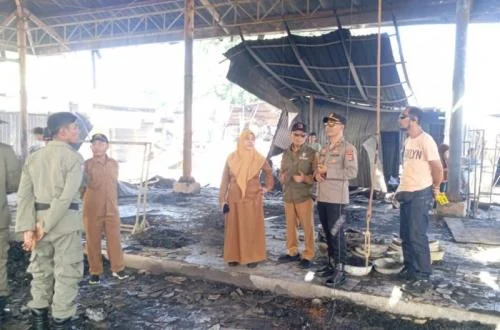
LOMBOK TIMUR, REPUBLIKA.CO.ID – In the wake of a massive fire that ravaged Pasar Peringgebaya, a vital traditional market in East Lombok Regency, West Nusa Tenggara Province, local authorities are undertaking swift and decisive measures to ensure the continuity of trade and support the affected community. Hadi Fathurahman, Head of the Trade Office of Lombok Timur Regency, confirmed efforts are underway to clear the extensive debris left by the conflagration, which erupted on Monday night, and to facilitate the immediate resumption of commercial activities. The fire, while devastating in its material impact, fortunately resulted in no casualties, occurring after the market’s operational hours had concluded, thereby preventing a potential human tragedy. The initial estimates place the material losses upwards of Rp5 billion, an figure that underscores the severe economic blow dealt to hundreds of local traders and the broader community dependent on the market.
The Devastation at Pasar Peringgebaya
The catastrophic blaze that swept through Pasar Peringgebaya on Monday evening left a trail of destruction, reducing hundreds of market stalls, kiosks, and shop-houses to ashes. The intensity of the fire, fueled by the combustible materials common in traditional market structures—wood, textiles, and various merchandise—led to a rapid and widespread engulfment of the trading area. Witnesses described towering flames and thick plumes of smoke visible from a considerable distance, signaling the severity of the incident. Firefighting units from Lombok Timur and surrounding areas were dispatched to the scene, battling the inferno for several hours into the night. Their efforts were commendable in containing the fire and preventing its spread to adjacent residential areas, though much of the market’s core was already consumed. The morning light revealed a stark landscape of twisted metal, charred timbers, and smoldering ruins, a testament to the ferocity of the fire. Despite the extensive damage, the absence of fatalities or serious injuries was a significant relief, a fortunate outcome attributed to the timing of the incident after most traders and shoppers had departed. This fact, however, does little to diminish the profound economic hardship now facing countless families whose livelihoods were inextricably linked to the market.
Rapid Response and Recovery Efforts
Immediately following the assessment of the damage, the Lombok Timur Regency government, through its Trade Office, initiated an urgent recovery plan. Hadi Fathurahman emphasized the administration’s commitment to a rapid clean-up and reconstruction phase to minimize disruption to the local economy. "Heavy equipment will be deployed promptly to clear the burnt debris," Fathurahman stated, outlining the immediate next steps. "Within one to two days, the remnants of the fire should be cleared, enabling traders to set up temporary stalls while awaiting permanent repairs." This swift action aims to provide a functional space for vendors to resume their businesses, mitigating the immediate financial impact on their families. The strategy involves not only the physical removal of rubble but also the designation of temporary trading zones that adhere to safety standards and allow for orderly commerce. This proactive approach underscores the local government’s understanding of the critical role Pasar Peringgebaya plays in the daily lives and economic stability of its constituents. The coordination between the Trade Office, Public Works Department, and local community leaders is deemed crucial for the efficient execution of these initial recovery stages.
The Heartbeat of Peringgebaya: A Market’s Significance
Pasar Peringgebaya is more than just a collection of stalls; it is the economic and social heartbeat of Kecamatan Peringgebaya and a significant hub for a wider radius within Lombok Timur. As a traditional market, it serves as the primary distribution point for a diverse array of goods, from fresh agricultural produce sourced from local farmers to daily necessities, textiles, household items, and artisanal crafts. Hundreds of small and medium-sized enterprises (SMEs) operate within its confines, providing employment and income for thousands of individuals, directly and indirectly. The market facilitates crucial supply chains, connecting rural producers with urban consumers and acting as a vital interface for economic exchange. Beyond its commercial function, Pasar Peringgebaya is also a social nexus, a place where community members gather, exchange news, and maintain cultural traditions. Its destruction represents not only a monetary loss but also a significant disruption to the social fabric and customary routines of the local populace. The market’s resilience and ability to bounce back are therefore paramount for the overall well-being and continued development of the Peringgebaya area. The average daily turnover, though difficult to precisely quantify without detailed records from the fire-damaged stalls, is estimated to contribute substantially to the local economy, circulating capital and supporting a myriad of ancillary businesses.
Chronology of the Catastrophe
The sequence of events leading to the devastation of Pasar Peringgebaya began late on Monday evening. While the exact ignition point and initial cause remain under investigation, reports indicate the fire started sometime after regular market hours, when most traders had already packed up and left. The fire quickly escalated, spreading rapidly through the tightly packed wooden structures and stalls. The market’s design, typical of many traditional Indonesian markets, with narrow aisles and close proximity of vendors, likely contributed to the swift propagation of the flames. Emergency services were alerted, and fire engines from the Lombok Timur Fire Department, supported by units from neighboring districts and volunteers, rushed to the scene. Firefighters faced significant challenges, including limited access points for their equipment within the dense market layout and ensuring a continuous water supply. Despite their strenuous efforts throughout the night, a substantial portion of the market was consumed before the fire was eventually brought under control in the early hours of Tuesday morning. As dawn broke, the full extent of the damage became apparent, prompting immediate coordination meetings among local government officials to strategize the urgent response and recovery plan.
Investigating the Cause: Police on the Scene
To ascertain the precise origin and cause of the devastating fire, forensic investigators from the Lombok Timur Regional Police have commenced a thorough crime scene investigation (olah TKP). This critical phase involves meticulous examination of the burnt remnants, collection of evidence, and interviewing potential witnesses. While initial speculation often points to electrical short circuits as a common cause in traditional market fires due to complex and often informal wiring systems, investigators are considering all possibilities. Other potential factors include faulty gas appliances, unattended cooking fires, or even arson, though no evidence currently supports the latter. The police investigation is crucial not only for accountability but also for informing future prevention strategies. Understanding the root cause will allow authorities to implement targeted safety measures, revise building codes for markets, and educate traders on best practices for fire prevention. The findings of this investigation are eagerly awaited by both the government and the affected traders, as they will provide clarity and potentially guide the allocation of resources for rebuilding a safer, more resilient market.
Voices from the Ground: Traders’ Plight and Hopes
For the hundreds of traders whose livelihoods have been abruptly halted, the fire at Pasar Peringgebaya represents an immediate and profound crisis. Many traditional market vendors operate on thin margins, with their entire capital invested in their stock and stall. The complete destruction of their merchandise and selling spaces means a total loss of their business assets, leaving them with no inventory and no place to trade. The emotional toll is immense, as countless families face an uncertain future, grappling with the sudden loss of their primary source of income. "Everything is gone," lamented one hypothetical trader, echoing the sentiments likely felt by many. "My entire life savings were in that stall. We don’t know how we will start over." Despite the despair, there is also a prevailing sense of hope and resilience, characteristic of communities facing adversity. Traders are expected to appeal to the government for financial assistance, soft loans, or grants to help them recapitalize and rebuild their businesses. The promise of temporary trading spaces by the Trade Office offers a glimmer of hope, providing an immediate pathway to earning a living, even if on a reduced scale. Their collective voice will be crucial in shaping the long-term reconstruction plans and ensuring that the new market truly meets their needs.
Broader Implications: Resilience and Future Safeguards
The Pasar Peringgebaya fire carries broader implications beyond the immediate economic losses. It highlights systemic vulnerabilities inherent in many traditional markets across Indonesia, which often grapple with outdated infrastructure, inadequate fire safety systems, and a lack of consistent regulatory oversight. The incident serves as a stark reminder of the urgent need for comprehensive market revitalization programs that prioritize safety, modern infrastructure, and robust emergency preparedness. Such programs would involve upgrading electrical systems, ensuring proper waste management, establishing clear emergency exits, and installing fire suppression equipment. Furthermore, regular fire drills and safety training for traders are essential. The socio-economic impact of such disasters extends far beyond the individual traders, affecting local supply chains, consumer prices, and the overall economic stability of the region. The resilience demonstrated by the community and the swift governmental response will be critical in mitigating these wider consequences. This event could also spur discussions on the availability and accessibility of micro-insurance schemes for traditional market traders, which could provide a crucial safety net against unforeseen calamities.
Government Commitment to Rebuilding
In response to the extensive damage and the profound impact on the local economy, the Lombok Timur Regency government is expected to reiterate its strong commitment to not only clean up the site but also to fully reconstruct Pasar Peringgebaya. Beyond the immediate provision of temporary trading facilities, long-term plans will likely include the design and construction of a modern, safer, and more resilient market structure. This may involve incorporating fire-resistant materials, wider aisles for better accessibility, improved ventilation, and state-of-the-art fire detection and suppression systems. Financial aid packages, potentially comprising grants, interest-free loans, or subsidies, are likely to be considered to assist affected traders in rebuilding their capital and restocking their inventories. Coordination with provincial and national government bodies may also be sought to secure additional funding and technical expertise for the ambitious reconstruction project. The ultimate goal is to restore Pasar Peringgebaya to its former vibrancy, ensuring it continues to serve as a cornerstone of the local economy for generations to come, while also setting a new standard for market safety and infrastructure.
Lessons Learned and Path Forward
The devastating fire at Pasar Peringgebaya, while tragic, offers critical lessons for urban planning, market management, and disaster preparedness across Indonesia. It underscores the importance of proactive measures, rather than reactive responses, in safeguarding vital economic infrastructure and the livelihoods it supports. Moving forward, a multi-faceted approach will be essential. This includes rigorous enforcement of building codes and safety regulations, regular inspections of electrical and gas installations, community-wide awareness campaigns on fire prevention, and fostering a culture of collective responsibility among traders and market management. The reconstruction of Pasar Peringgebaya presents an opportunity to implement innovative, sustainable designs that enhance both functionality and safety. By learning from this unfortunate event, Lombok Timur can set an example for other regions in strengthening the resilience of their traditional markets, ensuring that these invaluable economic and cultural institutions can withstand future challenges and continue to thrive. The path ahead will require sustained effort, strong collaboration between government, traders, and community members, but the unwavering spirit of the people of Peringgebaya ensures that their market, their economic heart, will beat strong once again.