Nasution Nanang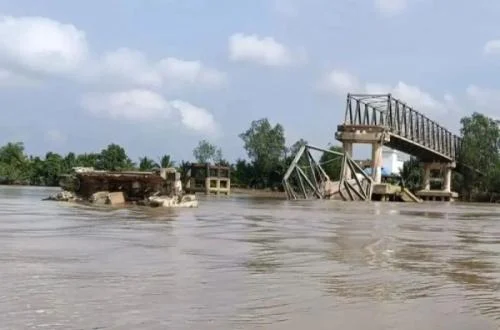
PALEMBANG, REPUBLIC OF INDONESIA – The Musi Banyuasin Regency Government (Pemkab Muba) in South Sumatra has announced the temporary closure of the vital Lalan Bridge, effective Thursday, April 30, 2026, for a duration of one month. This decisive action is being taken to significantly accelerate the comprehensive revitalization process of the bridge, which suffered severe structural damage after being struck by a coal barge on August 12 of the previous year. The extensive repairs and structural reinforcement are critical to restoring the bridge’s integrity and ensuring the safety of countless commuters and vital logistics operations in the region.
Background: A Lifeline Interrupted
The Lalan Bridge stands as a critical artery connecting Musi Banyuasin and several surrounding regencies to key economic hubs, including Palembang, the provincial capital. Spanning the Lalan River, a busy waterway primarily used for the transport of coal, palm oil, and other commodities, the bridge is not merely a piece of infrastructure but a linchpin for regional connectivity and economic activity. Prior to the incident, an estimated 8,000 to 10,000 vehicles, ranging from private cars to heavy-duty trucks transporting agricultural products and mining output, traversed the bridge daily. Its strategic location makes it indispensable for local communities, facilitating access to markets, educational institutions, healthcare services, and administrative centers. The incident on August 12, when a heavily laden coal barge veered off course and collided with one of the bridge’s primary support pillars, sent shockwaves through the region, immediately raising concerns about the stability and long-term viability of the structure. Initial assessments revealed significant damage to the substructure, necessitating immediate temporary measures and, subsequently, a comprehensive long-term revitalization plan.
Chronology of an Unforeseen Disruption
The sequence of events leading to the current full closure highlights the complex challenges faced by regional authorities in managing critical infrastructure in dynamic environments. The Lalan Bridge, a structure that has served the region for decades, was operating normally until the fateful morning of August 12, 2025. At approximately 03:00 AM local time, a large coal barge, reportedly navigating the Lalan River en route to a nearby port, lost control and impacted a key pier of the bridge. The force of the collision caused visible structural deformation and compromised the integrity of the affected support.
Immediately following the incident, local authorities, including the Musi Banyuasin Disaster Mitigation Agency (BPBD Muba) and the police, responded to secure the area and conduct preliminary assessments. Traffic flow was immediately restricted, and detailed engineering evaluations were initiated. These initial assessments confirmed the severity of the damage, indicating that while the bridge could still bear limited light traffic after emergency shoring, a full-scale revitalization was imperative to prevent further degradation and potential catastrophic failure.
The months that followed were dedicated to extensive technical studies, damage quantification, and the intricate process of planning the revitalization. This phase involved collaboration between the Musi Banyuasin Regency Government, provincial authorities, and structural engineering consultants. A tender process was conducted to select a qualified contractor capable of undertaking the complex repairs, which included reinforcing the damaged pier, replacing compromised structural elements, and potentially upgrading the bridge’s resilience against future impacts. The selection of the contractor, PT. Wira Karya Bangun Persada (hypothetical name), was finalized in early 2026, paving the way for the physical work to commence. The decision to implement a full, temporary closure starting April 30, 2026, was made after careful consideration of all options, concluding that an uninterrupted work environment was the most efficient and safest path to achieving the ambitious December 2026 completion target. This one-month full closure is specifically designed to allow for the most critical initial phase of heavy-duty work, particularly the installation of foundational support structures, to proceed without the complexities and hazards of managing concurrent traffic flow.
Strategic Imperative: Accelerating Revitalization
Bupati Musi Banyuasin, Toha Tohet, emphasized the strategic necessity of the temporary closure. "The decision to close the Lalan Bridge for one month, starting April 30, 2026, is a crucial step to maximize the efficiency and speed of the revitalization efforts," Bupati Toha stated in a press briefing from Palembang. He elaborated that maintaining partial access would inevitably impede the progress of heavy machinery and specialized construction teams, thereby prolonging the overall project timeline. "If we keep the bridge open, even partially, the pace of work will be significantly hampered. This closure, while inconvenient in the short term, is the best strategy to ensure the physical revitalization of Jembatan Lalan can be carried out to its fullest potential," he added.
Beyond the bridge structure itself, the closure also extends to the specific segment of the river’s navigational channel directly beneath and adjacent to the bridge. This measure is a proactive step to prevent any further marine incidents that could jeopardize the ongoing construction work or pose risks to maritime traffic navigating the active construction zone. Bupati Toha underscored that the policy was not intended to disrupt community activities unnecessarily but rather to ensure the swift and safe restoration of the bridge. "We understand the temporary inconvenience this will cause our citizens and businesses. However, this measure is an investment in the future, aiming to return a fully functional and secure bridge to the community as quickly as possible," he affirmed, reiterating the government’s commitment to prioritizing public safety and infrastructure resilience.
Technical Undertaking: The Contractor’s Perspective
The revitalization project is a significant engineering challenge, requiring precision and robust construction methodologies. Bagus, a representative from the lead contractor, elaborated on the critical phases of the work. "Our primary focus during this initial one-month closure period is on maximizing the work, particularly the crucial phase of installing the primary support structures," Bagus explained. He specified that the initial phase involves the "pemancangan steel spun pile shoring," which refers to the driving of large, pre-stressed concrete or steel piles into the riverbed to create robust temporary or permanent foundational support for the damaged sections. This operation requires heavy machinery, significant logistical coordination, and a clear working space, making the full closure indispensable.
"The uninterrupted closure allows us to deploy our specialized equipment and teams effectively, ensuring that the pile-driving process, which is foundational to the entire repair, proceeds optimally without any risks posed by traffic or river navigation," Bagus added. He assured the public that the contractor is committed to leveraging this window to make substantial progress. The target completion for the entire revitalization of Lalan Bridge is set for December 2026. "This access point is highly anticipated by the community, and we are striving diligently to complete the work on schedule, ensuring the bridge is safe and fully operational for everyone," Bagus emphasized, highlighting the team’s dedication to meeting the deadline. The project involves not only the repair of the damaged pier but also potential upgrades to the bridge deck, railings, and perhaps even the implementation of advanced monitoring systems to track structural health. The total cost of the revitalization project is estimated to be in the range of IDR 80-120 billion (approximately USD 5-8 million), primarily funded through the Musi Banyuasin Regency budget with potential support from the provincial or national infrastructure programs.
Implications for Commuters and the Regional Economy
The temporary closure of Lalan Bridge, even for a month, has significant implications for daily life and economic activities in Musi Banyuasin and its surrounding areas. Commuters, including those traveling for work, school, or personal errands, will need to utilize alternative routes. The most prominent alternative involves a longer detour, potentially via existing provincial roads that are less developed or more circuitous, adding an estimated two to three hours to travel times, depending on the destination and traffic conditions. This extended travel translates directly into increased fuel consumption, higher transportation costs, and reduced productivity for individuals and businesses alike.
For the regional economy, the impact is multi-faceted. Musi Banyuasin is a significant producer of palm oil, rubber, and coal. The Lalan Bridge is a crucial conduit for transporting these commodities to processing plants and export terminals. Logistics companies and businesses relying on efficient transportation networks are now compelled to re-evaluate their routes, schedules, and operational costs. The added mileage and time on alternative routes will inevitably lead to higher freight charges, potentially impacting the competitiveness of local products and increasing the cost of goods for consumers. Small and medium-sized enterprises (SMEs), particularly those involved in perishable goods or just-in-time supply chains, are expected to face considerable challenges. Local farmers, for instance, may find it harder and more expensive to bring their produce to markets in a timely manner, potentially leading to spoilage or reduced profits.
Stakeholder Reactions and Mitigation Efforts
Reactions from various stakeholders underscore the mixed feelings of frustration over inconvenience and understanding of the necessity. Local residents, while acknowledging the long-term benefits of a safe bridge, have voiced concerns about the immediate disruptions. "It’s a huge hassle, especially for those of us who commute daily to work or school in the next town," remarked Ibu Siti, a resident of Lalan sub-district. "The alternative routes are often congested, and the roads are not in the best condition, making the journey much longer and more tiring." Others, however, expressed a pragmatic acceptance. "We need the bridge to be strong and safe. If closing it for a month helps speed up the repairs, then it’s a necessary sacrifice," said Pak Budi, a local entrepreneur.
The Musi Banyuasin Chamber of Commerce and Industry (KADIN Muba) has appealed to the government for clear communication channels regarding the project’s progress and potential support mechanisms for affected businesses. "We urge the authorities to provide regular updates and perhaps consider temporary subsidies or incentives for logistics companies that are incurring higher operational costs due to the detour," a KADIN Muba representative suggested.
In response to these concerns, the Musi Banyuasin Regency Government, in coordination with the South Sumatra Provincial Government and relevant agencies, has outlined several mitigation strategies. These include:
- Traffic Management: Deploying additional traffic police and wardens along alternative routes to manage congestion and ensure smooth flow.
- Public Information Campaigns: Regular updates through local media, social media, and community meetings to keep residents informed about progress and any changes to the schedule.
- Road Maintenance: Expedited maintenance and minor repairs on designated alternative routes to improve their condition and capacity during the closure period.
- Emergency Services Access: Ensuring clear protocols and routes for emergency services (ambulances, fire brigades) to maintain rapid response times despite the bridge closure.
- Maritime Safety Review: The Directorate General of Sea Transportation, under the Ministry of Transportation, is expected to intensify surveillance and enforcement of navigation rules on the Lalan River to prevent future collisions, potentially reviewing barge licensing and operational safety standards in the area.
Broader Context: Infrastructure Resilience and Maritime Safety
The incident at Lalan Bridge and the subsequent revitalization effort highlight broader challenges related to infrastructure resilience and maritime safety in Indonesia. As a vast archipelago with extensive river networks, bridges often serve as critical links, but they are also vulnerable to impacts from a thriving maritime transport sector. The increasing volume of cargo, particularly bulk commodities like coal, on inland waterways necessitates a critical review of navigational safety protocols, vessel operator accountability, and the structural robustness of bridges spanning these busy rivers.
This incident serves as a stark reminder of the importance of regular structural assessments, not only for age-related degradation but also for external threats. It also underscores the need for integrated planning between land transportation infrastructure development and maritime traffic management. Future infrastructure projects in similar environments may need to incorporate enhanced protective measures, such as stronger fendering systems or real-time monitoring of vessel movements, to mitigate risks.
The national government, through the Ministry of Public Works and Housing (PUPR), has consistently emphasized the importance of building and maintaining resilient infrastructure across Indonesia. Projects like the Lalan Bridge revitalization are part of a larger national agenda to enhance connectivity, support economic growth, and ensure the safety and longevity of public assets. The lessons learned from this incident will likely contribute to policy adjustments and best practices for infrastructure development and maintenance in other regions facing similar challenges.
Outlook: Awaiting Restoration
As Musi Banyuasin embarks on this critical phase of the Lalan Bridge revitalization, the focus remains firmly on achieving the December 2026 completion target. The temporary inconvenience of the one-month full closure is a calculated measure designed to accelerate progress and ensure the long-term safety and functionality of this indispensable structure. The successful completion of this project will not only restore a vital transportation link but also reaffirm the commitment of local and national authorities to resilient infrastructure development and public welfare. The community, while navigating the immediate challenges, looks forward to the day when the Lalan Bridge once again stands fully restored, serving as a robust and reliable gateway for generations to come.