Azin Asro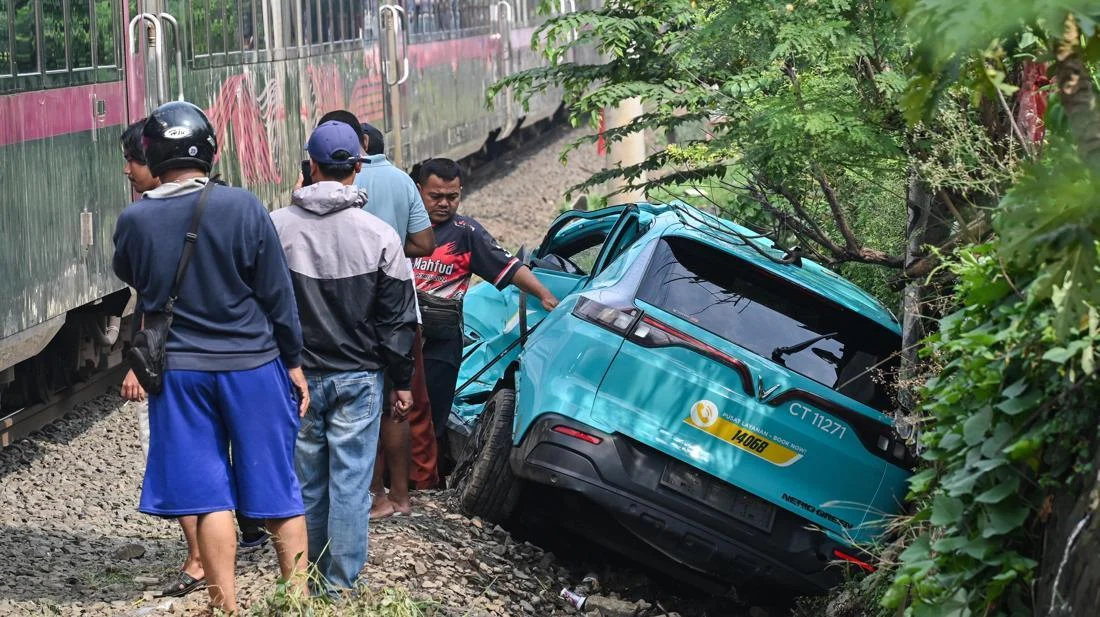
The transportation landscape in Bekasi, West Java, faced a significant disruption following a complex accident involving a Green SM electric taxi, a Commuter Line (KRL) train, and the prestigious Argo Bromo Anggrek executive train. The incident, which occurred at the Ampera level crossing near East Bekasi Station on Tuesday, April 28, 2026, has sparked an intense investigation into the vulnerabilities of electric vehicles (EVs) when exposed to high-intensity electromagnetic fields at railway intersections. Preliminary police reports suggest that the Vietnamese-operated electric taxi suffered a catastrophic electrical short circuit while traversing the tracks, leaving the vehicle immobilized in the direct path of oncoming rail traffic and initiating a chain reaction that halted one of Indonesia’s busiest transit corridors.
Detailed Chronology of the Bekasi Rail Collision
The sequence of events began during the morning peak hour when a green electric taxi, operated by the Vietnamese firm Green SM, attempted to cross the Ampera railway intersection in East Bekasi. According to eyewitness accounts and preliminary police findings, the vehicle suddenly lost power and stalled directly on the tracks. Despite the driver’s attempts to restart the vehicle or move it manually, the taxi’s electronic systems appeared to have locked, a common fail-safe or malfunction characteristic in modern high-tech vehicles.
As the taxi sat immobilized, a Commuter Line (KRL) train approaching the East Bekasi Station was forced to make an emergency stop or was otherwise impacted by the obstruction. The presence of the stalled vehicle on the tracks created an immediate signal blockage and operational hazard. While the KRL was attempting to navigate the emergency, the KA Argo Bromo Anggrek—the flagship executive service running the Jakarta-Surabaya route—approached the section at a high rate of speed.
Kompol Sandhi Wiedyanoe, Kasi Pullahjianta Subdit Laka Ditgakkum Korlantas Polri, explained that the stalled taxi acted as the primary catalyst. The disruption caused by the taxi’s electrical failure prevented the KRL from clearing the section in a timely manner. Consequently, the Argo Bromo Anggrek, which operates on a strict high-speed schedule, collided with the stationary or slow-moving KRL train after the taxi had already been struck or caused the initial line blockage. The impact resulted in severe damage to the taxi and significant structural damage to the leading cars of the involved trains, leading to a total suspension of rail services between Bekasi and Cikarang for several hours.
Technical Analysis: The Role of Electromagnetic Interference
The most pressing question emerging from the wreckage is why a modern electric vehicle would suddenly suffer a total system failure at a railway crossing. Agus Purwadi, a senior researcher at the National Center for Sustainable Transportation Technology (NCSTT) at the Bandung Institute of Technology (ITB), provided a technical breakdown of how the environment of a railway crossing can be hostile to EV electronics.
Purwadi noted that modern vehicles, whether Internal Combustion Engine (ICE) or Electric Vehicles (EV), rely heavily on sophisticated control units, including the Power Control Unit (PCU), Vehicle Control Unit (VCU), and Engine Control Unit (ECU). These components are highly sensitive to external electrical stimuli. "These control systems can be influenced by the presence of strong magnetic fields generated by the high-voltage overhead lines (LAA) and the current flowing through the rails themselves," Purwadi stated.
In the context of the East Bekasi incident, the electric taxi may have been subjected to an electromagnetic surge or interference that bypassed its internal shielding. Railway lines, particularly those serving electrified KRL trains, utilize high-voltage alternating or direct current. When a train is nearby, the electromagnetic flux increases significantly. If a vehicle’s Electromagnetic Compatibility (EMC) shielding is insufficient or if there is a specific resonance between the vehicle’s frequency and the rail infrastructure, the VCU may "freeze" or trigger an emergency shutdown to protect the battery, effectively bricking the car on the tracks.
Regulatory Standards and Safety Protocols
The vulnerability of electric motors and control systems to electromagnetic interference is a known factor in automotive engineering. Purwadi highlighted that international regulations, specifically UNR 100 and UNR 136, mandate rigorous EMC testing for electric cars and motorcycles, respectively. These tests are designed to ensure that the vehicle’s control systems do not interfere with external electronics and, conversely, are not compromised by external electromagnetic fields within certain thresholds.
"The EMC testing for control systems is critical so that the vehicle remains operational even when exposed to the electromagnetic threshold conditions required by law," Purwadi added. The failure of the Green SM taxi suggests either a localized electrical fault (short circuit) or that the electromagnetic environment at the Ampera crossing exceeded the vehicle’s design parameters.
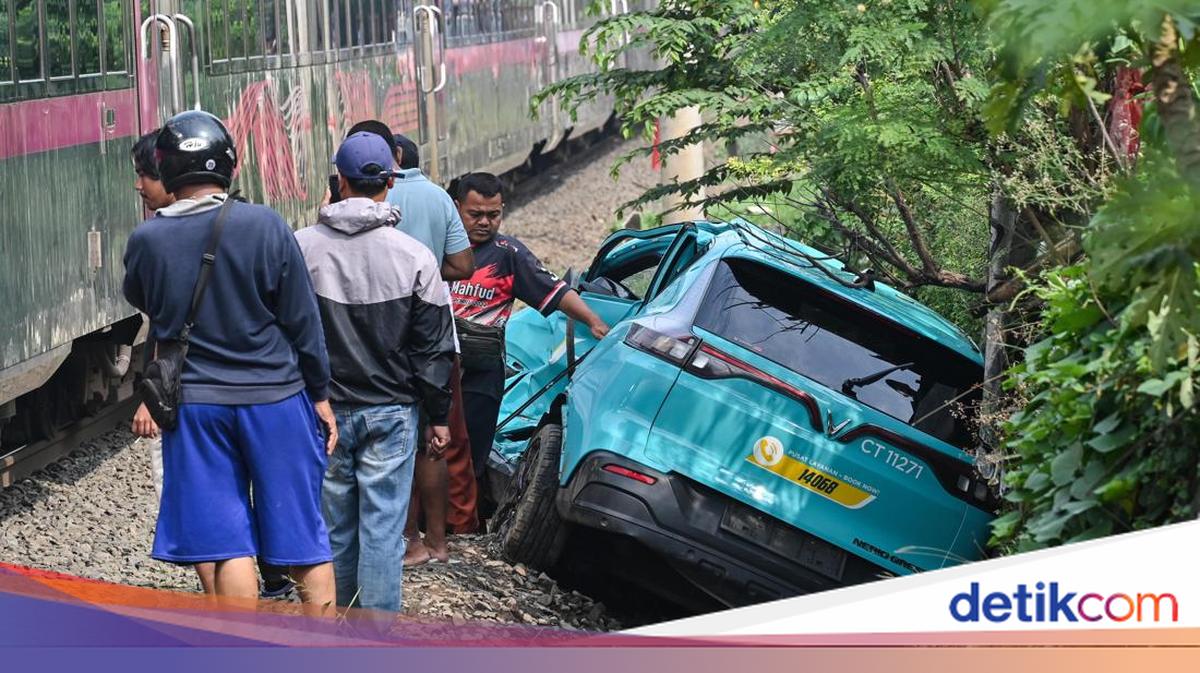
This incident raises concerns regarding the rapid deployment of EV fleets in urban areas with dense rail infrastructure. As Indonesia pushes for greater electrification of its public transport and taxi sectors, the compatibility of these vehicles with existing high-voltage rail corridors must be re-evaluated. The NCSTT researcher suggested that while EV drivers should not panic, they must exercise extreme caution. The primary safety recommendation remains to ensure a significant distance from any approaching train, as the electromagnetic field intensity peaks when a train is in the immediate vicinity of the crossing.
Official Responses and Police Investigation
The Indonesian National Police (Polri) through its Korlantas division has launched a comprehensive investigation into the "taksi hijau" (green taxi). Kompol Sandhi Wiedyanoe confirmed that the initial focus is on the vehicle’s electrical integrity. "This accident was caused by a short circuit or an electrical problem from the four-wheeled electric taxi vehicle. This specific problem occurred exactly at the Ampera crossing," Sandhi remarked during a press briefing.
The investigation is also looking into why the safety systems at the level crossing were unable to prevent the collision once the taxi stalled. In many cases, level crossing gates are synchronized with train signaling; however, if a vehicle stalls after the gates have already opened or during a transition, the window for intervention is narrow. The police are currently coordinating with PT Kereta Api Indonesia (KAI) and the vehicle manufacturer to extract data from the taxi’s "black box" or onboard diagnostic system to determine the exact millisecond the system failure occurred.
Broader Implications for Indonesia’s Railway Infrastructure
The Bekasi collision underscores a long-standing issue in Indonesian urban planning: the prevalence of "perlintasan sebidang" or level crossings. For decades, transportation experts have called for the elimination of level crossings in favor of flyovers or underpasses, particularly in high-frequency corridors like the Greater Jakarta commuter rail network.
Agus Purwadi emphasized that the most effective way to prevent such incidents in the future is infrastructure separation. "To minimize the influence of electromagnetic fields and prevent physical collisions, electrified rail lines should ideally not have level crossings," he argued. Level crossings are not only a safety risk but also a bottleneck for both road and rail traffic. As train frequencies increase to accommodate growing passenger numbers, the statistical likelihood of a vehicle—EV or otherwise—stalling on the tracks increases.
Furthermore, the involvement of the KA Argo Bromo Anggrek, a symbol of Indonesia’s railway excellence, highlights the economic and operational stakes. A single stall at a crossing can disrupt the travel of thousands of passengers and cause millions of rupiah in damages to high-speed rolling stock. The incident will likely accelerate government plans to fast-track the construction of overpasses in the Bekasi and East Jakarta regions.
The Future of Electric Taxis in Indonesia
The Green SM taxi involved in the accident is part of a broader wave of Vietnamese investment in Indonesia’s green economy. Green SM, associated with the automaker VinFast, has been aggressively expanding its fleet in Jakarta and surrounding cities. This incident serves as a critical case study for the company and the Indonesian Ministry of Transportation.
For the EV industry, the "Bekasi Stall" may lead to stricter local certification requirements for EMC shielding. Manufacturers may be required to prove that their vehicles can withstand the specific electromagnetic profiles of Indonesia’s aging and modernizing rail grids. Additionally, there may be a push for "emergency neutral" features in EVs, allowing them to be easily pushed off tracks even during a total electronic failure—a task currently difficult in many EVs due to electronic parking brakes and transmission locks.
Conclusion and Safety Recommendations
As the investigation into the collision between the Green SM taxi, the KRL, and the Argo Bromo Anggrek continues, the focus remains on the intersection of modern automotive technology and traditional rail infrastructure. While the transition to electric mobility is essential for environmental sustainability, the Bekasi incident proves that technical challenges remain in ensuring these vehicles are "rail-safe."
For the public, the advice from experts is clear: maintain a safe distance at railway crossings and never attempt to cross if a train is approaching, regardless of the vehicle type. For policymakers, the event is a stark reminder that the "electrification" of the nation must be matched by "modernization" of infrastructure, primarily through the elimination of level crossings to ensure that a simple vehicle malfunction does not escalate into a multi-train disaster. The findings from the Korlantas Polri investigation will likely shape the safety regulations for electric public transport vehicles for years to come, ensuring that the "green" revolution in Indonesian transport is as safe as it is sustainable.