Paryono Ramadhan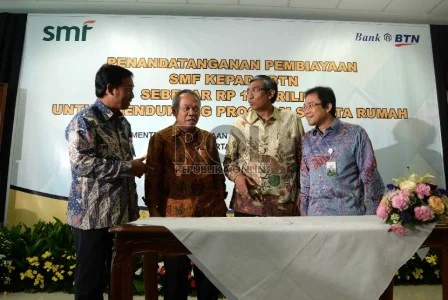
The Indonesian government is mobilizing all available resources to ensure the successful implementation of the ambitious One Million Houses Program, a flagship initiative aimed at addressing the nation’s persistent housing backlog, particularly for low-income communities. This commitment was underscored by Minister of Public Works and Housing, Basuki Hadimuljono, during the signing of a significant cooperation agreement between PT Sarana Multigriya Finansial (SMF) and Bank Tabungan Negara (BTN) in Jakarta recently. The agreement sees SMF extending a crucial loan facility of Rp 1.5 trillion to BTN, specifically earmarked to bolster the execution of the One Million Houses Program and facilitate easier access to homeownership for eligible low-income segments of society.
Background and Genesis of the One Million Houses Program
The One Million Houses Program (Program Sejuta Rumah) was officially launched by President Joko Widodo in April 2015, marking a pivotal moment in Indonesia’s housing policy. The initiative was born out of a critical need to address the country’s substantial housing deficit, which, at the time of its inception, was estimated to be around 11.4 million units, primarily affecting low-income households and first-time homebuyers. Rapid urbanization, population growth, and the rising cost of land and construction materials had made affordable housing increasingly elusive for a significant portion of the Indonesian populace.
The program’s overarching goal extends beyond merely constructing a certain number of homes; it aims to create a sustainable housing ecosystem that involves collaboration among various stakeholders. This includes central and local governments, state-owned enterprises (SOEs), private developers, financial institutions, and the community. Its core objectives are multifaceted: to reduce the housing backlog, stimulate economic growth through the construction sector, create employment opportunities, and improve the quality of life for millions of Indonesians by providing access to decent and affordable shelter. The program emphasizes a "people-centered" approach, ensuring that housing solutions are tailored to the needs and affordability levels of low-income earners, civil servants, military personnel, and informal sector workers.
The Strategic SMF-BTN Partnership: A Catalyst for Affordability
The recent Rp 1.5 trillion loan from PT Sarana Multigriya Finansial (SMF) to Bank Tabungan Negara (BTN) represents a critical financial injection designed to invigorate the One Million Houses Program. SMF, a state-owned enterprise under the Ministry of Finance, plays a vital role as a secondary mortgage facility provider in Indonesia’s housing finance sector. Its primary function is to increase the capacity and sustainability of the primary mortgage market by providing long-term funding to mortgage lenders like BTN. By securitizing mortgage assets and issuing bonds, SMF helps banks free up capital, enabling them to extend more housing loans, especially for affordable housing segments. This mechanism is crucial for ensuring liquidity and reducing interest rate risks for lenders, which in turn can translate into more favorable loan terms for homebuyers.
Bank Tabungan Negara (BTN), on the other hand, holds a unique and central position in Indonesia’s housing finance landscape. Often dubbed "the bank for a million houses," BTN has historically been at the forefront of providing housing credit, particularly for low-income segments and through government-subsidized programs. Its extensive branch network and specialized expertise in mortgage lending make it an indispensable partner in the government’s housing initiatives. The Rp 1.5 trillion loan from SMF will significantly enhance BTN’s capacity to disburse more Housing Ownership Loans (KPR – Kredit Pemilikan Rumah), especially those subsidized by the government, such as through the Housing Finance Liquidity Facility (FLPP). This increased funding allows BTN to maintain a steady flow of credit, ensuring that eligible low-income families can access financing with more manageable interest rates and longer tenures, directly contributing to the program’s targets. The collaboration between SMF and BTN exemplifies the synergy between state-owned financial institutions working towards a common national development goal.
Diverse Funding Streams Supporting the Housing Initiative
Minister Basuki Hadimuljono elaborated on the multifaceted funding architecture supporting the One Million Houses Program, highlighting the government’s comprehensive approach to secure adequate financing from various sources. Beyond the SMF-BTN collaboration, several other key financial mechanisms are in play:
-
BPJS Ketenagakerjaan (Workers Social Security Agency): The Minister pointed to a substantial potential contribution from BPJS Ketenagakerjaan, estimated at Rp 48.5 trillion. As a social security institution managing workers’ contributions, BPJS Ketenagakerjaan is mandated to invest its funds responsibly and can channel a portion of these investments into long-term, low-risk assets, including housing development. Furthermore, BPJS Ketenagakerjaan offers specific housing benefits for its members, such as down payment assistance, housing renovation loans, and even direct housing loans, which complement the broader government housing program by making homeownership more accessible to formal sector workers who are members of the agency. This represents a significant pool of capital that can be strategically deployed to support affordable housing initiatives, aligning with the agency’s social welfare mandate.
-
FLPP (Fasilitas Likuiditas Pembiayaan Perumahan – Housing Finance Liquidity Facility): The government’s direct financial intervention through FLPP is a cornerstone of affordable housing provision, with an allocation of Rp 5.1 trillion. FLPP is a government-backed subsidy program designed to make housing loans more affordable for low-income segments. Under FLPP, the government provides liquidity support to banks, enabling them to offer mortgages at significantly lower and fixed interest rates over the loan’s tenure, typically around 5%, which is substantially below market rates. This mechanism directly reduces the monthly installments for homebuyers, making homeownership attainable for those who would otherwise be priced out of the market. The Rp 5.1 trillion allocation ensures that a substantial number of housing units can be financed under these favorable terms, targeting individuals and families earning below a certain income threshold.
-
DIPA APBN (Daftar Isian Pelaksanaan Anggaran – Budget Implementation List of State Budget): An allocation of Rp 8.1 trillion from the DIPA APBN further underscores the government’s direct financial commitment. DIPA represents the detailed operational budget of government ministries and agencies. This direct budget allocation for housing can be utilized for various purposes, including land acquisition for public housing projects, development of basic infrastructure (roads, water, electricity) in new housing areas, construction of rental housing units for specific vulnerable groups, or direct subsidies for housing development costs. This funding stream ensures that the government can directly intervene in housing supply where market mechanisms fall short, especially in remote areas or for specific social housing needs.

In addition to these major funding sources, the program also leverages contributions from local government budgets, private sector investments, and corporate social responsibility (CSR) initiatives, creating a robust and diversified financial framework essential for sustaining such an expansive national program.
Critical Recommendations for Program Success: Insights from Indonesia Property Watch
While the financial commitments are substantial, achieving the ambitious targets of the One Million Houses Program requires addressing systemic challenges beyond just funding. Indonesia Property Watch, a prominent independent research and consulting firm specializing in the property sector, has consistently outlined five critical areas that the government must effectively manage to ensure the program’s long-term success. These recommendations highlight the complexities of housing development in a rapidly growing economy:
-
Land Availability and Land Bank Establishment: The soaring cost of land is arguably the single largest impediment to affordable housing development in Indonesia. Speculative buying, rapid urbanization, and inadequate land use planning have driven land prices beyond the reach of developers building for low-income segments. Indonesia Property Watch emphasizes the urgent need for a robust "land bank" mechanism. A land bank would involve the government proactively acquiring strategic land parcels, especially on the periphery of urban centers, and holding them for future public housing development. This would insulate land prices from market speculation, ensure the availability of affordable land for developers, and allow for more integrated urban planning. Without effective land management, any financial injection for housing will eventually be absorbed by inflated land costs, negating affordability efforts.
-
Dedicated and Focused Housing Institution: The fragmented nature of housing governance, with responsibilities often spread across multiple ministries and agencies, can lead to inefficiencies, bureaucratic delays, and a lack of coherent policy implementation. The recommendation calls for the establishment of a dedicated, powerful, and focused institution specifically tasked with overseeing and coordinating all aspects of public housing. Such an entity would streamline decision-making, improve inter-agency coordination, and ensure consistent execution of housing policies, from planning and land acquisition to financing and post-occupancy management. This institution would serve as a single point of contact and accountability, significantly enhancing the program’s agility and effectiveness.
-
Sustainable and Diverse Funding Mechanisms: While existing funding sources like FLPP, BPJS, and DIPA are crucial, there is a continuous need to explore and diversify funding mechanisms to ensure the program’s long-term sustainability. This includes innovating financial products for the informal sector, leveraging pension funds, attracting more private sector investment through public-private partnerships (PPPs), and potentially exploring international financing options. The goal is to reduce over-reliance on the state budget and create a more resilient funding ecosystem that can adapt to economic fluctuations and evolving housing needs. This also involves improving the efficiency of existing subsidies to reach the truly needy.
-
Comprehensive Data and Information Systems: Effective policy-making and program targeting are impossible without accurate, up-to-date, and granular data. There is a critical need for a centralized, comprehensive database on housing demand (backlog specifics, income profiles of MBR, geographic distribution), housing supply (available land, construction permits issued, completed units), and market dynamics. Such a system would enable the government to identify specific housing needs, allocate resources more efficiently, track program progress, and evaluate impact. Currently, data fragmentation and inconsistencies can hinder precise targeting and lead to suboptimal resource allocation.
-
Streamlining Costs Associated with Permitting, Certification, and Utilities: The administrative burden and associated costs are significant contributors to the final price of housing units, particularly for affordable housing. This includes complex and lengthy permitting processes (e.g., building permits, environmental impact assessments), high fees for land certification and property registration, and the often-exorbitant costs and delays associated with connecting to essential utilities like electricity (PLN), water, and sanitation. Indonesia Property Watch advocates for a radical simplification and digitalization of these processes, reduction of unnecessary fees, and better coordination with utility providers. By cutting red tape and lowering these non-construction costs, developers can offer housing at more affordable prices, directly benefiting low-income buyers.
Broader Impact and Implications for National Development
The success of the One Million Houses Program carries profound implications for Indonesia’s socio-economic development. Economically, the program acts as a significant stimulus, driving growth in the construction sector and its extensive supply chain, from cement and steel manufacturing to logistics and labor. This creates millions of direct and indirect jobs, contributing to national income and reducing unemployment. The multiplier effect extends to related industries, fostering broader economic resilience.
Socially, providing decent, affordable housing directly improves the quality of life for millions. It reduces urban slum areas, enhances public health outcomes by providing better sanitation and living conditions, and fosters a greater sense of security and stability for families. Homeownership can also empower communities, encourage civic participation, and reduce social inequalities. For low-income families, owning a home represents a significant asset, a pathway to intergenerational wealth, and a buffer against economic shocks.
However, the program also faces ongoing sustainability challenges. These include ensuring that new housing developments are integrated with adequate infrastructure (transportation, education, healthcare), minimizing environmental impact, and promoting resilient, well-planned urban growth. The government’s continued commitment to addressing these challenges through innovative financing, streamlined regulations, and collaborative partnerships will be crucial for the long-term success and legacy of the One Million Houses Program. The current financial agreements and policy discussions reflect a sustained national effort to ensure that housing remains a fundamental right accessible to all Indonesians.