Nasution Nanang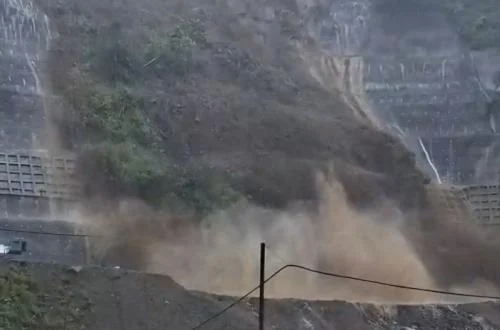
WEST BANDUNG, Indonesia – A significant landslide occurred at the construction site of the Upper Cisokan Pumped Storage Hydroelectric Power Plant (PLTA) project in West Bandung Regency, West Java, but crucially, no fatalities or injuries were reported, according to local disaster management authorities. The incident, believed to have been triggered by intense rainfall, prompted immediate coordination between regional agencies and project management to assess the damage and ensure ongoing safety measures. The Upper Cisokan project, a cornerstone of Indonesia’s renewable energy strategy and critical for the stability of the Java-Bali electricity grid, continues to draw close scrutiny from both environmental and infrastructure development perspectives.
The Head of the Regional Disaster Management Agency (BPBD) for West Bandung Regency, Asep Sehabbudin, confirmed on Friday that his office had received no reports of casualties following the landslide. "It is true that a landslide incident occurred. Based on information and coordination with the Head of Rongga Sub-district, there were no fatalities as a result of this event," Sehabbudin stated. He emphasized BPBD’s ongoing coordination with the Rongga sub-district authorities to monitor post-landslide conditions and to prepare for a comprehensive on-site inspection. This proactive approach underscores the commitment of local government to public safety and infrastructure integrity, particularly for projects of national strategic importance.
BPBD’s planned direct inspection, scheduled for the following day, is intended to ascertain the latest conditions at the Upper Cisokan PLTA project site and to anticipate any potential secondary risks. This inspection will involve various relevant stakeholders, including representatives from the sub-district authorities and the project management team, to thoroughly map the impact and ensure there are no further immediate dangers. "BPBD will also promptly deploy personnel to inspect the location tomorrow," Sehabbudin added, highlighting the urgency and methodical nature of the response. The comprehensive assessment aims to provide a clearer picture of the geological stability of the affected area and to inform any necessary remedial actions.
The Incident Unfolds: A Timeline of Events
The landslide occurred in the early hours of Friday, specifically around 2:00 AM local time, following a period of sustained heavy rainfall across the region. Asep Badrup, the Head of Rongga Sub-district, provided details on the suspected cause and the immediate aftermath. "Heavy rain is suspected to have triggered the landslide; the incident occurred around 2 AM," Badrup explained. He further reassured the public and authorities that no workers were on site at the time of the collapse. "We confirmed there were no casualties because, coincidentally, it was a work holiday," Badrup added, a factor that undoubtedly prevented a potentially tragic outcome.
The affected area, locally known as Bukit Pasir Datar (Flat Sand Hill), is a critical part of the project infrastructure. Badrup specified that the collapsed slope is situated directly above two water tunnels designed to channel water from the turbines to the reservoir. These tunnels are integral components of the pumped storage system, which relies on the movement of water between upper and lower reservoirs to generate electricity during peak demand and store energy during off-peak hours. The landslide’s proximity to these vital conduits necessitates a thorough structural assessment to ensure their integrity and the long-term operational safety of the power plant. The project site itself is strategically located along the administrative border between West Bandung Regency and Cianjur Regency, approximately 50-60 kilometers from Padalarang, the administrative center of West Bandung, underscoring its remote yet significant placement.
The Upper Cisokan Hydroelectric Power Plant: A Strategic National Project
The Upper Cisokan Pumped Storage Hydroelectric Power Plant (PLTA) project represents a monumental undertaking in Indonesia’s efforts to bolster its energy security and transition towards cleaner energy sources. With a planned installed capacity of 1,040 megawatts (MW), comprising four units of 260 MW each, it is poised to become the largest pumped-storage hydropower plant in Southeast Asia. This type of power plant is crucial for grid stability, offering a flexible and reliable source of electricity to meet fluctuating demand, particularly for the densely populated Java-Bali power system. During periods of low electricity demand, typically at night, excess power from other sources (such as coal-fired or geothermal plants) is used to pump water from a lower reservoir to an upper reservoir. When demand peaks, the stored water is released back down through turbines to generate electricity, acting as a giant rechargeable battery for the grid.
The project is being developed by PT PLN (Persero), Indonesia’s state-owned electricity company, with significant financial backing from the World Bank. The World Bank’s involvement, through a substantial loan, underscores the international recognition of the project’s importance for sustainable development and climate change mitigation in Indonesia. Construction commenced in the early 2010s, and while facing various challenges inherent in large-scale infrastructure development in complex geological terrains, it has steadily progressed. The Upper Cisokan project is not merely about generating electricity; it is also a testament to advanced engineering and a strategic investment in Indonesia’s future energy landscape, aiming to reduce reliance on fossil fuels and enhance the resilience of the national power grid. Its location in a mountainous, seismically active region, combined with high rainfall intensity, presents significant engineering and environmental challenges that require meticulous planning and robust construction methodologies.
Official Responses and Ongoing Investigations
Following the incident, BPBD West Bandung Regency and the Rongga Sub-district office have taken immediate steps to coordinate their response. Asep Sehabbudin of BPBD emphasized the importance of a multi-agency approach, stating that the planned inspection would involve not only disaster management personnel but also representatives from local government and the project’s management. This collaborative effort aims to conduct a thorough assessment of the landslide’s extent, identify any potential risks to the structural integrity of adjacent project components, and formulate an action plan for remediation and prevention of future incidents. The coordination also extends to ensuring the safety of the local communities residing near the project site.
Camat Asep Badrup’s quick assessment that the absence of workers due to a public holiday prevented casualties highlights a critical element of site safety protocols, albeit fortuitous in this instance. This incident will undoubtedly prompt a review of these protocols, especially concerning operations during adverse weather conditions. While initial reports confirm no immediate danger to nearby communities, continuous monitoring of the affected slope and surrounding areas will be crucial. Project management, likely PT PLN and its contracted builders, will be expected to launch their own internal investigations into the cause of the landslide, evaluate the impact on construction timelines, and implement enhanced safety measures. Their statements are anticipated to focus on adherence to international safety standards and commitments to environmental protection.
Geological Context and Contributing Factors
The region surrounding the Upper Cisokan project, like much of West Java, is characterized by its rugged topography, volcanic origins, and susceptibility to geological hazards, particularly landslides. The heavy rainfall preceding the incident is a well-known trigger for such events in Indonesia, especially during the monsoon season. The saturation of soil and weathered rock reduces their shear strength, making slopes unstable and prone to collapse. Bukit Pasir Datar, identified as the site of the landslide, likely comprises unstable soil and rock formations that became oversaturated. Building large-scale infrastructure, such as dams, powerhouses, and extensive tunnel networks, in such challenging geological environments demands continuous geotechnical monitoring and adaptive engineering solutions.
Indonesia experiences a tropical climate with distinct wet and dry seasons. The intensity and duration of rainfall have been observed to increase in recent years, partly attributed to climate change, leading to a higher frequency of extreme weather events. This climatic reality adds another layer of complexity to infrastructure development, necessitating more resilient design and construction practices. The landslide at Cisokan serves as a stark reminder of the dynamic interplay between natural forces and human endeavors in vulnerable landscapes. Engineers involved in the project would have conducted extensive geological surveys and risk assessments, but the unpredictability of natural phenomena, especially under extreme conditions, always poses residual risks.
Project Safety and Future Implications
The landslide incident, while fortunately without casualties, carries several implications for the Upper Cisokan PLTA project. Primarily, it will necessitate a pause in construction activities in the affected area, leading to potential delays in the overall project timeline. Any damage to the two water tunnels, even if superficial, will require thorough inspection and potentially extensive repair work to ensure their structural integrity and operational efficiency. Such delays can have significant financial implications, increasing project costs due to extended construction periods, additional engineering assessments, and remedial work.
More broadly, this incident will likely trigger a comprehensive review of safety protocols and geotechnical engineering practices across the entire project site. This could include enhanced slope stability monitoring systems, revised excavation and embankment procedures, and stricter guidelines for work during periods of heavy rainfall. The reputation of large infrastructure projects often hinges on their safety record and environmental stewardship. Therefore, ensuring transparent investigations and robust corrective actions will be crucial for maintaining public trust and demonstrating commitment to international best practices in construction and environmental management. For a project funded by an international body like the World Bank, adherence to stringent environmental and social safeguards is paramount, and any incident will be thoroughly scrutinized against these standards.
Regional Significance and Energy Security
The Upper Cisokan PLTA project holds immense regional and national significance. As a pumped-storage facility, it is uniquely positioned to provide critical ancillary services to the Java-Bali grid, including frequency regulation, voltage support, and black start capabilities, which are essential for maintaining grid stability and reliability. The ability to quickly dispatch power during peak demand and absorb excess power during off-peak hours makes it an invaluable asset in a power system increasingly integrating intermittent renewable energy sources like solar and wind power.
Any prolonged delay in the project’s completion could impact Indonesia’s energy security strategy, which aims to achieve a substantial increase in renewable energy’s share in the national energy mix. The project is a key component in reducing Indonesia’s carbon footprint and fulfilling its commitments under the Paris Agreement. Therefore, while safety and structural integrity are immediate concerns, the strategic importance of Upper Cisokan ensures that all efforts will be made to mitigate delays and bring the project to fruition responsibly. The incident serves as a powerful reminder of the inherent challenges in developing large-scale, environmentally sensitive infrastructure projects, but also of their undeniable importance for a sustainable future. The ongoing vigilance and coordinated efforts of all stakeholders will be vital in navigating these challenges and ensuring the long-term success and safety of the Upper Cisokan PLTA.