Lina Irawan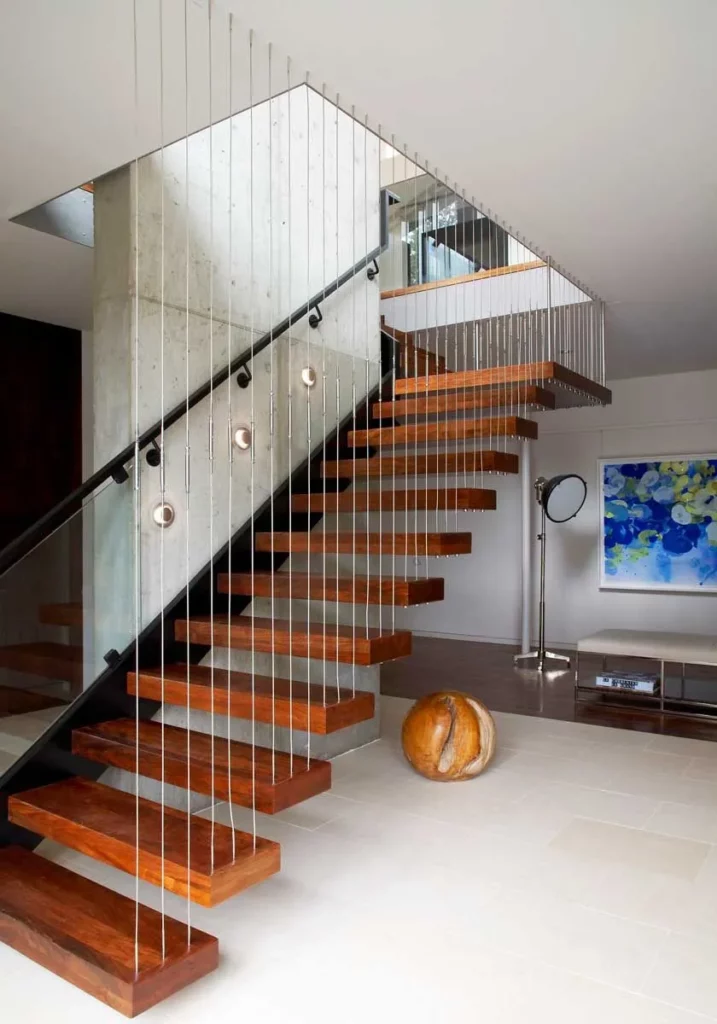
Floating iron stairs, characterized by their seemingly unsupported design, have become a hallmark of modern architectural elegance, offering an unparalleled sense of openness and luxury. These structures typically rely on either a cantilever system, where each step extends from a load-bearing wall, or a suspension system, utilizing vertical tension cables anchored to the ceiling. While the visual effect of steps appearing to defy gravity is undeniably captivating, achieving this aesthetic marvel demands an unyielding commitment to rigorous structural engineering and material science. The illusion of lightness belies a complex hidden anatomy, where physics cannot be compromised for design. A thorough understanding of their structural requirements, potential failure modes, and stringent construction standards is paramount to ensure the safety and longevity of these architectural statements within residential or commercial spaces. This article delves into the intricate mechanics, potential risks, and essential prerequisites for constructing floating stairs safely and effectively, providing a comprehensive guide for homeowners, architects, and contractors alike.
The Allure of the Levitation Effect: Aesthetic Dominance in Modern Design
The surging popularity of floating stairs is intrinsically linked to contemporary architectural trends that prioritize spatial efficiency, minimalism, and an expansive feel. In an era where open-plan living dominates, these stairs serve as more than just a functional connector between floors; they become a sculptural element, a focal point that commands attention upon entry. Their design, often devoid of visible risers or cumbersome under-structures, allows natural light from windows or skylights to penetrate deeper into the interior, enhancing brightness and promoting better air circulation. Psychologically, the absence of bulky supports contributes to a perception of greater spatial volume, making rooms feel larger and more unencumbered than their actual dimensions. This visual transparency offers unparalleled design flexibility, allowing the space beneath the stairs to be creatively utilized for features such as indoor gardens, serene koi ponds, or integrated seating areas, further elevating the property’s aesthetic and functional value. The initial impression of entering a space graced by a floating staircase is often one of sophistication and bespoke luxury, instantly setting a premium tone for the entire dwelling.
Architectural Vision Meets Structural Reality: Understanding the Mechanics
At the heart of any floating stair design lies a sophisticated interplay of forces, primarily managed through either a cantilever or suspension system. In a cantilevered design, each step acts as a beam fixed at one end (the wall) and free at the other. When a person steps on the outer edge, it creates a significant bending moment and shear force at the connection point to the wall, attempting to twist and pull the step away. This torsional stress is the critical challenge. For a suspension system, the outer edge of each step is connected by vertical cables or rods to an overhead structural beam, transferring the load upwards. While visually distinct, both systems necessitate an exceptionally robust supporting structure. Structural engineers emphasize that the integrity of the floating stair is not primarily determined by the visible steps themselves, but by the unseen load-bearing elements. For cantilevered stairs, this means the adjacent wall must be specifically engineered to absorb and distribute these concentrated forces. Industry standards, such as those outlined by the American Society of Civil Engineers (ASCE) or local building codes, mandate precise calculations to determine the maximum anticipated live loads (people, furniture) and dead loads (stair materials) to prevent deflection and catastrophic failure.

The Invisible Backbone: Essential Structural Requirements
The crucial component in a cantilevered floating stair is invariably the load-bearing wall to which the steps are anchored. This is not merely a partition but an integral structural element designed to withstand immense stress. Conventional brick or lightweight block walls are entirely unsuitable for this purpose. Their inherent material properties lack the compressive strength and tensile resistance required to counteract the significant twisting moments and pull-out forces exerted by each step. Structural engineering best practices recommend a solid reinforced concrete wall with a minimum thickness of 15-20 cm. This allows for adequate embedment depth for reinforcing steel (rebar) and provides the necessary mass and rigidity. Alternatively, a concealed heavy-duty steel framework, typically utilizing Wide Flange (WF) or H-Beam profiles, can be integrated within a non-load-bearing wall. This steel skeleton then becomes the primary load-bearing element, distributing forces vertically to the foundation.
Beneath the finished surface, the true complexity of the design unfolds. Engineers commonly specify the installation of thick steel plates, often at least 12 mm in thickness, diagonally aligned with the stair’s inclination. These primary plates are not merely bolted; they are either chemically anchored into solid concrete with high-strength epoxies, forming a bond stronger than the concrete itself, or directly welded to the existing reinforcing steel within a concrete wall. From these main plates, individual steel arms—typically fabricated from thick hollow sections (Hollow Structural Sections or HSS) or precisely bent steel plates—are welded perpendicular to the main plate, extending through the wall’s finished surface to support each tread. The quality of these welds is paramount; they must be full penetration welds, meticulously executed by certified welders, free from porosity or imperfections. This intricate internal framework ensures that the load from each individual step is evenly distributed across a wider section of the load-bearing wall, mitigating localized stress concentrations that could otherwise lead to premature cracking or structural distress in the surrounding masonry.
Beyond Aesthetics: Common Failure Modes and Their Prevention
Understanding the potential modes of failure is critical for both design and construction oversight. These scenarios underscore why adherence to engineering specifications is non-negotiable:
- Anchor Pull-out: This is arguably the most dangerous failure mode, as it can occur suddenly without significant prior warning. It typically happens when inadequate anchoring methods, such as standard expansion bolts (dinabolt), are used in weak or non-structural substrates like standard brick or hollow block. The forces exerted by the cantilevered step exceed the shear and pull-out strength of the anchor-substrate interface. Prevention involves using high-performance chemical anchors embedded deep into solid reinforced concrete or structural steel, creating a monolithic bond.
- Excessive Deflection or Vibration: While not immediately catastrophic, a stair that visibly bounces or vibrates underfoot creates a sense of instability and can be disorienting or nauseating. This is a common issue when the supporting arms or the steps themselves are insufficiently stiff or thick. Building codes often specify maximum allowable deflections (e.g., L/360 or L/240 of the span for residential stairs) to ensure comfort and serviceability. Increasing the thickness of the steel arms or incorporating stiffeners can significantly reduce unwanted dynamic responses.
- Weld Material Fatigue: Steel structures subjected to repetitive loading cycles over many years can experience microscopic cracking at weld points, especially if the welds are shallow, poorly executed, or made with incompatible filler materials. These cracks propagate slowly, eventually leading to a brittle fracture. Prevention necessitates using appropriate welding procedures (e.g., AWS D1.1 standards), employing certified welders, and specifying correct weld wire and joint preparation. Non-destructive testing methods like ultrasonic or radiographic inspection can be used for critical welds.
- Torsion/Twisting of Treads: Wide steps, particularly those exceeding 90-100 cm in width, generate substantial torsional forces at their connection point to the wall. If the supporting steel arm is a simple rectangular hollow section, it may not possess sufficient torsional rigidity. Over time, the outer edge of the tread can visibly sag or twist downwards. Solutions include using two parallel steel arms per tread, employing robust round pipes or square sections with greater torsional resistance, or designing the step itself as a torsion box section.
- Hidden Corrosion: In humid environments, outdoor installations, or coastal areas, moisture can infiltrate the small gaps between the steel structure and the plaster or finishing material. Poor ventilation in these concealed spaces can accelerate galvanic corrosion, compromising the structural integrity of the embedded steel over time. Comprehensive anti-corrosion treatments, including hot-dip galvanization, zinc-rich primers, and high-performance epoxy coatings, must be applied to all embedded steel components before they are encased in concrete or plaster. Regular inspections for rust stains on the finished wall surface can be an early indicator.
Ensuring User Confidence: Ergonomics and Psychological Safety

Beyond structural integrity, the user experience and psychological comfort are crucial. Humans instinctively seek solid footing, especially when ascending or descending. An overly slender or visually fragile floating stair can evoke a subconscious sense of panic or vertigo. The gap between individual treads is another critical factor; local building codes often specify a maximum opening of 10-12 cm to prevent children’s heads or feet from slipping through, a standard widely adopted for safety. Furthermore, while a 1 cm thick steel tread might be technically sound, cladding it with a 5 cm thick timber block can provide a visual illusion of robustness that significantly enhances user confidence and makes the stair feel more secure.
The role of railings and handrails, often seen as secondary design elements, is structurally significant. While minimalist aesthetics might tempt homeowners to omit them, this is a dangerous practice. Railings not only prevent falls but also contribute to the overall stability of the stair system by creating a rigid frame that reduces deflection and vibration, especially if the outer edge of the steps is rigidly connected to a sturdy balustrade. For those committed to a transparent aesthetic, installing full-height, tempered-laminated glass panels (typically 12-15 mm thick) from the treads to the ceiling can serve as both a safety barrier and a structural stiffener, preventing the cantilevered edges from deflecting downwards.
Precision Craftsmanship: The Fabrication and Installation Journey
The successful execution of floating stairs is a multi-disciplinary endeavor involving architects, structural engineers, and specialized fabricators. The process begins with detailed structural calculations and architectural drawings, which are then translated into highly precise shop drawings by the fabricator. These drawings meticulously detail every connection, weld specification, material thickness, and anchoring method.
Fabrication typically occurs in a controlled workshop environment, where steel plates are cut using advanced laser or plasma cutting machines to ensure clean, precise edges, minimizing heat-affected zones that could compromise material integrity. Manual flame cutting, while cheaper, can induce localized stress and micro-cracks. Components are then welded and assembled in jigs to maintain tight tolerances before being transported to the site.
On-site installation requires meticulous coordination. Crucially, any embedded anchor plates or structural steel elements for the stairs must be installed concurrently with the civil contractor’s concrete pouring schedule for the load-bearing wall. This ensures perfect integration with the reinforced concrete structure. Load testing, often involving two adults gently jumping on an initial step before all treads are installed, is a vital quality assurance step to verify the stair’s structural response and identify any undue deflection or vibration. Furthermore, the strategic placement of neoprene rubber pads at connection points can effectively dampen impact noise, preventing footsteps from resonating through the wall into adjacent rooms.

The Investment Perspective: Cost, Time, and Long-Term Value
It is important for prospective homeowners to understand that floating stairs represent a significant investment. Their construction costs can be two to three times higher than conventional cast-in-place concrete stairs. The primary cost drivers include:
- Specialized Engineering: Extensive structural design and analysis.
- High-Strength Materials: Reinforced concrete, specialized structural steel (ASTM A36 or SNI SS400), and high-performance chemical anchors.
- Skilled Labor: Certified welders, experienced steel fabricators, and precise installers.
- Complex Fabrication: Precision cutting, welding, and assembly in a controlled environment.
- Rigorous Quality Control: Testing and inspection.
The project timeline is also considerably longer due to the intricate design, off-site fabrication, and precise on-site installation requirements. Attempting to cut corners by reducing steel plate thickness, using inferior anchoring hardware, or opting for uncertified labor can have catastrophic consequences, vastly outweighing any initial savings. The investment in floating stairs should be viewed as an enhancement to the property’s architectural distinction, aesthetic appeal, and potentially its market value, but always underpinned by an uncompromising commitment to safety and structural integrity.
Enhancing the Experience: Lighting and Material Integration
Thoughtful integration of lighting is essential for both aesthetic enhancement and nighttime safety. LED strips discreetly embedded within the underside of each tread can create a captivating "floating" effect, casting a soft glow that highlights the architectural form and illuminates the path below. Alternatively, strategically placed wall-mounted lights alongside each step can create dramatic shadow play, emphasizing the texture of wood or metal. Planning for electrical conduits and wiring must occur during the initial design phase, with cables cleverly concealed within hollow steel sections before cladding.
Material finishes also play a crucial role in the overall aesthetic and user experience. While exposed steel can impart an industrial or minimalist vibe, it can also make a space feel cold and contribute to noticeable footfall noise. Wrapping the steel structure with solid hardwoods like Teak (Jati) or Merbau not only adds warmth and visual richness but also acts as an acoustic dampener. When combining disparate materials like steel and wood, it is vital to incorporate expansion gaps, as these materials expand and contract at different rates with temperature fluctuations, preventing cracking or warping of the cladding. Other luxurious options include natural stone or marble, but their significant weight must be meticulously factored into the structural calculations from the outset to avoid overloading the supporting system.

Sustaining Elegance: Long-Term Maintenance and Monitoring
Like any complex architectural feature, floating stairs require diligent long-term maintenance. Regular inspections, particularly during the first year of occupancy, are crucial. Minor hairline cracks in the paint or plaster around the base of the stair’s wall connection are often normal, indicative of slight structural movement. However, if plaster begins to crack excessively, chip, or peel, it signals that the deflection or movement exceeds acceptable limits, warranting immediate consultation with a structural engineer. Wooden treads require periodic re-finishing to maintain their luster and protect against wear and tear. For stairs utilizing a cable suspension system, the tension of the steel cables should be professionally checked and adjusted every two years, as steel cables can gradually stretch under sustained load.
Conclusion: The Imperative of Expert Collaboration
The enduring appeal of floating stairs lies in their ability to transform a functional element into a breathtaking work of art. However, this architectural ambition must always be anchored in sound engineering principles. The journey from conceptual design to a safe, stunning reality demands a harmonious collaboration between visionary architects, meticulous structural engineers, and highly skilled fabricators and installers. Relying solely on aesthetic inspiration from photographs, without the rigorous backing of structural calculations and expert execution, is a dangerous gamble. Homeowners are strongly advised to engage certified structural engineers to meticulously calculate loads and design the supporting structure, and to select contractors with a proven track record in similar complex projects. Ultimately, the transparent beauty of a floating staircase is priceless only when it inspires awe, not apprehension, with every confident step taken.