Lina Irawan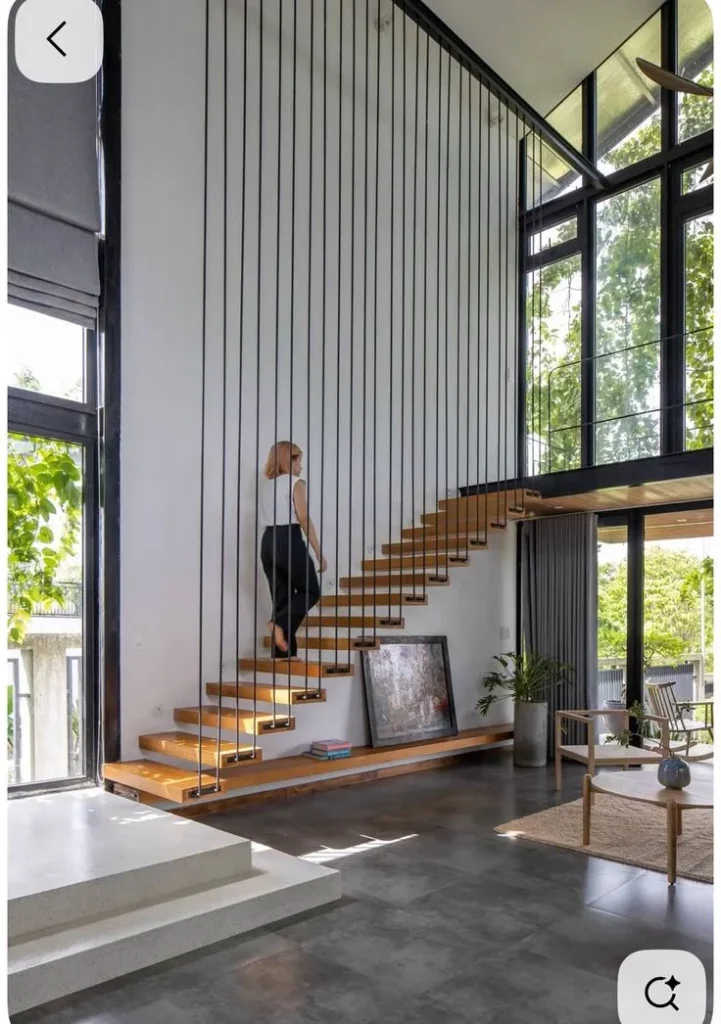
For homeowners and designers alike, the selection of staircase materials often presents a dilemma: prioritize structural integrity or visual elegance? The contemporary solution, increasingly favored in modern architecture, marries the robust strength of steel frames with the inviting warmth of wooden treads, effectively addressing both imperatives. This sophisticated fusion not only guarantees exceptional load-bearing capacity and longevity but also introduces a distinctive aesthetic that enhances the overall ambiance of a space. Far from being a mere functional element, a wood and steel staircase transforms into a prominent design feature, elevating property value and optimizing interior flow.
The Architectural Rationale: Why Experts Endorse This Combination
Leading architects and interior designers consistently recommend the wood and steel combination due to its inherent versatility and superior performance characteristics. Steel, renowned for its high tensile strength and precision engineering capabilities, forms a resilient skeletal structure capable of spanning significant lengths without requiring numerous supporting columns. This structural efficiency allows for more open and expansive under-stair areas, offering valuable real estate for storage, integrated workspaces, or decorative displays—a critical advantage, particularly in compact urban dwellings or minimalist designs where every square inch counts.
Conversely, wood contributes an organic warmth and tactile quality that steel alone cannot provide. Its natural grain patterns and varied hues inject an element of biophilic design, softening the often-perceived starkness of metal. Beyond aesthetics, wood treads offer superior sound dampening compared to solid metal or concrete, reducing the audible impact of footsteps and contributing to a quieter indoor environment. This harmonious interplay of contrasting materials—the industrial precision of steel meeting the earthy charm of wood—creates a dynamic focal point that captivates attention upon entry, redefining the staircase from a utilitarian passage to an artful installation.
Evolution of Design Trends: A Historical Context

The popularity of wood and steel staircases is deeply rooted in the broader evolution of modern interior design. The early 20th century saw the rise of industrial aesthetics, celebrating raw materials and exposed structural elements. As urban living intensified and spaces became more constrained, minimalist design philosophies gained traction, emphasizing clean lines, functional efficiency, and uncluttered environments. The fusion of wood and steel perfectly aligns with these movements. Steel, with its ability to be fabricated into slender yet strong forms, allowed for "floating" or open-riser staircases that minimized visual bulk, enhancing light penetration and air circulation—a significant benefit in homes with limited natural light or smaller footprints. Wood, meanwhile, offered a counterbalance, preventing spaces from feeling overly cold or sterile, bridging the gap between utilitarianism and comfort. This design synergy became particularly prominent in the late 20th and early 21st centuries, establishing itself as a hallmark of contemporary residential and commercial architecture.
Understanding the Trade-offs: Advantages and Challenges in Detail
While the wood and steel combination offers compelling benefits, a thorough understanding of its inherent trade-offs is crucial for informed decision-making and project success. Addressing potential challenges during the planning phase can prevent costly rectifications down the line.
1. Aesthetics: Warmth vs. Industrial Coolness
Wood intrinsically introduces a sense of warmth and natural elegance, its unique grain patterns adding character and softening the hard lines often associated with modern interiors. However, an overly exposed or thick steel frame can inadvertently dominate, risking a stark, factory-like ambiance that overshadows the organic beauty of the wood. The design challenge lies in achieving a delicate balance. Architects often recommend using thinner, yet structurally robust, steel plates or hollow sections for the frame to maintain a sleek profile. This minimalist approach allows the wood treads to remain the primary visual element, ensuring that the industrial undertone complements rather than overwhelms the overall aesthetic. Selecting a matte black or white finish for the steel frame often helps it recede visually, further emphasizing the wood.
2. Structure and Space: Slenderness vs. Material Weight
Steel’s exceptional strength-to-weight ratio allows for the creation of remarkably slender and elegant stair structures that minimize visual obstruction and maximize perceived space. This is particularly advantageous for open-concept layouts or homes with limited square footage. However, the inherent density of steel means that even a slender frame can be significantly heavy. This substantial weight necessitates meticulous structural planning. Standard gypsum board or lightweight concrete block (hebel) walls are typically insufficient to anchor such a structure without specialized reinforcement. Contractors must often integrate additional steel columns or reinforced concrete members within the main structural walls of the house before the staircase is installed. Failure to do so can lead to structural instability, wall damage, or, in severe cases, catastrophic failure. Therefore, precise engineering calculations and robust anchoring systems are non-negotiable for safety and longevity.
3. Longevity and Maintenance: Durability vs. Ongoing Care
Both solid wood and high-quality steel boast impressive longevity when properly maintained. Steel frames, protected by appropriate coatings, can endure for decades, resisting corrosion and structural fatigue. Similarly, well-selected and treated hardwood treads can withstand daily foot traffic for many years. However, this material pairing demands a proactive maintenance regimen. Wood, being an organic material, is susceptible to moisture fluctuations, scratches from footwear, and pest infestations (like termites) if its protective finish is compromised. Regular cleaning, timely refinishing, and pest control are essential. Steel, particularly in humid or coastal environments, requires periodic inspection for rust, especially at welded joints or areas where the protective coating might be chipped. Prompt touch-ups with anti-corrosion paint are critical to prevent widespread deterioration. Neglecting these routine checks can significantly shorten the lifespan of the staircase and compromise its aesthetic appeal.

4. Integration with Interior Styles: Versatility vs. Visual Dominance
The wood and steel combination is remarkably adaptable, seamlessly integrating with a diverse range of interior styles, from industrial and rustic to modern minimalist and Japandi. Its clean lines and natural elements make it a versatile choice. However, a poorly conceived design can result in a staircase that visually overwhelms the room, detracting from other carefully curated furniture or architectural features. To prevent this visual imbalance, designers often recommend aligning the steel frame’s color with the room’s wall paint or opting for subtle, neutral tones like matte black, charcoal gray, or pristine white. These colors allow the staircase to integrate more cohesively with the background, letting the natural texture of the wood treads provide the primary visual interest without competing for dominance.
Optimizing for Specific Spaces
Minimalist Homes: A Perfect Fit
Minimalist design principles, which advocate for simplicity, functionality, and the elimination of superfluous elements, find an ideal expression in wood and steel staircases. The inherent strength of steel allows for extremely slender stringers (the main support beams), often reduced to a single central beam (mono-stringer) or even a cantilevered system. This minimalist structural approach creates the illusion of floating treads, enhancing the sense of lightness and openness. The absence of traditional risers (the vertical panels between treads) further contributes to this ethereal quality, allowing light to penetrate freely and improving air circulation. This design choice not only visually expands the space but also simplifies cleaning and maintenance, aligning perfectly with the minimalist ethos of less is more.
Apartments and Mezzanines: A Smart Solution
In urban apartments, particularly loft or studio configurations with mezzanines, space is a premium. Traditional reinforced concrete staircases are often impractical due to their significant footprint and immense dead weight, which can pose structural challenges and violate building regulations. Wood treads on a lightweight steel frame offer an intelligent alternative. The modular nature of steel fabrication allows components to be pre-cut and welded off-site in workshops, then transported and bolted together within the apartment unit. This "dry" installation process minimizes on-site mess, dust, and disruption—a major advantage in occupied buildings. Furthermore, the open design typical of these staircases liberates the under-stair area, transforming it into valuable, usable space for compact home offices, integrated storage units, or display shelving, maximizing the utility of every square foot.
Exploring Design Variations
The malleability of steel, combined with wood’s natural appeal, opens up a myriad of design possibilities beyond the conventional straight flight.

- Straight Stairs: The most common and cost-effective, ideal for long, narrow spaces.
- L-shaped and U-shaped Stairs: Incorporate a landing (bordes), providing a resting point and breaking up the visual linearity. These are often placed near windows to maximize natural light.
- Spiral Stairs: A space-saving marvel, where a central steel pole acts as a pivot, and the wooden treads radiate outwards like fan blades. These are particularly striking as sculptural elements.
- Zig-zag (or Sawtooth) Stairs: For a bold industrial aesthetic, the steel frame mimics the profile of the treads and risers, creating a distinctive jagged silhouette from the ground floor to the top.
- Cantilevered Stairs: Perhaps the most dramatic, where treads appear to float directly from the wall with no visible support underneath, achieved by embedding robust steel cantilevers into the structural wall.
Choosing the Right Wood for Treads: A Critical Decision
The selection of wood for stair treads is paramount, as this component endures dynamic loads and constant abrasion. Only solid hardwood is suitable; engineered wood products like MDF or plywood are prone to warping, delamination, and rapid deterioration when exposed to moisture or heavy impact.
- Teak Wood (Kayu Jati): Revered for its exceptional durability, natural oils that impart resistance to termites and rot, and remarkable dimensional stability. Teak’s distinctive grain patterns and warm golden-brown hues exude luxury, making it a premium choice. Its Janka hardness rating typically ranges from 1,000 to 1,155 lbf.
- Merbau Wood (Kayu Merbau): An excellent alternative for those favoring darker tones, Merbau boasts a hardness comparable to or exceeding Teak (Janka hardness 1,800-1,900 lbf). Its deep reddish-brown color pairs exquisitely with matte black steel frames, creating a sophisticated and bold statement. It’s also known for its good resistance to insects and decay.
- Bangkirai Wood (Kayu Bengkirai): Often used in heavy-duty outdoor decking due to its extreme toughness and resistance to weathering. Bengkirai (Janka hardness 1,790 lbf) provides exceptional resilience for indoor stair treads, ensuring they remain uncracked and stable even under frequent heavy use. Its lighter, yellowish-brown tone can be stained to various finishes.
- White Oak (Ek Putih): A popular choice for Scandinavian, Japandi, and contemporary interiors, White Oak (Janka hardness 1,360 lbf) features an appealing straight grain and a lighter, neutral color palette. It readily accepts various stains and finishes, allowing for customization to match specific interior schemes while offering excellent durability and stability.
Technical Specifications for a Safe Steel Frame
A visually appealing design must always be underpinned by sound engineering and robust material specifications.
- Hollow Section Steel (Pipa Kotak): Commonly used for its strength and clean lines. For the main stringers (the primary load-bearing beams), a minimum wall thickness of 2.5 mm to 3 mm is recommended to prevent deflection and ensure stability. Thinner sections can lead to noticeable flex or vibration under load.
- Solid Plate Steel (Plat Besi): For designs incorporating folded or "ribbon" plate stringers, a plate thickness of 8 mm to 10 mm is advisable. Thinner plates will cause the staircase to feel springy and unstable.
- Tread Supports: The individual plates or brackets supporting the wooden treads can be thinner, typically 4 mm, provided they are adequately welded to the main stringer.
- Welding Standards: All connections must be full-perimeter welds, not merely spot welds. This ensures maximum joint strength and structural integrity, crucial for preventing stress concentrations and premature failure. Adherence to recognized welding standards (e.g., AWS D1.1 for structural steel) is vital.
- Anchoring: Connection points to the building’s main structure must be robust, often involving chemical anchors, expansion bolts, or direct welding to embedded steel plates.
The Crucial Role of Finishing: Enhancing Durability and Aesthetics
The finishing process is not merely cosmetic; it is fundamental to the longevity and performance of both the steel frame and wooden treads.

- Steel Frame Finishing:
- Powder Coating: The superior choice for steel. This electrostatic application of dry powder paint, followed by heat curing in an oven, creates an exceptionally durable, chip-resistant, and corrosion-proof finish. It offers a uniform, smooth surface without brush marks and is available in a vast array of colors and textures.
- Epoxy Primer + Polyurethane (PU) Topcoat: For larger staircases that cannot fit into a powder coating oven, a high-quality epoxy anti-corrosion primer is essential. This base layer provides critical rust protection. It should then be top-coated with a polyurethane (PU) paint, known for its excellent hardness, abrasion resistance, and color retention, offering a robust barrier against impact and environmental factors.
- Wood Tread Finishing:
- Avoid Glossy Varnishes: High-gloss finishes, while visually striking, create a dangerously slippery surface, especially when wet or walked on with socks. This poses a significant safety hazard.
- Matte or Doff Finishes: These are strongly recommended. They provide better slip resistance, maintain the natural tactile feel of the wood, and allow the intrinsic beauty of the grain to show through without excessive sheen. Options include low-VOC (Volatile Organic Compound) polyurethane, oil-based finishes (which penetrate and protect the wood from within), or hardwax oils, which offer a natural look and are easy to repair locally. Slip resistance ratings (e.g., R9-R13) should be considered, especially for public-facing staircases.
Installation Best Practices: Ensuring Seamless Integration
Successfully integrating wood and steel requires meticulous attention to detail, particularly given their differing thermal expansion rates.
- Thermal Expansion Gaps: Do not rigidly fasten wood treads directly to the steel frame with tightly secured screws. Instead, drill slightly oversized bolt holes in the steel plates. This small allowance permits the wood to expand and contract with changes in temperature and humidity without cracking or splitting. Using slotted holes for fasteners can also accommodate movement.
- Sound Dampening: To mitigate the metallic clang or creaking that can occur with direct wood-on-steel contact, insert thin rubber pads, neoprene strips, or an appropriate construction-grade sealant between the steel support plates and the underside of the wooden treads. These acoustic isolators effectively absorb vibrations, ensuring a quieter and more pleasant user experience.
- Phased Wood Installation: Erect the steel frame early in the construction process. However, store the pre-finished wooden treads in a climate-controlled, protected environment. Install the treads as one of the final steps, once all heavy construction, painting, and tiling are complete. This prevents damage from dropped tools, paint spills, cement splatter, or foot traffic from construction workers, preserving the pristine condition of the wood.
Safety and Ergonomics Standards: Beyond Aesthetics
While aesthetics are important, adherence to safety and ergonomic standards is paramount for any staircase. These standards are often enshrined in local building codes (e.g., International Building Code (IBC) in the US, or national standards in other regions).
- Tread Depth (Antrade): An ideal tread depth for comfortable and safe ascent/descent is between 25 cm and 30 cm (approximately 10-12 inches). This ensures that an adult’s entire foot can comfortably rest on the tread without overhang, reducing the risk of slips or falls.
- Riser Height (Optrade): The vertical rise of each step should be consistently between 15 cm and 19 cm (approximately 6-7.5 inches). Heights exceeding this range can make the stairs feel overly steep and strenuous, causing fatigue. Inconsistent riser heights are a major tripping hazard.
- Stair Width: The clear width of the stair path should be a minimum of 80 cm to 90 cm (approximately 31-35 inches). This allows two people to comfortably pass each other or for furniture to be carried up and down without excessive difficulty.
- Open Risers and Child Safety: For open-riser staircases (without vertical risers), building codes often mandate a maximum gap of 10 cm (4 inches) between treads. This prevents small children or pets from slipping through the opening and minimizes the risk of falls.
- Handrails and Guardrails: Handrails should be continuous and graspable, typically at a height of 86 cm to 96 cm (34-38 inches). Guardrails (balustrades) for open sides must prevent falls, with vertical spacing between balusters typically not exceeding 10 cm (4 inches) to prevent a child’s head from passing through.
Routine Maintenance for Lasting Appeal
Maintaining a wood and steel staircase is straightforward with the right approach:

- Wood Treads: Avoid using soaking wet mops, as excessive moisture can warp, swell, or damage the wood and its finish. Instead, use a slightly damp microfiber cloth or a specialized wood floor cleaner spray. Promptly wipe up any spills. Periodically inspect for scratches or wear spots, and consider professional refinishing every few years, depending on traffic.
- Steel Frame: Regularly dust the frame with a soft cloth. Annually, inspect all welded joints and painted surfaces for any signs of rust or chipped paint. If rust spots appear, gently sand the affected area with fine-grit sandpaper, clean thoroughly, and apply a rust-inhibiting primer followed by a matching topcoat. For bolted connections, check for any loosening due to vibrations from foot traffic and tighten as necessary.
- Screws and Fasteners: At least once a year, check the tightness of all screws and bolts securing the wooden treads to the steel frame. Minor shifts and vibrations over time can cause fasteners to loosen, leading to creaking or instability.
Estimating and Allocating Budget: A Financial Overview
The cost of a wood and steel staircase varies significantly based on design complexity, material choices, and labor rates. Broadly, the fabrication and installation of the steel frame (including welding, finishing, and structural reinforcement) typically account for 40% to 50% of the total budget. The remaining portion covers the cost of solid hardwood treads, precision cutting, and specialized finishing applications.
Premium hardwoods like solid Teak or Merbau will naturally command a higher price point due to their rarity, durability, and aesthetic appeal, but they offer unparalleled luxury and longevity. For projects with budget constraints, alternative hardwoods such as Sungkai or Mindi can provide excellent performance and aesthetics at a more accessible cost. Furthermore, simplifying the design of the steel frame—opting for straight, minimalist lines rather than intricate curves or complex zig-zag patterns—can substantially reduce fabrication time and labor costs from the welding workshop. Investing in a credible fabricator and experienced installer is crucial, as the quality of craftsmanship directly impacts both safety and long-term durability.
Frequently Asked Questions (FAQ)
1. Is a steel frame prone to noise when stepped on?
No, not if properly installed. The strategic placement of thin rubber or neoprene pads between the wooden treads and the steel support plates effectively dampens vibrations and eliminates metallic sounds or creaking, ensuring a quiet ascent and descent.
2. What is the ideal thickness for wooden stair treads?
For structural integrity and to prevent bowing or warping, solid hardwood treads should be between 3 cm and 4 cm (approximately 1.2 to 1.6 inches) thick. This thickness is particularly crucial for open-riser or cantilevered designs where the treads receive support only at their ends.

3. Is an open-riser staircase safe for toddlers?
While aesthetically pleasing, open-riser stairs can pose a safety risk for toddlers. To ensure safety, local building codes often mandate that the vertical gap between treads must not exceed 10 cm (4 inches). This prevents a child from slipping through the opening. Additionally, installing a robust handrail and balustrade system is essential.
4. Can this type of staircase be disassembled and relocated?
Yes, often. One of the significant advantages of modular steel construction is its inherent portability. If designed with high-tensile bolted connections rather than permanent welds, the steel frame can be disassembled into sections, transported, and reassembled in a new location, offering remarkable flexibility for homeowners.
Conclusion
The integration of wood and steel in staircase design represents a sophisticated and highly functional choice for modern homes. This harmonious blend skillfully marries the raw strength and industrial elegance of steel with the organic warmth and timeless beauty of wood. The result is a staircase that not only serves as a safe and reliable passage between levels but also stands as a captivating architectural statement, enhancing light flow, optimizing space, and significantly contributing to the overall aesthetic and value of a property. Meticulous planning, adherence to technical specifications, and engagement with skilled professionals—from structural engineers to experienced fabricators and installers—are key to realizing a staircase that is both visually stunning and enduringly safe.