Nila Kartika Wati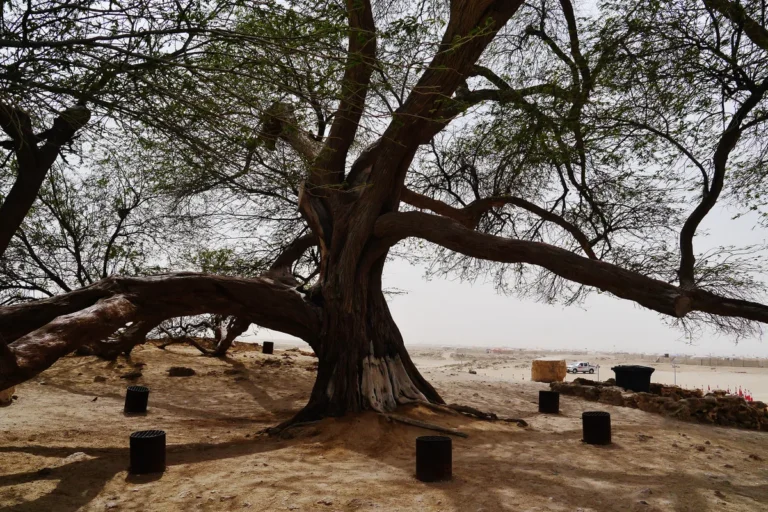
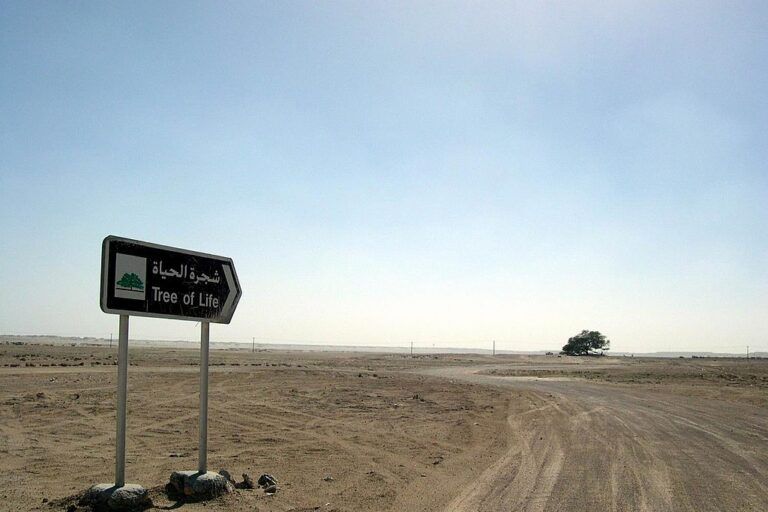
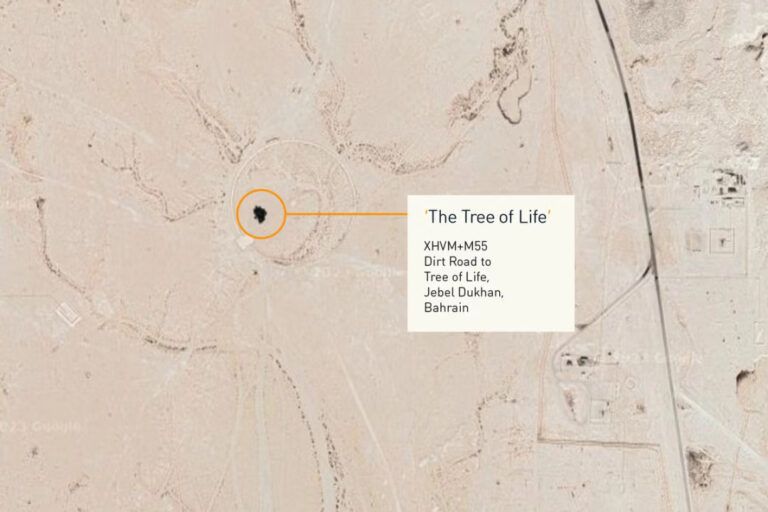
Standing as a solitary emerald sentinel amidst the vast, sun-bleached expanses of the Arabian Desert, the Tree of Life, or Shajarat al-Hayat, continues to defy the fundamental laws of botany and the harsh realities of its environment. Located approximately 40 kilometers from Manama, Bahrain’s capital, and six kilometers from the island’s highest point, Jebel Dukhan, this 9.75-meter-tall Prosopis cineraria has flourished for over four centuries without any apparent source of water. In a region where annual rainfall rarely exceeds 80 millimeters and surface vegetation is virtually non-existent for miles in every direction, the tree’s survival is not merely a biological feat but a subject of intense scientific scrutiny and local folklore. For hundreds of years, this lone organism has remained a symbol of endurance, prompting questions that range from the geological to the mystical, as researchers struggle to pinpoint exactly how it maintains its lush, green canopy in one of the most inhospitable climates on Earth.
The Botanical Profile of Prosopis cineraria
The Tree of Life belongs to the species Prosopis cineraria, a member of the Fabaceae (legume) family. In the United Arab Emirates and Oman, this species is known as the Ghaf tree, where it is revered as the national tree and a vital component of the desert ecosystem. While the species is native to arid portions of Western Asia and the Indian subcontinent, the Bahraini specimen is unique due to its extreme isolation. Most Prosopis cineraria grow in clusters or near oases where the water table is relatively accessible. In contrast, the Shajarat al-Hayat stands atop a 25-foot-high sandy hill, far removed from any other visible life forms, making its 400-year lifespan an anomaly that challenges traditional understandings of desert flora.
Physiologically, the tree is a masterpiece of evolutionary engineering. Its leaves are bipinnately compound, featuring numerous small leaflets that minimize the surface area exposed to the blistering sun, thereby reducing water loss through transpiration. During periods of extreme heat or prolonged drought, the tree employs a survival mechanism known as defoliation, strategically shedding its leaves to conserve internal moisture. This ability to enter a semi-dormant state allows it to survive temperatures that frequently soar above 50 degrees Celsius (122 degrees Fahrenheit).
The Hydrogeological Mystery: Where Does the Water Come From?
The central question surrounding the Tree of Life has always been the source of its hydration. Several theories have been proposed over the decades, ranging from the scientific to the mythological. Local legends often suggest that the tree is protected by Enki, the ancient Sumerian god of water, or that it marks the site of the original Garden of Eden. However, geologists and botanists provide more grounded explanations.
The most widely accepted scientific theory identifies the tree as a phreatophyte—a plant with a root system that reaches down to the water table. It is estimated that the tree’s taproots extend between 35 and 50 meters below the desert floor. Bahrain’s geological structure consists of porous limestone and underground aquifers, such as the Dammam Aquifer, which have historically provided the island with fresh water via artesian springs. While many of these springs have dried up due to modern industrialization and oil extraction, it is believed that the Tree of Life has successfully tapped into a deep-seated moisture pocket or a hidden branch of an ancient aquifer system.
Beyond the deep taproot, the tree also possesses an extensive lateral root system. These roots spread horizontally just beneath the surface, allowing the tree to capture even the slightest amounts of moisture from rare rainfall or the heavy morning mists that occasionally roll in from the Persian Gulf. Some researchers have even theorized that the tree has adapted to extract moisture from sand grains themselves through a process of molecular suction, though this remains a subject of ongoing debate.
Recent Scientific Breakthroughs: The Role of the Microbiome
While the physical root structure explains the "how" of water access, recent research has shifted focus toward the "how" of nutrient absorption and stress tolerance. In April 2024, a landmark study published in the journal Microbiology Spectrum provided new insights into the microscopic world thriving beneath the Tree of Life. The study utilized metagenomic and metatranscriptomic analysis to examine the microbial communities residing in the tree’s root nodules.
The findings were unexpected. While the root nodules were found to contain over 90% bacterial DNA, the tree itself produced a significantly higher volume of genetic transcripts than the bacteria. This suggests a powerful and active genetic contribution from the tree in managing its symbiotic relationships. The researchers identified several key bacterial genera, including Rhizobium, Agrobacterium, and Ensifer, which live in symbiosis with the tree. These microbes perform the critical task of nitrogen fixation, converting atmospheric nitrogen into a form the tree can use to build proteins and DNA. In the nutrient-poor soil of the Bahraini desert, this microbial partnership is essential for the tree’s sustained growth and its ability to maintain a green canopy year-round.
Furthermore, a 2022 study by researchers at UAE University successfully sequenced the entire genome of Prosopis cineraria. The genomic data revealed an expansion of genes related to terpenoid metabolism. Terpenoids are organic chemicals that play a significant role in a plant’s defense mechanisms, helping it resist pests, diseases, and environmental stressors like heat and UV radiation. This genetic "fortification" likely explains why the Shajarat al-Hayat has remained healthy and free of disease for four centuries, even as other vegetation in the region has perished.
A Chronology of Survival and Human Interaction
The estimated birth of the Tree of Life dates back to approximately 1582, during the era of the Safavid Empire’s influence in the region and shortly before the arrival of European colonial powers in the Persian Gulf. At that time, the landscape of Bahrain was significantly different, with more active natural springs. However, as the centuries progressed and the climate became increasingly arid, the tree remained while the surrounding greenery vanished.
In the 20th century, the tree’s isolation became even more pronounced following the discovery of oil in Bahrain in 1932. The first oil well, Jebel Dukhan No. 1, was located just a few kilometers away. The industrialization of the area led to the construction of roads and pipelines, yet the tree was preserved as a natural curiosity. By the late 20th century, it had become Bahrain’s most famous natural landmark, attracting tens of thousands of tourists annually.
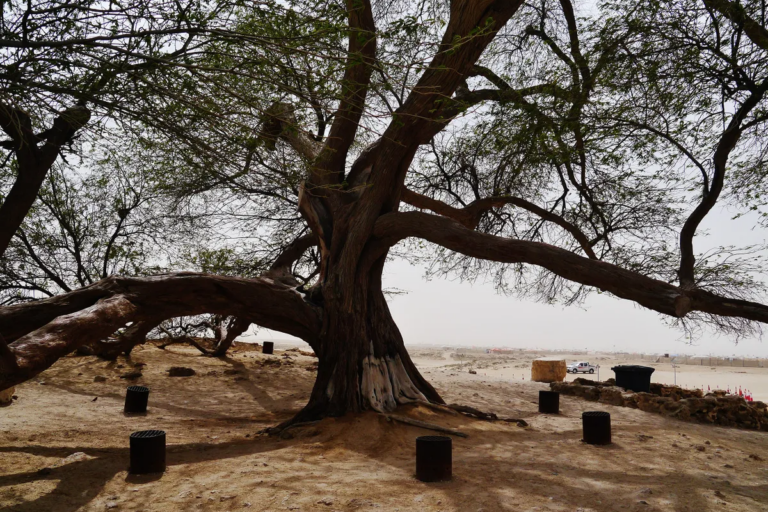
The influx of visitors, however, brought new challenges. For years, the tree was subject to vandalism, with visitors carving names into its bark and leaving trash at its base. In response, the Bahrain Authority for Culture and Antiquities (BACA) took decisive action. In 2013, a protective fence was installed, and a visitor center was constructed to educate the public on the tree’s ecological and historical significance. These measures have helped stabilize the tree’s environment and ensure its continued survival in the face of modern human pressure.
Broader Implications and Ecological Significance
The resilience of the Tree of Life offers more than just a tourist attraction; it provides a blueprint for future environmental conservation and desertification reversal. As climate change accelerates and arid zones expand globally, the genetic and microbial secrets of Prosopis cineraria could be instrumental in developing drought-resistant crops or in reforestation efforts in sub-Saharan Africa and other desert regions.
Agricultural scientists believe that by understanding the specific symbiotic relationships between the tree and its root-zone bacteria, they can "inoculate" other plants to improve their survival rates in poor soils. The tree stands as a living laboratory for "extreme-o-phile" biology, demonstrating that life can not only survive but thrive in conditions that were previously thought to be biologically impossible.
Official Stance and Cultural Impact
The Bahraini government views the Shajarat al-Hayat as a national treasure. Officials from the Ministry of Oil and Environment have frequently highlighted the tree as a symbol of Bahrain’s commitment to preserving its natural heritage amidst rapid economic development. There have been ongoing discussions regarding nominating the Tree of Life for UNESCO World Heritage status, citing its unique status as a natural monument that embodies the intersection of geology, biology, and human history.
"The Tree of Life is more than just a biological wonder; it is a testament to the spirit of Bahrain," noted a representative from the Bahrain Authority for Culture and Antiquities in a recent briefing. "It reminds us that even in the most difficult circumstances, life finds a way. Our goal is to ensure that scientific research continues to unlock its mysteries while we protect its physical integrity for future generations."
Conclusion: An Eternal Symbol of the Desert
As the Tree of Life enters its fifth century of existence, it remains an enigma that bridges the gap between ancient legend and cutting-edge science. Whether its survival is due to a 50-meter-deep taproot, a complex network of nitrogen-fixing bacteria, or a unique genetic predisposition to heat tolerance, the tree continues to inspire awe. In the silent, shimmering heat of the Bahraini desert, the Shajarat al-Hayat stands as a powerful reminder of nature’s tenacity. It is a solitary survivor of a bygone era, a beacon of green in a world of sand, and a profound subject of study for those seeking to understand the limits—and the limitless potential—of life on Earth.