Azin Asro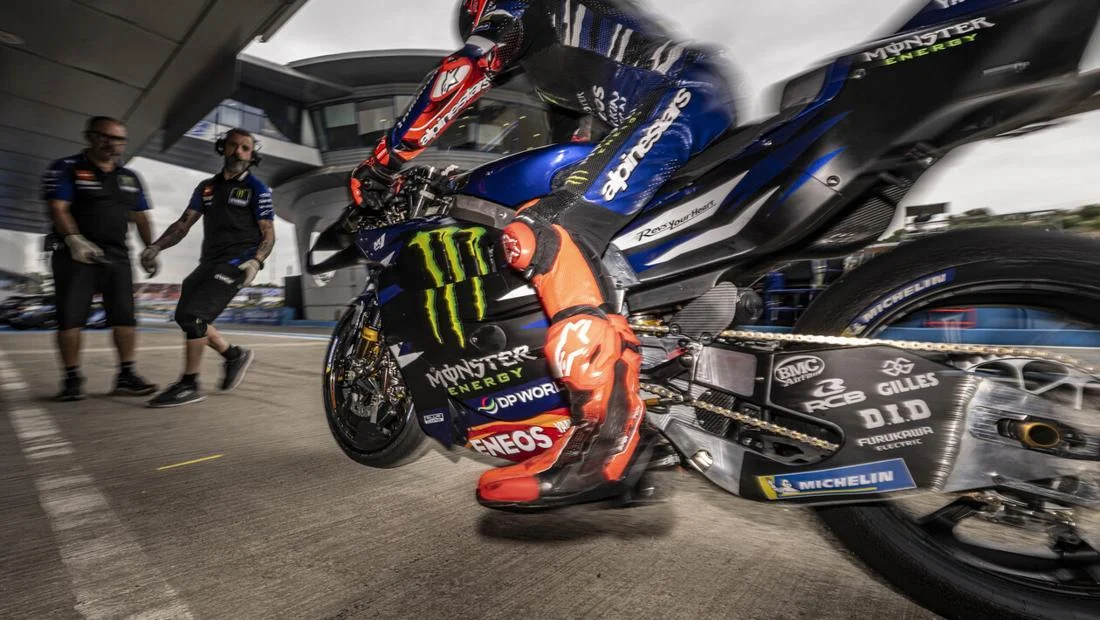
The landscape of modern grand prix motorcycle racing is undergoing a seismic shift, and for Yamaha Motor Co., the transition from its storied past to a high-performance future has proven to be more treacherous than anticipated. As the only manufacturer on the current MotoGP grid still utilizing an Inline-4 engine configuration, Yamaha has officially embarked on a high-stakes project to develop a 1,000cc V4 powerplant. However, recent admissions from senior leadership suggest that the Iwata-based manufacturer has struck a "thick wall" of technical complications. This development bottleneck is not only threatening the timeline for their 2026 resurgence but is also casting a long shadow over their current competitive standing and the loyalty of their premier talent, including former world champion Fabio Quartararo.
Massimo Meregalli, Team Director of Monster Energy Yamaha MotoGP, has broken the silence regarding the internal state of the project, offering a candid assessment that has sent ripples of concern through the paddock. According to Meregalli, the process of migrating to a V4 architecture—a design long championed by rivals Ducati, Aprilia, and KTM—has introduced fundamental engineering challenges that the team did not foresee. These "unexpected paths" have effectively throttled the pace of development at a time when the gap between the Japanese manufacturers and their European counterparts is at an all-time wide.
The Technical Crossroads: Why the V4 Shift is Mandatory
For over two decades, the Yamaha YZR-M1 has been defined by its Inline-4 engine and its "Crossplane" crankshaft. This configuration was the cornerstone of Yamaha’s philosophy, prioritizing corner speed, agility, and a rider-friendly power delivery. This approach yielded legendary success with Valentino Rossi and Jorge Lorenzo, and most recently, Fabio Quartararo in 2021. However, as MotoGP evolved into an era dominated by sophisticated aerodynamics and ride-height devices, the inherent weaknesses of the Inline-4 became glaringly apparent.
In a modern MotoGP race, where "dirty air" makes overtaking in corners nearly impossible, top-end speed and braking stability have become the primary currencies of success. The V4 engine configuration is inherently narrower, allowing for more aggressive aerodynamic packaging, and it typically offers a higher ceiling for peak horsepower. Despite Yamaha’s best efforts to extract more power from the Inline-4—even enlisting the help of former Ferrari Formula 1 engine designer Luca Marmorini—the engine has reached its physical limits. The decision to build a V4 was a realization that to beat Ducati, Yamaha had to stop fighting with a different weapon and start building a better version of the industry standard.
Chronology of a Crisis: From Ambition to Stagnation
The timeline of Yamaha’s current predicament reveals a rapid decline in competitive output. At the start of the 2023 season, Yamaha was already showing signs of struggle, but they managed to maintain a respectable level of mid-field consistency. By the same point in the previous season, the team had secured 42 points in the opening four rounds. In stark contrast, the start of the 2024 campaign has seen the manufacturer plummet to a mere 14 points over the same duration.
This statistical drop is more than just a fluctuation in form; it represents a systemic failure to keep pace with the rapid development cycles of the European manufacturers. While Ducati continues to refine its Desmosedici and Aprilia finds new levels of ground-effect aero efficiency, Yamaha has found itself caught between two worlds. Resources are being split between trying to make the current Inline-4 bike habitable for its riders and the secretive, resource-heavy development of the V4 prototype.
Meregalli’s admission that the team is facing a "slower development process" suggests that the V4 prototype may be encountering issues with heat management, chassis integration, or electronics mapping—areas where the V4 differs significantly from the Inline-4. In the high-pressure environment of MotoGP, a delay of even a few months in the R&D phase can translate to a deficit of several seasons on the racetrack.
The Quartararo Factor and the Honda Rumors
The human cost of this technical stagnation is centered on Fabio Quartararo. The Frenchman, who is widely considered one of the most talented riders of his generation, has become increasingly vocal about his frustration. Quartararo’s riding style is built on precision and high corner entry speeds—traits that the current M1 can no longer support while remaining competitive against the raw power of the V4 machines.
Rumors have intensified within the paddock that Quartararo is exploring options outside of the Yamaha stable. Most notably, links to Honda have emerged. While Honda is also currently struggling in the lower tiers of the standings, the "Golden Wing" manufacturer already possesses a V4 engine architecture and has significantly more financial leverage to overhaul its project. The prospect of Quartararo leaving would be a devastating blow to Yamaha’s prestige and would leave them without a top-tier developmental pilot to guide the new V4 bike through its infancy.
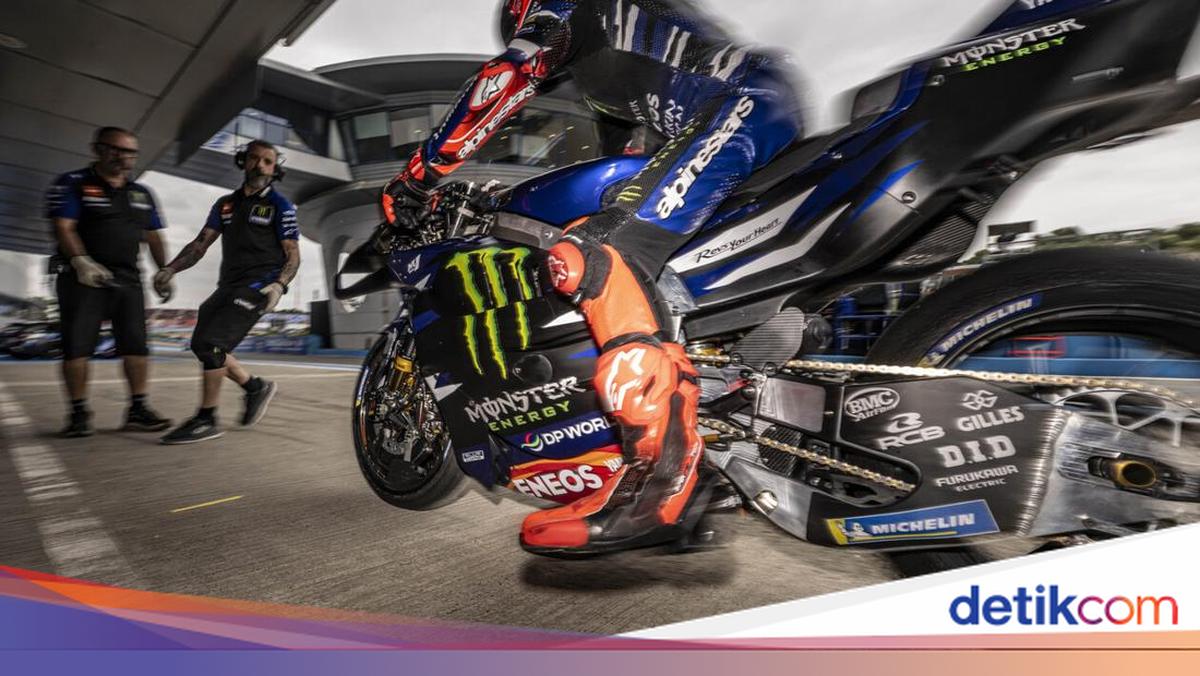
Quartararo’s patience is reportedly wearing thin because the "solutions" promised by Yamaha have yet to materialize on the stopwatch. While Meregalli has attempted to maintain a veneer of optimism, stating that the team expects "different results to appear in the second half of the season," the history of mid-season turnarounds in the current aero-dependent era is sparse.
Comparative Analysis: The European Benchmark
To understand the scale of Yamaha’s "wall," one must look at the benchmarks set by Ducati, Aprilia, and KTM. These three manufacturers have mastered the synergy between V4 power and "downforce" aerodynamics.
- Ducati: The Desmosedici is currently the most balanced bike on the grid, combining immense straight-line speed with a chassis that now turns as well as the old Yamaha.
- Aprilia: The RS-GP has pioneered aerodynamic innovations that use the fairing to create a "venturi effect," pulling the bike into the tarmac during high-speed leans.
- KTM: The RC16 has made massive strides in carbon fiber chassis technology, allowing their V4 engine to deliver power more effectively out of slow corners.
Yamaha is not just trying to build a V4 engine; they are trying to build an entire ecosystem of electronics, chassis flex, and aerodynamics that has taken their rivals over a decade to perfect. The "unexpected path" Meregalli mentioned likely refers to the fact that simply swapping an Inline-4 for a V4 disrupts the entire balance of the motorcycle. The weight distribution changes, the center of gravity shifts, and the way the bike interacts with the spec Michelin tires is completely altered.
Official Responses and Internal Restructuring
In response to the crisis, Yamaha has undergone an internal revolution that is uncharacteristic of traditional Japanese corporate culture. The hiring of Max Bartolini from Ducati as Technical Director marks the first time a European has held such a high-ranking influence over the engineering direction of the M1.
Bartolini’s task is to bridge the gap between the Japanese engineers in Iwata and the racing team in Gerno di Lesmo, Italy. However, even with elite personnel, the physical reality of the "wall" remains. Meregalli noted, "Unfortunately, we are facing a path that we perhaps did not expect before, which is slowing down our development process a bit." This suggests that even with European expertise, the foundational data Yamaha has relied on for 20 years is no longer applicable to the new V4 project.
The team is currently utilizing the "Concession" system—a set of rules designed to help struggling manufacturers by allowing more private testing and engine development. While this gives Yamaha more "track time," Meregalli’s comments indicate that the problem isn’t a lack of testing, but rather a fundamental hurdle in the design phase that testing has only served to highlight.
Broader Implications for the 2027 Regulations
The timing of this struggle is particularly critical due to the upcoming 2027 regulation changes. In 2027, MotoGP will shift to 850cc engines and significantly reduced aerodynamic packages. Yamaha’s current V4 project is intended to be the bridge to that new era. If they cannot solve the fundamental issues with their 1,000cc V4 now, they risk entering the 2027 era with a flawed foundation.
Furthermore, the lack of a satellite team has hampered Yamaha’s data collection. While Ducati has eight bikes on the grid to gather data, Yamaha currently has only two. This 4-to-1 data disadvantage makes hitting a "wall" even more difficult to overcome, as they have fewer riders providing feedback on different setups and components.
Conclusion: A Race Against Time
Yamaha stands at a historical crossroad. The "thick wall" described by Massimo Meregalli is a symptom of a manufacturer in the midst of a painful identity crisis. The transition from the refined, elegant Inline-4 to the brutal efficiency of the V4 is not merely a mechanical change; it is a total overhaul of the company’s racing DNA.
The second half of the current season will be the ultimate litmus test for the project. If the promised "different results" do not materialize, Yamaha faces the very real possibility of losing their star rider and becoming a permanent backmarker in a sport they once dominated. In the world of MotoGP, momentum is everything, and right now, Yamaha is fighting a desperate battle to stop their momentum from sliding backward. Whether they can find the "right path" through their current technical maze will determine if the V4 project is the start of a new golden era or the most significant technological failure in the company’s modern racing history.