Azin Asro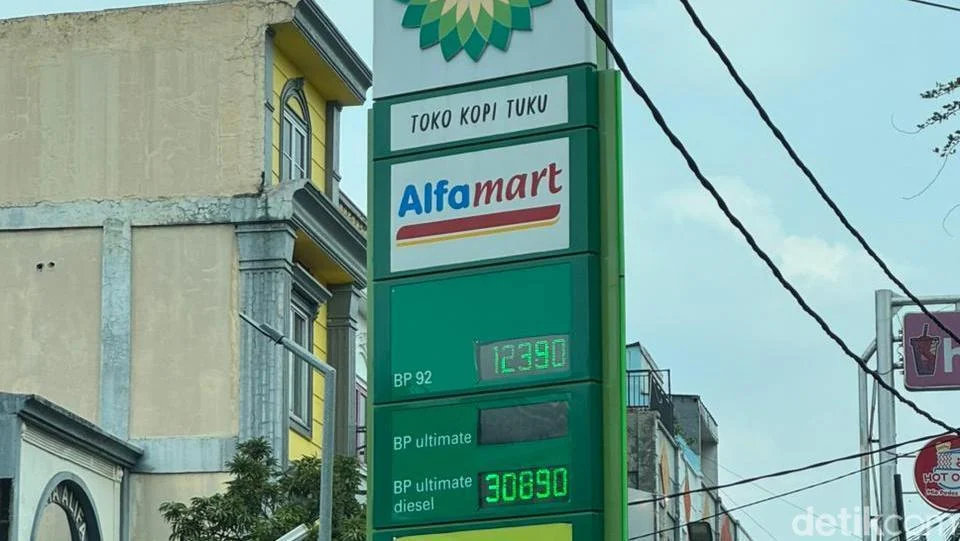
The landscape of the Indonesian energy market has witnessed a significant shift as of May 2, 2026, with private fuel retail stations implementing a drastic price hike for non-subsidized diesel products. Consumers utilizing private providers such as Vivo and BP-AKR have been met with a new pricing reality where high-quality diesel fuel has crossed the psychological threshold of Rp 30,000 per liter. This adjustment marks one of the most substantial price increases in recent history for the private sector, placing a heavy financial burden on owners of modern diesel vehicles, particularly popular high-end Sport Utility Vehicles (SUVs) like the Toyota Fortuner and Mitsubishi Pajero Sport.
This price movement is not an isolated incident but rather a continuation of a volatile trend in the Indonesian fuel market. Just one month prior, the price for similar high-grade diesel at private stations stood at Rp 25,560 per liter, which at the time was already considered the most expensive diesel option available in the country. The jump to Rp 30,890 per liter represents an increase of approximately 20%, a surge that has immediate implications for the operational costs of private transportation and logistics sectors that rely on high-specification fuel.
Detailed Price Adjustments at Private Retailers
A direct observation of the price totems at various fuel stations reveals a targeted adjustment focusing primarily on premium diesel variants. At BP-AKR stations, the BP Ultimate Diesel product has been officially adjusted to Rp 30,890 per liter. Interestingly, other products in their lineup have shown more stability; for instance, BP 92 remains priced at Rp 12,390 per liter. This discrepancy highlights the specific pressures currently affecting the diesel supply chain and refining margins compared to gasoline.
Similarly, Vivo, another major private player in the Indonesian downstream oil and gas sector, has mirrored this price point. Their flagship diesel product, Diesel Primus, is now also retailing at Rp 30,890 per liter. The synchronization of prices between these two major private competitors suggests a shared response to external market pressures, including the Mean of Platts Singapore (MOPS) benchmarks and the fluctuating exchange rate of the Indonesian Rupiah against the United States Dollar.
The Economic Burden on Luxury Diesel SUV Owners
The most immediate impact of this price surge is felt by the owners of passenger vehicles equipped with modern common-rail diesel engines. In the Indonesian market, the Toyota Fortuner and the Mitsubishi Pajero Sport dominate this segment. These vehicles are engineered to meet Euro 4 emission standards, which necessitates the use of high-quality diesel fuel with low sulfur content—typically 50 parts per million (ppm) or less.
To understand the scale of the financial impact, one must look at the refueling costs for these vehicles. The Toyota Fortuner features a substantial fuel tank capacity of 80 liters. Under the new pricing regime, filling a Fortuner’s tank from an empty state to full with premium diesel at a private station now costs approximately Rp 2,471,200. Even in a more common scenario where a driver refills when the tank still has 5 liters remaining, the cost for 75 liters of fuel reaches Rp 2,316,750.
The Mitsubishi Pajero Sport, while having a slightly smaller tank capacity of 68 liters, still demands a significant expenditure. A full tank from empty now costs Rp 2,100,520. For a typical top-up of 63 liters (assuming 5 liters remain in the tank), the cost is Rp 1,946,070. These figures represent a stark contrast to the costs associated with subsidized diesel or even the premium diesel prices from a year ago, effectively doubling the "cost per trip" for many families and professionals.
Technical Necessity and Emission Standards
The reliance of these vehicles on expensive, low-sulfur diesel is not a matter of luxury but a technical necessity. Modern diesel engines utilize high-pressure common-rail injection systems and sophisticated exhaust after-treatment components like Diesel Particulate Filters (DPF). Using lower-quality diesel fuel, such as the subsidized "BioSolar" which has a much higher sulfur content, can lead to catastrophic engine failure over time.
High sulfur content causes the formation of sulfuric acid during combustion, which can corrode engine components and lead to the buildup of deposits in the fuel injectors. For owners of vehicles like the Fortuner and Pajero Sport, the choice is often between paying the exorbitant price at the pump or risking repair bills that can reach tens of millions of rupiah. Consequently, as private stations raise their prices, these consumers find themselves in an increasingly difficult financial position, as their vehicles are effectively "locked" into the premium fuel market.
Chronology of Market Adjustments
The path to Rp 30,890 per liter has been characterized by several phases of adjustment:
- Pre-Adjustment Period (Early 2026): Prices for premium diesel at private stations hovered between Rp 23,000 and Rp 24,500, already reflecting a premium over state-owned Pertamina’s offerings.
- April 2026 Shift: Private retailers increased prices to approximately Rp 25,560 per liter, citing rising global crude costs and refining bottlenecks in the Southeast Asian region.
- May 2, 2026 Implementation: The current sharp spike to Rp 30,890 was implemented. This move was largely unexpected by the general public in terms of its magnitude, although analysts had warned of tightening diesel supplies globally.
Comparative Analysis: Private Stations vs. Pertamina
A critical aspect of the Indonesian fuel market is the price gap between private retailers (Vivo, BP, Shell) and the state-owned enterprise, Pertamina. While Pertamina also adjusts the price of its non-subsidized products like Pertamina Dex (their high-grade diesel), they often do so with a different frequency and under different regulatory oversight.
Historically, private stations offer perceived benefits such as superior additives, better customer service, and shorter queues. However, as the price gap widens to several thousand rupiah per liter, the value proposition of private stations is being put to the test. If Pertamina maintains its Pertamina Dex prices significantly lower than Rp 30,890, a massive migration of customers from private stations to Pertamina stations is expected, potentially leading to supply shortages and longer wait times at state-owned pumps.
Broader Economic and Market Implications
The implications of diesel hitting Rp 30,000 per liter extend beyond the individual SUV owner. While these specific high-grade fuels are primarily used by passenger cars, they serve as a bellwether for the overall energy market.
1. Impact on the Automotive Industry
The high cost of operation may dampen the demand for diesel-powered SUVs in the secondary and new car markets. Indonesia has traditionally been a "diesel-loving" nation due to the torque and efficiency of such engines. However, if fuel costs remain at this level, consumers may pivot toward gasoline-hybrid vehicles or accelerate the transition to Battery Electric Vehicles (BEVs), which offer significantly lower "fuel" costs per kilometer.
2. Inflationary Pressures
While subsidized diesel (BioSolar) remains the primary fuel for logistics and heavy transport, any upward movement in non-subsidized fuel eventually trickles down. Small-to-medium enterprises (SMEs) that use modern light commercial vehicles for "last-mile" delivery often require high-grade diesel to maintain vehicle longevity. As their operational costs rise, the prices of goods and services are likely to follow suit.
3. Consumer Behavior
The "full tank" cost of over Rp 2 million is a significant psychological barrier. It is expected that consumers will change their driving habits, opting for public transportation where available or reducing non-essential travel. Furthermore, there may be an increase in the "mixing" of fuels—a risky practice where drivers mix high-grade diesel with cheaper alternatives to save money, which could lead to a future surge in automotive repair demands.
Expert Analysis and Future Outlook
Energy analysts suggest that the price hike is a reflection of the "de-coupling" of diesel prices from gasoline. Globally, diesel remains in high demand for industrial use and heating in various parts of the world, keeping its market value high even when gasoline demand fluctuates. Furthermore, the Indonesian government’s commitment to stricter emission standards means that the demand for low-sulfur diesel will only increase, while the domestic capacity to produce such fuel remains limited, forcing a reliance on expensive imports.
In the coming months, market watchers will be looking for any signs of government intervention or a potential cooling of global oil prices. If the Rupiah remains under pressure against the Dollar, further adjustments cannot be ruled out. For now, the era of "cheap" high-performance diesel in Indonesia appears to have come to an end, replaced by a high-cost environment that demands a reconfiguration of household budgets for many Indonesian motorists.
The situation remains fluid, and as the mid-year point approaches, the performance of the global energy sector will dictate whether Rp 30,890 is the ceiling or merely a stepping stone to even higher prices. For owners of the Pajero Sport and Fortuner, the focus shifts from the prestige of the vehicle to the logistical challenge of keeping it on the road.