Nila Kartika Wati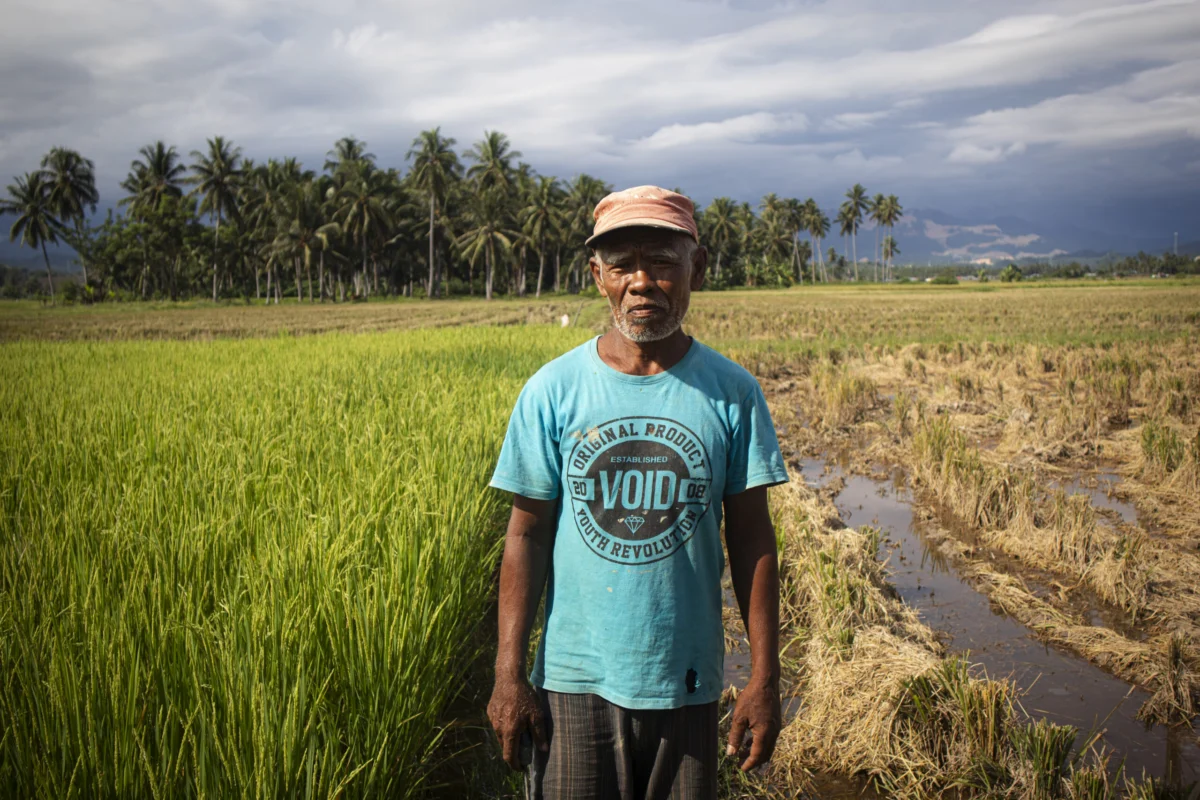
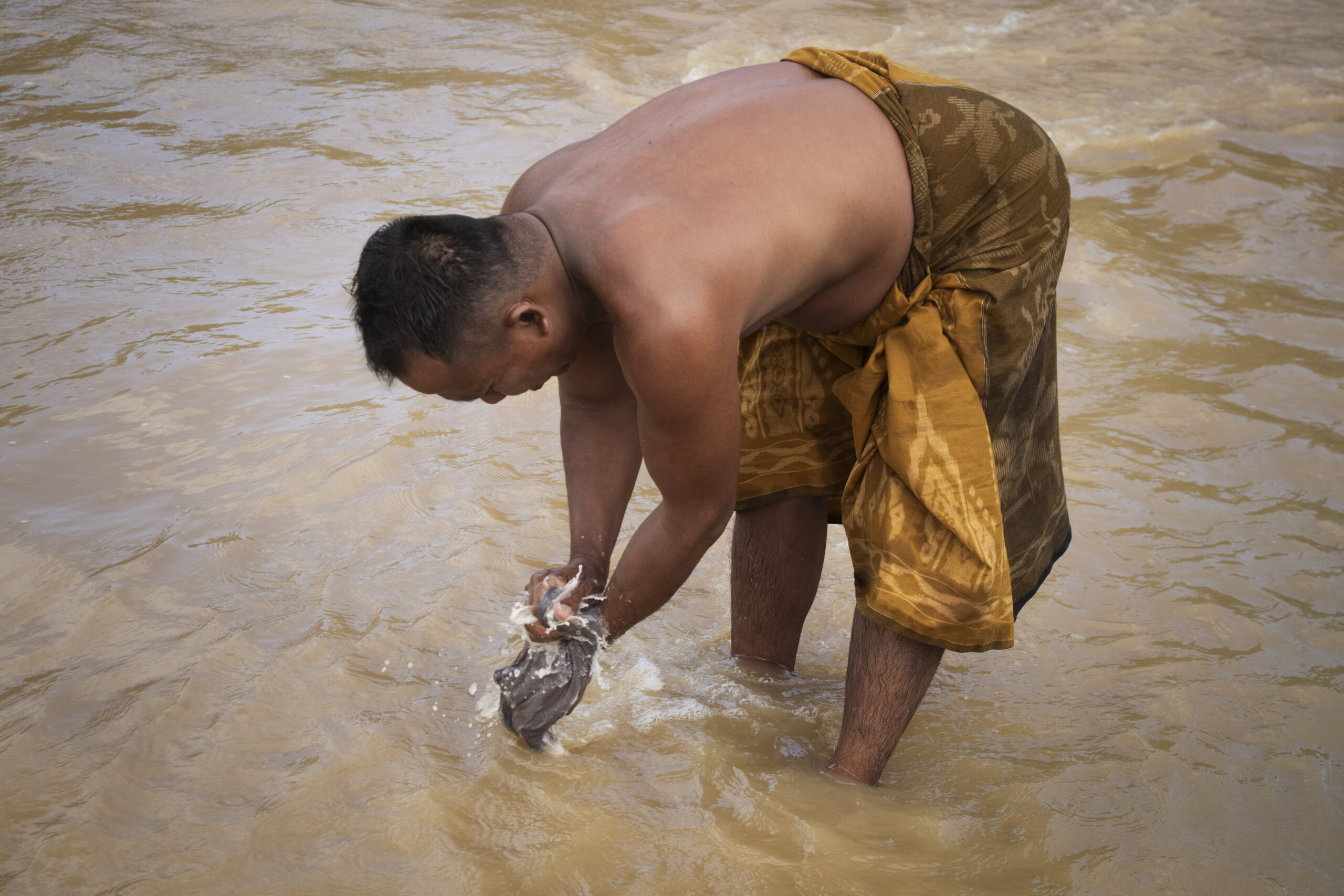
The Popayato River, which once served as the lifeblood of Pohuwato Regency in Gorontalo, has undergone a harrowing transformation. For generations, its waters were crystal clear, providing sustenance and a sense of security to the thousands of residents living along its 40.6-kilometer span. Today, the river resembles "coffee with milk," a thick, opaque brown slurry of silt and sediment. For Samin Ahmad, a local resident, the change is not merely aesthetic; it is a direct threat to his family’s survival. Standing on the riverbank with a somber expression, Samin recalls a time when the river was safe to drink from. Now, he notes with a heavy heart, even the fish have disappeared, leaving behind a sterile, muddy flow that carries the heavy toll of unregulated gold mining.
The degradation of the Popayato River is the visible symptom of a much larger, more systemic crisis: the explosion of Unlicensed Gold Mining (PETI) in the upstream regions of Pohuwato. Over the last several years, the landscape has been aggressively reshaped by semi-industrial operations that utilize heavy machinery, displacing the traditional, low-impact panning methods of the past. While the miners seek fortune in the soil, the communities downstream are paying the price in health, economic stability, and environmental safety. Samin and his family, unable to afford consistent access to clean water, are forced to use the contaminated river for bathing and washing. The results are immediate and painful: skin rashes, persistent itching, and the constant fear of long-term health complications. To mitigate the danger, Samin digs small "seepage wells" in the sand along the bank, hoping the earth will filter the grime, though he knows this provides no protection against chemical contaminants or bacteria.
The Gendered Burden of Environmental Decay
The water crisis in Pohuwato is not an equal-opportunity disaster; it has placed a disproportionate burden on the women of the region. Ratna Ismail, a resident of Bukit Tinggi Village, exemplifies the "double burden" that environmental degradation imposes on women. In her household, Ratna is responsible for the domestic sphere—cooking, cleaning, and ensuring the health of her children. When the river became unusable, her workload did not stay the same; it doubled. She must now trek significant distances to purchase gallon-bottled water, an expense that eats away at the family’s meager income.
"Sometimes I have to go back and forth twice to buy gallons," Ratna explains. "If I don’t, there isn’t enough for the day." The financial toll is staggering for a rural family, with some households spending upwards of Rp500,000 (approximately $32) per month just to secure basic drinking water. This is money that would otherwise go toward education or nutrition. Furthermore, the time spent fetching water is time stolen from rest or other economic activities. To make ends meet, Ratna has had to find side work selling snacks and garden produce, as the family’s agricultural income has plummeted due to the contaminated water supply.
This phenomenon aligns with global sociological findings that suggest women in developing regions are the most vulnerable to climate and environmental shocks. Because they are the primary managers of household resources, the disappearance of clean water forces them into a cycle of "poverty of time" and "poverty of health." Like Samin, Ratna still uses the river for laundry despite the skin diseases it causes, simply because there is no other choice. According to data from the Alliance of Students and People Concerned for the Environment, more than 1,800 heads of households along the Popayato are currently facing this acute clean water crisis.
Two Decades of Deforestation and the Rise of "Semi-Industrial" PETI
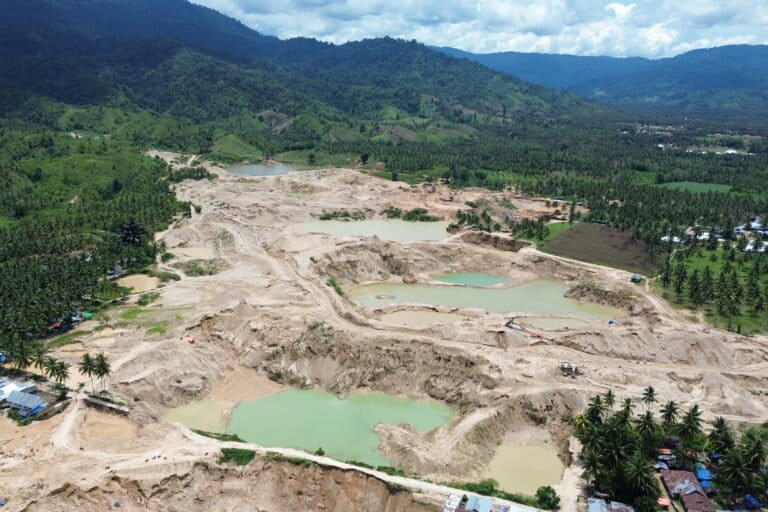
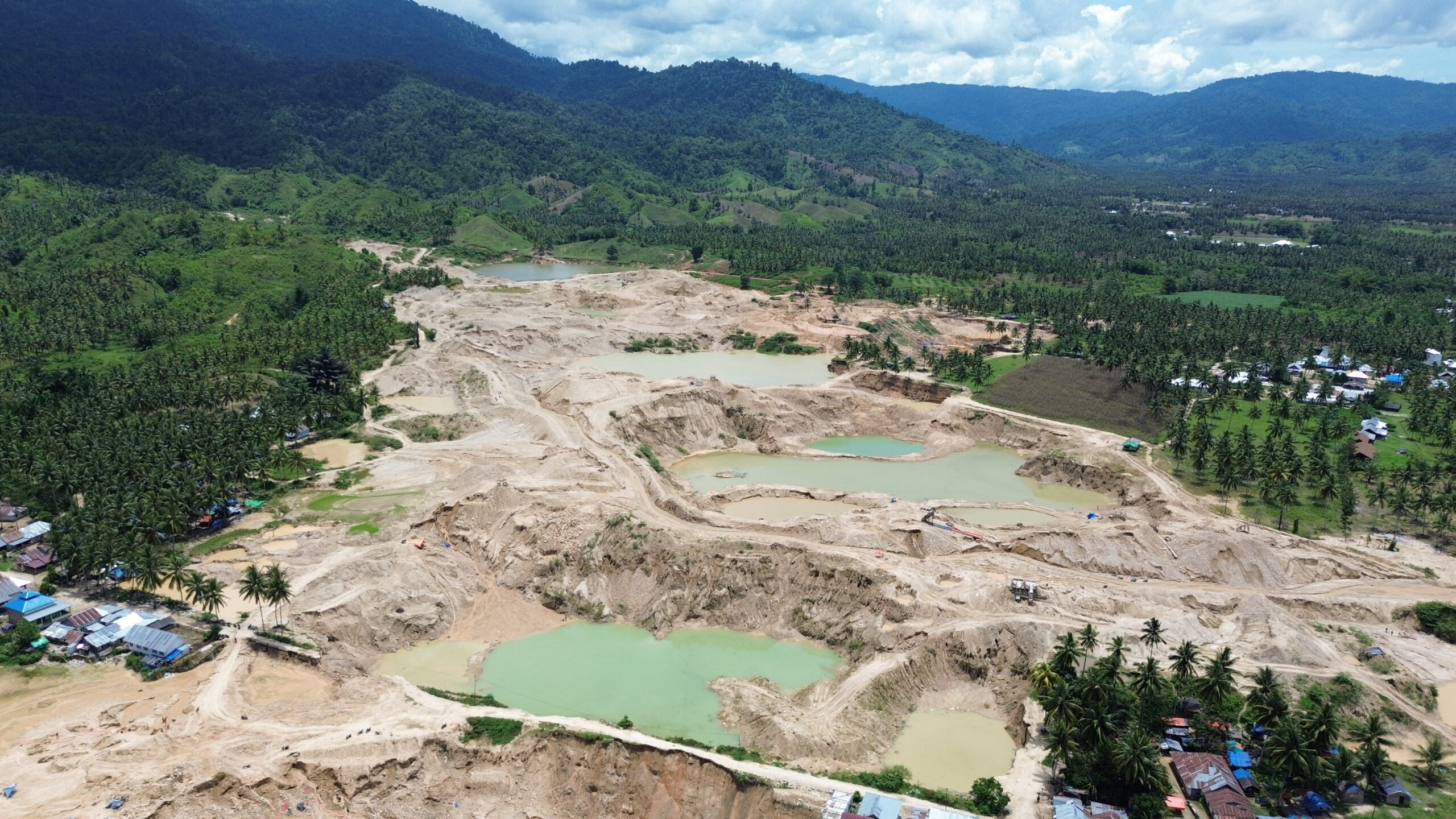
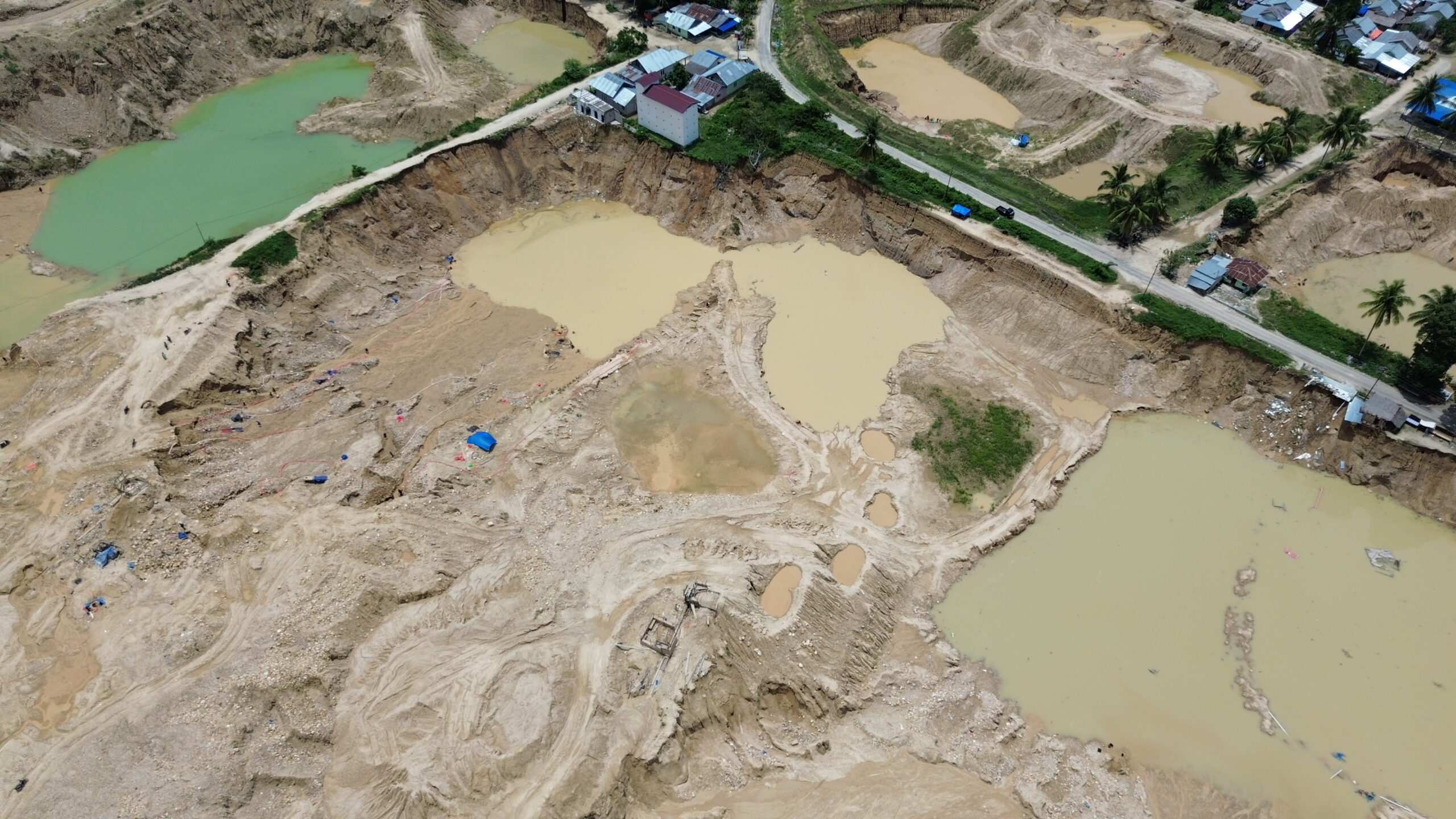
The scale of mining in Pohuwato has shifted dramatically over the past 20 years. What began as individual villagers panning for gold has transformed into a massive, unregulated industry. In the highland forests that serve as the regency’s primary watershed, dozens of excavators now operate around the clock. The constant roar of engines has replaced the sounds of the jungle as hills are leveled and deep, gaping pits are carved into the earth.
Data from Global Forest Watch (GFW) paints a chilling picture of the environmental cost. Between 2002 and 2024, Pohuwato lost approximately 20,000 hectares of primary moist forest. This loss accounts for nearly 47% of the total tree cover loss in the regency during that period. In total, the regency has lost 44,000 hectares of tree cover since 2001, an 11% decrease that has released an estimated 31 million tons of CO2 equivalent into the atmosphere.
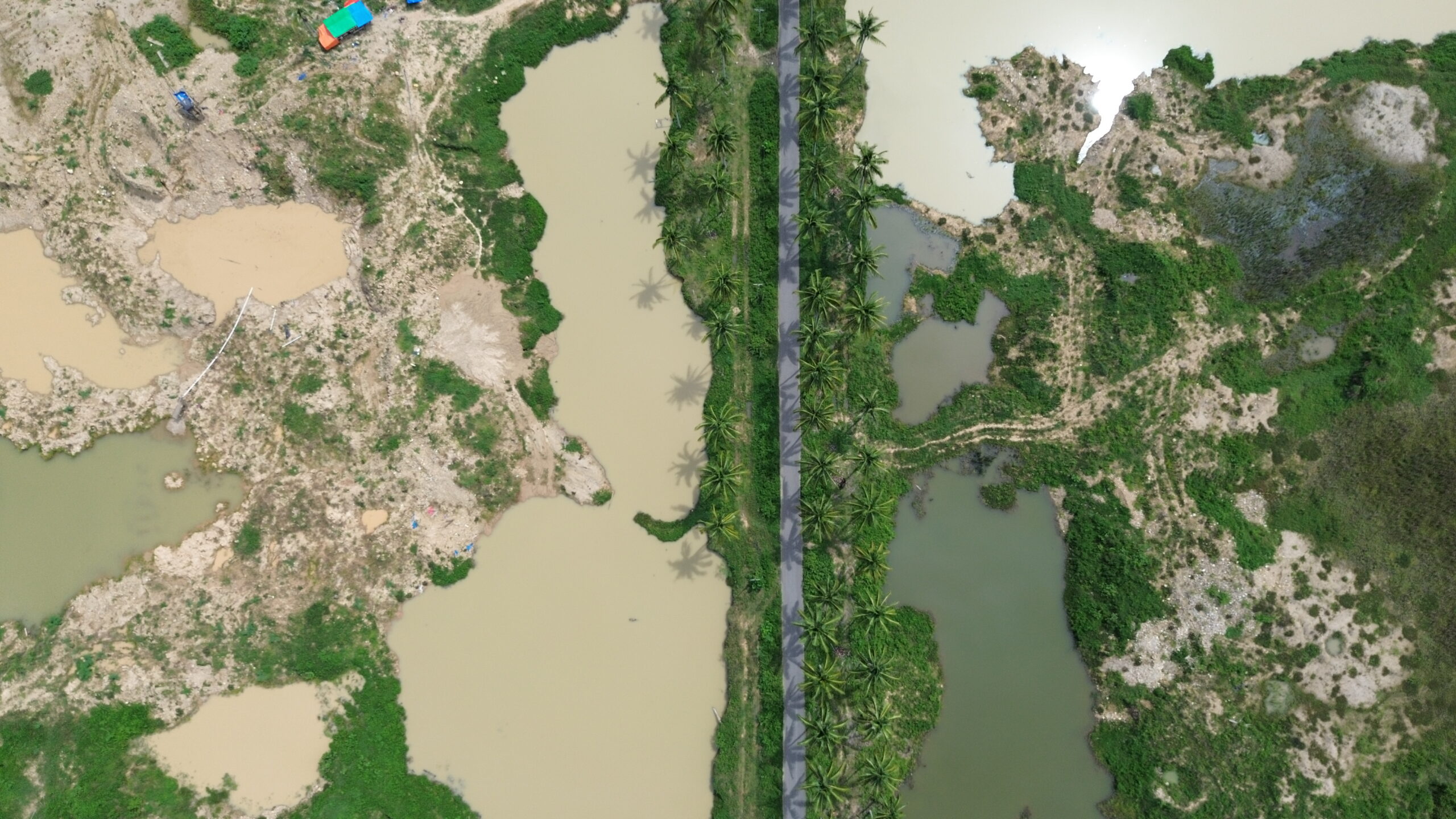
MapBiomas Indonesia further corroborates this destruction, reporting that the total area of mining pits in Pohuwato reached 1,165 hectares by 2024—the highest level in over two decades. On average, the mining footprint expands by 90 hectares every year. This massive land clearing has stripped the soil of its ability to absorb rainwater, turning every storm into a potential catastrophe for those living in the valleys below.
From Deforestation to Disaster: The Hydrometeorological Connection
The causal link between upstream mining and downstream flooding is no longer a matter of speculation for the residents of Pohuwato. Data from the National Disaster Management Agency (BNPB) shows a sharp increase in hydrometeorological disasters corresponding with the rise of heavy machinery in illegal mining. Since 2017, the regency has recorded 39 significant flood events. These floods have submerged approximately 16,000 homes and forced more than 56,000 people to evacuate.
The geographical layout of Pohuwato makes it particularly susceptible. According to the BNPB’s National Disaster Risk Assessment, the regency has the highest flood risk level in Gorontalo Province, with over 41,000 hectares of land classified as high-danger zones. This area is home to more than 87,000 people who now live in a state of constant anxiety whenever the rainy season approaches. The sediment-laden rivers overflow almost instantly during heavy downpours, as the riverbeds have been raised by years of mining silt.
The Controversy of Legalization: WPR and IPR
In response to the chaos, the Pohuwato and Gorontalo governments have moved to "formalize" these illegal activities. Since 2022, the Ministry of Energy and Mineral Resources (KESDM) has designated 63 blocks as People’s Mining Areas (WPR), totaling over 5,500 hectares. The goal is to transition illegal miners into a legal framework through People’s Mining Permits (IPR), often managed by local cooperatives.
However, environmental advocates like Rahwandi Botutihe, Chairman of the Gorontalo Youth Alliance for the Environment, argue that this is a dangerous "label-swapping" exercise. "The problem isn’t just the lack of a permit; it’s the extractive practice itself," Rahwandi asserts. He argues that legalizing mining without first addressing the ecological carrying capacity of the land simply legitimizes destruction. He points out that the WPR/IPR scheme often benefits "cukong"—wealthy financiers and equipment owners—while the local community remains trapped in a cycle of environmental decay. "If the state simply moves violations into a formal system without fundamental reform, the damage becomes negotiable rather than preventable," he adds.
Encroachment into the Panua Nature Reserve
The greed for gold has even breached the boundaries of protected lands. The Panua Nature Reserve (CAP), a 36,575-hectare sanctuary for Sulawesi’s endemic species like the Maleo bird and the knobbed hornbill, is under siege. Abdul Mutalib Palaki, a ranger at the reserve, reports that at least 16 hectares of the conservation area have been destroyed by heavy machinery.
The battle to protect the reserve is fraught with corruption and "leaks." Rosman Mantu, an official from the Ministry of Environment and Forestry’s Law Enforcement Agency (Gakkum) in Sulawesi, expresses deep frustration over the resilience of the illegal operations. "Whenever we plan a raid, the heavy equipment mysteriously vanishes before we arrive," Rosman says. This suggests a high level of coordination and "backing" from influential figures who protect the mining interests. Despite multiple joint operations with the police, the sheer profitability of the gold ensures that as soon as the authorities leave, the excavators return.
The Collapse of the Agrarian Economy
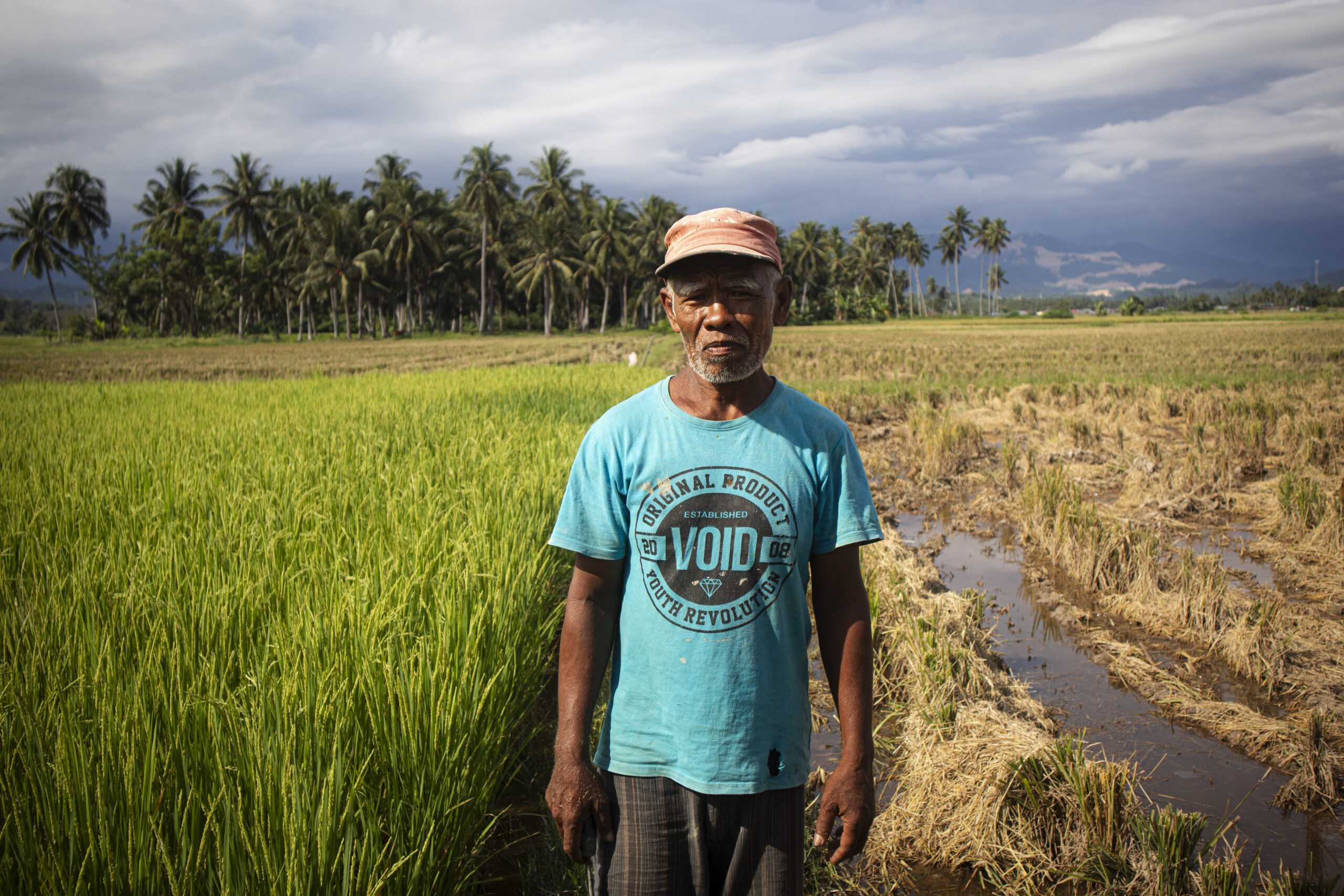
While the gold mining sector booms for a few, the traditional backbone of Pohuwato’s economy—agriculture—is collapsing. In Duhiadaa District, farmers are witnessing the slow death of their rice fields. Darwin Djafar, a local farmer, explains that the irrigation systems are now choked with mining sediment. "The water in the canals is thick with mud. When it reaches the fields, it coats the soil in a layer of silt that suffocates the rice plants," he says.
Darwin’s yields have been cut in half. Where he once harvested 30 bags of grain per quarter-hectare, he now struggles to produce 15. The data from the Central Bureau of Statistics (BPS) for Gorontalo confirms this trend. In the first quarter of 2026, the area of harvested rice fields dropped by 13.07% compared to the previous year. Total rice production fell by nearly 16%, a devastating blow to regional food security.
Kamri Alwi, Head of the Pohuwato Agriculture Department, acknowledges the crisis but feels hamstrung by jurisdictional limits. While his department has attempted to rehabilitate irrigation canals, the source of the problem—the upstream mining—is outside his authority. He has even had to ask the mining companies themselves to help dredge the canals they helped clog, a move that highlights the government’s desperate and often contradictory position.
Conclusion: A Regency at a Crossroads
The situation in Pohuwato is a microcosm of the global struggle between short-term resource extraction and long-term ecological survival. The "gold rush" has provided a temporary economic stimulus for some, but at the cost of the region’s water, forests, and future agricultural viability. As the Popayato River flows brown and the Panua Nature Reserve shrinks, the people of Pohuwato are left to wonder if the gold buried in their hills is worth the destruction of the life above them. Without a fundamental shift in enforcement and a genuine commitment to ecological restoration, the regency faces a future of increasing disasters, declining health, and the permanent loss of its natural heritage.