Nila Kartika Wati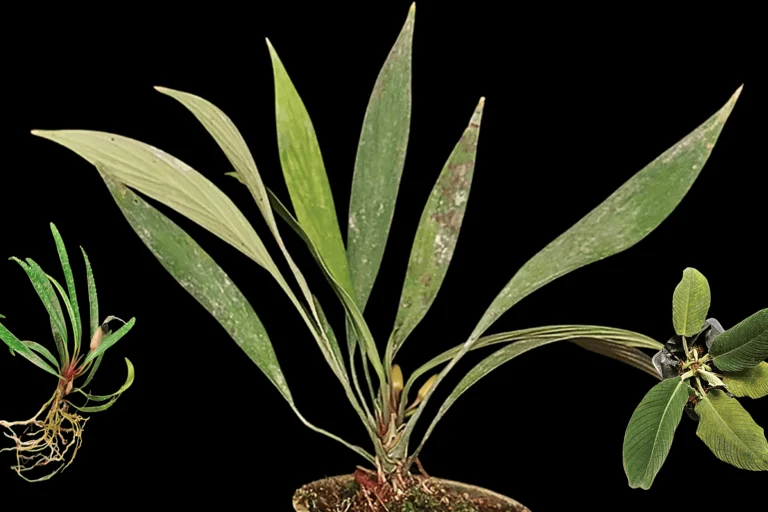
In an era where digital connectivity often blurs the line between recreation and professional research, a significant botanical milestone has been reached through the most unlikely of sources: social media. What began as casual photo uploads by ornamental plant enthusiasts has culminated in the formal scientific description of three new species within the genus Homalomena, a group of the Araceae (aroid) family. These findings, spearheaded by researchers from the National Research and Innovation Agency (BRIN) and the School of Life Sciences and Technology at the Bandung Institute of Technology (SITH ITB), underscore a shifting paradigm in biodiversity exploration where citizen science and digital platforms act as vital conduits for discovery.
The research team, led by Muhammad Rifqi Hariri and A.S.D. Irsyam, successfully identified and documented Homalomena pachyderma, Homalomena pulopadangensis, and Homalomena uncinata from the island of Sumatra. Their findings were recently detailed in the scientific journal Telopea, in a paper titled “Taxonomic contributions to the genus Homalomena (Araceae) in Western Malesia: three new species from Sumatra discovered through the ornamental plant trade.” This discovery was further bolstered by the identification of a fourth species from Papua, Homalomena polyneura, popularly known in the horticultural community as the "Papuan Samurai."
The Chronology of Digital Discovery
The journey toward these formal descriptions did not begin in a remote jungle, but rather on the screens of smartphones and laptops. In recent years, the global obsession with rare indoor plants—particularly those in the Araceae family—has driven a massive increase in the trade of wild-collected specimens. As hobbyists shared photos of their latest acquisitions on platforms like Instagram and Facebook, researchers noticed distinctive morphological traits that did not align with any known species.
Hariri and his colleagues began tracking these "unidentified" plants through the supply chain, eventually tracing several specimens back to specialized nurseries in Bogor, West Java. These nurseries often serve as halfway points for plants collected from the deep forests of Sumatra and Papua before they are sold to domestic and international collectors. By studying these live specimens in a controlled environment, the researchers were able to observe the plants through their entire life cycle, including the flowering stage. This is a critical advantage, as Homalomena species are notoriously difficult to identify in the wild when they are not in bloom, and their remote habitats in the Sumatran highlands are often inaccessible for long-term observation.
The researchers noted that this is not the first time digital platforms have facilitated such breakthroughs. Previous species, such as H. chikmawatiae and H. pistioides, were also brought to light after being spotted in the online marketplace. This trend suggests that the digital space is becoming an essential "virtual herbarium" that complements traditional field exploration.
Detailed Profiles of the New Sumatran Species
The three species discovered in Sumatra belong to the Supergroup Chamaecladon, a group characterized by their relatively small stature and their tendency to grow as lithophytes—plants that grow on or among rocks.
Homalomena pachyderma
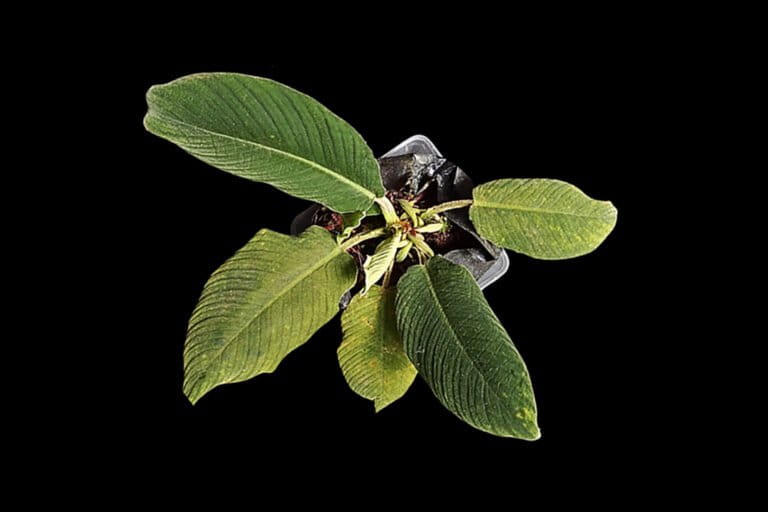
The first of the trio, Homalomena pachyderma, was analyzed from specimens found in a Bogor nursery, originally sourced from Aek Nabobar in Central Tapanuli. Reaching a height of approximately 18 centimeters, this plant is distinguished by its remarkably thick, leathery leaves. The name "pachyderma" is derived from the Greek words "pachys" (thick) and "derma" (skin), a direct reference to the fibrous, papilla-textured surface of the foliage. While it bears a superficial resemblance to Homalomena mobula, it is distinguished by its asymmetrical elliptical leaves and slightly wavy (undulate) margins, whereas H. mobula possesses reverse spear-shaped leaves with irregular serrations.
Homalomena pulopadangensis
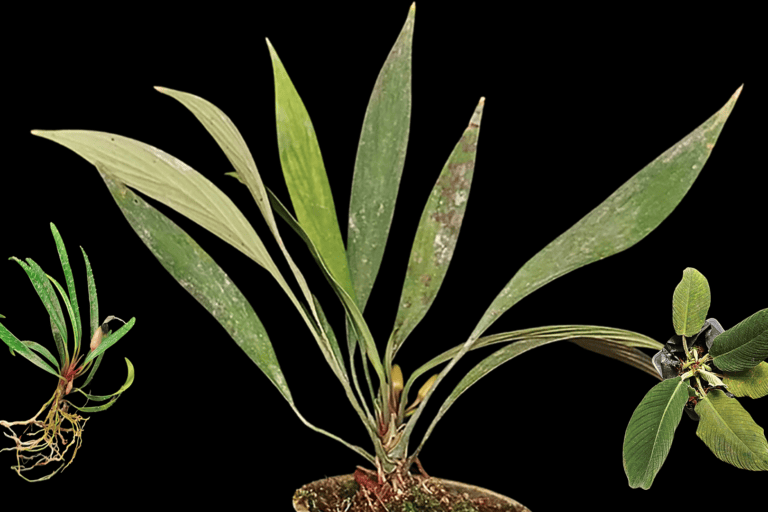
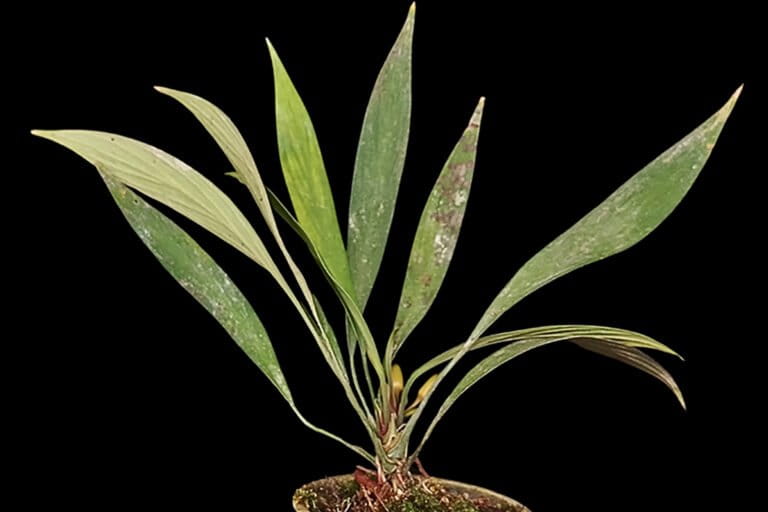
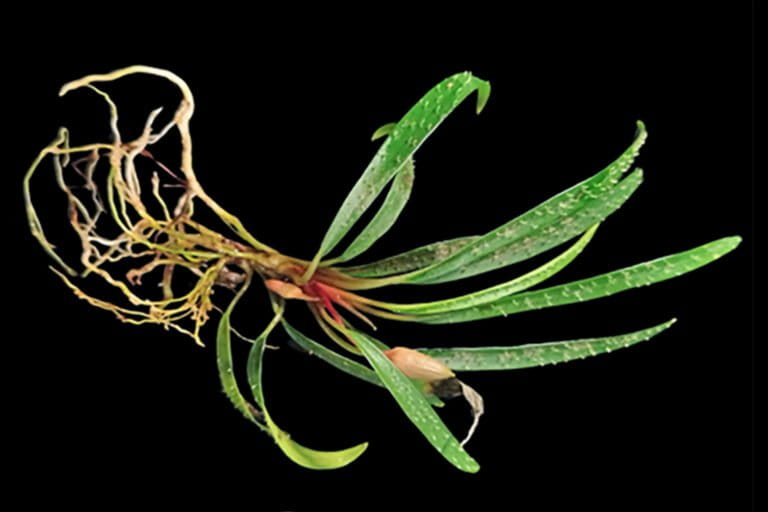
Sourced from the wild in the Mandailing Natal region of North Sumatra—specifically the Pulo Padang area—this species is named after its type locality. Homalomena pulopadangensis stands upright with narrow, lance-like leaves. It is often compared to Homalomena anthurioides due to similar morphological traits, but the two are easily distinguished by their leaf posture: the leaves of H. pulopadangensis stand erect, while those of H. anthurioides tend to hang downward. Additionally, the tertiary leaf veins of H. pulopadangensis are nearly invisible to the naked eye, a sharp contrast to the prominent veining seen in its relatives.
Homalomena uncinata
Perhaps the most unique of the three is Homalomena uncinata, the smallest of the group at only 11 centimeters in height. Its defining characteristic is the presence of microscopic, hook-shaped hairs on the upper surface of its leaves. The specific epithet "uncinata" is Latin for "hooked" or "barbed." While it shares some similarities with the hairy-leaved Homalomena hasei, the specific curvature of the "uncinate" hairs provided the definitive evidence required to classify it as a distinct species. This plant was traced back to cultivation in South Tapanuli, North Sumatra.
The Papuan Samurai: Homalomena polyneura
Parallel to the Sumatran discoveries, the research team also formalized the description of Homalomena polyneura, a species from Nabire, Central Papua. For years, this plant had been a "holy grail" for Indonesian collectors, who dubbed it the "Samurai Papua" because of its long, narrow, blade-like leaves that resemble the traditional Japanese sword.
Despite its long-standing presence in the horticultural trade, the plant lacked a formal scientific name until the publication of "A new spectacular species of Homalomena (Araceae) from Indonesian New Guinea" in Gardens’ Bulletin Singapore. The scientific name "polyneura" refers to the many prominent veins that run along its elongated leaves. The discovery of H. polyneura is particularly significant because it represents a secondary center of diversity for the genus east of the Lydekker Line, a faunal and floral boundary that separates the Oriental and Australian zoogeographic regions.
Biogeographical Significance of Sumatra and Papua
The identification of these four species adds significant weight to the status of Sumatra and Papua as global biodiversity hotspots. Sumatra is currently recognized as the primary center of diversity for Homalomena in Western Malesia, with over 40 described species. The island’s rugged topography and diverse microclimates provide the ideal conditions for "speciation," the process by which new and distinct species evolve.
In contrast, the diversity of the genus generally decreases as one moves eastward across the Indonesian archipelago. For instance, Java is home to only eight species, while the Lesser Sunda Islands (Bali, NTT, NTB) host only two. However, the discovery of the "Samurai Papua" confirms that the eastern regions of Indonesia still hold vast, undocumented botanical treasures that defy the traditional expectations of species distribution.
The Paradox of the Ornamental Plant Trade
While the ornamental plant trade has inadvertently aided science by bringing hidden species to the attention of taxonomists, it presents a complex ethical and environmental challenge. The researchers expressed concern that the very visibility provided by social media could lead to the extinction of these species before they can be fully understood.
Many Homalomena species have extremely narrow distribution ranges, sometimes existing in only a single valley or on a specific rock formation. When a plant becomes "viral" on social media, its market value skyrockets, leading to "over-harvesting." Unregulated collection from the wild can decimate local populations, leaving them vulnerable to habitat loss from logging or land conversion.
"The digital platform is a double-edged sword," noted Hariri in his assessment. "It facilitates the rapid exchange of information that can lead to discovery, but it also creates a demand that can outpace our ability to protect these plants in their natural habitats."
Implications for Conservation and Future Research
The discovery of these four species serves as a poignant reminder of the "taxonomic impediment"—the gap between the number of species that exist and the number of researchers available to describe them. With climate change and deforestation threatening Indonesian rainforests at an unprecedented rate, the work of BRIN and ITB researchers is a race against time.
The researchers advocate for a more integrated approach to conservation that involves local communities and plant hobbyists. By educating collectors on the importance of sustainable cultivation and the dangers of wild poaching, the horticultural industry could potentially transition from a threat to a partner in biodiversity preservation.
Furthermore, the study highlights the importance of maintaining and funding national botanical gardens and herbaria. The specimens brought from the wild to Bogor allowed for the precise anatomical and genetic analysis required for formal description. Without these institutions, the "Samurai Papua" and the "Hooked Homalomena" might have remained mere curiosities in private collections, their true scientific value lost to history.
In conclusion, the formal naming of Homalomena pachyderma, H. pulopadangensis, H. uncinata, and H. polyneura is more than just a taxonomic update. It is a testament to the power of observation in the digital age. It proves that even in a world dominated by algorithms and viral trends, there is still room for the quiet, meticulous work of science to uncover the ancient secrets of the natural world. As these new species join the official records of Indonesian flora, they stand as symbols of the country’s immense biological wealth and the urgent need to protect it for future generations.