Nila Kartika Wati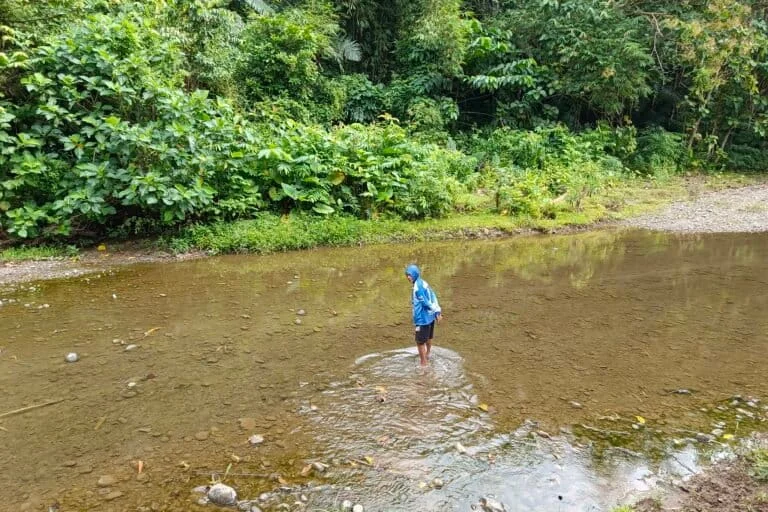
The highlands of Enrekang Regency, South Sulawesi, have become the epicenter of a protracted struggle between local agricultural communities and the extractive ambitions of CV Hadaf Karya Mandiri (HKM). What began as a series of opaque socializations nearly a decade ago has escalated into a high-stakes confrontation involving international surveyors, local politicians, and a grassroots movement determined to protect their ancestral lands and water sources. At the heart of the dispute is a 1,711-hectare Mining Business License (IUP) that threatens to transform a productive agricultural landscape into an industrial gold mine, sparking fears of environmental degradation and the permanent loss of local livelihoods.
The Genesis of a Contested License
The roots of the current tension trace back to 2015, when representatives of CV Hadaf Karya Mandiri first appeared in Kampung Pinang, Enrekang. Led by Muhammad Yakub Abbas, the company conducted what it labeled as a "Focus Group Discussion" (FGD). However, residents recall the event differently, describing it not as a dialogue but as a one-sided presentation. This single meeting served as the basis for the company’s claim of social legitimacy, a claim that would later be used to secure vital permits.
By 2018, the company had obtained approval for its Environmental Impact Analysis (Amdal), and on December 10 of that year, an environmental permit for gold mining and ore management was issued by the Enrekang Investment and One-Stop Integrated Services Department (DPMPTSP) on behalf of the Regent. The formal Mining Business License (IUP) for 1,711 hectares was finalized in 2019. The project was designed in two phases: an initial 694.42-hectare operation focusing on alluvial lithology (young soil layers), followed by an 824.13-hectare expansion into conglomerate rock formations.
Despite the legal paperwork, a significant portion of the community remained unaware of the project’s scale. Muhammad Ali, a former local neighborhood head who served for 30 years in the Leoran sub-district, noted that he was never invited to any socialization regarding gold mining. Instead, he recalled Yakub Abbas visiting the area years prior to promote oil palm plantations under different corporate banners, PT Borneo Cemerlang Plantation (BCP) and East West Plantation (EWP). The sudden pivot from palm oil to gold has left many residents feeling deceived by a shifting corporate agenda.
A Pattern of Corporate Reinvention
The figure of Muhammad Yakub Abbas is central to the narrative of extractive expansion in Enrekang. A native of the Dante Durian area at the foot of the Latimojong Mountains, Yakub has a history of introducing controversial industrial projects to the region. In 2017, he spearheaded a marble mining venture through PT Arung Bungin Group, which was ultimately driven out by local residents who feared the destruction of their ecosystem. The conflict became so heated that heavy machinery was set ablaze, leading to the company’s withdrawal.
However, the retreat from marble mining did not signal an end to Yakub’s activities. Corporate records reveal his involvement in PT Indo Asiana Lestari (IAL), a company linked to the massive "Tanah Merah" project in Boven Digoel, Papua, which aims to develop over 270,000 hectares of oil palm plantations. Investigations into CV Hadaf Karya Mandiri (HKM) further highlight a web of corporate interconnectivity; the address listed in HKM’s environmental documents in Makassar is identical to that of IAL. When journalists visited the site in April 2026, they found no trace of either mining company, only a sharia-based lending office, raising questions about the transparency and physical presence of the firms holding these significant land concessions.
The 2026 Escalation and the "Baba Incident"
After years of relative quiet, the conflict reached a breaking point in early 2026. Despite a formal agreement reached in January between the Enrekang Regional House of Representatives (DPRD) and the Mining Circle Community Alliance to halt mining activities, a survey team entered the village of Baba in Cendana District on March 6, 2026. The team included a Chinese national, later identified as Cao Yuzhang, and was accompanied by Ali Suryaji Kartono, a three-term member of the Enrekang DPRD known locally as Angko.
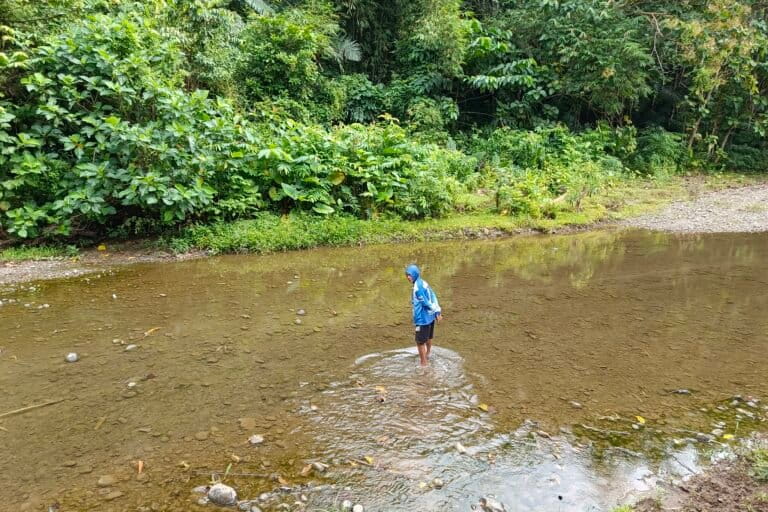
The group was discovered by Yansong, a 64-year-old local farmer, on his private seven-hectare plot. Yansong found the team digging samples and using gold panning equipment in a small stream that runs through his garden of aren palms, cocoa, and corn. When confronted, Angko—who is actually a relative of Yansong—claimed they were merely checking samples. The news of the unauthorized entry spread rapidly through the village.
As the sun began to set, nearly 100 residents converged on the site. The presence of a sitting legislator facilitating a mining survey on land he had previously promised to protect triggered an emotional outburst. In the ensuing chaos, physical violence erupted; Cao Yuzhang was struck, sustaining facial injuries and bruising that required medical attention at the Enrekang Regional General Hospital (RSUD). The incident highlighted the deep-seated sense of betrayal felt by villagers toward their elected representatives.
Environmental and Socio-Economic Implications
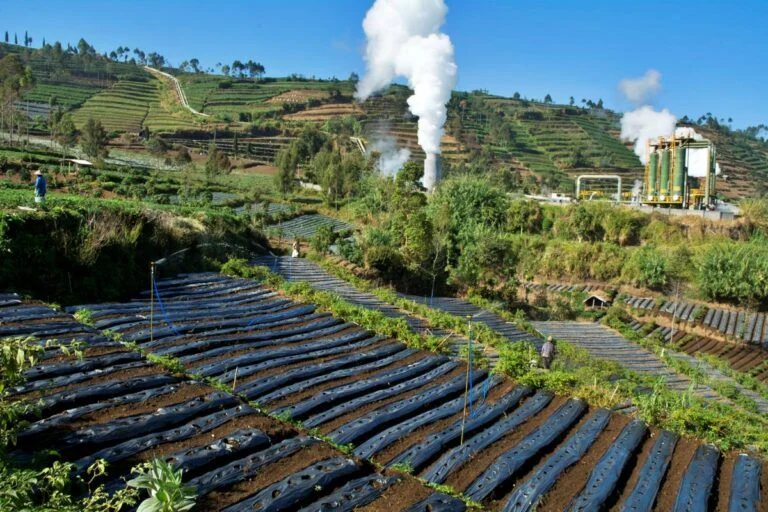
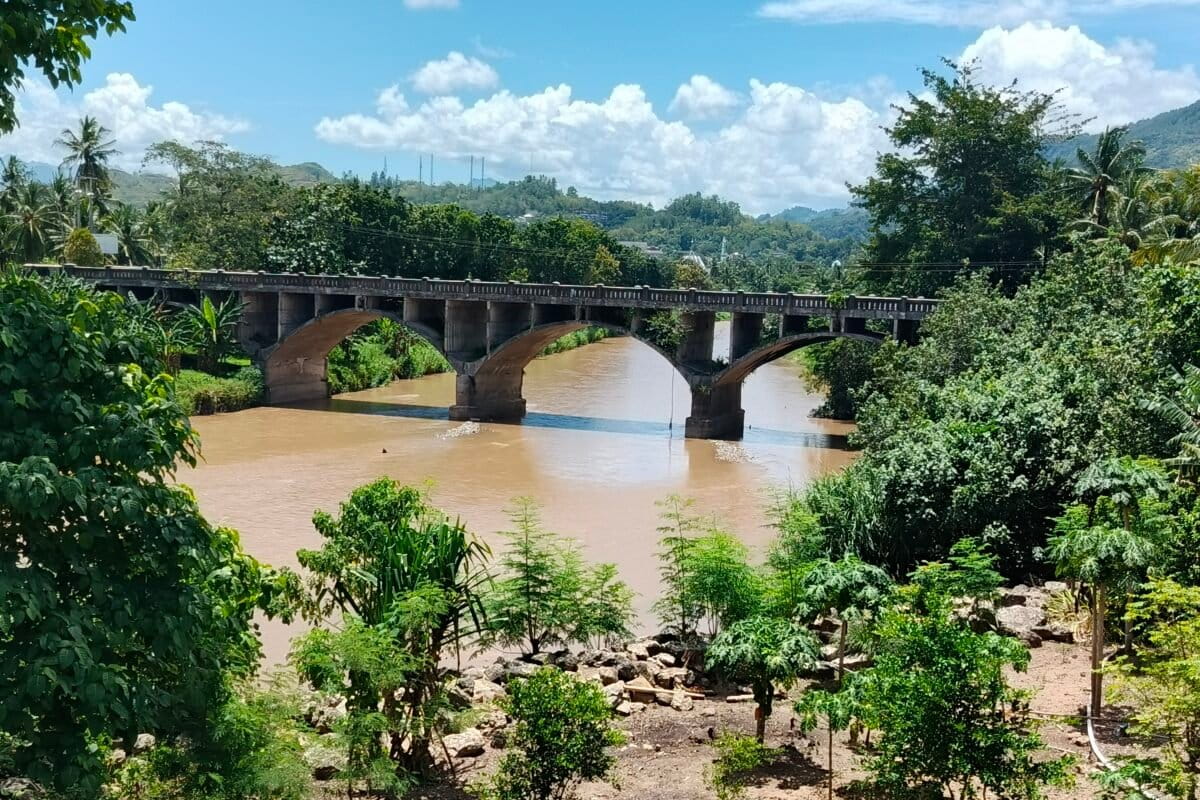
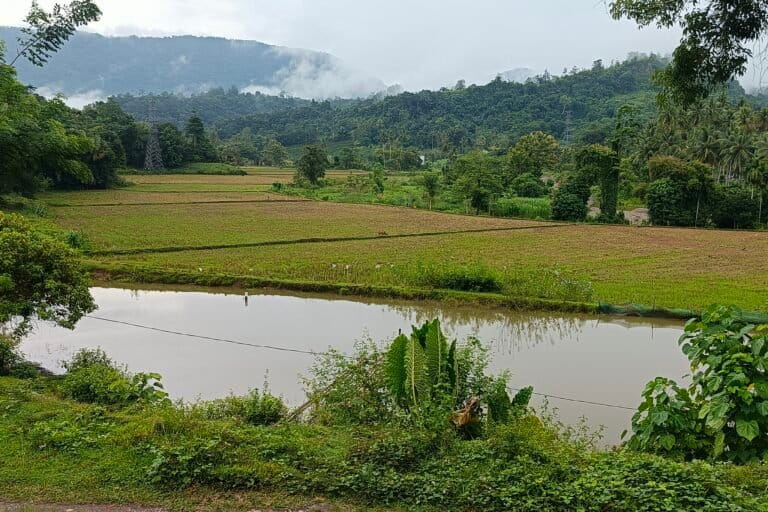
The resistance in Enrekang is rooted in a pragmatic assessment of the region’s geography and economy. Enrekang is a vital agricultural hub, particularly for commodities like shallots, coffee, and palm sugar. The proposed mining site sits within the Saddang river watershed, specifically near the Mata Allo river which originates in the Latimojong Mountains. These mountains are considered the "water tower" of South Sulawesi, providing irrigation for thousands of hectares of rice fields downstream.
Local farmers, such as Burhan from Osso Village, argue that mining offers no long-term security. "In the garden, we are the managers. we can predict our harvest and we own the results," Burhan explained. "With the mine, they say they will employ us, but we would just be laborers while they take the gold. Once the gold is gone, our land is ruined."
The environmental risks of alluvial gold mining are well-documented in Indonesia. Such operations often lead to:
- Water Contamination: The use of heavy machinery in riverbeds increases turbidity, destroying aquatic habitats and rendering water unfit for irrigation or domestic use.
- Loss of Topsoil: Stripping the "alluvial" layer removes the most fertile soil, making future agricultural reclamation nearly impossible.
- Landscape Alteration: The hilly terrain of Enrekang is prone to landslides; large-scale excavation could destabilize slopes, threatening nearby settlements.
Regulatory Ambiguity and the Government’s Stance
The legal status of CV Hadaf Karya Mandiri remains a point of contention. Yarsin Gau, Head of the Enrekang Environmental Office, noted that under the terms of the original 2018 environmental permit, the company was required to commence activities within three years. Failure to do so should have rendered the permit invalid. However, the implementation of the Job Creation Law (Omnibus Law) has blurred the lines of regional oversight, shifting many permitting and monitoring powers to the central government.
In response to the massive wave of protests, the current Regent of Enrekang, Muh. Yusuf R, sent a formal letter to the Minister of Energy and Mineral Resources (ESDM). The letter acknowledged that the "social legitimacy" claimed in the company’s Amdal was fundamentally flawed and did not reflect the reality on the ground. The Regent formally requested that the Minister review and revoke the mining license for HKM, citing the potential for prolonged social horizontal conflict.
Despite this, the local government’s position is complicated by the legal principle of legal standing. Pj Secretary of State Zulkarnain Kara explained that while the executive branch recognizes the community’s rejection, they cannot unilaterally cancel a permit issued under state law without a formal legal process or a decision from the central ministry.
Legal Aftermath and the Threat of Criminalization
The fallout from the March 6 incident has moved into the halls of the Enrekang Police. Two separate legal tracks have emerged: Yansong has reported Ali Suryaji Kartono (Angko) for trespassing and unauthorized entry into his certified land, while the company’s representatives have filed reports against the villagers for the assault on the Chinese national.
By late April 2026, four residents had been named as suspects in the assault case. Legal advocates from the Makassar Legal Aid Institute (LBH Makassar), who are part of the Mining Circle Community Alliance, have decried these developments as a form of "criminalization." They argue that the physical altercation was a spontaneous reaction to an illegal provocation by the company and a sitting politician who violated a signed agreement.
"This is an effort to weaken the community’s resolve," said Hasbi Assidiq of LBH Makassar. "The residents are fighting for their right to a healthy environment and their livelihoods. The law should not be used as a tool to pave the way for extractive industries that lack social consent."
Conclusion: A Community at a Crossroads
The conflict in Enrekang is more than a dispute over a single gold mine; it is a clash of visions for the future of rural Indonesia. On one side is a corporate model that views the land as a source of quick extractive wealth, often through opaque permitting processes and shifting corporate identities. On the other is a community of farmers who view the land as a permanent endowment that must be preserved for future generations.
As the Ministry of Energy and Mineral Resources considers the Regent’s request for revocation, the atmosphere in Cendana and Enrekang remains tense. The "Baba Incident" served as a stark warning that without genuine social license and transparent governance, the push for mineral extraction will continue to meet fierce, and sometimes violent, resistance. For the people of the Latimojong foothills, the gold beneath their feet is far less valuable than the soil that sustains their way of life.